> ## Documentation Index
> Fetch the complete documentation index at: https://notes.kodekloud.com/llms.txt
> Use this file to discover all available pages before exploring further.
# Your Next Move
> Advises sysadmins and SREs to transition into AI infrastructure, focusing on GPUs, model servers, orchestration, autoscaling, monitoring, and cost-performance optimization for production LLMs
Now, before we close, let’s talk about where you go next and how to turn your existing skills into a career advantage in AI infrastructure.
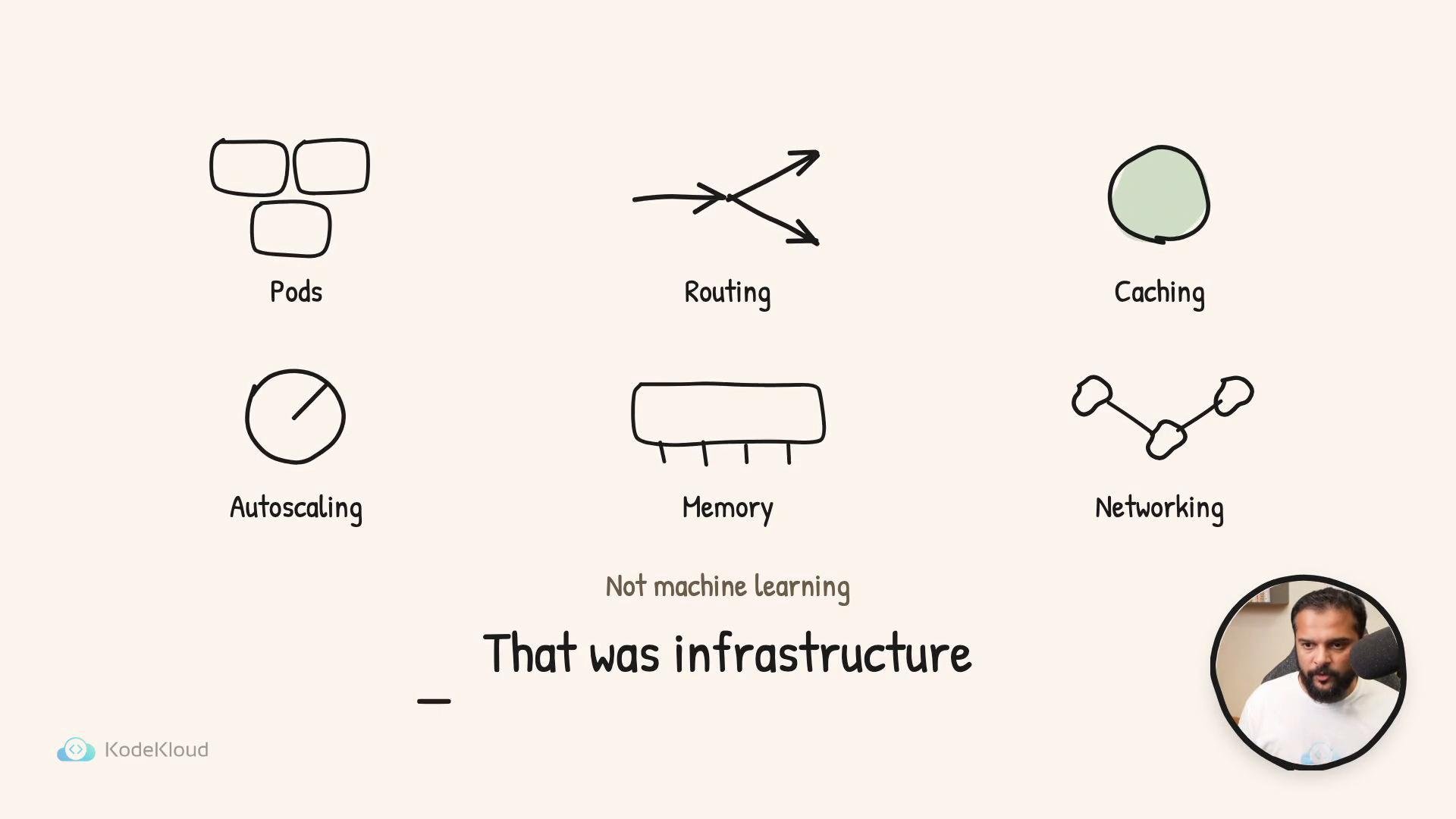
We spent this course building the infrastructure that makes modern AI systems usable and reliable: pods and deployments, routing and load balancing, caching, autoscaling, memory management, and networking. Most of the work we covered is infrastructure engineering — not model research.
 If you’re a systems administrator, SRE, or DevOps engineer, you already have many of the exact skills companies need to operate AI platforms. Linux, containers, Kubernetes, and monitoring are the foundation for model-serving infrastructure — and those are the competencies organizations are hiring for now.
Every company racing to ship AI needs people who can:
* Keep GPUs efficiently utilized
* Minimize inference latency
* Control costs at scale
Those responsibilities map closely to traditional platform and operations roles.
This isn’t a small corner of the market. Large investments in data centers and cloud infrastructure mean sustained demand for engineers who can build, run, and optimize AI platforms. AI engineering is one of the fastest-growing job categories — and you don’t need to become a data scientist or train models to contribute.
What to add to your skillset
* Preserve your operations foundation (Linux, containers, orchestration).
* Add hardware and model-serving knowledge: GPUs, model servers like vLLM, and orchestration tools such as llm-d.
* Learn cost and performance trade-offs for serving models at scale (batching, quantization, autoscaling policies, resource requests/limits).
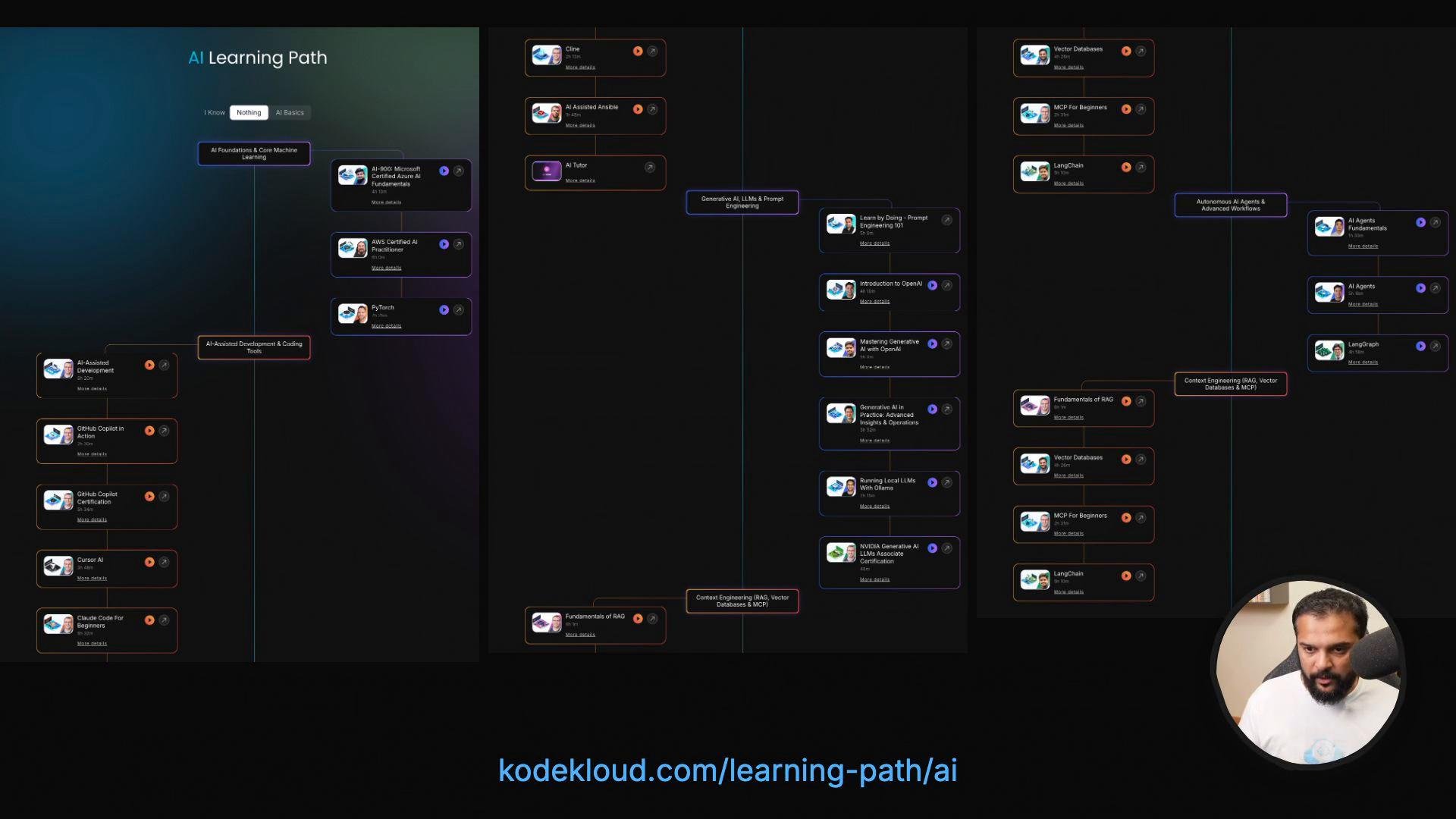
We’ve organized this material into a guided learning path that starts from fundamental operations and progresses to serving models in production. You can join the KodeKloud AI learning path at any time to work through practical labs and real-world scenarios.
If you’re a systems administrator, SRE, or DevOps engineer, you already have many of the exact skills companies need to operate AI platforms. Linux, containers, Kubernetes, and monitoring are the foundation for model-serving infrastructure — and those are the competencies organizations are hiring for now.
Every company racing to ship AI needs people who can:
* Keep GPUs efficiently utilized
* Minimize inference latency
* Control costs at scale
Those responsibilities map closely to traditional platform and operations roles.
This isn’t a small corner of the market. Large investments in data centers and cloud infrastructure mean sustained demand for engineers who can build, run, and optimize AI platforms. AI engineering is one of the fastest-growing job categories — and you don’t need to become a data scientist or train models to contribute.
What to add to your skillset
* Preserve your operations foundation (Linux, containers, orchestration).
* Add hardware and model-serving knowledge: GPUs, model servers like vLLM, and orchestration tools such as llm-d.
* Learn cost and performance trade-offs for serving models at scale (batching, quantization, autoscaling policies, resource requests/limits).
We’ve organized this material into a guided learning path that starts from fundamental operations and progresses to serving models in production. You can join the KodeKloud AI learning path at any time to work through practical labs and real-world scenarios.
 Focus your learning on three pillars: foundational platform skills, hardware and model-serving concepts, and orchestration at scale. Start with Linux, containers, and Kubernetes, then study GPUs, model servers (for example `vLLM`), and orchestration tools (for example `llm-d`) to operate AI systems reliably and cost-effectively.
Quick learning roadmap (what to prioritize)
| Skill area | Why it matters | Where to start |
| - | - | - |
| Linux fundamentals | Base OS and tooling for servers and clusters | KodeKloud Linux courses |
| Containers & Docker | Packaging and running model servers | KodeKloud Docker labs |
| Kubernetes & Orchestration | Deploy, scale, and manage model-serving workloads | KodeKloud Kubernetes tutorials |
| GPUs & Performance | Efficient model inference and utilization | GPU-specific modules and hands-on labs |
| Model servers (vLLM, others) | Low-latency inference and batching | Documentation and practical examples |
| Orchestration for LLMs (llm-d) | Schedule and coordinate model-serving components | Orchestration guides and examples |
| Monitoring & Cost control | Keep latency low and bills under control | Prometheus, Grafana, and cost tooling |
Actionable next steps
1. Strengthen fundamentals: re-visit Linux, container, and Kubernetes labs for hands-on practice.
2. Study GPUs: learn memory hierarchy, batching, and multi-GPU strategies.
3. Deploy a model server: experiment with a lightweight model and a server such as `vLLM` to measure latency and throughput.
4. Practice orchestration: try deploying model servers with `llm-d` (or similar) and configure autoscaling and resource limits.
5. Monitor and optimize: add metrics, set alerts, and iterate to reduce cost and latency.
Links and references
* KodeKloud AI learning path: [https://kodekloud.com/learning-path/ai](https://kodekloud.com/learning-path/ai)
* Linux basics course: [https://learn.kodekloud.com/user/courses/learning-linux-basics-course-labs](https://learn.kodekloud.com/user/courses/learning-linux-basics-course-labs)
* Docker training course: [https://learn.kodekloud.com/user/courses/docker-training-course-for-the-absolute-beginner](https://learn.kodekloud.com/user/courses/docker-training-course-for-the-absolute-beginner)
* Kubernetes fundamentals: [https://learn.kodekloud.com/user/courses/kubernetes-for-the-absolute-beginners-hands-on-tutorial](https://learn.kodekloud.com/user/courses/kubernetes-for-the-absolute-beginners-hands-on-tutorial)
* Monitoring and observability: [https://learn.kodekloud.com/user/courses/aiops-foundations-intelligent-monitoring-with-prometheus-grafana](https://learn.kodekloud.com/user/courses/aiops-foundations-intelligent-monitoring-with-prometheus-grafana)
The hard problems in AI today are infrastructure problems — and that creates strong, growing demand for engineers who can build and operate the platforms that power modern models. Point your existing skills at these workloads: keep your foundation, add the AI layer, and you’ll be well-positioned to run production-scale AI systems.
This documentation is built and hosted on [Mintlify](https://mintlify.com), a developer documentation platform.
Focus your learning on three pillars: foundational platform skills, hardware and model-serving concepts, and orchestration at scale. Start with Linux, containers, and Kubernetes, then study GPUs, model servers (for example `vLLM`), and orchestration tools (for example `llm-d`) to operate AI systems reliably and cost-effectively.
Quick learning roadmap (what to prioritize)
| Skill area | Why it matters | Where to start |
| - | - | - |
| Linux fundamentals | Base OS and tooling for servers and clusters | KodeKloud Linux courses |
| Containers & Docker | Packaging and running model servers | KodeKloud Docker labs |
| Kubernetes & Orchestration | Deploy, scale, and manage model-serving workloads | KodeKloud Kubernetes tutorials |
| GPUs & Performance | Efficient model inference and utilization | GPU-specific modules and hands-on labs |
| Model servers (vLLM, others) | Low-latency inference and batching | Documentation and practical examples |
| Orchestration for LLMs (llm-d) | Schedule and coordinate model-serving components | Orchestration guides and examples |
| Monitoring & Cost control | Keep latency low and bills under control | Prometheus, Grafana, and cost tooling |
Actionable next steps
1. Strengthen fundamentals: re-visit Linux, container, and Kubernetes labs for hands-on practice.
2. Study GPUs: learn memory hierarchy, batching, and multi-GPU strategies.
3. Deploy a model server: experiment with a lightweight model and a server such as `vLLM` to measure latency and throughput.
4. Practice orchestration: try deploying model servers with `llm-d` (or similar) and configure autoscaling and resource limits.
5. Monitor and optimize: add metrics, set alerts, and iterate to reduce cost and latency.
Links and references
* KodeKloud AI learning path: [https://kodekloud.com/learning-path/ai](https://kodekloud.com/learning-path/ai)
* Linux basics course: [https://learn.kodekloud.com/user/courses/learning-linux-basics-course-labs](https://learn.kodekloud.com/user/courses/learning-linux-basics-course-labs)
* Docker training course: [https://learn.kodekloud.com/user/courses/docker-training-course-for-the-absolute-beginner](https://learn.kodekloud.com/user/courses/docker-training-course-for-the-absolute-beginner)
* Kubernetes fundamentals: [https://learn.kodekloud.com/user/courses/kubernetes-for-the-absolute-beginners-hands-on-tutorial](https://learn.kodekloud.com/user/courses/kubernetes-for-the-absolute-beginners-hands-on-tutorial)
* Monitoring and observability: [https://learn.kodekloud.com/user/courses/aiops-foundations-intelligent-monitoring-with-prometheus-grafana](https://learn.kodekloud.com/user/courses/aiops-foundations-intelligent-monitoring-with-prometheus-grafana)
The hard problems in AI today are infrastructure problems — and that creates strong, growing demand for engineers who can build and operate the platforms that power modern models. Point your existing skills at these workloads: keep your foundation, add the AI layer, and you’ll be well-positioned to run production-scale AI systems.
This documentation is built and hosted on [Mintlify](https://mintlify.com), a developer documentation platform.