> ## Documentation Index
> Fetch the complete documentation index at: https://notes.kodekloud.com/llms.txt
> Use this file to discover all available pages before exploring further.
# Evaluating Cost
> This article explains how to evaluate, manage, and optimize costs associated with Azure Pipelines for efficient CI/CD processes.
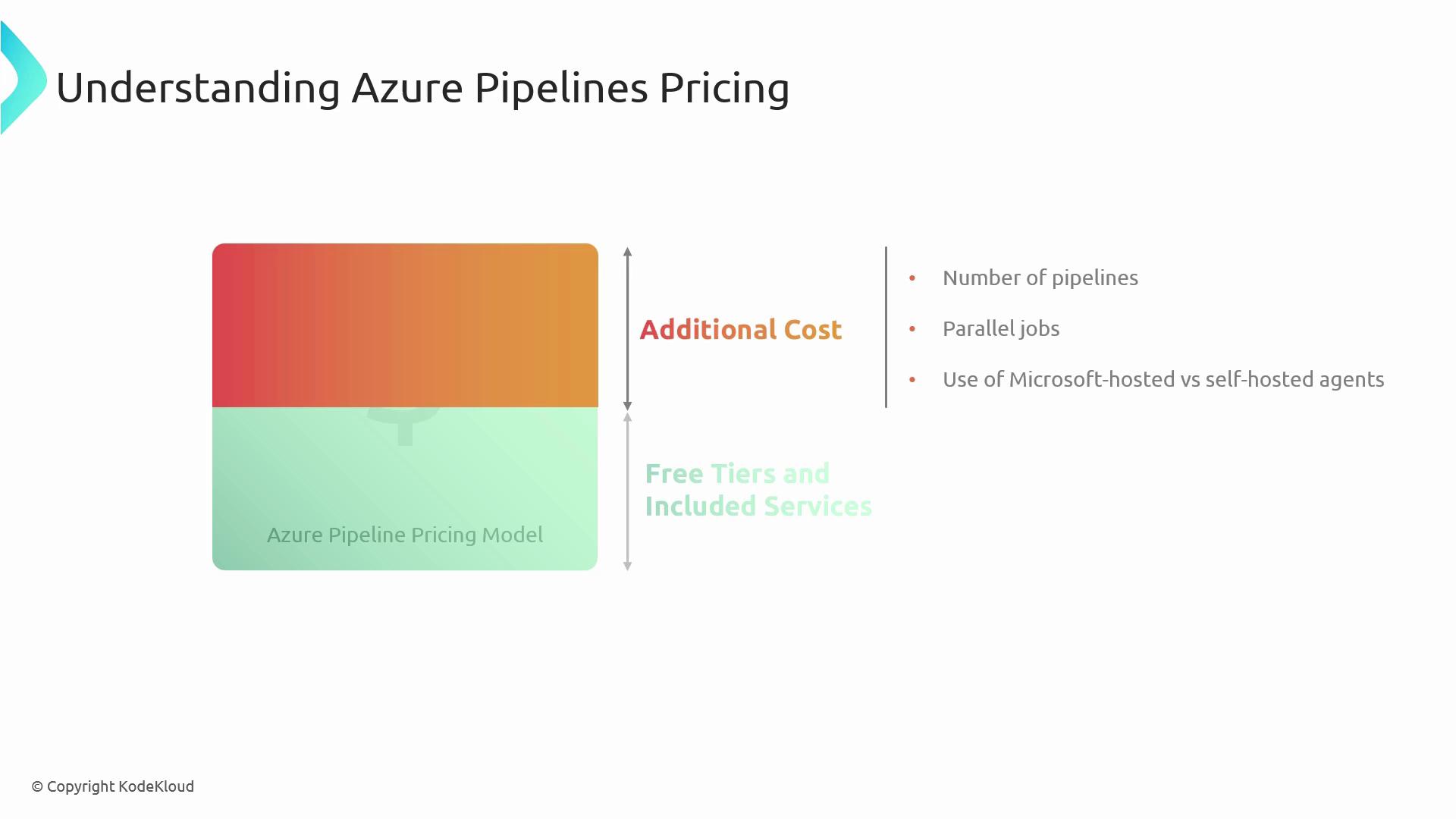
In this lesson, we’ll walk through how to **evaluate**, **manage**, and **optimize** your expenses with [Azure Pipelines](https://learn.microsoft.com/azure/devops/pipelines/). By understanding pricing tiers and cost drivers, you can scale your CI/CD processes efficiently and avoid unexpected bills.
Azure Pipelines includes free build minutes and a free self-hosted agent for open-source projects. Leverage these allowances to experiment before moving to paid plans.
## Cost Factors
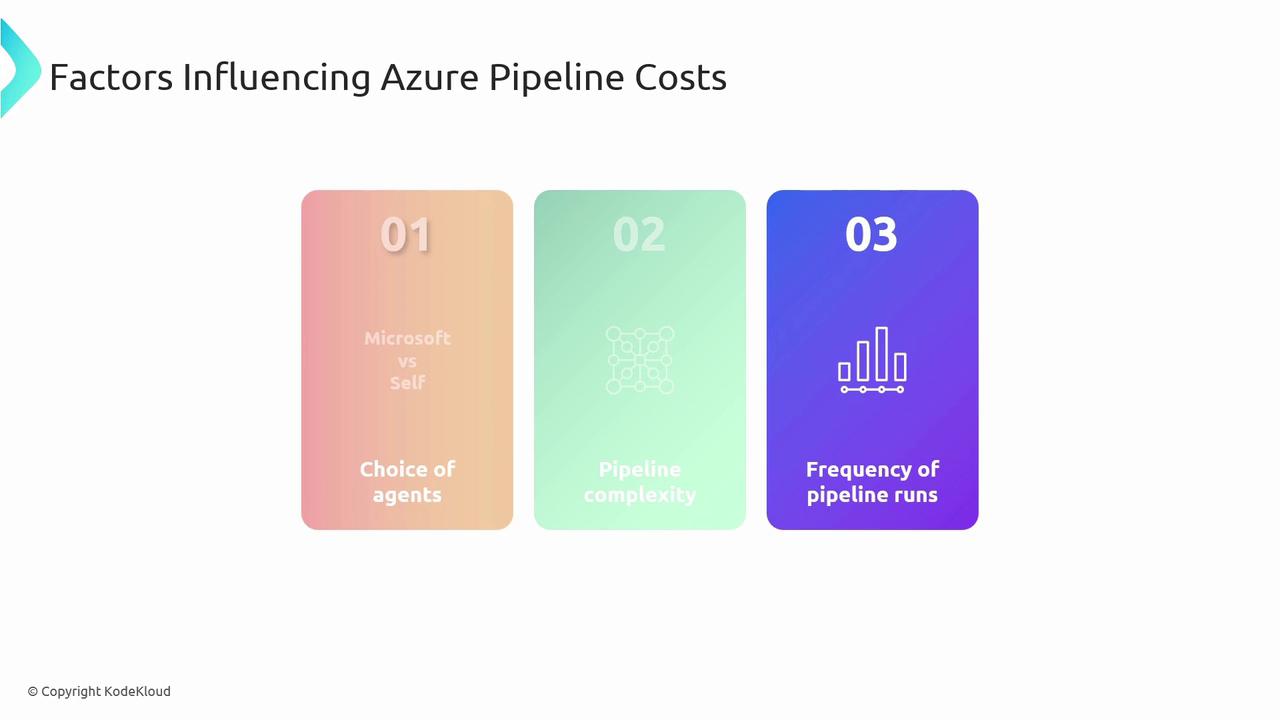
Azure Pipelines charges are driven by three primary factors. Knowing how each one affects your bill helps you plan capacity and cut unnecessary spend.
| Factor | Description | Key Considerations |
| ------------------- | ----------------------------------------------------------- | -------------------------------------------------------- |
| Agent Type | Microsoft-hosted vs. self-hosted worker instances | Setup complexity, scaling limits, maintenance overhead |
| Pipeline Complexity | Number of steps, tasks, tools, and resource-intensive ops | Container usage, test suites, build artifacts |
| Run Frequency | How often pipelines execute (CI, scheduled, or manual runs) | Trigger rules, parallel jobs, scheduled batch processing |
Self-hosted agents require you to provision, secure, and maintain VMs or hardware. Underestimate this at your own risk.
## Cost Management Strategies
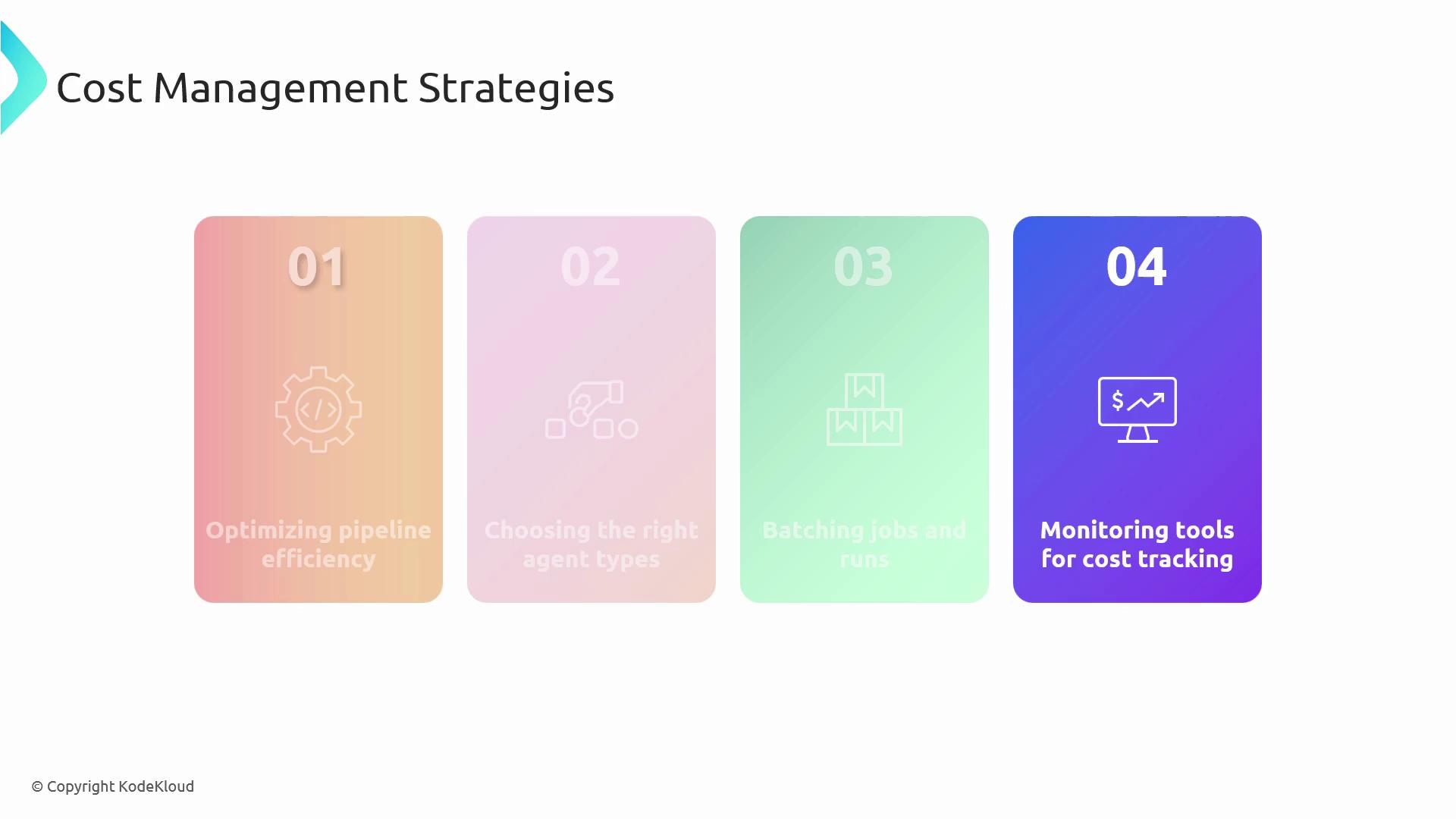
Optimize your Azure Pipelines spending by adopting these proven strategies:
| Strategy | Action Items |
| ----------------------- | ------------------------------------------------------------------------------- |
| Streamline Pipelines | Remove redundant tasks, combine steps, and cache dependencies |
| Choose the Right Agent | Mix Microsoft-hosted for burst workloads and self-hosted for steady volume |
| Batch and Schedule Runs | Group related jobs or schedule off-peak builds to smooth out agent consumption |
| Monitor Usage | Use Azure Cost Management dashboards and alerts to identify spikes and outliers |
## Best Practices for Cost Optimization
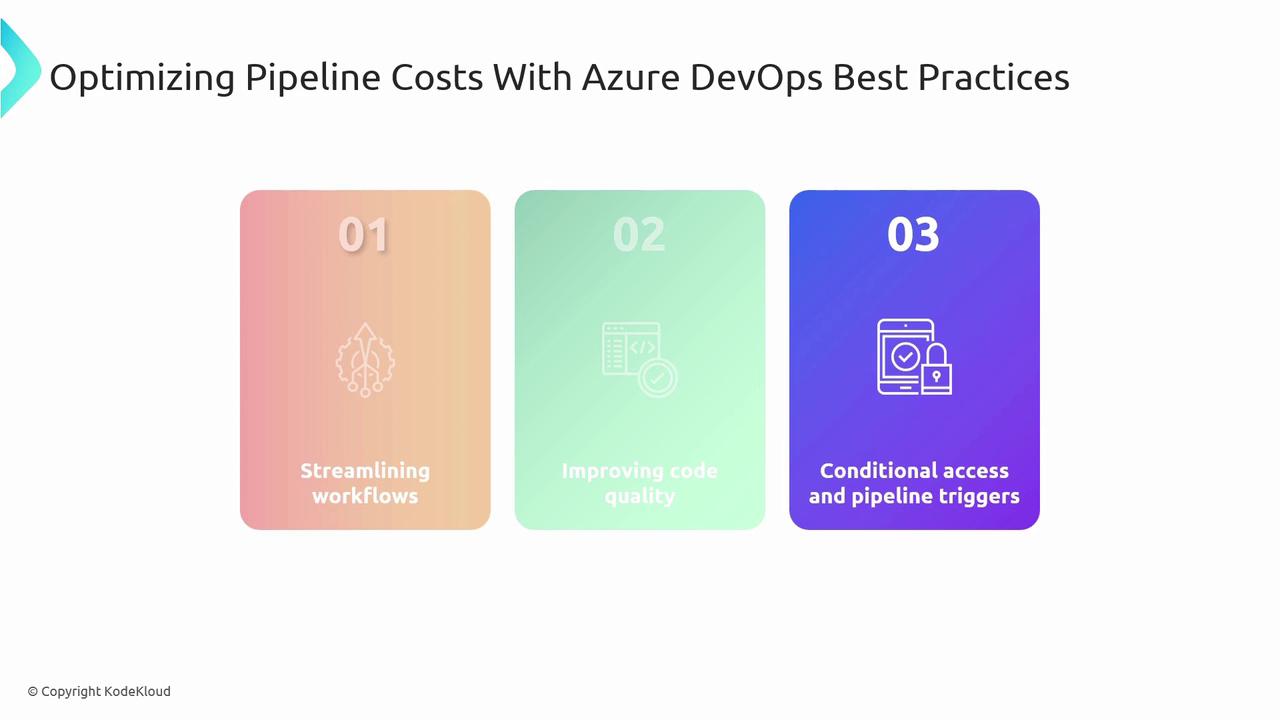
Embed cost-efficient practices directly into your DevOps workflows:
* **Streamline workflows** by eliminating idle waits and parallelizing only critical steps.
* **Improve code quality** early with linting, static analysis, and unit tests to reduce build failures.
* **Use conditional triggers** (`paths`, `branches`) and **pipeline caching** to run jobs only when necessary.
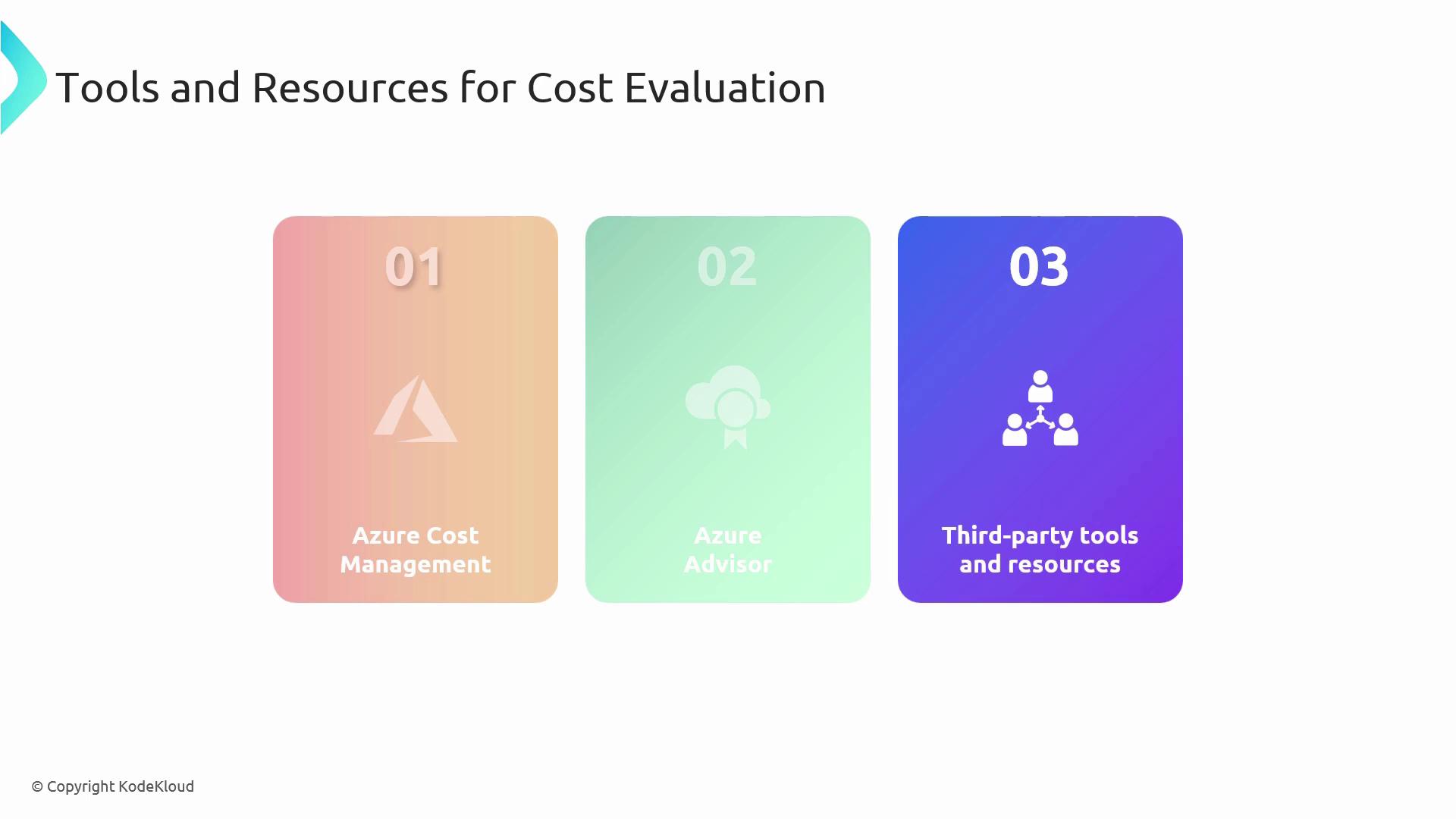
## Tools and Resources
Leverage these native and third-party tools to track, analyze, and optimize your Azure Pipelines spend:
* [Azure Cost Management](https://learn.microsoft.com/azure/cost-management/): Comprehensive dashboards, budgets, and alerts for all Azure services.
* [Azure Advisor](https://learn.microsoft.com/azure/advisor): Personalized recommendations to improve performance and efficiency.
* Third-party analytics platforms (e.g., CloudHealth, Harness) for deeper pipeline-specific insights.
## Summary
In this article, you learned how to:
* Interpret the **Azure Pipelines pricing model** and free-tier grants.
* Identify **key cost drivers**: agent types, pipeline complexity, and run frequency.
* Apply **strategies** to streamline, batch, and monitor pipeline runs.
* Implement **best practices** for efficient, failure-resilient workflows.
* Use **tools and resources** for continuous cost analysis and optimization.
By balancing performance needs against budget constraints, you can maintain a robust DevOps pipeline that scales without breaking the bank.
***
## Links and References
* [Azure Pipelines Pricing](https://azure.microsoft.com/pricing/details/devops/azure-devops-services/)
* [Kubernetes on Azure DevOps](https://learn.microsoft.com/azure/aks/)
* [Terraform Best Practices](https://learn.hashicorp.com/terraform)
* [Azure DevOps Documentation](https://learn.microsoft.com/azure/devops/)