> ## Documentation Index
> Fetch the complete documentation index at: https://notes.kodekloud.com/llms.txt
> Use this file to discover all available pages before exploring further.
# Module version numbering
> This article explores module version numbering, highlighting its importance for stability and backward compatibility in module development and usage.
In this lesson, we explore module version numbering—a system that signals the stability and backward compatibility of a module. Understanding these conventions is crucial for both module developers and users, as they help manage expectations during upgrades and ensure smooth integration.
Each segment of a module's version number communicates a different level of change:
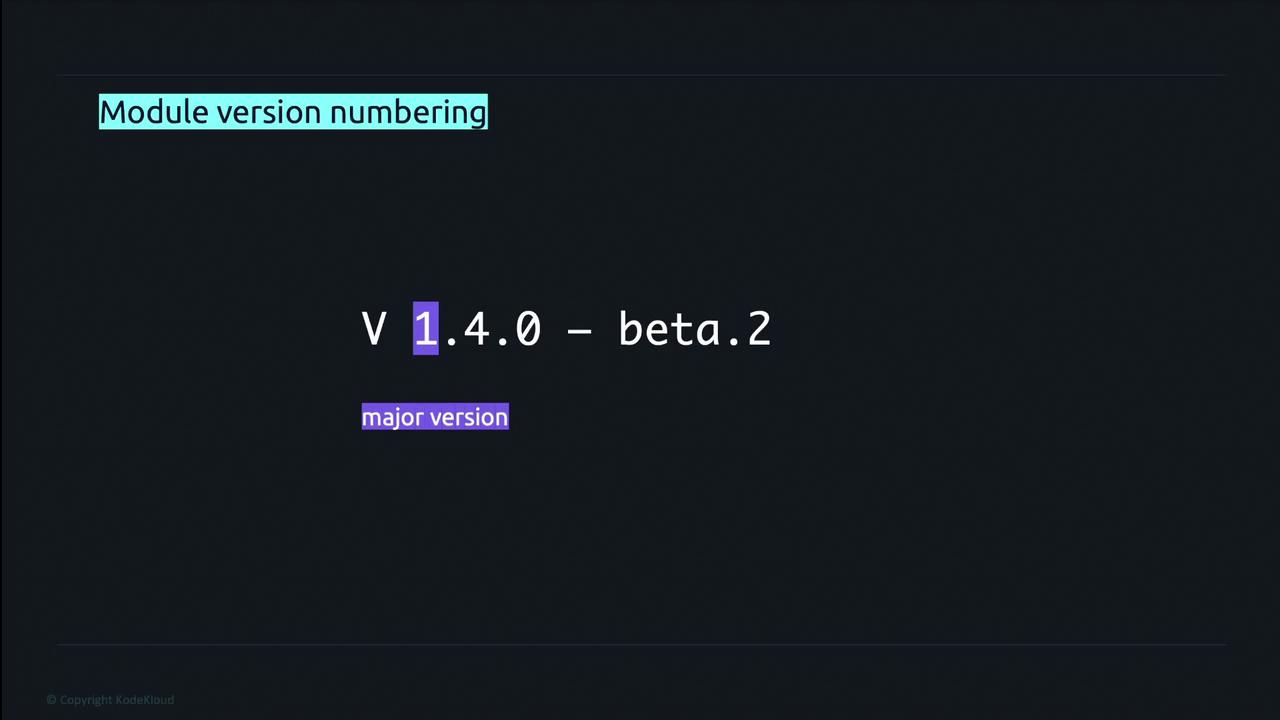
1. **Major Version**\
A change in the major version indicates backward-incompatible public API changes. When upgrading to a new major release, be aware that previous code implementations might break.
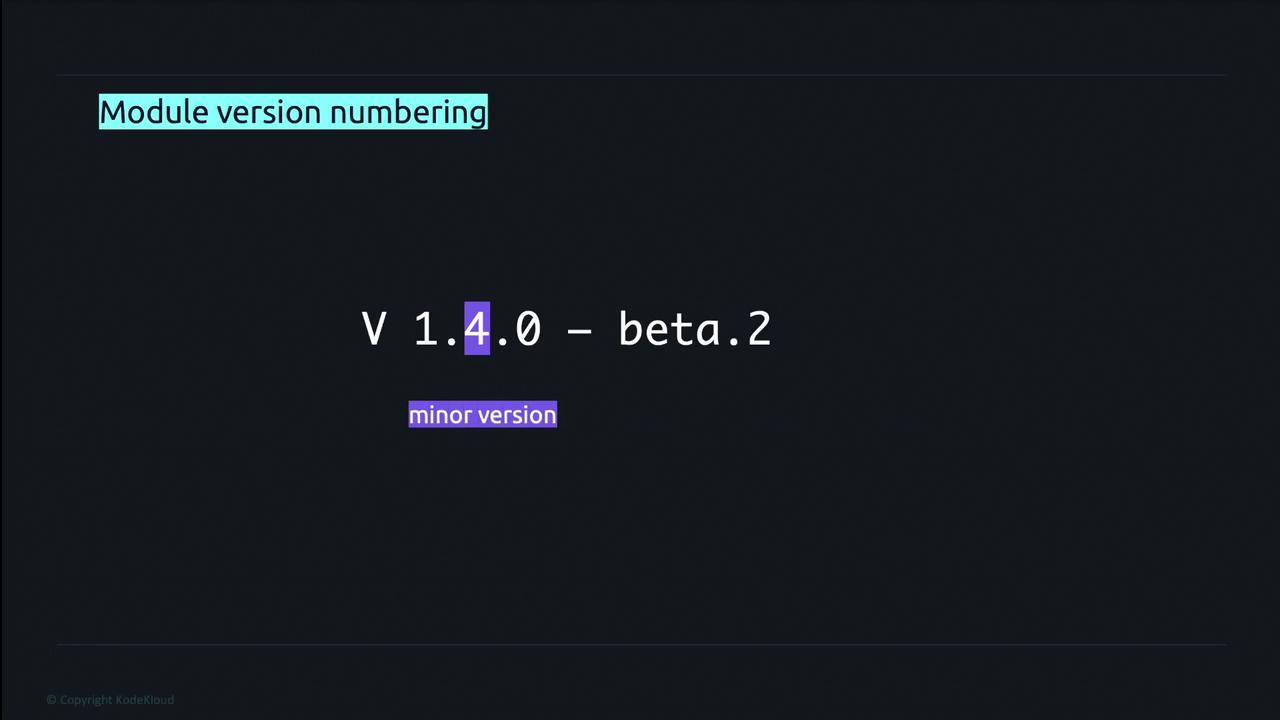
2. **Minor Version**\
The minor version reflects the introduction of new features that are backward-compatible. Updating to a new minor version should not disrupt existing integrations.
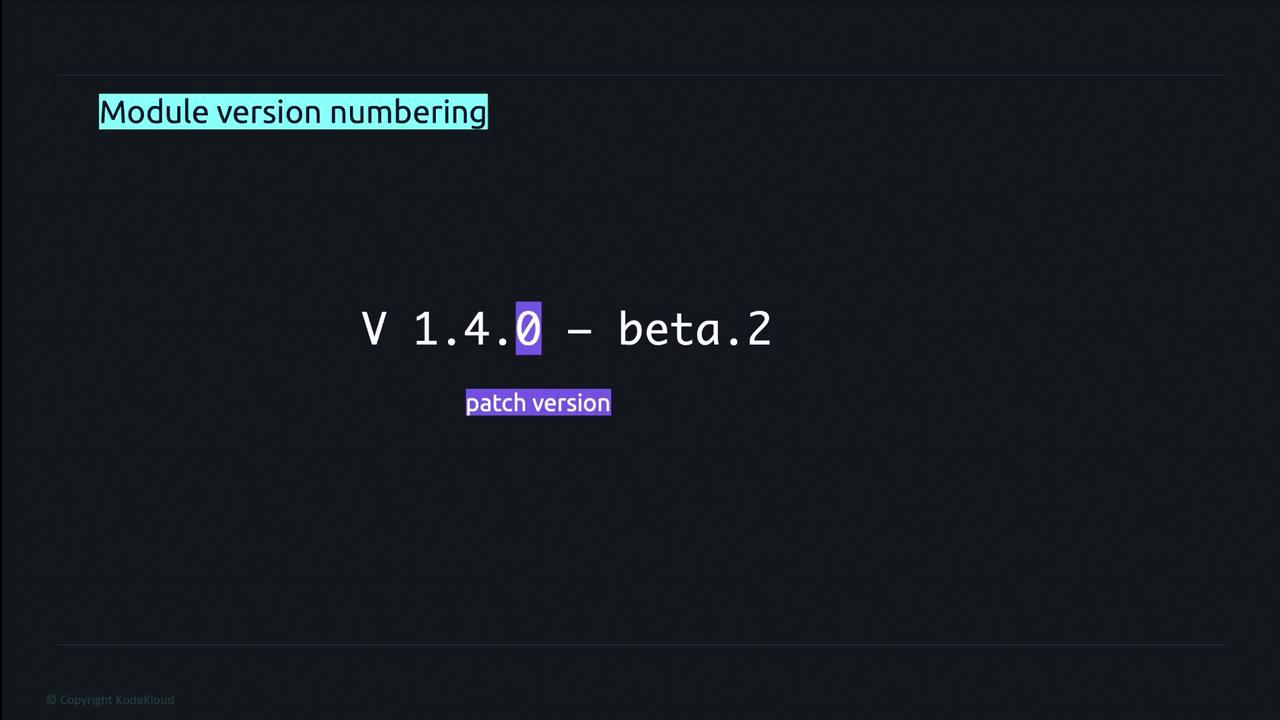
3. **Patch Version**\
Patch versions are reserved for backward-compatible bug fixes and minor improvements that do not affect the public API. These updates enhance stability without influencing dependencies.
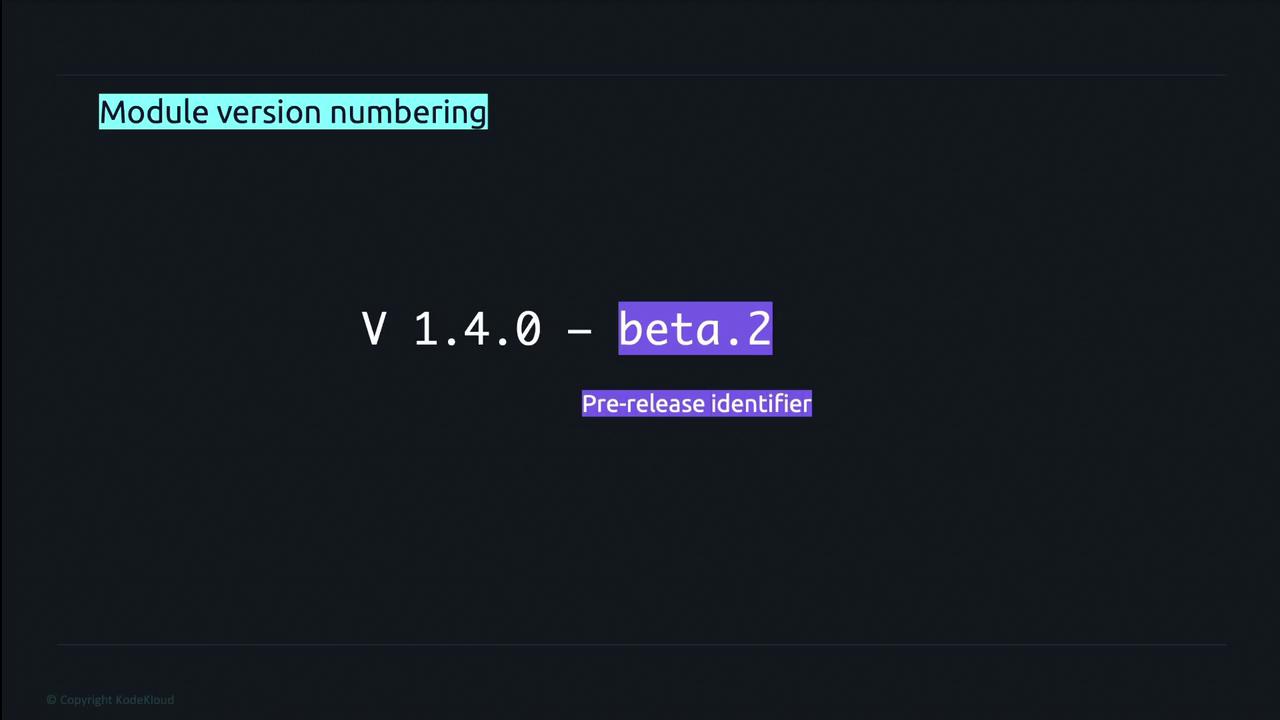
4. **Pre-release Identifier**\
The pre-release tag (such as "alpha" or "beta") indicates that the version is not yet stable and is intended for testing purposes. These versions do not guarantee full backward compatibility or complete feature stability.
Understanding these versioning conventions allows developers to confidently upgrade external modules and effectively communicate changes within their own projects.
That concludes this lesson. We look forward to guiding you through more advanced topics in our upcoming articles.