> ## Documentation Index
> Fetch the complete documentation index at: https://notes.kodekloud.com/llms.txt
> Use this file to discover all available pages before exploring further.
# Elements of a compelling story
> How to use character, conflict, resolution, data, and visuals to craft technical stories that engage nontechnical audiences and tie solutions to measurable business outcomes.
Welcome, students.\
This is Michael Forrester.
In this lesson we examine the elements that make a story compelling—especially when explaining technical ideas to non-technical audiences. We use [The Phoenix Project](https://en.wikipedia.org/wiki/The_Phoenix_Project_%28novel%29) as a running example to show how character, conflict, resolution, and theme make technical change feel human and actionable.
[The Phoenix Project](https://en.wikipedia.org/wiki/The_Phoenix_Project_%28novel%29) follows Bill Palmer, an IT manager at Parts Unlimited, who is asked to rescue a critical initiative called The Phoenix Project. The project is behind schedule and over budget, the environment is unstable, and organizational communication is poor. Bill applies a DevOps-inspired approach—emphasizing collaboration, automation, and continuous improvement—to restore flow and accelerate delivery. The story demonstrates how cultural and technical changes combine to produce measurable business benefits, making it a useful model for technical storytelling.
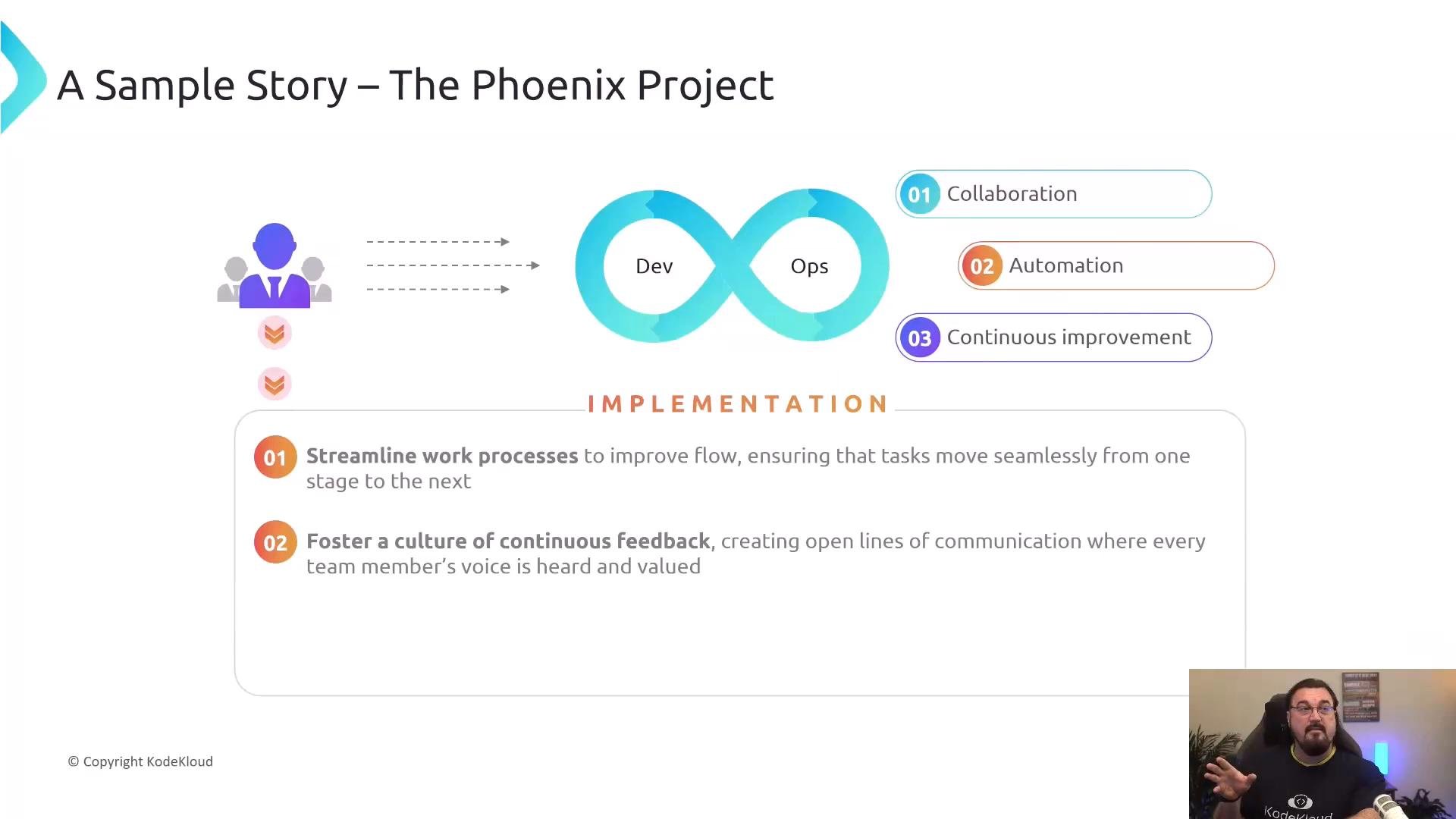 Why stories like The Phoenix Project work for technical audiences
* They make complex, cross-functional change relatable by centering on people and decisions rather than abstractions.
* A clear narrative arc improves attention, retention, and recall.
* Showing concrete outcomes helps listeners imagine how a similar transformation could apply in their organization.
The Hero's Journey and the basic story arc
A classic storytelling framework—popularized by Joseph Campbell in [The Hero with a Thousand Faces](https://en.wikipedia.org/wiki/The_Hero_with_a_Thousand_Faces)—provides a practical structure for technical narratives:
* Character: a relatable protagonist with a role and constraints.
* Conflict: a clear challenge or problem to be solved.
* Resolution: the path or solution taken to resolve the conflict.
* Theme: the lesson or value that emerges from the journey.
Typically the hero starts in an ordinary state, receives a call to action, faces tests that demand transformation, and finally returns (or reports) the benefits learned. You can map this pattern to technical stories by treating the solution—people, process, technology, or culture—as the transformative agent.
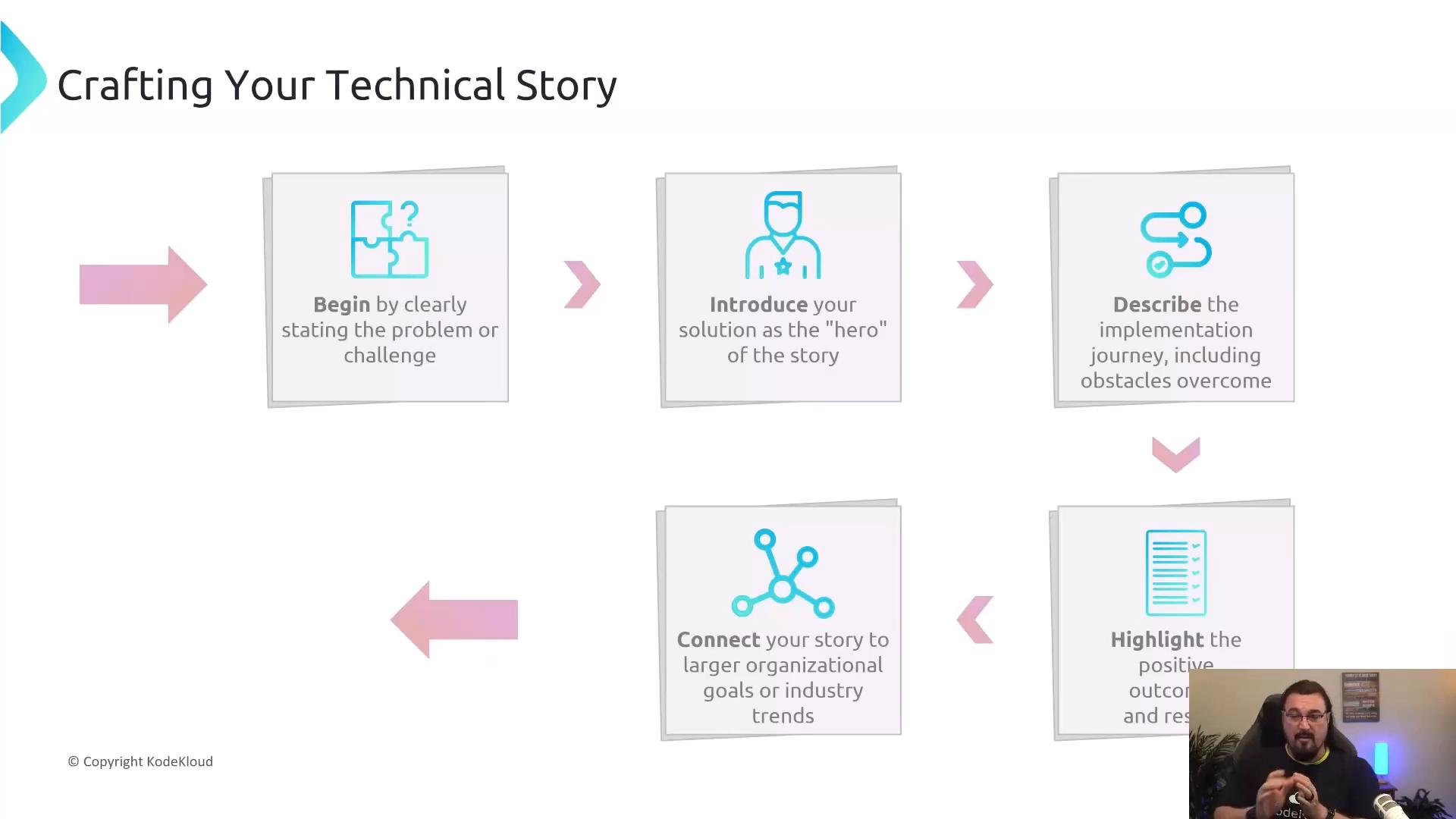
When crafting your technical story, follow this simplified sequence: state the problem clearly, introduce the proposed change (the hero/solution), describe the journey to implement it, highlight the measurable benefits, and connect the outcome to broader organizational goals.
Frame your story around measurable outcomes and stakeholders. Start with the pain point, explain who is impacted, and quantify the expected improvement (time saved, error rates reduced, revenue impact). This helps non-technical audiences evaluate trade-offs and priorities.
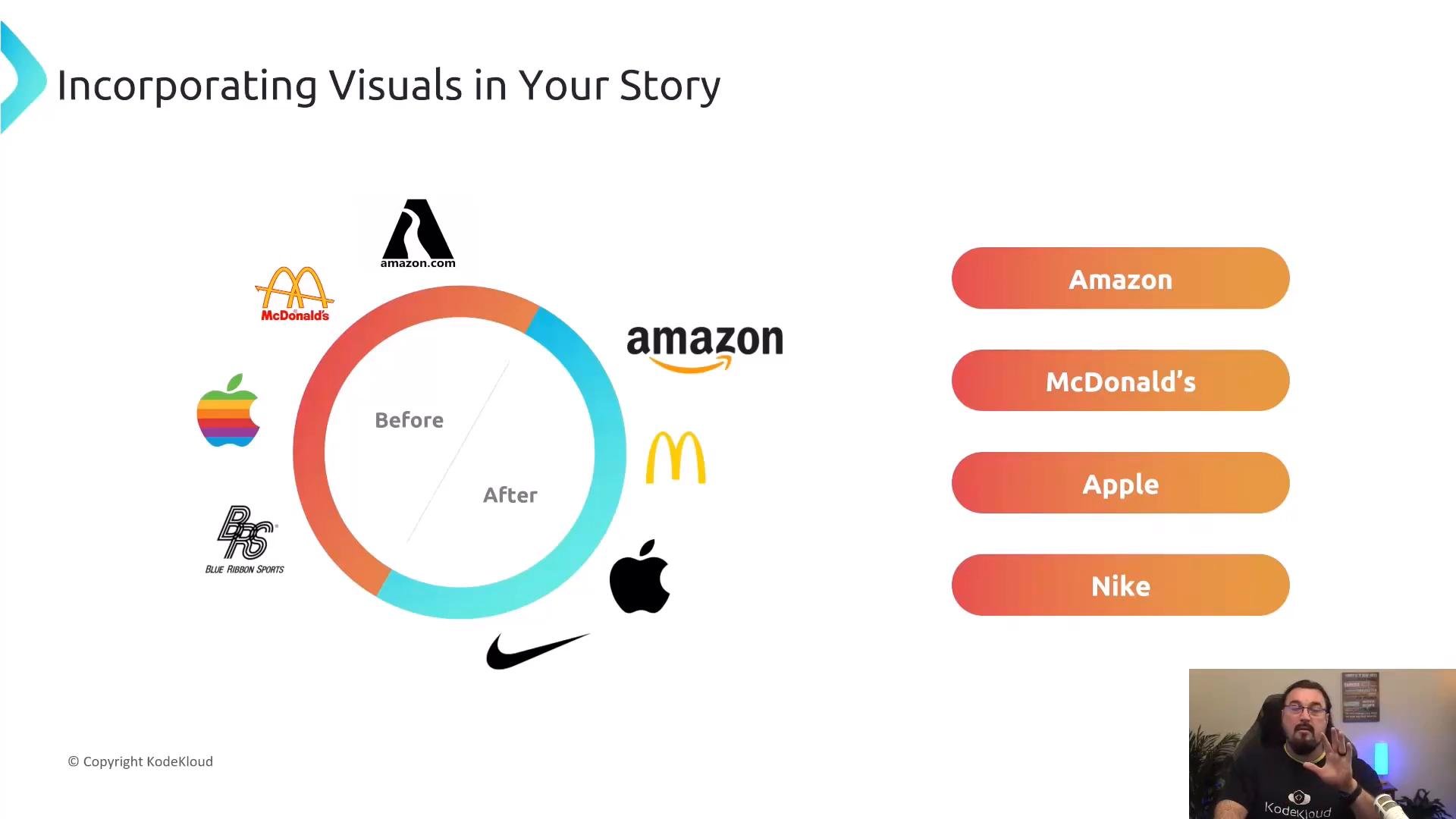
 Using data and visuals to support your story
Data and imagery make impact tangible—when used correctly:
* Use analogies and comparisons to give numbers meaning (for example, “This saves the equivalent of X person-hours per month”).
* Prefer simple visualizations that map directly to business outcomes—before/after charts, clear icons, or customer logos that the audience recognizes.
* For technical audiences, familiar platform icons (e.g., [AWS](https://aws.amazon.com), [Kubernetes](https://kubernetes.io)) provide context; for non-technical audiences, use metaphors that reduce jargon.
Keep visuals uncluttered so they support—rather than distract from—the story. Logos, simple icons (dollar signs for cost, gears for efficiency), and one clear takeaway per slide are often sufficient.
Avoid burying your message in dense dashboards or raw metrics. Numbers without context can confuse or mislead. Always show the business implication (time saved, cost avoided, revenue enabled) alongside the metric.
 Delivering your story effectively
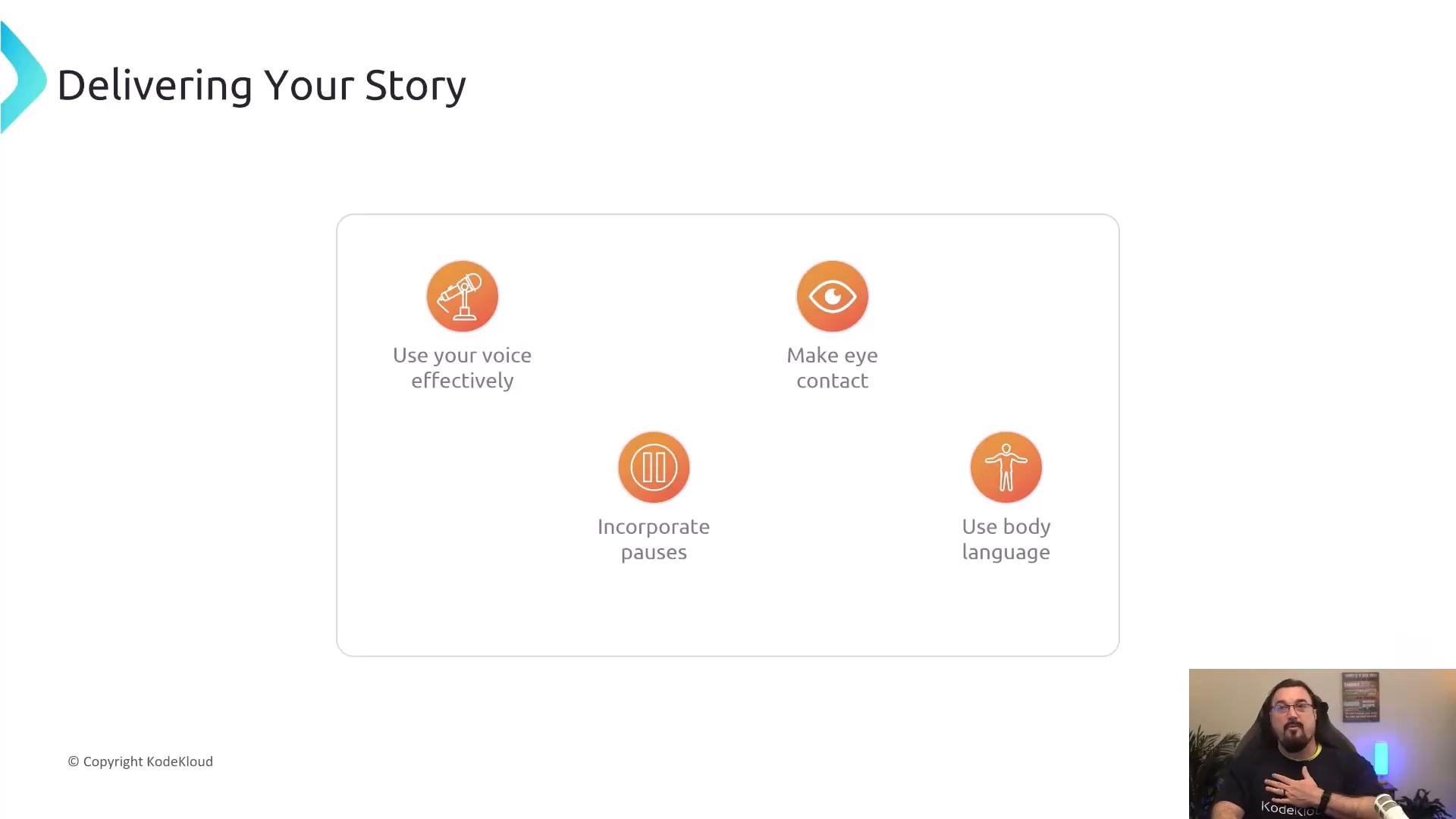
How you tell a story matters as much as what you tell:
* Use vocal contrast—softer for reflection, stronger for breakthrough moments—to signal emotional and logical shifts.
* Pause to let important points sink in.
* Make eye contact and scan the room or the camera in remote presentations.
* Use natural gestures and purposeful movement to reinforce emphasis.
Practice until timing, pacing, and body language feel authentic. Small variations in pace and volume help the audience follow both emotional and logical transitions.
 A simple final example
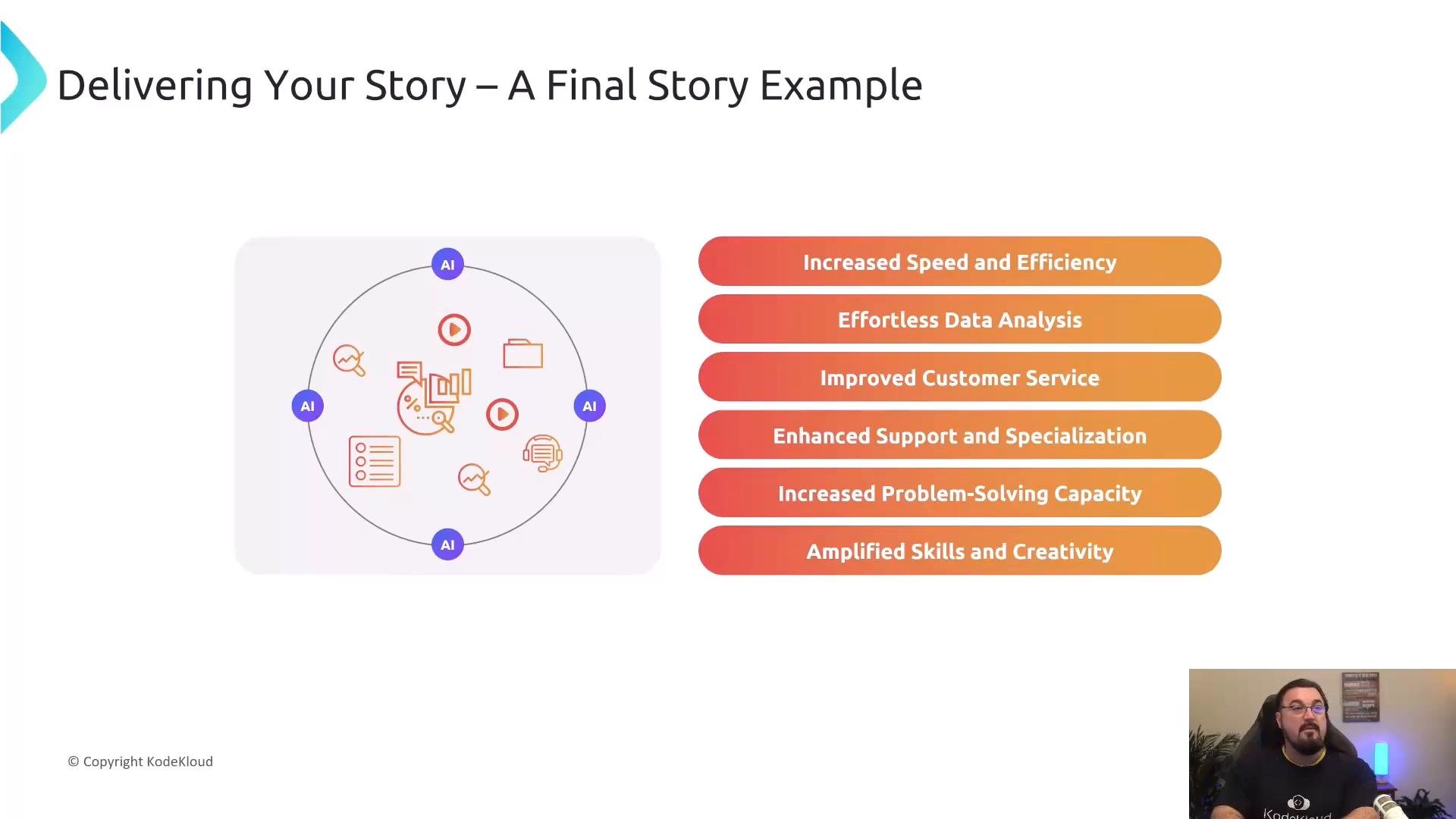
Consider Alex, who needs to convert raw data into actionable customer insights but lacks advanced data-processing skills. Alex experiments with AI-assisted techniques to augment his workflow: he instructs AI tools to clean, summarize, and visualize data, then refines the outputs for customer-facing reports.
The result:
* Faster, more efficient analysis.
* More accessible, actionable presentations for customers.
* Improved customer support and higher-quality outcomes.
* Alex’s skills are amplified—AI augments creativity and problem-solving rather than replacing him.
This example follows the character–problem–transformation–resolution pattern: the hero (Alex) adopts a practical toolset that delivers visible business benefits.
 Key takeaways
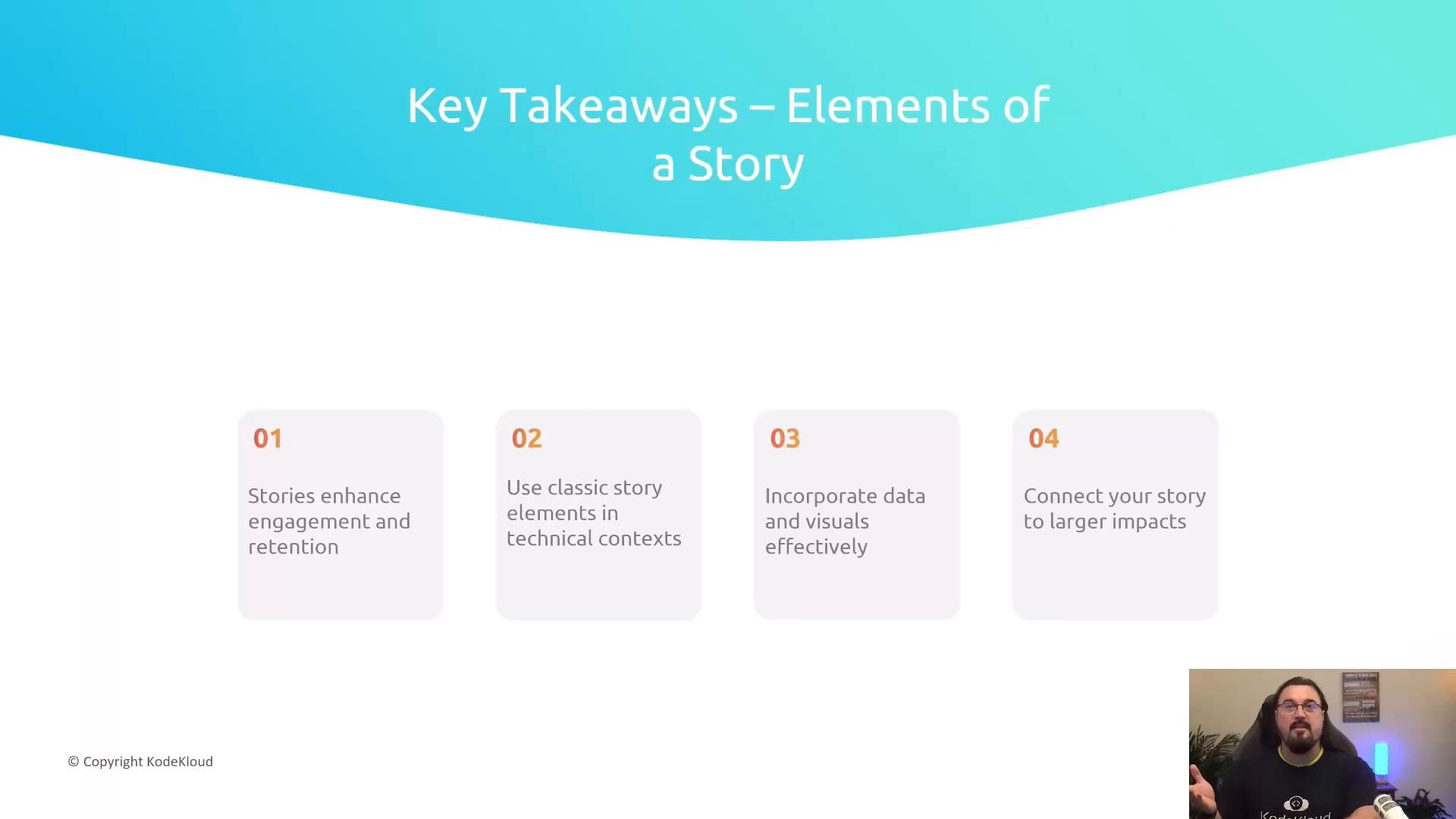
* Stories increase engagement and retention, making technical change easier to adopt.
* Use classic story elements—character, conflict, resolution, and theme—to frame technical initiatives.
* Incorporate data and visuals, but keep them simple and tied directly to business impact.
* Connect your story to organizational goals so listeners understand strategic relevance.
 Practical checklist
| Step | What to include | Example prompt |
| - | - | - |
| Problem | Define the pain and who feels it | “Which customers or teams are blocked today?” |
| Solution (Hero) | Describe the approach and owners | “Introduce the team/process/tool leading the change.” |
| Journey | Summarize key steps and trade-offs | “What tests, pilots, or rollouts were required?” |
| Outcomes | Quantify benefits and business impact | “Show before/after metrics: time, cost, quality.” |
| Connection | Align to strategy or goals | “How does this support company priorities?” |
Links and references
* [The Phoenix Project (Wikipedia)](https://en.wikipedia.org/wiki/The_Phoenix_Project_%28novel%29)
* [The Hero with a Thousand Faces (Wikipedia)](https://en.wikipedia.org/wiki/The_Hero_with_a_Thousand_Faces)
* [AWS](https://aws.amazon.com)
* [Kubernetes](https://kubernetes.io)
* Further reading: storytelling for product and technical teams, change management, and presenting metrics to non-technical stakeholders.
Thanks for listening. Those are the elements of a compelling story.
This documentation is built and hosted on [Mintlify](https://mintlify.com), a developer documentation platform.