> ## Documentation Index
> Fetch the complete documentation index at: https://notes.kodekloud.com/llms.txt
> Use this file to discover all available pages before exploring further.
# Focusing on business benefits and outcomes
> Explains how to communicate technical work as business value by translating features into measurable benefits, using metrics, visuals, and concise narratives for decision-makers.
Welcome — Michael Forrester here.
In this lesson we’ll focus on connecting technical work to business benefits and outcomes. This is primarily about communication: how to present technical solutions so they matter to decision-makers and stakeholders. Let’s dive in.
A common pitfall is a technically focused narrative that highlights features — “latest software update features,” “cutting-edge AI algorithms,” “boosting data processing speed” — without explaining why those things matter to the business.
A more effective approach translates technical capabilities into business-relevant outcomes. This helps decision-makers understand the value and makes it easier to secure support, budget, and executive buy-in.
* Instead of listing “advanced AI algorithms,” explain how those algorithms improve prediction accuracy and enable automation that reduces manual effort and cost.
* Instead of “optimize data processing,” show how faster processing shortens time-to-insight, enabling quicker business decisions.
* Instead of technical jargon about parallel processing or multi-threading, describe benefits such as improved performance, higher reliability, and easier integration with existing systems.
The goal: emphasize why the solution matters to the business — performance, reliability, smooth data flow, and simpler integration — rather than only explaining how it works.
When you map technical work to business objectives, the solution stops feeling like an isolated engineering effort and becomes relevant to leadership and stakeholders. That alignment improves the chance of driving action and achieving organizational goals.
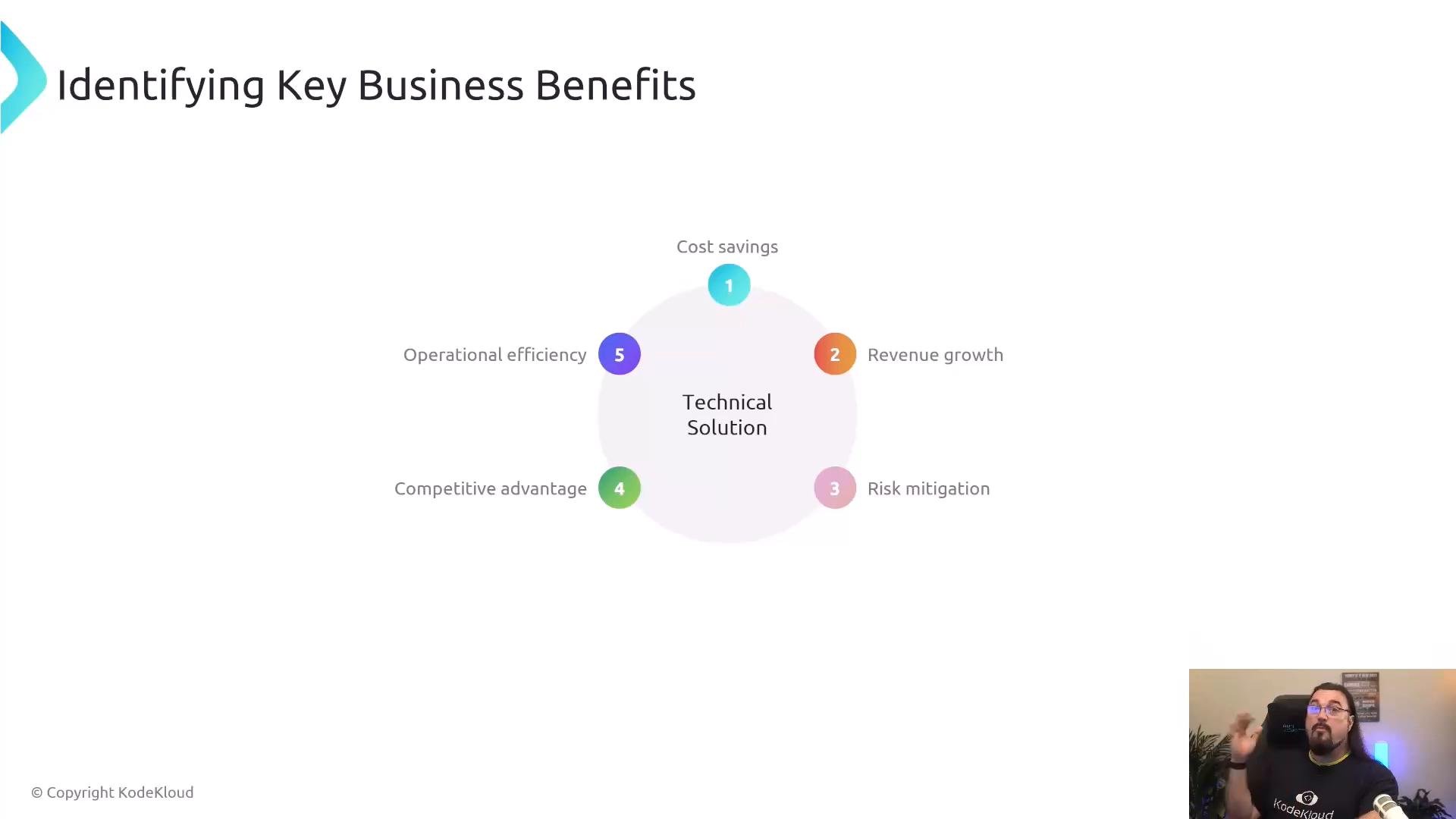
Common business benefits you can highlight for technical solutions:
* Cost savings
* Revenue growth
* Risk mitigation (security, compliance, reputation)
* Competitive differentiation or market positioning
* Increased operational efficiency
 Why operational efficiency matters
Operational efficiency is especially impactful because the dollars saved or productivity gains can be directly tied to the bottom line. Framing improvements in terms of time saved or reduced headcount leads to metrics executives understand.
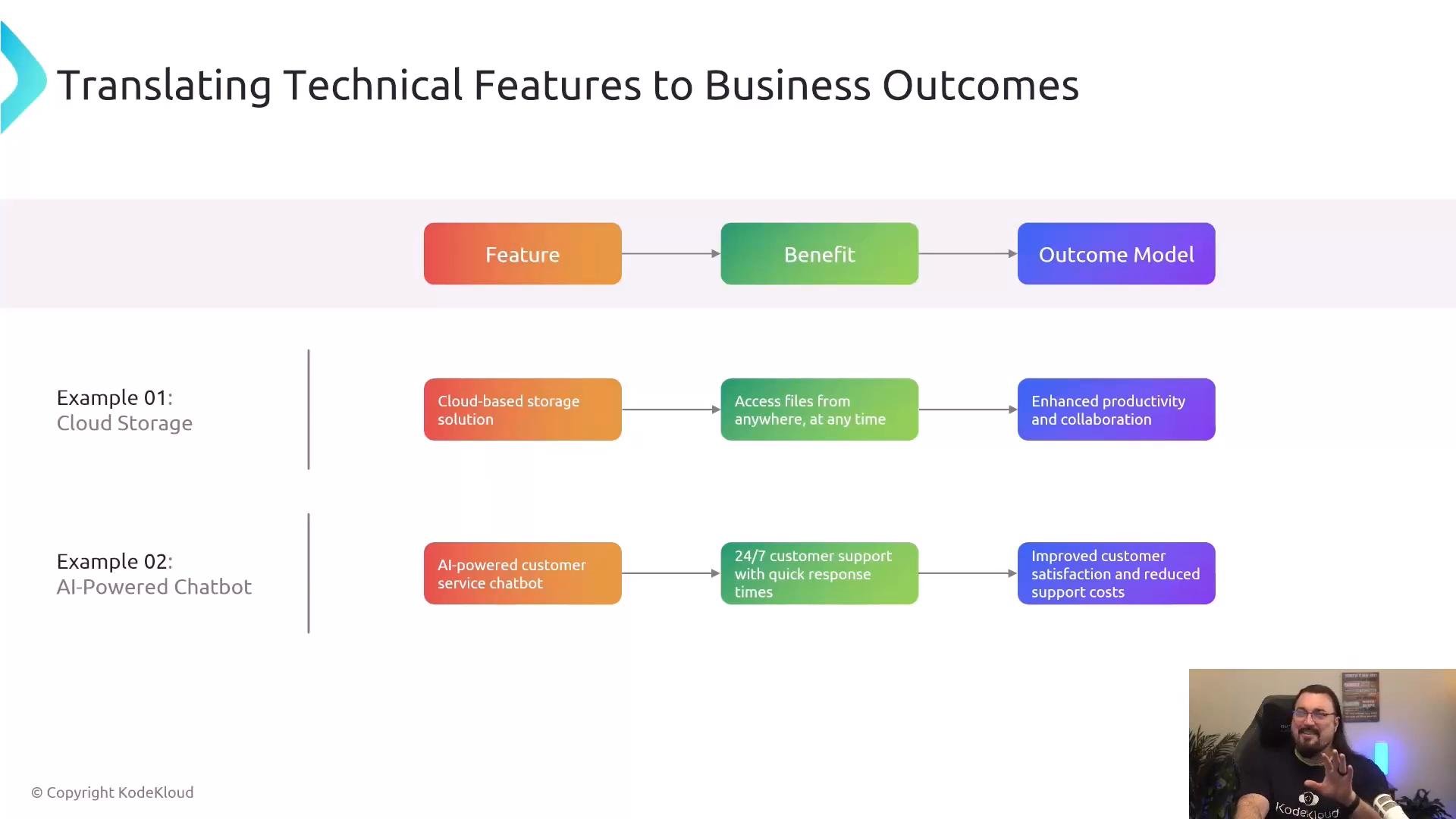
Feature → Benefit → Outcome
A simple, repeatable model for presentations is:
Feature → Benefit → Outcome
Translate technical capabilities into business impacts using that sequence.
Examples:
* Feature: Cloud-based storage — Benefit: Access files anywhere — Outcome: Improved productivity and better collaboration.
* Feature: AI-powered chatbot — Benefit: 24/7 quick responses — Outcome: Higher customer satisfaction and lower support costs.
* Feature: End-to-end data encryption — Benefit: Stronger data security — Outcome: Increased customer trust and easier support for regulatory compliance.
 Business benefits — quick reference
| Benefit category | What it means for the business | Example metric or outcome |
| - | - | - |
| Cost savings | Reduce operational or capital expense | Lower infrastructure spend, reduced FTE hours |
| Revenue growth | Enable new or larger revenue streams | Increased conversion rate, new product lines |
| Risk mitigation | Reduce exposure to security, compliance, or reputational loss | Fewer incidents, lower potential fines |
| Competitive differentiation | Unique capabilities that improve market position | Market share growth, faster time-to-market |
| Operational efficiency | Faster, more reliable processes | `X` hours saved per month, improved throughput |
Quantifying business impact
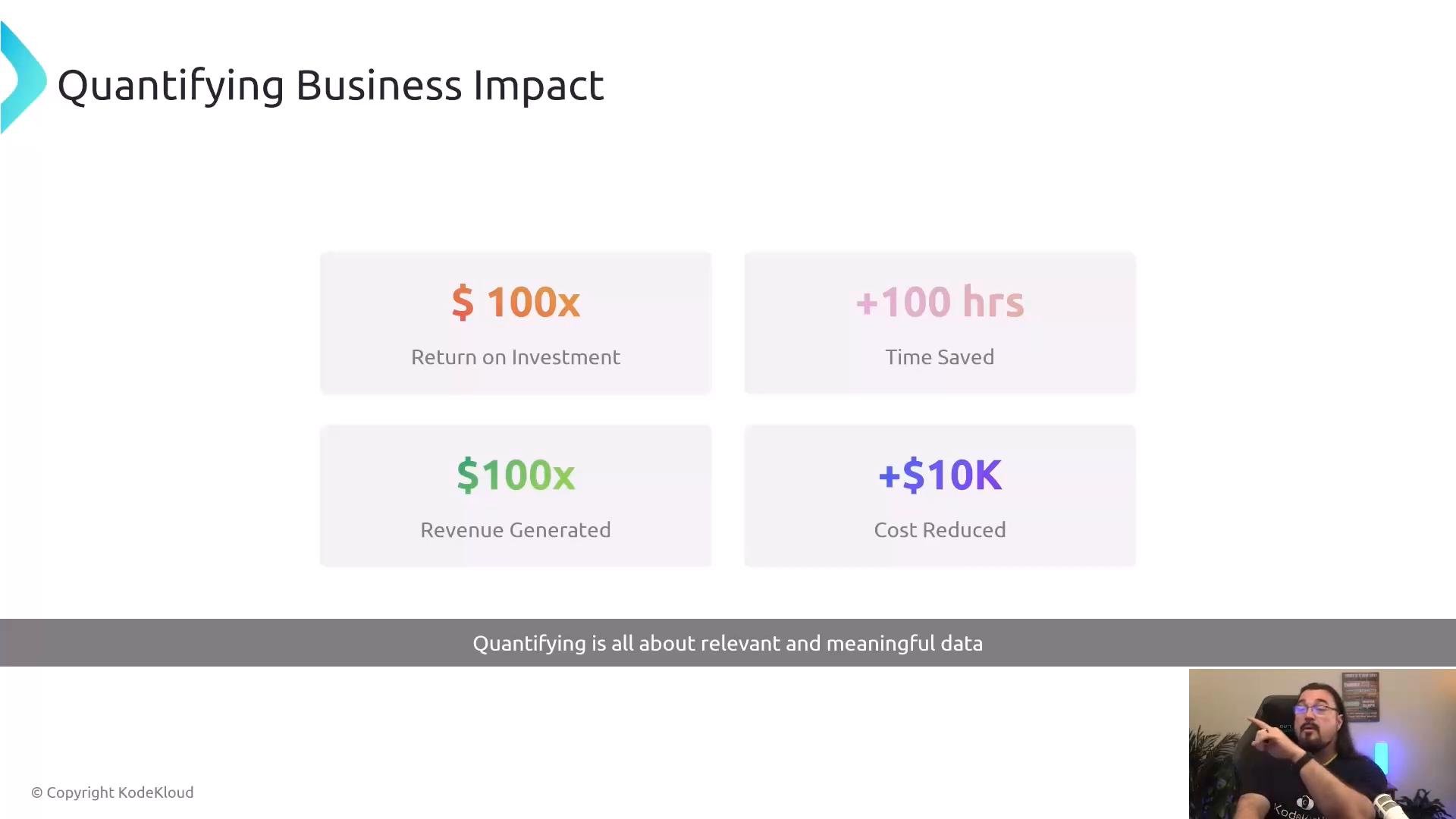
Whenever possible, quantify impact with meaningful metrics: ROI, time saved, cost reductions, revenue impact, risk reduction, or customer satisfaction improvements. Use conservative, supportable estimates and show the assumptions and calculations so stakeholders can validate them.
When presenting numbers, be conservative and transparent. Provide the math, define assumptions, and be ready to explain how you arrived at your estimates.
 Crafting a business-focused narrative
When presenting technical value to a non-technical audience, structure your message so it’s easy to follow and decision-oriented:
1. Start with the business problem (impact, pain, or opportunity).
2. Introduce the solution briefly — focus on the difference it will make.
3. Emphasize outcomes and benefits (use metrics and examples).
4. Support claims with minimal technical details; place deep technical content in an appendix or offer a follow-up.
5. Conclude with clear next steps and required decisions to realize the benefits.
Visualize the benefits
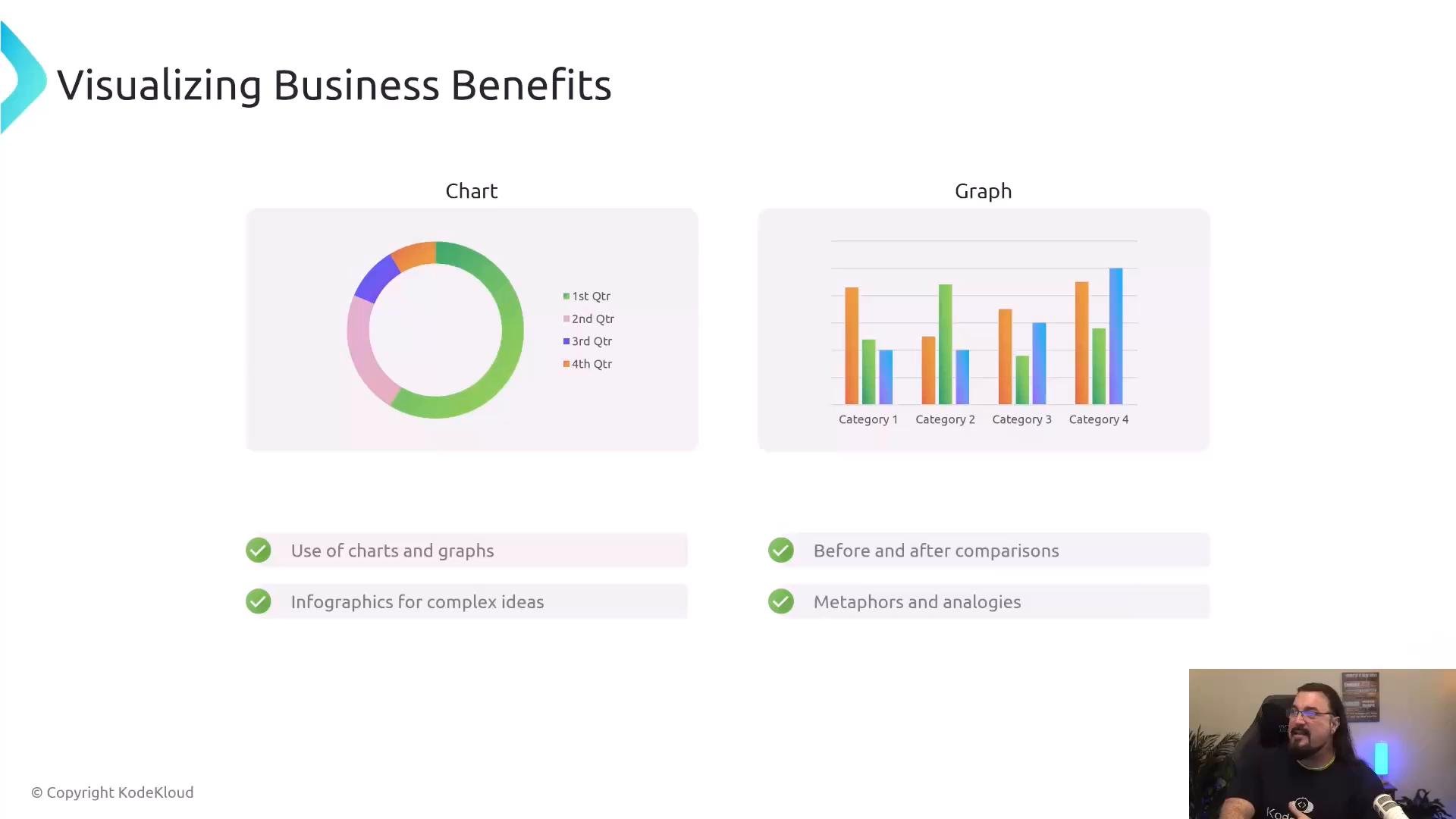
Use charts, before-and-after comparisons, infographics, and concise visuals to make the impact obvious. Simple metaphors or analogies can help clarify complex ideas for executive audiences.
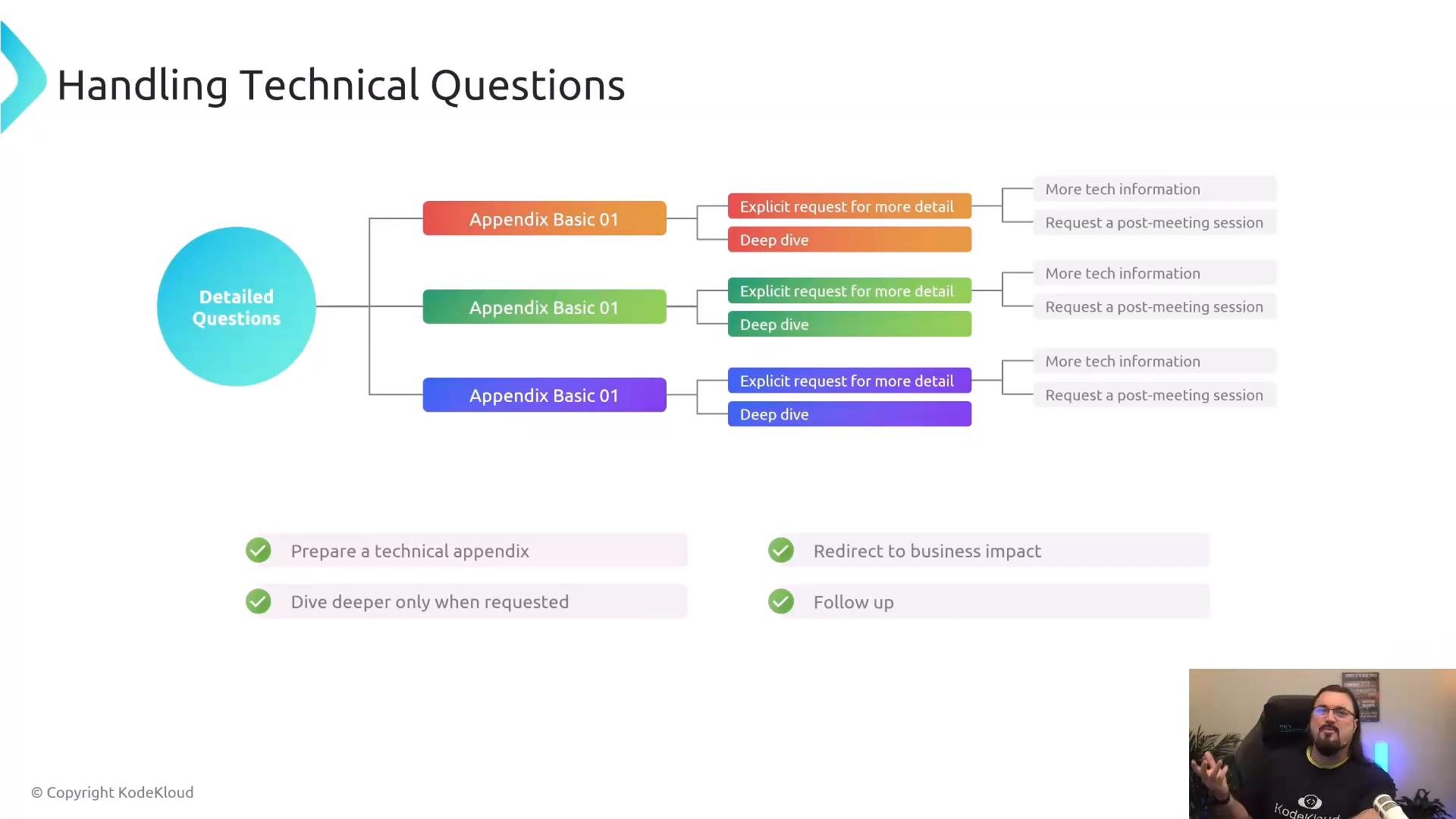
 Handling technical questions in mixed audiences
When technical questions come up from a mixed audience, choose the approach that preserves the meeting’s focus while meeting stakeholder needs:
* Prepare a technical appendix (detailed slides or a separate document) for those wanting a deep dive.
* Redirect the question briefly to business impact and explain why the detail matters for outcomes.
* Offer a follow-up technical session or office hours for those who want more depth.
* Provide detailed information after the meeting if an immediate deep technical discussion would derail the session.
Most of the time, a short answer plus an offer to follow up keeps the meeting on track and preserves stakeholder engagement.
 Key takeaways
* Focus on "why" (business outcomes), not only "how" (technical details).
* Translate features into benefits and outcomes that stakeholders care about.
* Quantify impact when possible and be transparent about assumptions.
* Use visuals to make impact obvious and memorable.
* Prepare technical appendices and follow-up options for deeper questions.
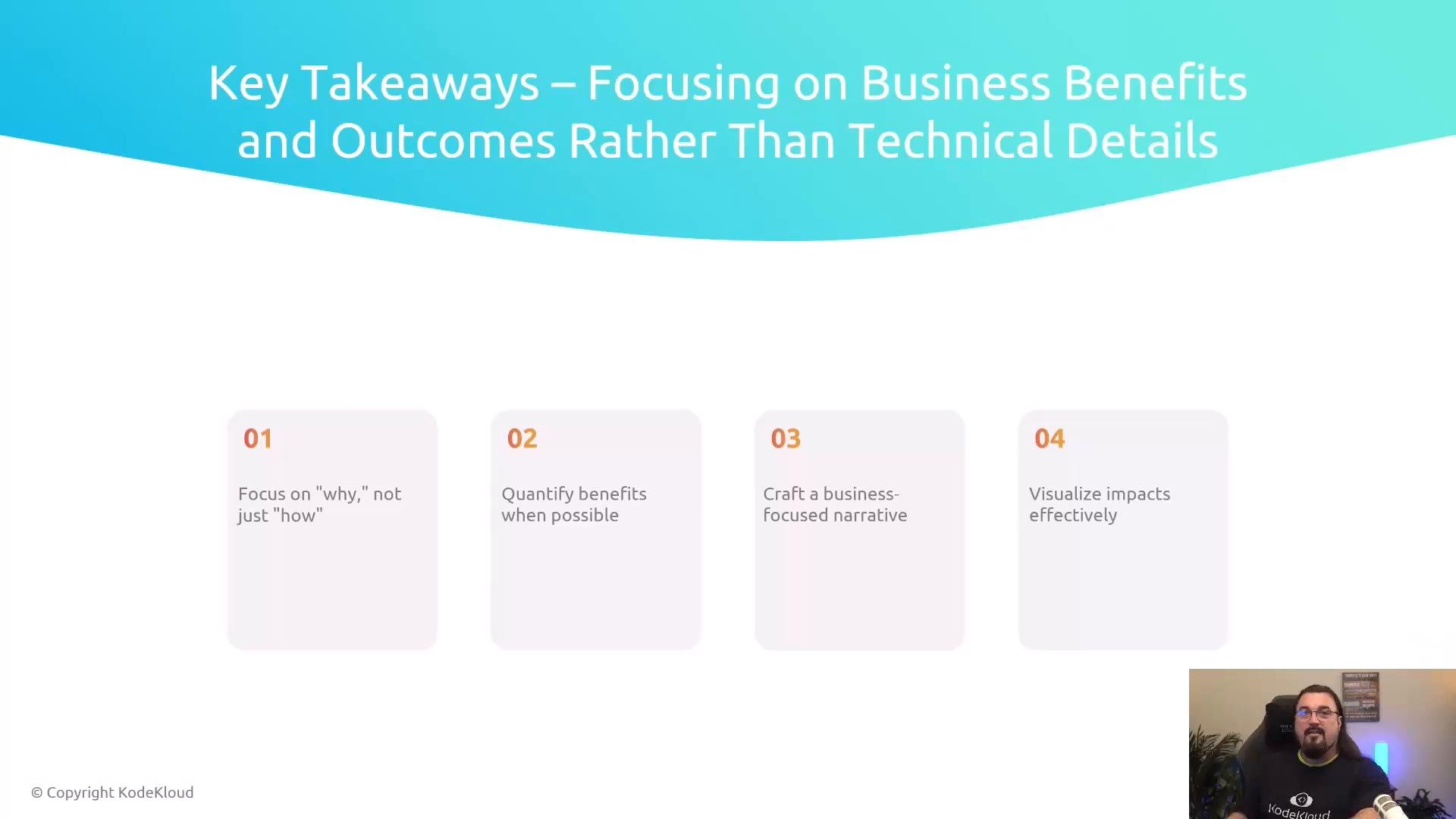 Use data, craft a concise business story, and visualize impact effectively. That’s how technical work becomes business value.
Thanks for reading.
This documentation is built and hosted on [Mintlify](https://mintlify.com), a developer documentation platform.