> ## Documentation Index
> Fetch the complete documentation index at: https://notes.kodekloud.com/llms.txt
> Use this file to discover all available pages before exploring further.
# Observation and Context
> This article discusses the importance of observation and context in enhancing communication within DevOps teams.
Welcome to this lesson on **Observation** and **Context**—two critical soft skills for DevOps professionals. Just as we monitor system metrics to detect anomalies, we can apply the same principles to human interactions: noticing patterns, identifying deviations, and adapting our approach to foster collaboration and prevent miscommunication.
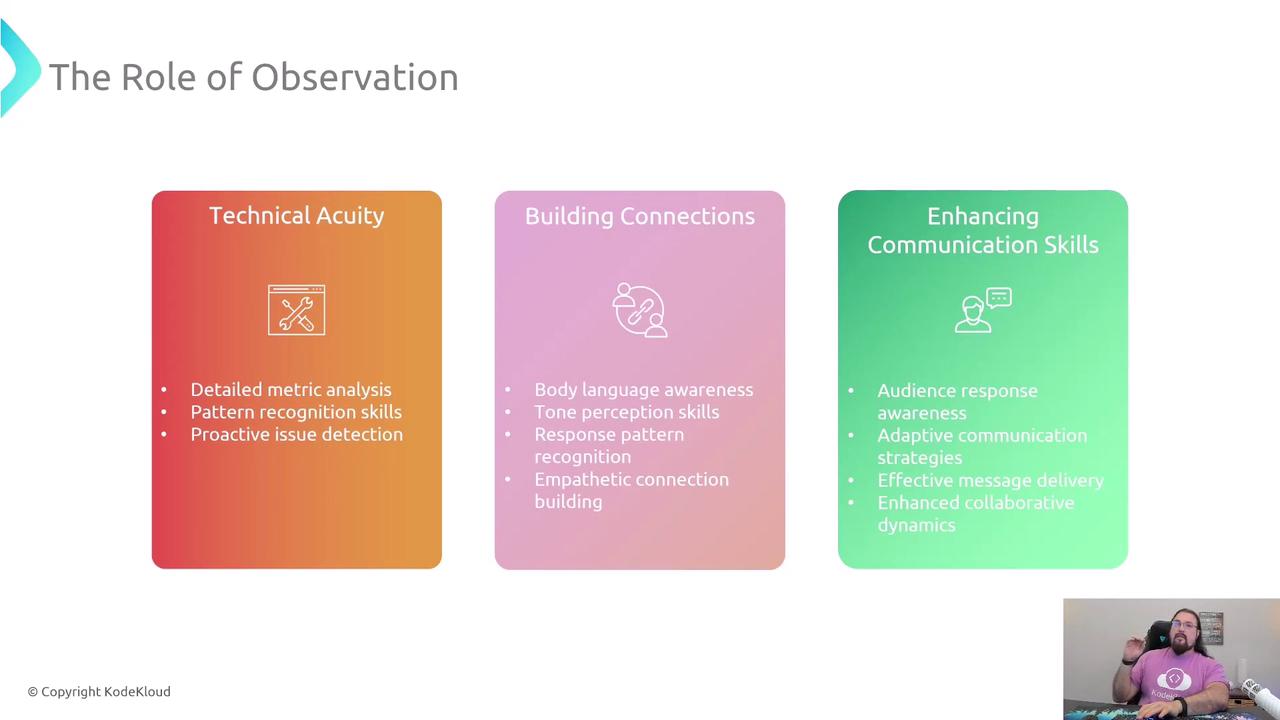
Observation goes beyond words—it’s about tuning into body language, tone, and micro-expressions. When you recognize typical team behavior, you can spot when someone is unusually quiet, overly enthusiastic, or disengaged. These cues often signal opportunities to connect or adjust your message.
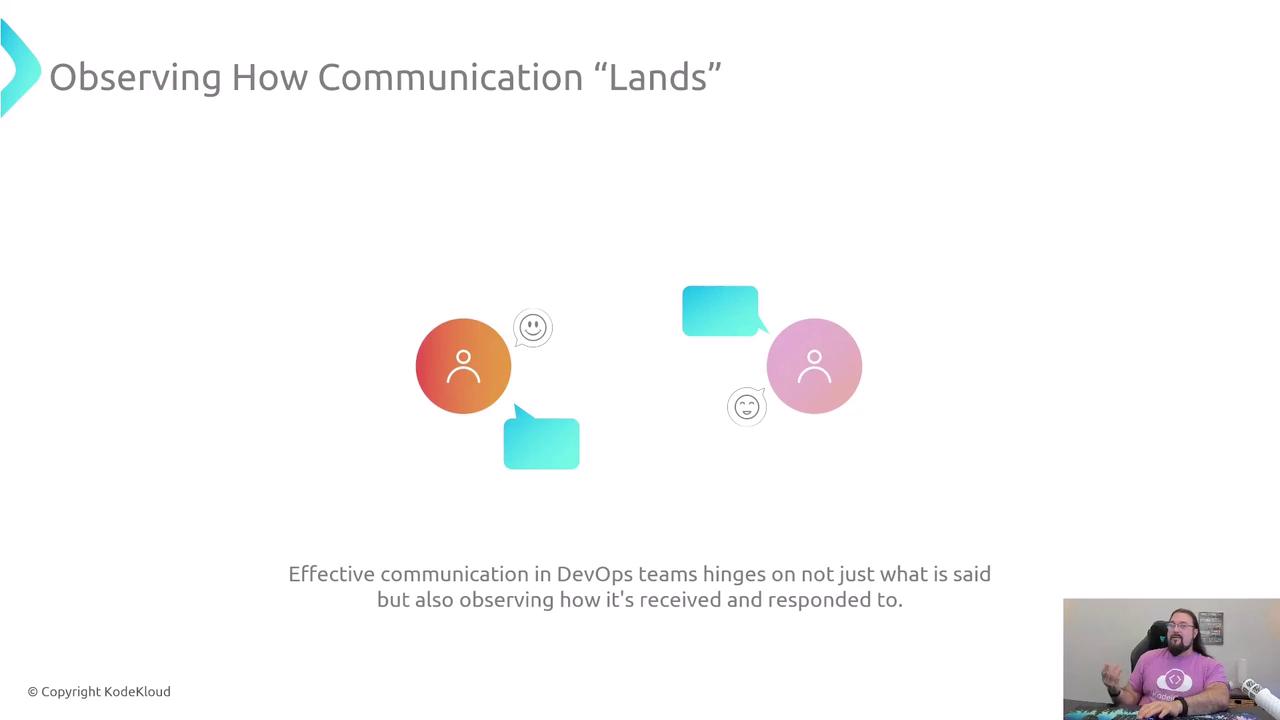
## Feedback Loop for Effective Communication
1. Observe: Note verbal and nonverbal signals.
2. Hypothesize: Interpret what those signals might indicate.
3. Experiment: Tweak your content, tone, or delivery.
4. Reflect: Assess the response and iterate.
Consistent observation helps tailor your communication. If a colleague often responds negatively to [AWS](https://aws.amazon.com) topics, try discussing general cloud concepts or a different provider to uncover their preferences.
## Contextual Factors: Cultural, Historical, Social & Environmental
Understanding context ensures your message lands as intended. The table below summarizes key context types:
| Context Type | Description | Impact on Communication |
| ------------- | ----------------------------------------------------------------------------------------------- | ------------------------------------------------------------- |
| Cultural | Norms around personal space, formality, and directness vary across regions and communities. | Adjust tone and phrasing to respect cultural expectations. |
| Historical | Past interactions—positive or challenging—shape current team dynamics. | Reference successful collaborations or address past friction. |
| Social | Presenting to peers differs from addressing leadership or cross-functional groups. | Choose appropriate level of detail and formality. |
| Environmental | Channel and setting (in-person, video call, email) influence how people interpret your message. | Opt for more personal channels for sensitive topics. |
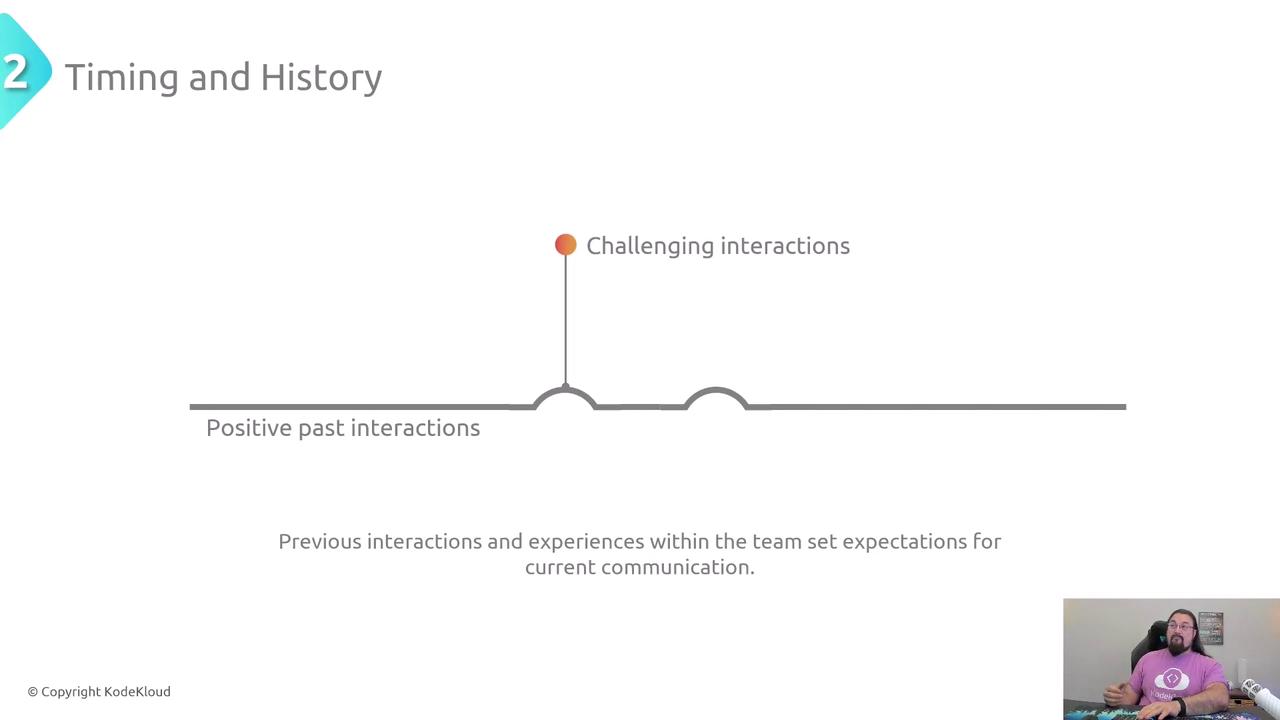
### Social vs. Environmental Context
* Social: Peers, leadership, cross-functional teams
* Environmental: Face-to-face, video conferences, chat, email
From virtual meetings with cameras off to hallway discussions, each setting offers different cues and expectations.
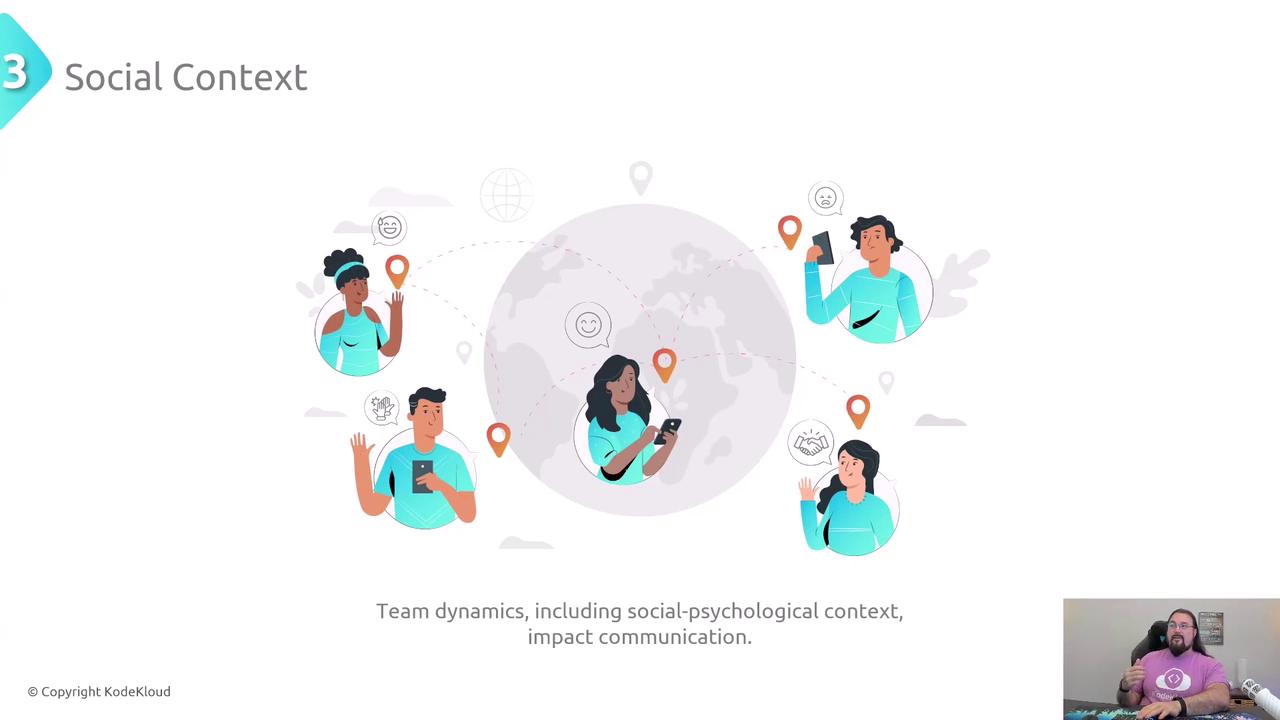
## Summary
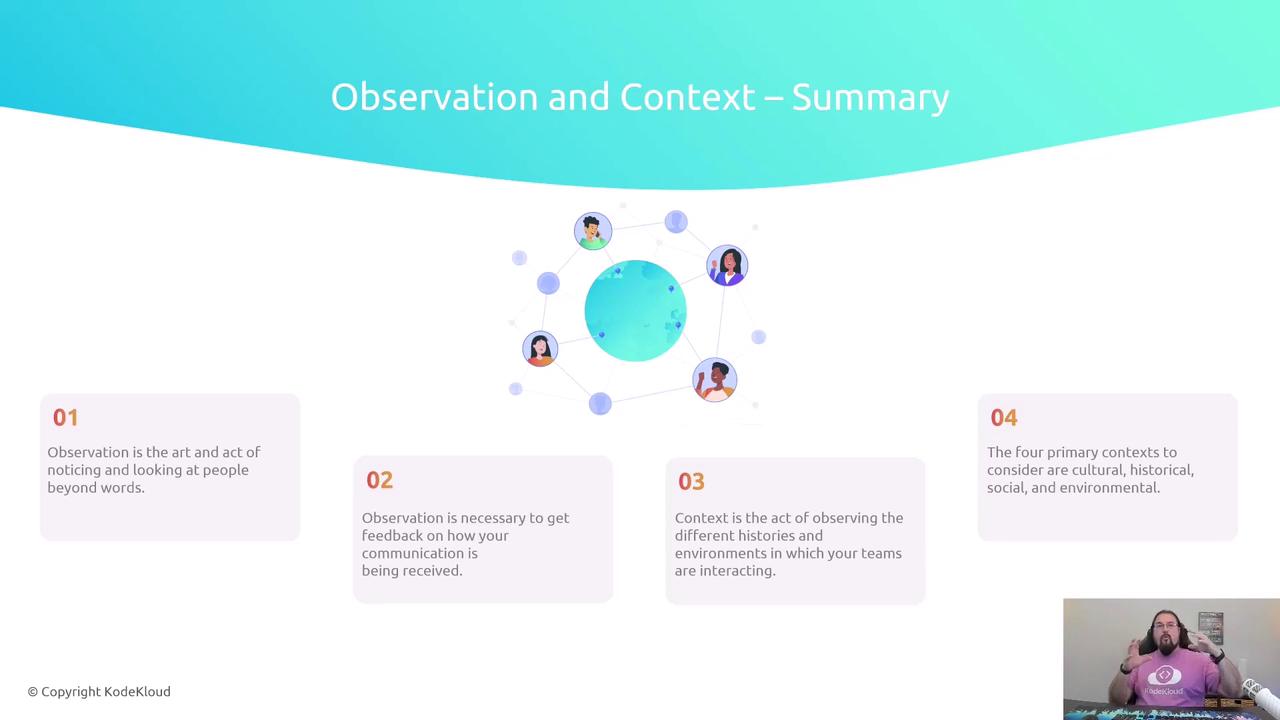
* Observation combines verbal and nonverbal awareness to gauge reactions.
* Context includes cultural, historical, social, and environmental factors shaping how messages are received.
* By applying a feedback loop and adapting to context, you’ll improve team collaboration and communication efficiency.
***
## Links and References
* [DevOps Collaboration Best Practices](https://www.atlassian.com/devops)
* [Effective Communication in Remote Teams](https://hbr.org/2020/04/a-guide-to-managing-your-newly-remote-workers)
* [AWS Documentation](https://aws.amazon.com/documentation/)