> ## Documentation Index
> Fetch the complete documentation index at: https://notes.kodekloud.com/llms.txt
> Use this file to discover all available pages before exploring further.
# Observation and Context
> Using observation and context to improve interpersonal communication and team alignment through curiosity, hypothesis testing, and adapting to cultural, social, and environmental factors.
Welcome, Soft Skills students.
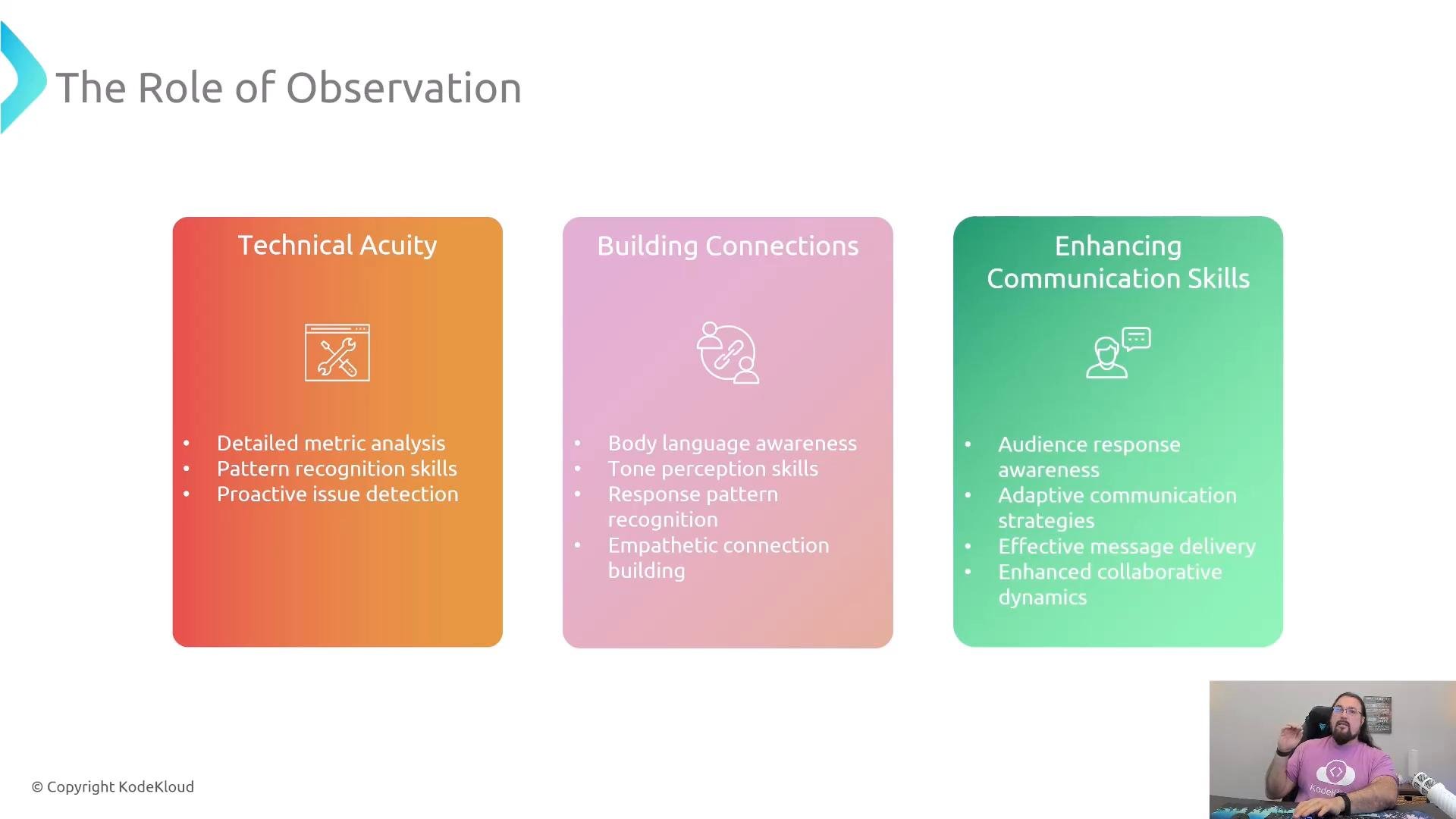
In this lesson we explore observation and context: why they matter, how they influence collaboration, and how to use them to align teams rather than create rivalry. Technical teams already rely on observation (metrics, patterns, anomalies) to guide decisions. The same disciplined approach applies to working with people: notice how someone speaks, gestures, and behaves; form hypotheses about why they respond that way; then iterate your communication to improve connection and alignment.
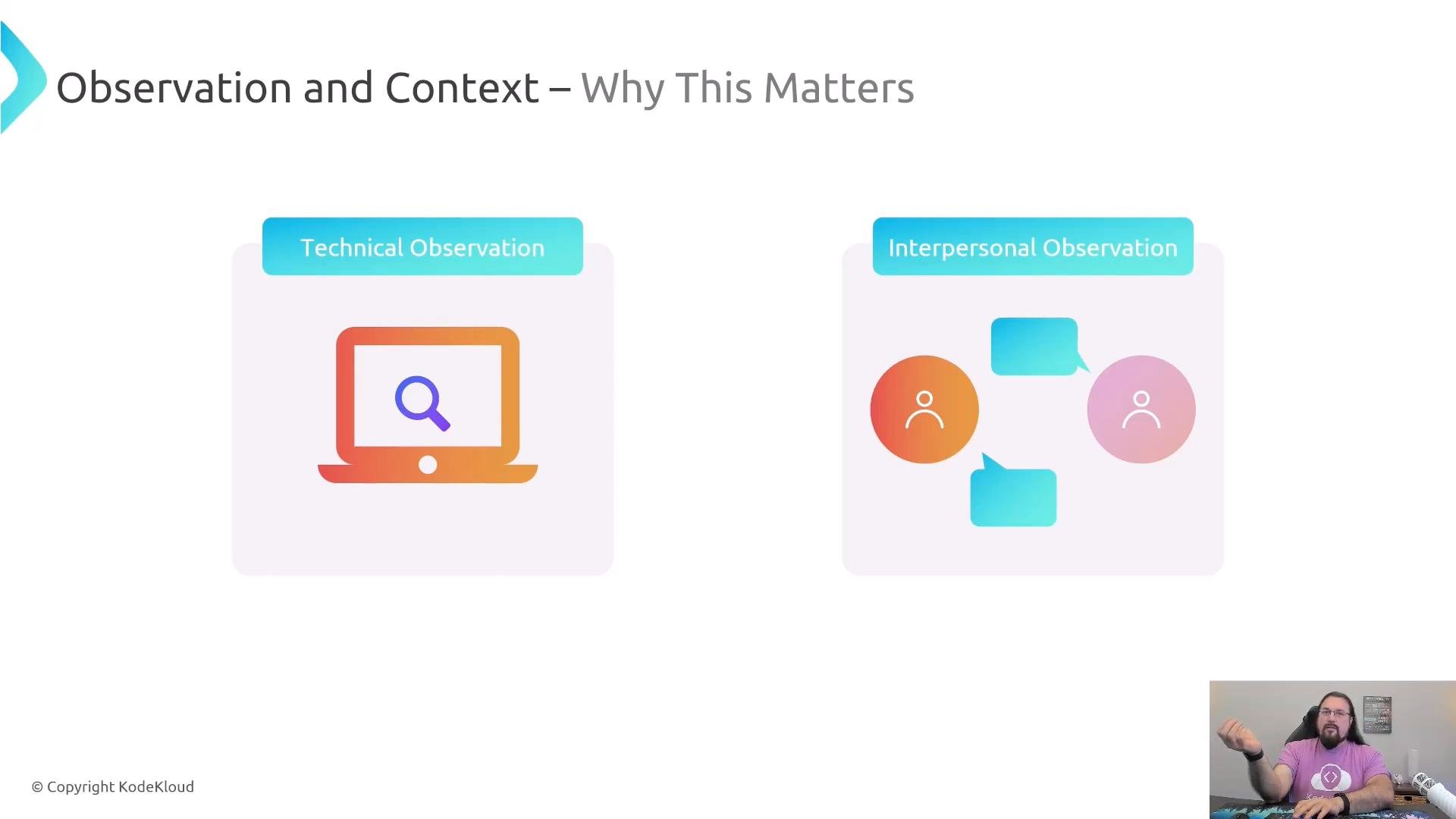 Observation for people follows the same cycle used in systems work: gather data, recognize patterns, and detect anomalies. You do not need exhaustive background on every colleague, but if you interact regularly, keep mental notes (or private, respectful records) about how they typically respond. When behavior departs from that pattern, treat it as a signal—this could point to a personal issue, a recent success, or a simple mismatch in communication style.
Start with curiosity and attention:
* Notice verbal cues (word choice, emphasis) and nonverbal cues (tone, posture, facial expression).
* Form lightweight hypotheses about why someone reacts as they do.
* Try small, low-cost experiments to test hypotheses and observe outcomes.
Observation for people follows the same cycle used in systems work: gather data, recognize patterns, and detect anomalies. You do not need exhaustive background on every colleague, but if you interact regularly, keep mental notes (or private, respectful records) about how they typically respond. When behavior departs from that pattern, treat it as a signal—this could point to a personal issue, a recent success, or a simple mismatch in communication style.
Start with curiosity and attention:
* Notice verbal cues (word choice, emphasis) and nonverbal cues (tone, posture, facial expression).
* Form lightweight hypotheses about why someone reacts as they do.
* Try small, low-cost experiments to test hypotheses and observe outcomes.
 Example scenario
* If five people in a meeting are enthusiastic about a proposal but one person is quiet or visibly disengaged, that single deviation is meaningful.
* Rather than assigning blame or assuming disinterest, observe and form a hypothesis (e.g., “They had a prior bad experience with this tech”), then test it by changing the framing, asking a direct but respectful question, or inviting their perspective.
Example scenario
* If five people in a meeting are enthusiastic about a proposal but one person is quiet or visibly disengaged, that single deviation is meaningful.
* Rather than assigning blame or assuming disinterest, observe and form a hypothesis (e.g., “They had a prior bad experience with this tech”), then test it by changing the framing, asking a direct but respectful question, or inviting their perspective.
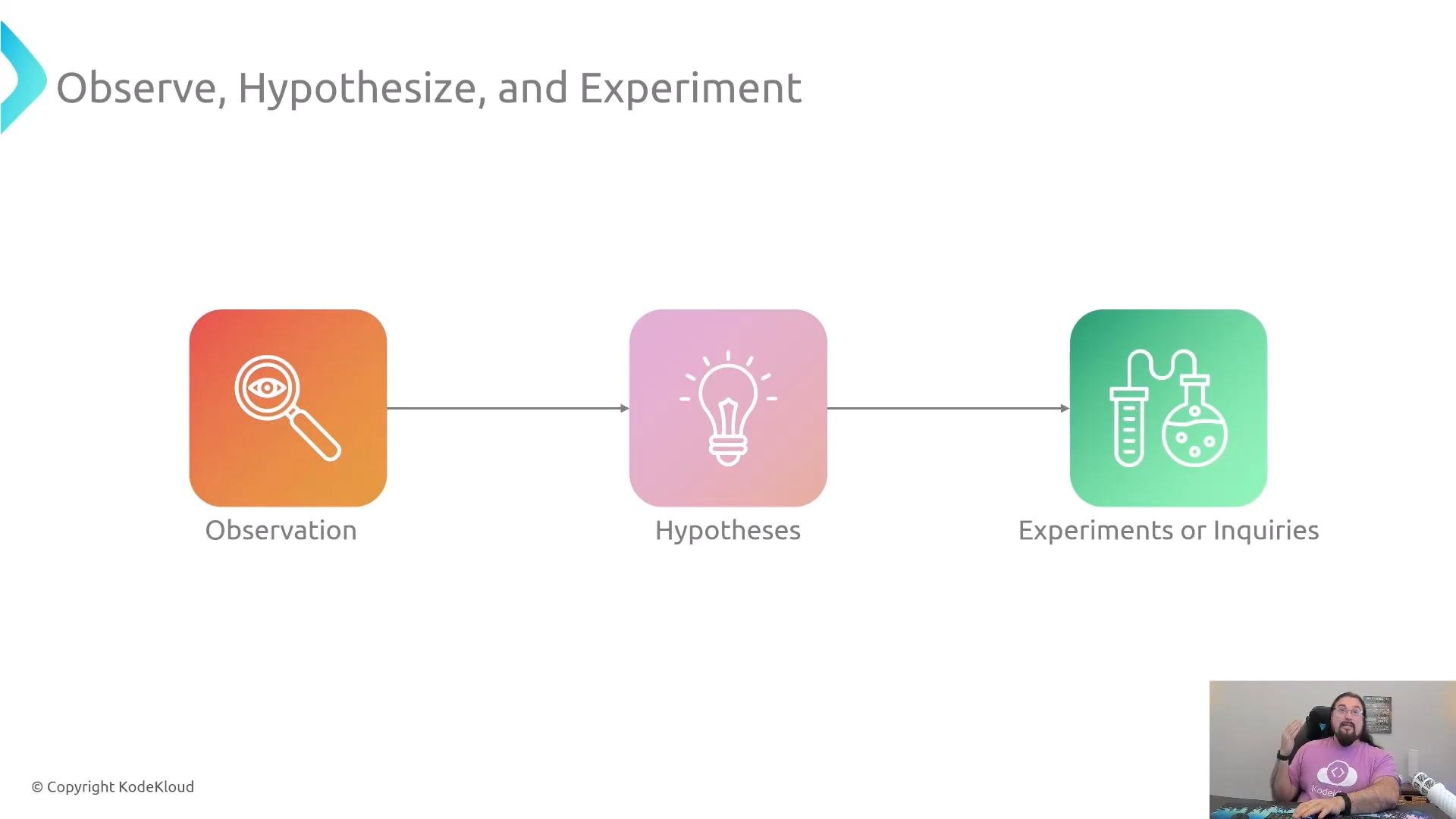 Start by observing, then form simple hypotheses and run low-cost experiments. This iterative approach reduces assumptions and increases alignment.
Why context matters
Context explains behavior. Culture, recent interactions, social dynamics, and the environment all influence how people communicate and receive information:
| Type of context | What it influences | Practical impact |
| - | - | - |
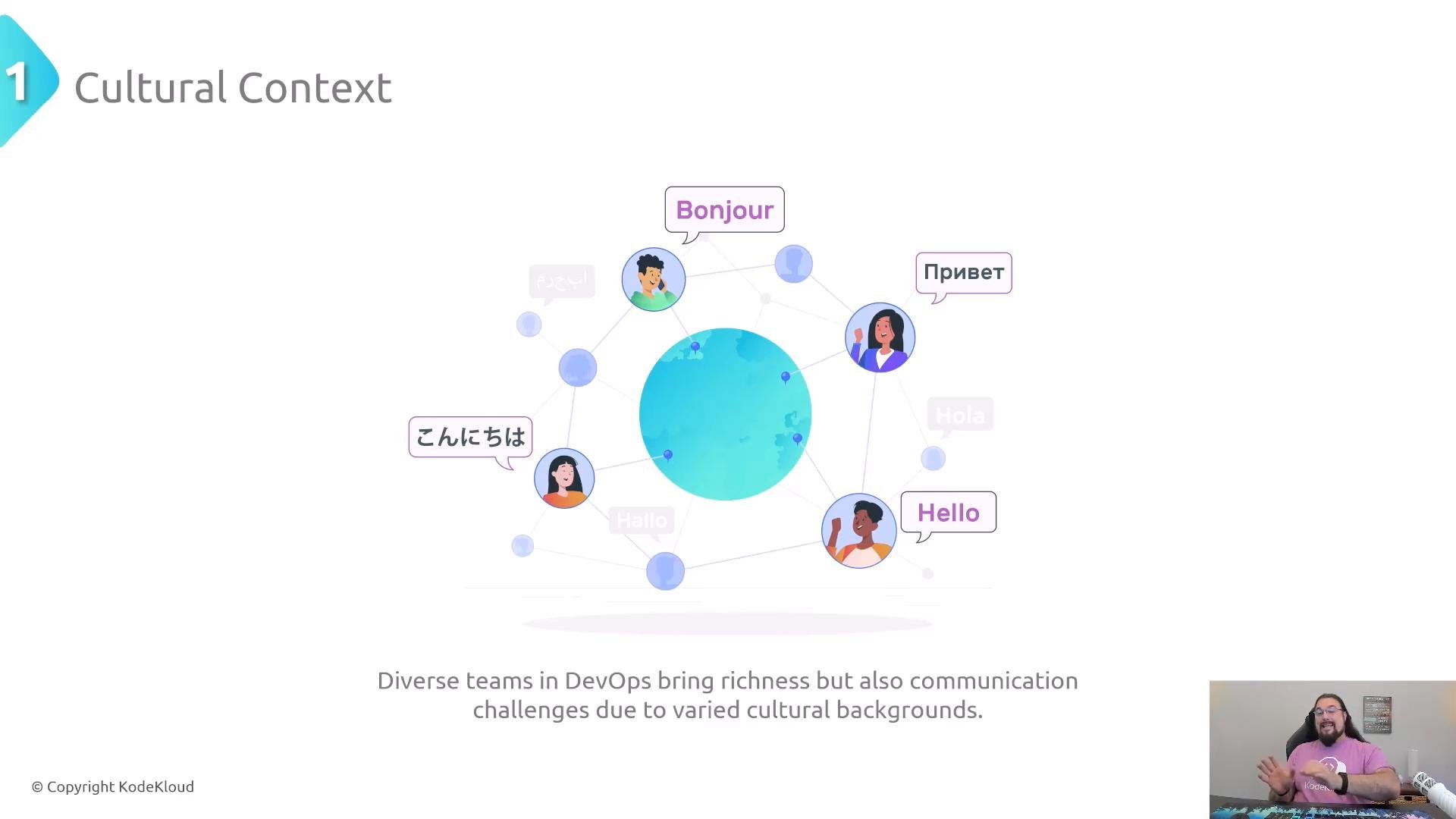
| Cultural context | Norms about directness, formality, and personal space | Adjust language, tone, and formality to fit cultural expectations |
| Recent history | Trust and receptivity based on prior interactions | Rebuild trust after challenging conversations; reference past positives |
| Social context | Behavior changes depending on who is present (boss, peers) | Choose the right forum to surface feedback or sensitive topics |
| Environmental context | Medium (email, chat, video, in-person), timing, and physical setting | Prefer synchronous channels for complex or sensitive discussions |
Start by observing, then form simple hypotheses and run low-cost experiments. This iterative approach reduces assumptions and increases alignment.
Why context matters
Context explains behavior. Culture, recent interactions, social dynamics, and the environment all influence how people communicate and receive information:
| Type of context | What it influences | Practical impact |
| - | - | - |
| Cultural context | Norms about directness, formality, and personal space | Adjust language, tone, and formality to fit cultural expectations |
| Recent history | Trust and receptivity based on prior interactions | Rebuild trust after challenging conversations; reference past positives |
| Social context | Behavior changes depending on who is present (boss, peers) | Choose the right forum to surface feedback or sensitive topics |
| Environmental context | Medium (email, chat, video, in-person), timing, and physical setting | Prefer synchronous channels for complex or sensitive discussions |
 If you encounter low receptivity:
* Do a bit of research on preferred communication styles (ask, don’t assume).
* Avoid stereotyping—focus on individual preferences.
* Consider recent interactions; a string of urgent asks or pushback can make someone guarded.
* Time sensitive or emotionally charged conversations for formats that enable immediate feedback (video call or in-person).
If you encounter low receptivity:
* Do a bit of research on preferred communication styles (ask, don’t assume).
* Avoid stereotyping—focus on individual preferences.
* Consider recent interactions; a string of urgent asks or pushback can make someone guarded.
* Time sensitive or emotionally charged conversations for formats that enable immediate feedback (video call or in-person).
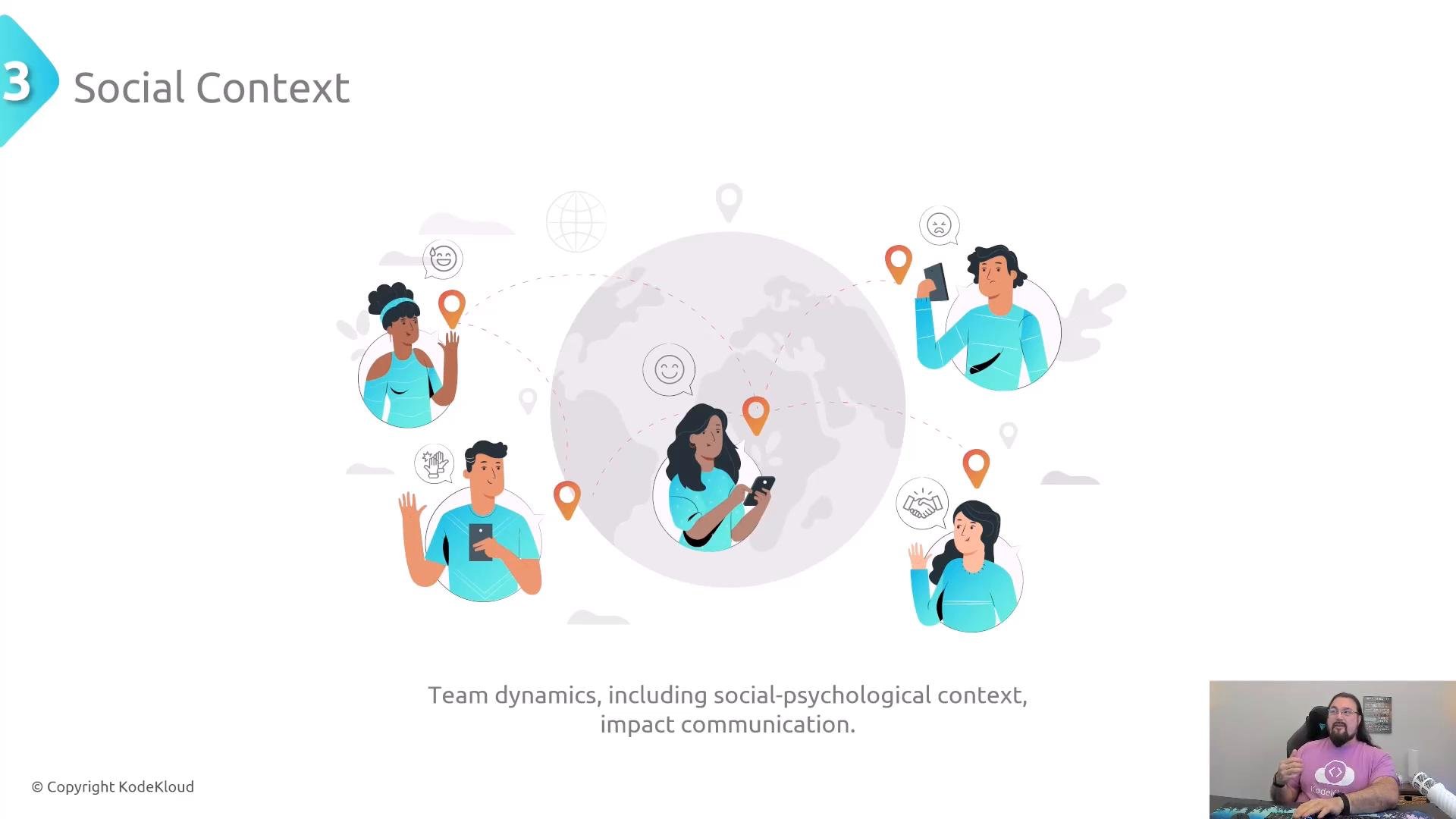 Environment matters
* Virtual meetings with cameras off reduce nonverbal data; rely more on tone, explicit check-ins, and written summaries.
* Sensitive or complex topics are usually better handled synchronously (call or in-person) where you can read responses and answer questions immediately.
* Use asynchronous channels (email, doc comments) for information that needs time to process or to create an auditable record.
Definitions you can use
* Observation: noticing beyond words — tone, posture, facial expressions, and behavioral patterns.
* Context: the combination of cultural norms, recent history, social dynamics, environment, and timing that explains why people behave the way they do.
Practical steps to apply today
1. Observe consistently: look for patterns and deviations across interactions.
2. Form simple, testable hypotheses: keep them short (e.g., “They prefer written updates”).
3. Run low-cost experiments: reframe the message, change the communication medium, or directly ask a clarifying question.
4. Reflect and iterate: track what works and adjust future approaches.
5. Respect privacy and dignity: don’t publicize sensitive observations; ask permission before probing personal reasons.
Environment matters
* Virtual meetings with cameras off reduce nonverbal data; rely more on tone, explicit check-ins, and written summaries.
* Sensitive or complex topics are usually better handled synchronously (call or in-person) where you can read responses and answer questions immediately.
* Use asynchronous channels (email, doc comments) for information that needs time to process or to create an auditable record.
Definitions you can use
* Observation: noticing beyond words — tone, posture, facial expressions, and behavioral patterns.
* Context: the combination of cultural norms, recent history, social dynamics, environment, and timing that explains why people behave the way they do.
Practical steps to apply today
1. Observe consistently: look for patterns and deviations across interactions.
2. Form simple, testable hypotheses: keep them short (e.g., “They prefer written updates”).
3. Run low-cost experiments: reframe the message, change the communication medium, or directly ask a clarifying question.
4. Reflect and iterate: track what works and adjust future approaches.
5. Respect privacy and dignity: don’t publicize sensitive observations; ask permission before probing personal reasons.
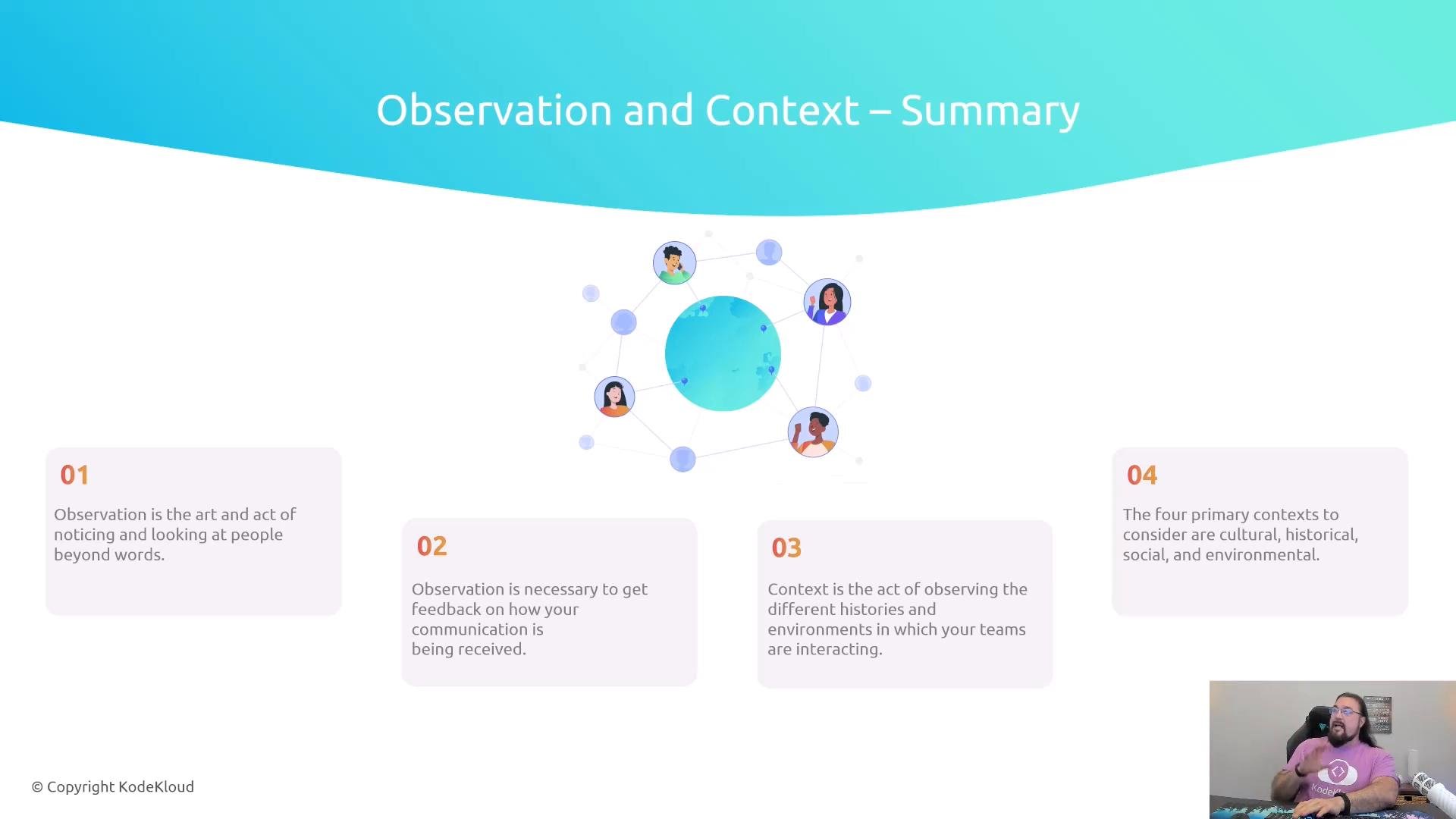 By combining deliberate observation with thoughtful contextualization, you’ll improve how your messages land, increase collaboration, and help align teams more effectively.
Links and references
* [Active Listening — Wikipedia](https://en.wikipedia.org/wiki/Active_listening)
* [Nonverbal Communication — Verywell Mind](https://www.verywellmind.com/nonverbal-communication-2795392)
* [Cultural Communication Styles — Harvard Business Review](https://hbr.org/2003/05/when-culture-doesnt-translate)
This documentation is built and hosted on [Mintlify](https://mintlify.com), a developer documentation platform.
By combining deliberate observation with thoughtful contextualization, you’ll improve how your messages land, increase collaboration, and help align teams more effectively.
Links and references
* [Active Listening — Wikipedia](https://en.wikipedia.org/wiki/Active_listening)
* [Nonverbal Communication — Verywell Mind](https://www.verywellmind.com/nonverbal-communication-2795392)
* [Cultural Communication Styles — Harvard Business Review](https://hbr.org/2003/05/when-culture-doesnt-translate)
This documentation is built and hosted on [Mintlify](https://mintlify.com), a developer documentation platform.