> ## Documentation Index
> Fetch the complete documentation index at: https://notes.kodekloud.com/llms.txt
> Use this file to discover all available pages before exploring further.
# What you say vs What you do
> Effective communication and decisive action are essential for leadership, fostering trust, credibility, and measurable results within teams.
Effective communication paired with decisive action is the bedrock of leadership and high-performing teams. In this lesson, we’ll explore how aligning your words with your deeds builds trust, credibility, and measurable results—from individual contributors to executives.
Consistency between what you say and what you do accelerates team cohesion and drives organizational success.
***
## 1. Real-World Scenario: The Procrastinating Manager
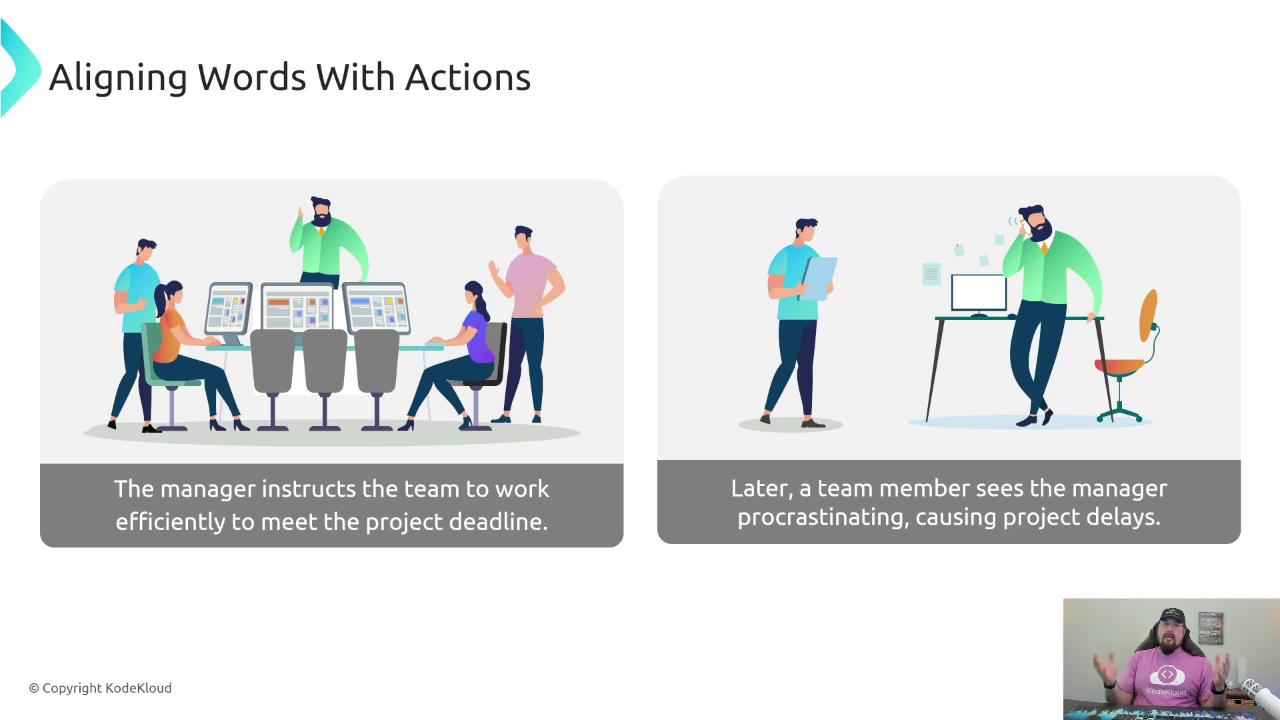
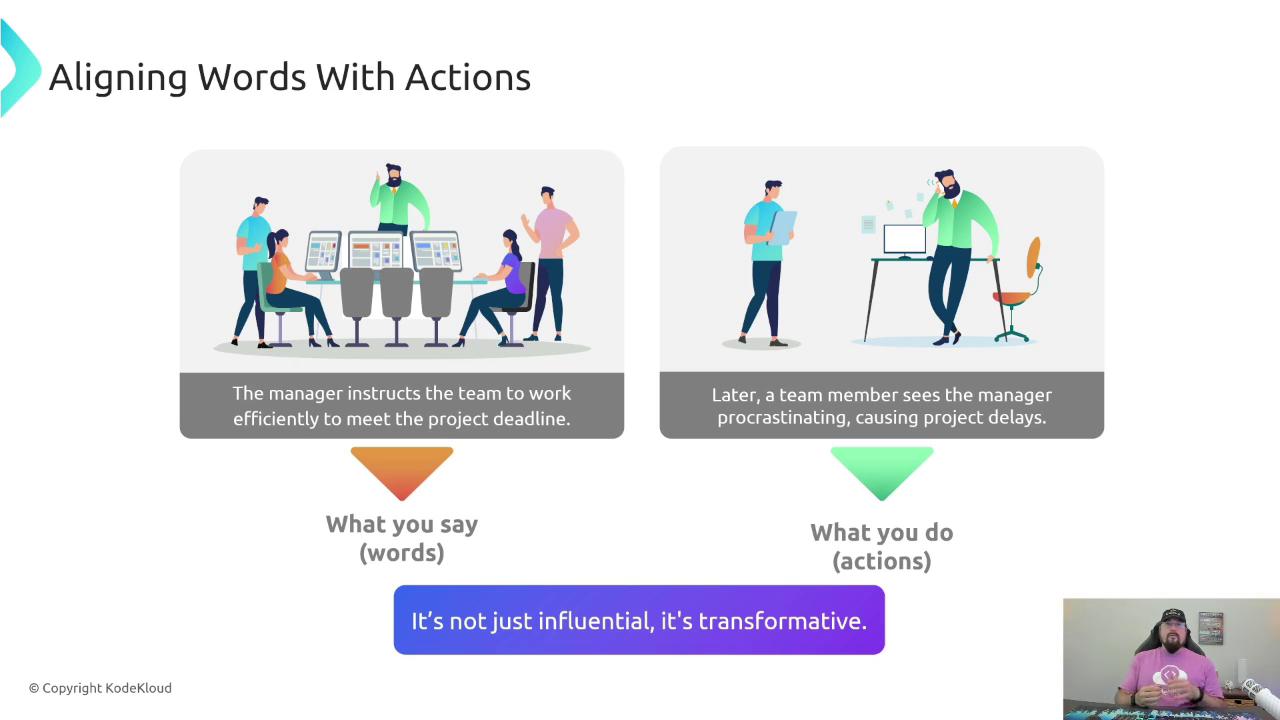
Imagine you coach your team:
> “We need to work more efficiently to meet our project deadline. Stay focused and let me know about any distractions.”
Later, a team member spots you scrolling through TikTok instead of collaborating on the project. This disconnect undermines your authority and sows doubt.
If you need to step away—say, to meet a commissioner on the golf course—announce it:
> “I’m heading to that meeting now. I’ll remain reachable for any urgent issues.”
Without transparency, you appear to value personal time over team goals. Likewise, if you advocate for automation, avoid manual workarounds unless you explain why.
Failing to communicate absences or process changes can erode your team’s trust and productivity.
***
## 2. Leaders vs. Doers: Shaping Strategy
As you advance into leadership roles, your focus shifts from hands-on tasks—like spinning up Kubernetes clusters—to defining strategy and enabling your team’s success.
Whether it’s a CI/CD pipeline or a complete automation roadmap, set realistic deadlines and communicate risks up front. If you promise delivery in three days, either meet it or renegotiate. Never leave your stakeholders guessing.
***
## 3. Actions Require Communication
Building a “pizza”—be it infrastructure, pipeline, chart, or document—without informing stakeholders can lead to confusion or outright rejection.
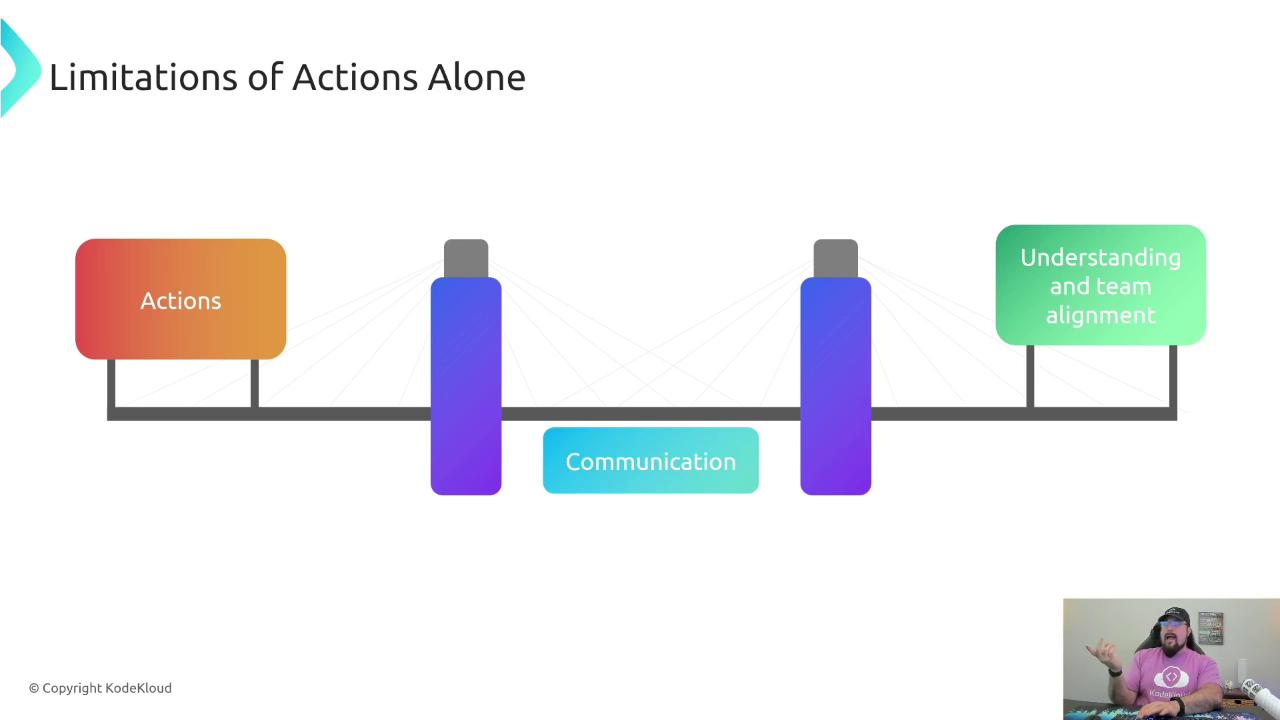
| Element | What It Means | Impact |
| ------------- | -------------------------------------------------- | ------------------------------------------------ |
| Actions | Technical deliverables (clusters, scripts, charts) | Alone may feel disconnected from team objectives |
| Communication | Sharing goals, progress, blockers | Ensures alignment and collective ownership |
| Understanding | Team awareness of context and expectations | Drives acceptance and leverages feedback loops |
For instance, a DevOps engineer covertly prepared marketing materials to move teams. The lack of clarity sparked frustration:
> “Why haven’t you completed the deployment? Why are you prepping a webinar?”
Reassigning roles fixed the workflow but temporarily strained trust.
***
## 4. Building Trust Through Consistency
Trust emerges when your words, actions, and outcomes form a reliable pattern.
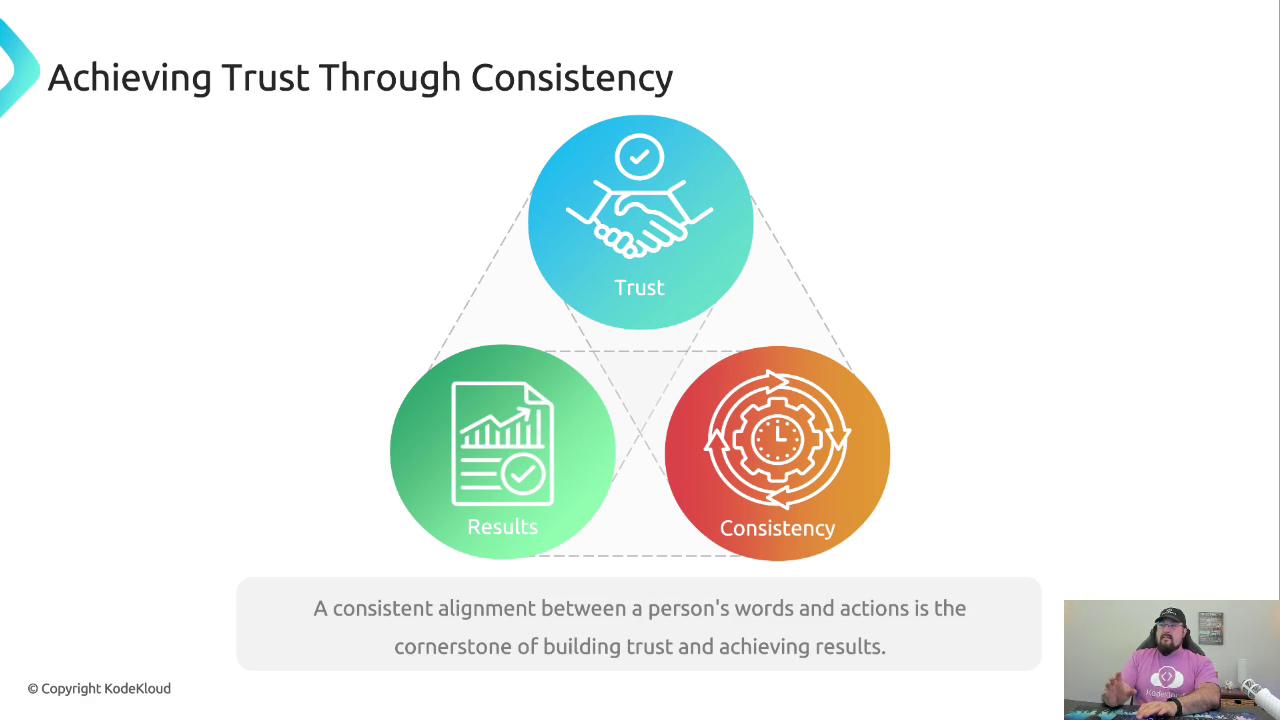
* **Consistency**: Deliver on promises—big or small.
* **Results**: Align deliverables with team objectives and values.
* **Trust**: Grows when teams see reliable follow-through.
Surprise features can delight only if they solve known pain points. Unannounced deviations risk breaking commitments and damaging credibility.
***
## 5. Summary: Balancing Words and Actions
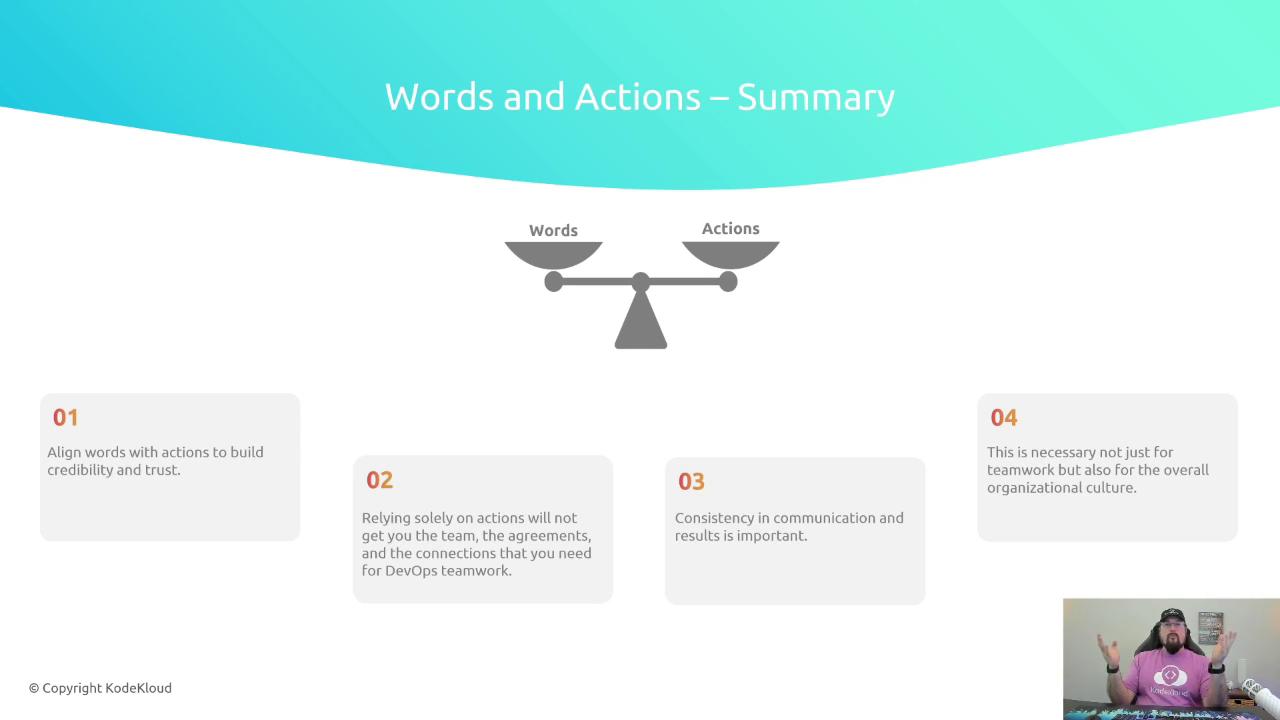
1. Align your words and actions to build and maintain trust.
2. Communicate before, during, and after your work.
3. Deliver outcomes that match team objectives and expectations.
4. Make consistency the cornerstone of your organizational culture.
Integrate these principles into your daily routine to foster a high-trust, high-performing environment.
***
## Links and References
* [Effective Communication in DevOps](https://www.atlassian.com/devops/communication)
* [Building Trust Within Teams](https://hbr.org/2017/08/the-neuroscience-of-trust)
* [Kubernetes Documentation](https://kubernetes.io/docs/)
* [CI/CD Best Practices](https://docs.gitlab.com/ee/ci/)