> ## Documentation Index
> Fetch the complete documentation index at: https://notes.kodekloud.com/llms.txt
> Use this file to discover all available pages before exploring further.
# Best Practices for Writing Secure WASM Code
> This article discusses best practices for securing WebAssembly code by leveraging built-in protections and adopting safe coding techniques.
In previous lessons, we explored how to compile code to WebAssembly using toolchains like [Emscripten](https://emscripten.org), [WASM-Pack](https://rustwasm.github.io/wasm-pack/), and [AssemblyScript](https://www.assemblyscript.org/). We also examined common pitfalls, performance optimizations, and debugging techniques. Now, it’s time to focus on security—leveraging WASM’s built-in protections and adopting coding practices to harden your modules against threats.
***
## WebAssembly Security Features
Below is a quick overview of core WASM protections enforced by modern browsers:
| Feature | Description | Browser Enforced |
| ---------------------------- | ----------------------------------------------------------------------------------------- | ------------------------------------------------------------------------------------------ |
| Sandbox & File System Limits | Modules run in a restricted environment with no direct access to the host file system. | Yes |
| Same-Origin Policy | Prevents cross-origin requests unless explicitly permitted by CORS or other headers. | Yes ([MDN Docs](https://developer.mozilla.org/en-US/docs/Web/Security/Same-origin_policy)) |
| Linear Memory Model | Each module has a contiguous memory block; out-of-bounds access is trapped automatically. | Yes ([MDN Docs](https://developer.mozilla.org/en-US/docs/WebAssembly/Memory)) |
| Digital Signatures | Optional code signing enables integrity checks before execution. | Depends on runtime |
### Sandbox & File System Restrictions
WASM modules cannot read or write host files directly:
```javascript theme={null}
// This will throw an error in the browser or runtime
const data = Deno.readFileSync('/etc/passwd');
```
The sandbox ensures your local files remain off-limits.
### Same-Origin Policy Enforcement
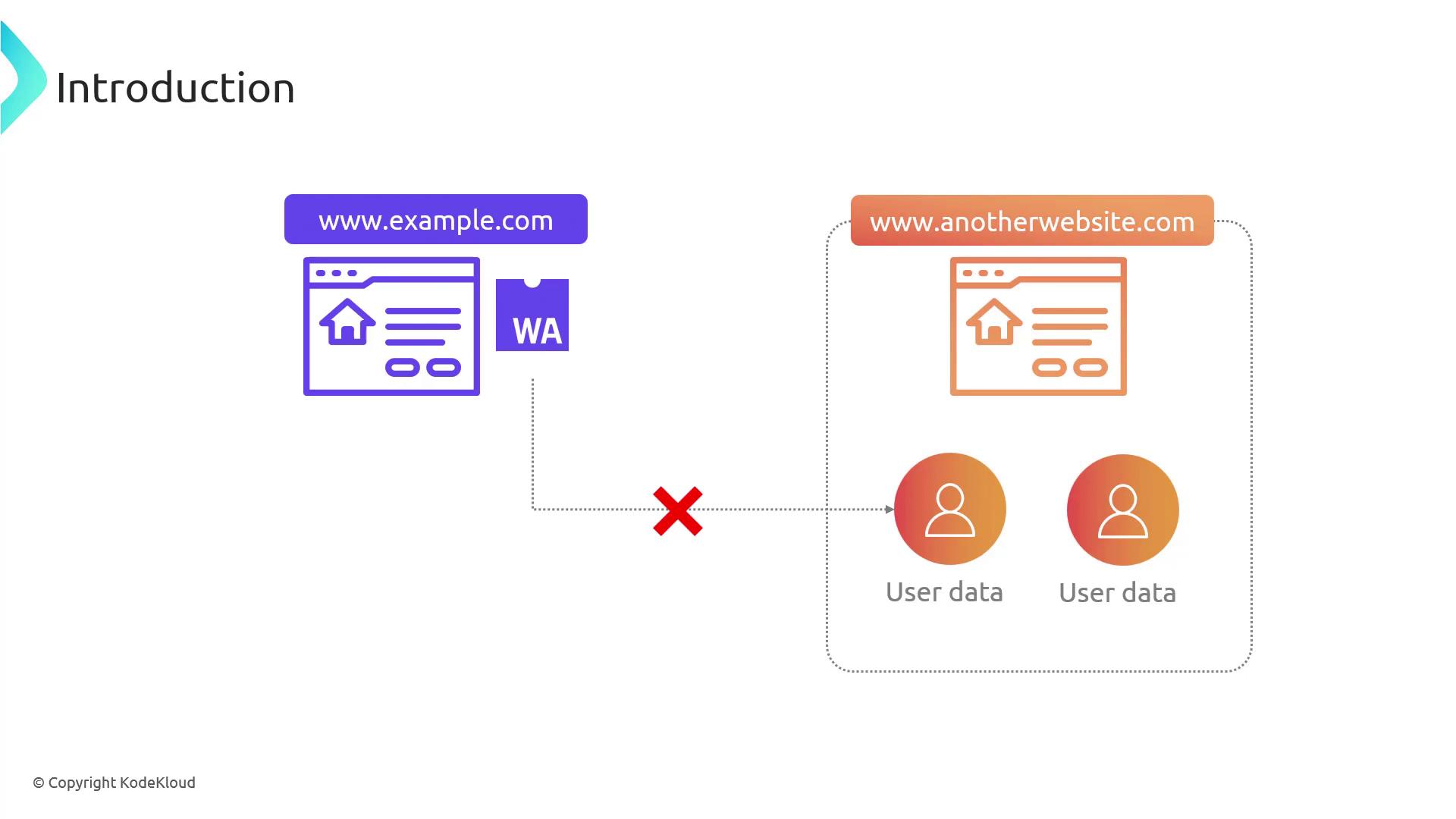
A WASM module loaded from `example.com` cannot fetch data from `anotherwebsite.com` without proper CORS headers. This prevents unauthorized cross-site data leaks.
### Linear Memory Model
WebAssembly’s memory is a single, contiguous array of bytes. Any attempt to access outside its allocated bounds is immediately trapped, mitigating buffer overflow exploits:
```javascript theme={null}
const buffer = new ArrayBuffer(16);
const view = new Uint8Array(buffer);
view[20] = 0xFF; // RangeError: Offset is outside the bounds of the DataView
```
### Digital Signatures
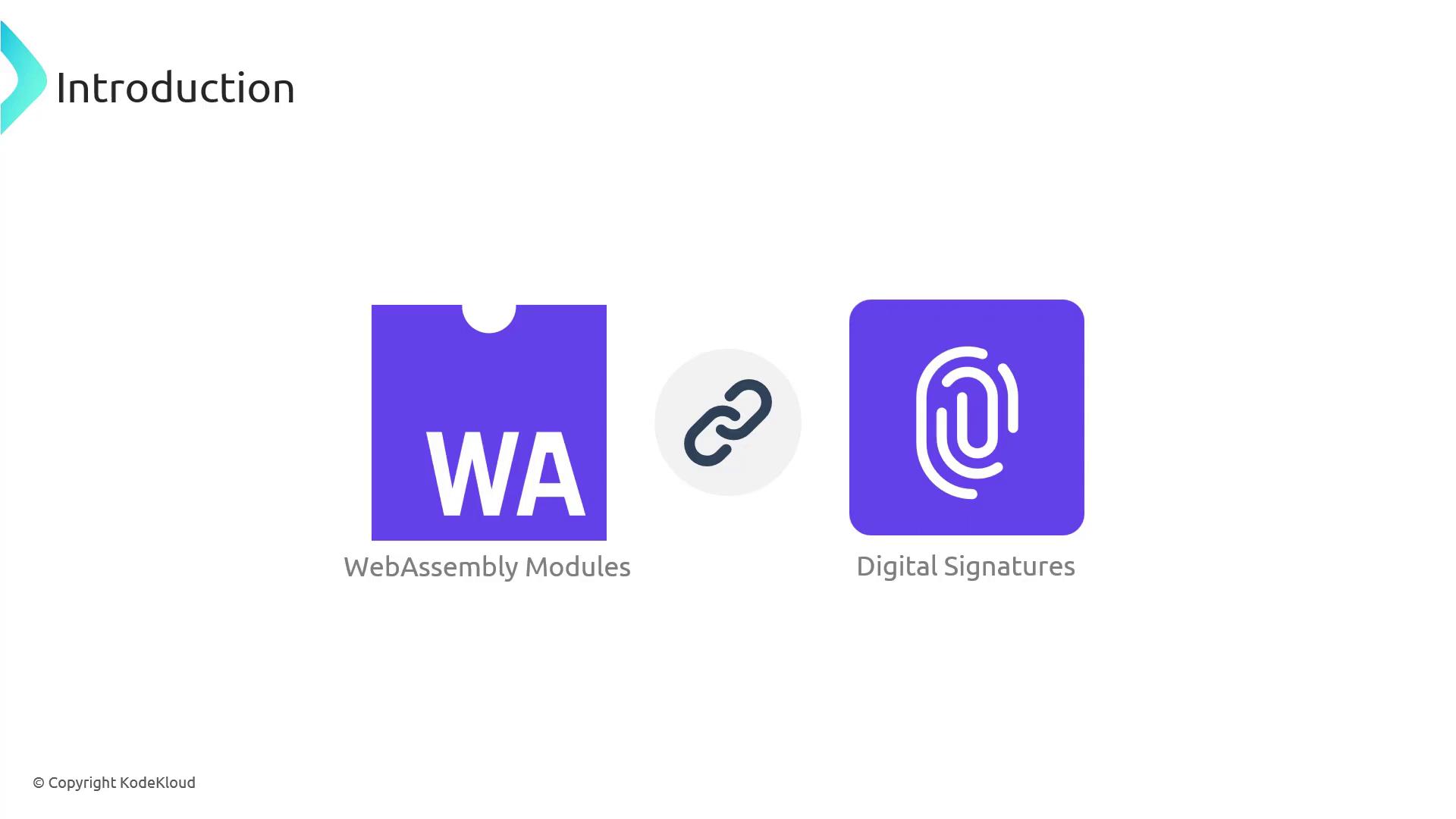
To guarantee integrity, sign your `.wasm` artifacts and verify them at load time. A mismatched signature stops execution:
***
## Best Practices for Secure WASM Coding
Beyond inherent sandboxing, follow these guidelines to further strengthen your modules:
### 1. Validate Inputs
Ensure every external input adheres to expected types and ranges:
```javascript theme={null}
function sum(a, b) {
if (typeof a !== 'number' || typeof b !== 'number') {
throw new Error('Invalid input: numbers required');
}
return a + b;
}
```
Invalid or unchecked inputs often lead to overflows or unexpected behavior. Always validate early and fail fast.
### 2. Safe Memory Management
When allocating and manipulating memory, explicitly check boundaries and free resources when finished:
```javascript theme={null}
// Allocate 64 bytes and write a 32-bit integer
const memory = new ArrayBuffer(64);
const dv = new DataView(memory);
dv.setInt32(0, 12345, true);
```
### 3. Constant-Time Operations
Avoid leaking sensitive data via timing variations:
```javascript theme={null}
function secureCompare(a, b) {
let diff = a.length ^ b.length;
for (let i = 0; i < a.length && i < b.length; i++) {
diff |= a.charCodeAt(i) ^ b.charCodeAt(i);
}
return diff === 0;
}
```
### 4. Use Typed Arrays
Typed arrays enforce strict data layouts and reduce overflow risks:
```javascript theme={null}
const intBuffer = new Int32Array(8);
intBuffer[0] = 256;
```
### 5. Restrict Imports
Only import required functions from vetted, trusted modules:
```wat theme={null}
;; trusted_math.wat
(module
(func $add (param i32 i32) (result i32)
local.get 0
local.get 1
i32.add
)
(export "add" (func $add))
)
;; main.wat
(module
(import "trusted_math" "add" (func $add (param i32 i32) (result i32)))
(func (export "computeSum") (param i32 i32) (result i32)
(call $add (local.get 0) (local.get 1))
)
)
```
### 6. Avoid Direct System Calls
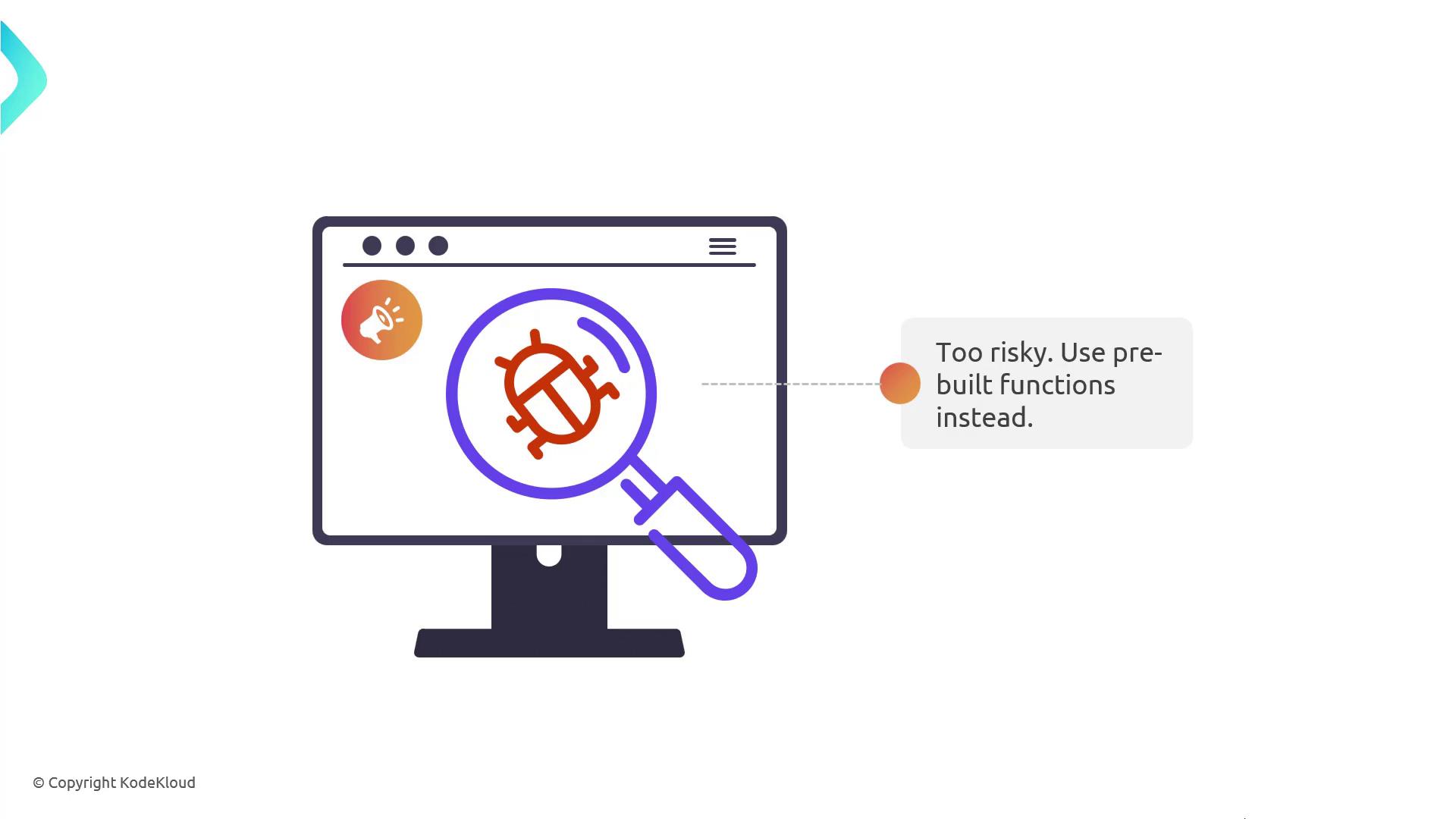
Leverage mature libraries instead of crafting raw OS interfaces.
Direct syscalls can introduce subtle memory and permission bugs. Prefer high-quality, well-audited libraries.
### 7. Mark Unverified Code
Label modules or functions that require additional review:
```wat theme={null}
(module
;; TODO: Security audit required for this function
(func $potentiallyUnsafe (param i32) (result i32)
local.get 0
i32.const 0
i32.add
)
;; Reviewed and approved
(func $safeFunction (param i32) (result i32)
i32.const 42
)
)
```
***
## Conclusion
By combining WebAssembly’s sandbox, linear memory model, same-origin enforcement, and optional digital signatures with disciplined coding practices—such as input validation, boundary checks, and restricted imports—you can deliver high-performance WASM modules that stand up to real-world threats.
***
## Links and References
* [WebAssembly Documentation (MDN)](https://developer.mozilla.org/en-US/docs/WebAssembly)
* [Emscripten](https://emscripten.org)
* [WASM-Pack](https://rustwasm.github.io/wasm-pack/)
* [AssemblyScript](https://www.assemblyscript.org/)
* [Same-Origin Policy](https://developer.mozilla.org/en-US/docs/Web/Security/Same-origin_policy)
* [WebAssembly Memory](https://developer.mozilla.org/en-US/docs/WebAssembly/Memory)