> ## Documentation Index
> Fetch the complete documentation index at: https://notes.kodekloud.com/llms.txt
> Use this file to discover all available pages before exploring further.
# Introduction to Cloud Native WASM
> This article discusses the integration of WebAssembly with cloud-native applications to enhance performance, security, and scalability across various infrastructures.
Cloud-native applications are like beachfront homes: designed to endure shifting sands, high tides, and relentless sun. They automatically scale on demand, recover from failures, and adapt to traffic spikes. WebAssembly (WASM) complements this model with near-native performance, strict sandboxing, and cross-platform portability.
By merging WASM with cloud-native design, you get fast-starting services, minimal attack surfaces, and seamless deployments across any infrastructure.
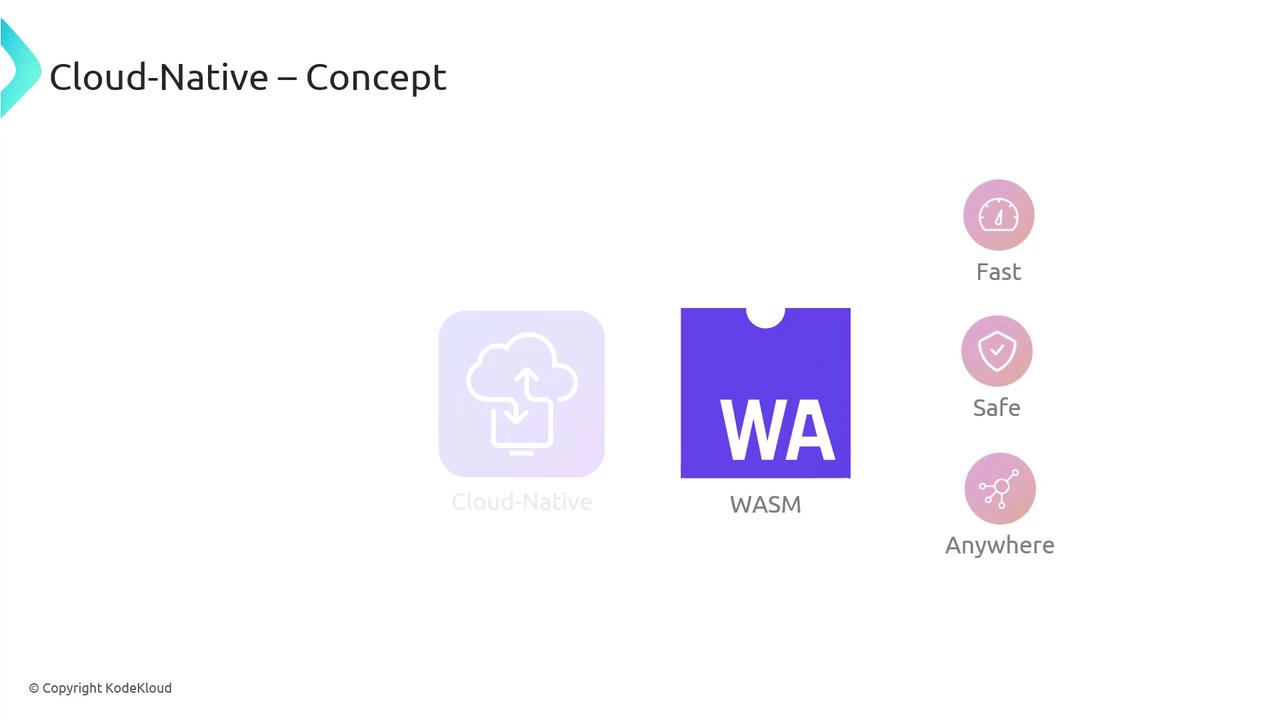
When you deploy WASM modules alongside containers and serverless functions, your applications handle peak traffic, self-heal from faults, and deliver ultra-low latency to users—no matter where they are.
## Bytecode Alliance and Standalone Runtimes
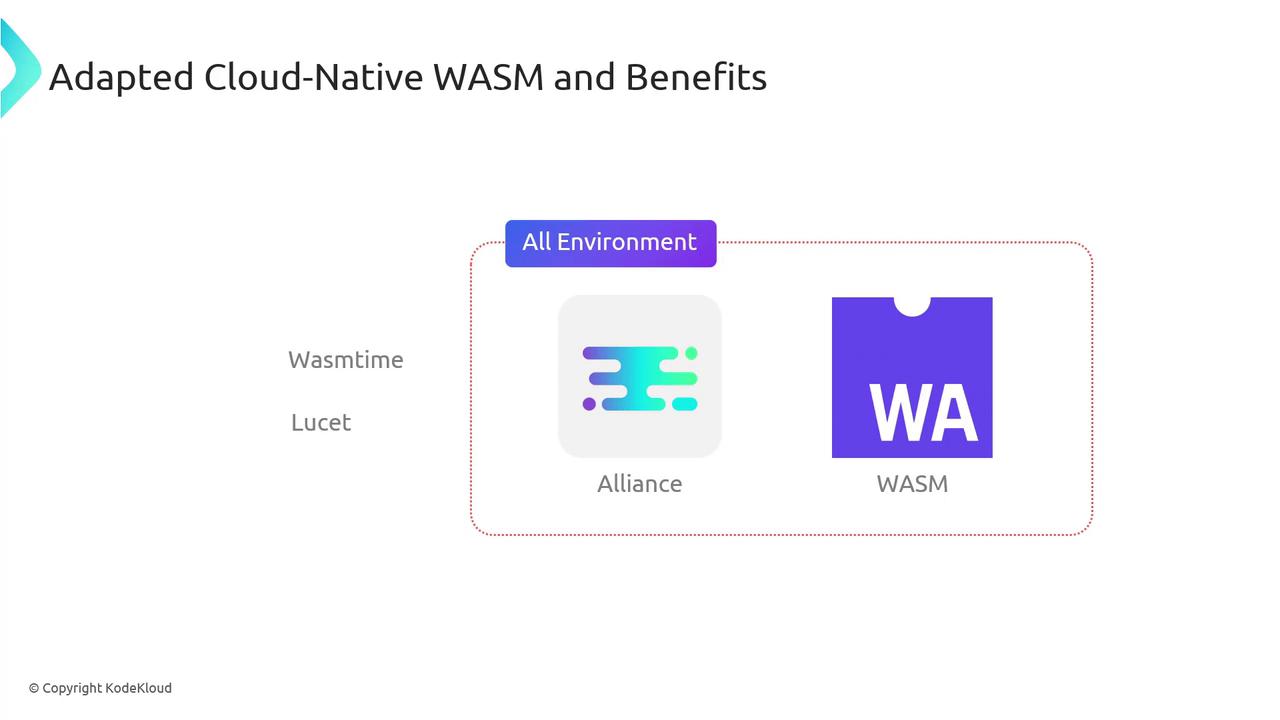
The [Bytecode Alliance](https://bytecodealliance.org/) unites industry leaders like Mozilla, Fastly, Intel, and Red Hat to standardize secure WASM runtimes outside the browser. Two flagship projects include:
| Runtime | Compiler Type | Description |
| ------------ | ------------- | ----------------------------------------------------------------- |
| **Wasmtime** | JIT | Production-grade WASM runtime with fast dynamic compilation. |
| **Lucet** | AOT | Ahead-of-time compiler for instant startup and minimal footprint. |
Both Wasmtime and Lucet target cloud scenarios—from microservices to edge functions—offering predictable performance and strict isolation.
## Edge Compute and Kubernetes Integration
**Fastly Compute\@Edge** leverages WASM to run JavaScript, Rust, or C++ workloads at edge locations worldwide—shrinking response times and offloading origins. Meanwhile, **Krustlet** brings WASM to Kubernetes: it acts as a Kubelet replacement so you can schedule WASM modules (`.wasm` images) alongside containers.
* Compute\@Edge: Ultra-low latency at edge POPs
* Krustlet: Run WASM pods through native Kubernetes APIs
## Core Pillars of Cloud-Native Architecture and WASM’s Role
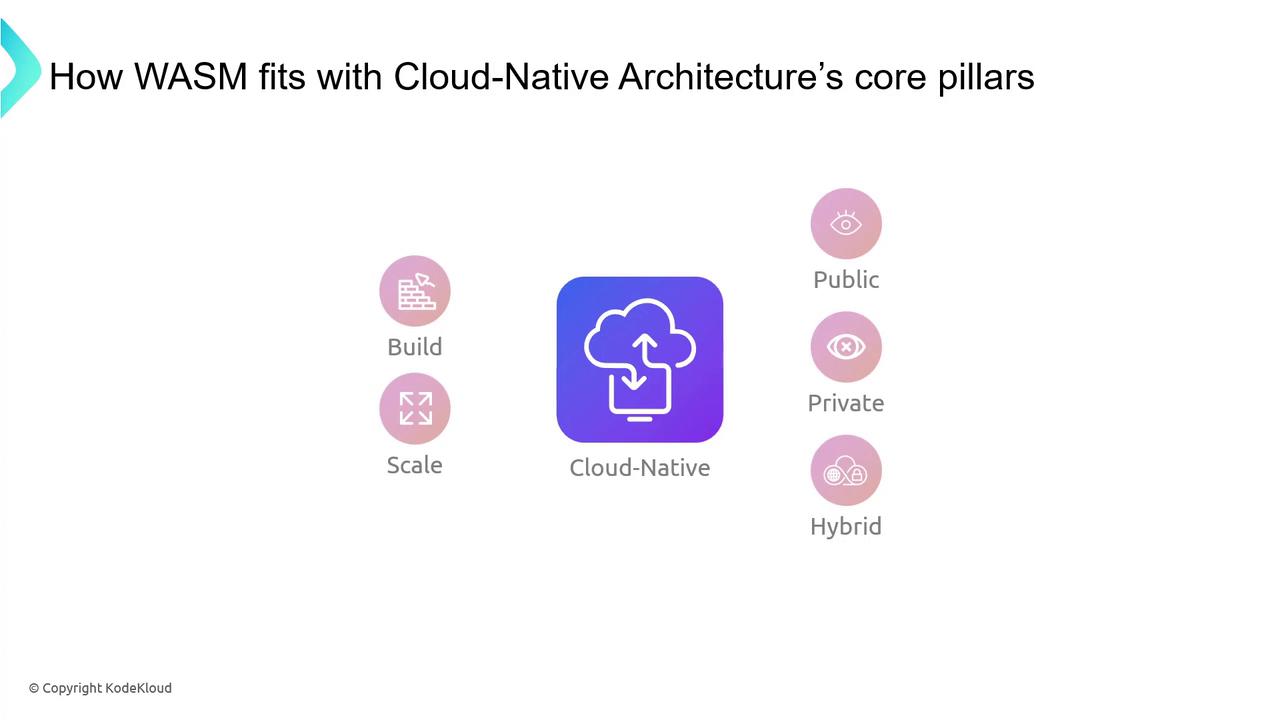
Cloud-native philosophy centers on resilient, scalable services in dynamic infrastructures—public, private, or hybrid clouds.
### Microservices
Breaking monoliths into independent microservices accelerates development cycles and isolates failures. Embedding WASM runtimes in each service ensures consistent sandboxing and performance across environments—from local dev to production clusters.
### Containers
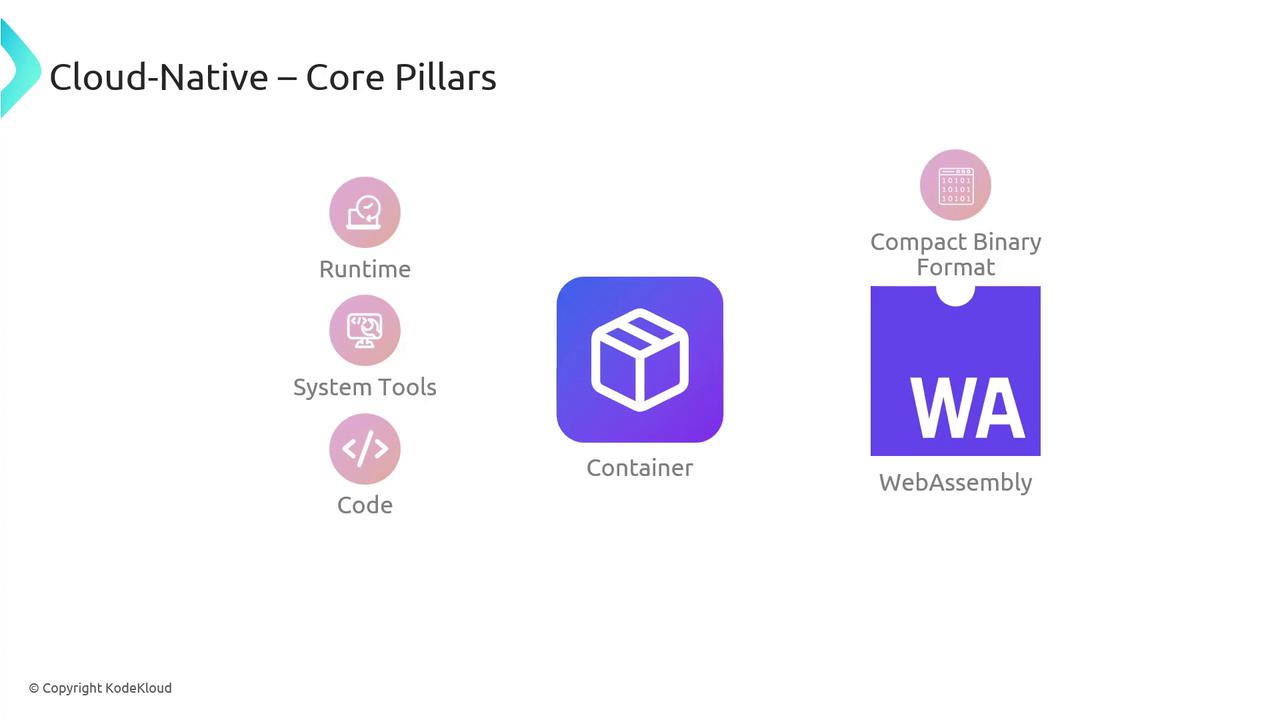
Containers package code, libraries, and dependencies into portable units. Augment them with WASM for plugins, extensibility, or sidecar logic—benefiting from small binary sizes and stronger security boundaries.
### Serverless
Serverless platforms let you focus on functions, not infrastructure. Compiling functions to WASM means multi-language support, fast cold starts, and a unified, verifiable runtime across providers.
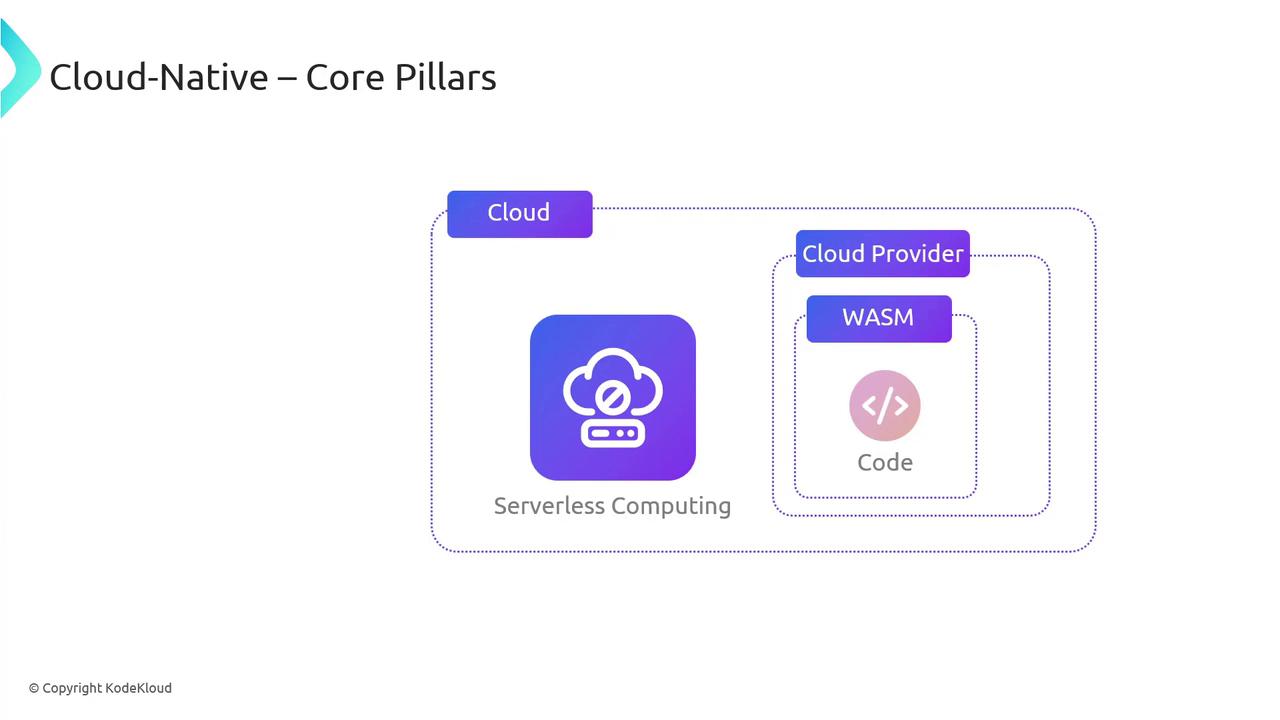
WASM-based serverless functions can run on any host that implements the WebAssembly System Interface (WASI), simplifying vendor portability.
### CI/CD Pipelines
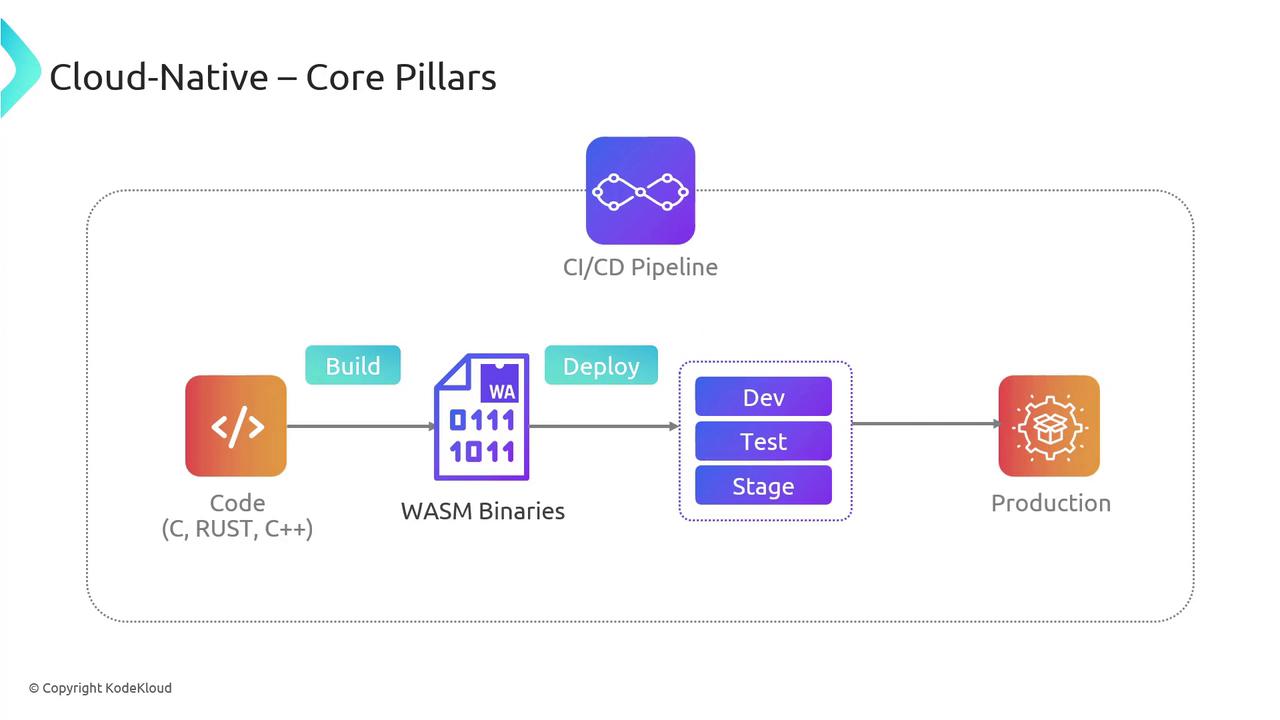
Automated CI/CD workflows compile code (e.g., Rust, Go, C++) into WASM modules, run uniform tests in headless environments, and deploy artifacts across clusters or edge points—accelerating releases and ensuring consistency.
***
## Links and References
* [Cloud Native Computing Foundation (CNCF)](https://www.cncf.io/)
* [Kubernetes Documentation](https://kubernetes.io/docs/)
* [WebAssembly.org](https://webassembly.org/)
* [Bytecode Alliance](https://bytecodealliance.org/)
* [Docker](https://www.docker.com/)
* [CI/CD Best Practices](https://martinfowler.com/bliki/Ci.html)