> ## Documentation Index
> Fetch the complete documentation index at: https://notes.kodekloud.com/llms.txt
> Use this file to discover all available pages before exploring further.
# Course Structure and Learning Path
> Outline of a progressive SRE course covering fundamentals, SLOs, incident response, observability, release engineering, hands-on labs, and a capstone using the KodeKloud Record Store app
This lesson explains how the course is organized and the path you'll follow to build Site Reliability Engineering (SRE) skills. The curriculum is progressive: we establish core SRE concepts first, then move into hands-on implementation, incident practices, observability, and finally synthesis through a capstone project.
## Overview
* The course is structured to grow your SRE capabilities from fundamentals to advanced, production-ready practices.
* Modules begin with core theory and then emphasize practical application using real-world scenarios.
* The KodeKloud Record Store app is used throughout as a hands-on playground to apply concepts in labs and the final project.
## Course module sequence
| Module | Focus | Key outcomes |
| -------------------------------------- | ------------------------------------------ | ---------------------------------------------------------------------- |
| 1. Foundations | SRE fundamentals and core principles | Understand SRE goals, reliability trade-offs, and baseline terminology |
| 2. SLOs & measurements | Defining and measuring service reliability | Create Service Level Objectives (SLOs), SLIs, and error budgets |
| 3. Managing complexity, risk, and toil | Reduce operational overhead and risk | Apply automation and toil-reduction strategies |
| 4. Incident management | Detection, response, and postmortems | Build alerting, runbooks, and post-incident improvements |
| 5. Release engineering | Reliable deployment practices | Implement safe deployment patterns and rollback strategies |
| 6. Monitoring & observability | Systems that expose actionable signals | Instrument systems, collect metrics/traces/logs, and analyze signals |
| 7. Advanced reliability engineering | Synthesis and specialized topics | Advanced patterns for large-scale resilience and reliability |
| 8. Capstone project | Integrate course concepts | Complete a practical project demonstrating SRE skills |
## Lesson types and how they’re used
You’ll learn through a blend of formats so you can grasp theory and apply it immediately:
* Lessons — conceptual and theoretical foundations.
* Labs — guided, hands-on exercises in realistic environments.
* Games — interactive challenges to reinforce skills and retention.
* Assessments — module-end checks to validate understanding.
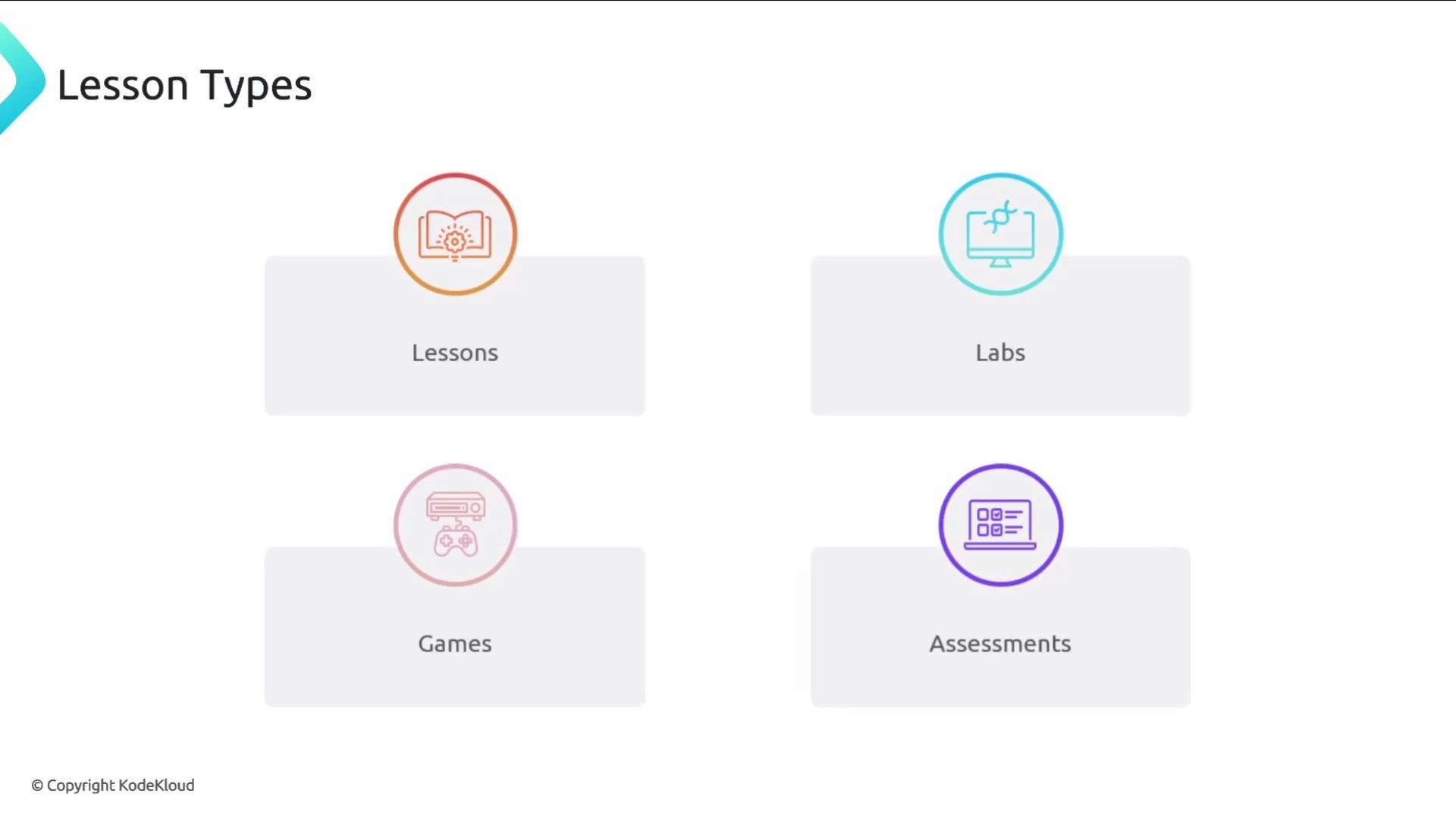 This variety keeps the material engaging and reinforces learning from multiple angles.
## Learning flow
The course follows a logical progression:
* Foundations: Learn SRE core concepts and principles to form a solid theoretical base.
* Core skills: Master SLOs, measurement techniques, and incident response practices.
* Implementation: Build reliable release pipelines and observability systems in labs.
* Advanced topics: Synthesize knowledge into production-ready patterns and strategies.
Theory is front-loaded to ensure you understand the “why”; hands-on labs and practical exercises follow so you can practice the “how.”
## Prerequisites and recommended background
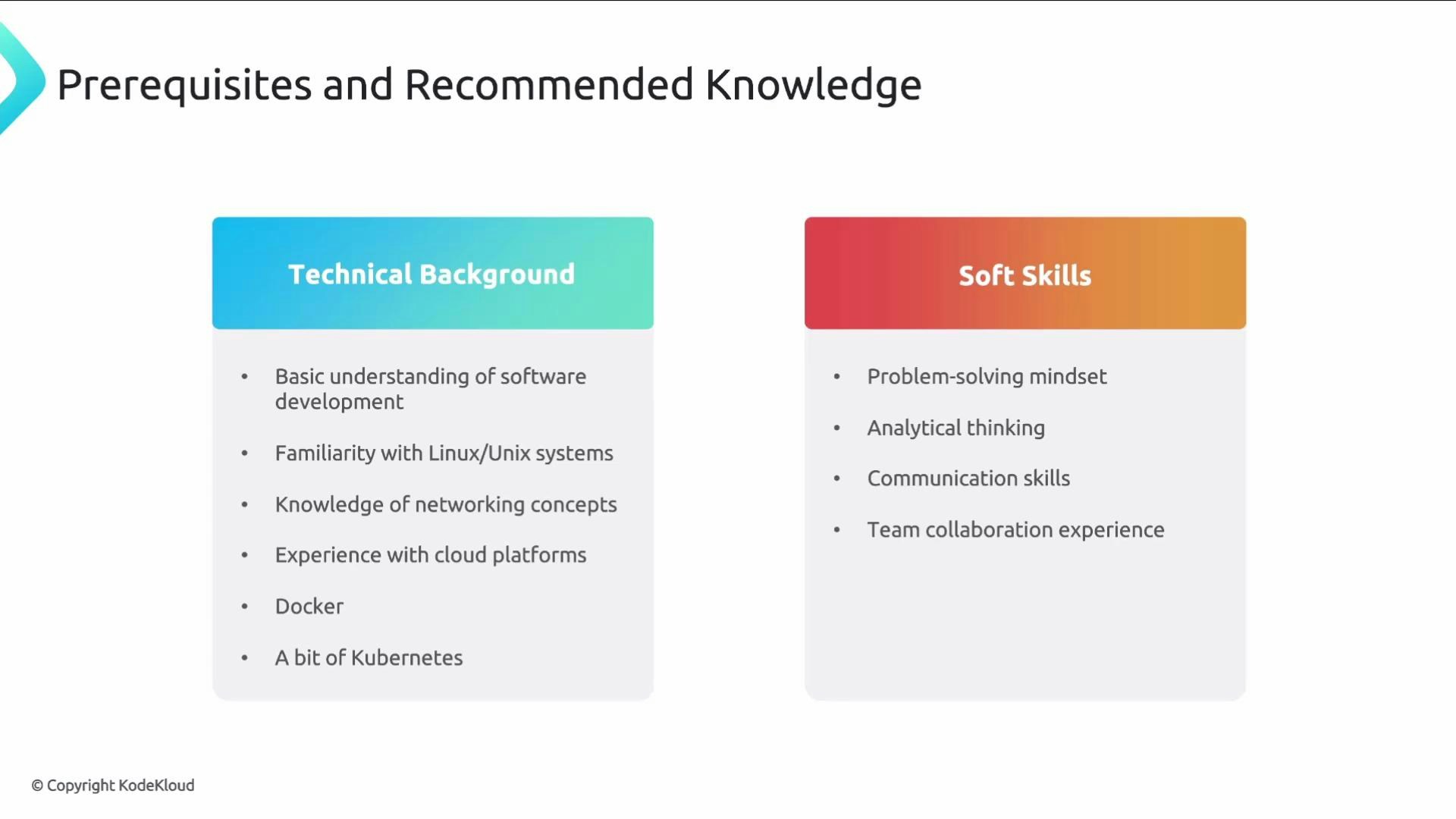
You do not need to be an expert to start. Recommended background:
* Basic software development experience
* Familiarity with Linux/Unix
* Basic networking concepts
* Some exposure to cloud platforms, Docker, or Kubernetes
* Soft skills: problem solving, analytical thinking, communication, teamwork
If you lack some of the technical prerequisites, that’s okay — this is a fundamentals course. Consider the recommended preparatory courses below if you want a stronger head start.
This variety keeps the material engaging and reinforces learning from multiple angles.
## Learning flow
The course follows a logical progression:
* Foundations: Learn SRE core concepts and principles to form a solid theoretical base.
* Core skills: Master SLOs, measurement techniques, and incident response practices.
* Implementation: Build reliable release pipelines and observability systems in labs.
* Advanced topics: Synthesize knowledge into production-ready patterns and strategies.
Theory is front-loaded to ensure you understand the “why”; hands-on labs and practical exercises follow so you can practice the “how.”
## Prerequisites and recommended background
You do not need to be an expert to start. Recommended background:
* Basic software development experience
* Familiarity with Linux/Unix
* Basic networking concepts
* Some exposure to cloud platforms, Docker, or Kubernetes
* Soft skills: problem solving, analytical thinking, communication, teamwork
If you lack some of the technical prerequisites, that’s okay — this is a fundamentals course. Consider the recommended preparatory courses below if you want a stronger head start.
 ## Suggested preparatory courses
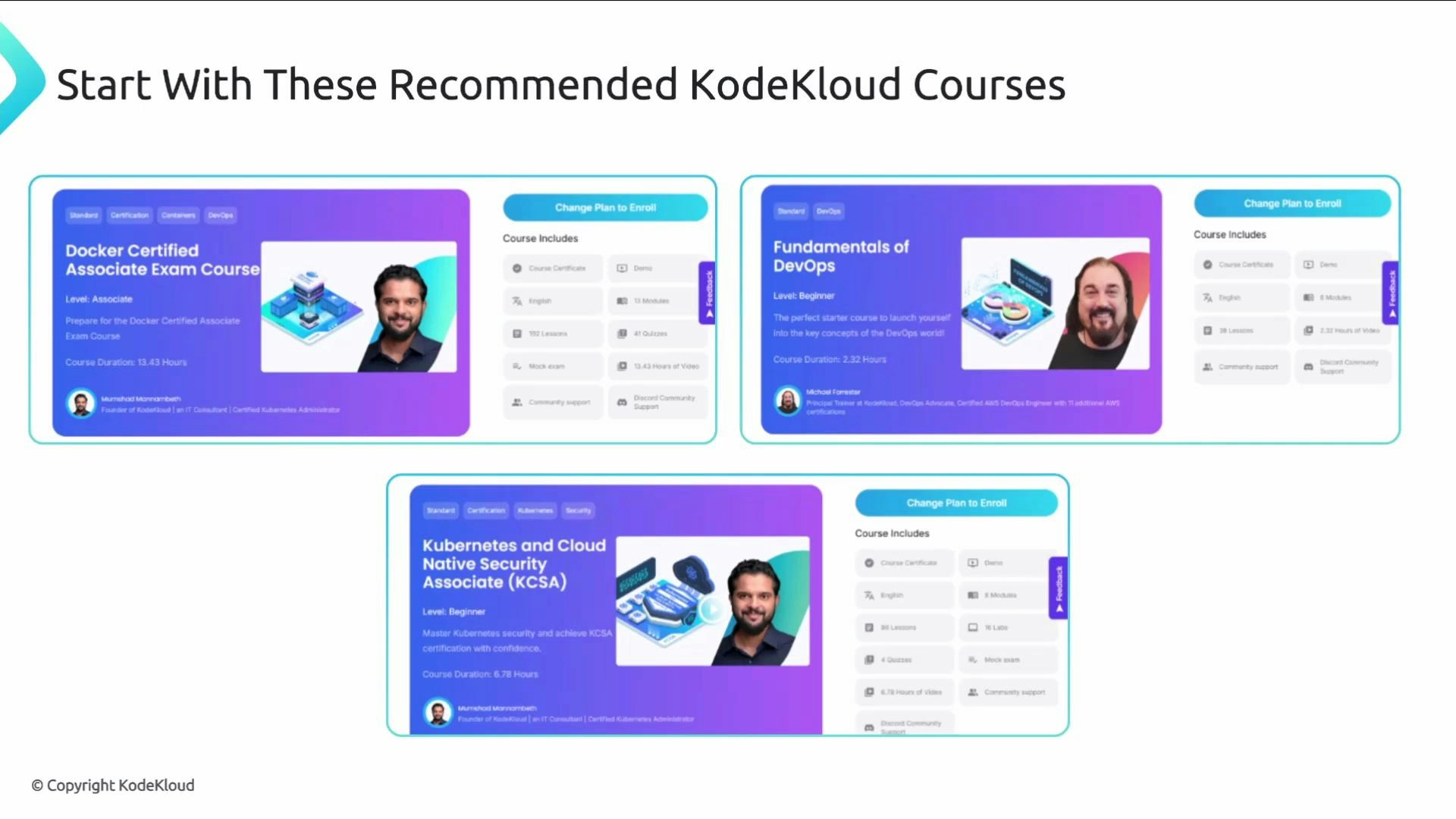
If you want to strengthen your background before or alongside this course, consider these KodeKloud offerings:
* [Docker Certified Associate Exam Course](https://learn.kodekloud.com/user/courses/docker-certified-associate-exam-course)
* [Fundamentals of DevOps](https://learn.kodekloud.com/user/courses/fundamentals-of-devops)
* [Kubernetes and Cloud Native Security Associate (KCSA)](https://learn.kodekloud.com/user/courses/kubernetes-and-cloud-native-security-associate-kcsa)
## Suggested preparatory courses
If you want to strengthen your background before or alongside this course, consider these KodeKloud offerings:
* [Docker Certified Associate Exam Course](https://learn.kodekloud.com/user/courses/docker-certified-associate-exam-course)
* [Fundamentals of DevOps](https://learn.kodekloud.com/user/courses/fundamentals-of-devops)
* [Kubernetes and Cloud Native Security Associate (KCSA)](https://learn.kodekloud.com/user/courses/kubernetes-and-cloud-native-security-associate-kcsa)
 ## Final project and practical application
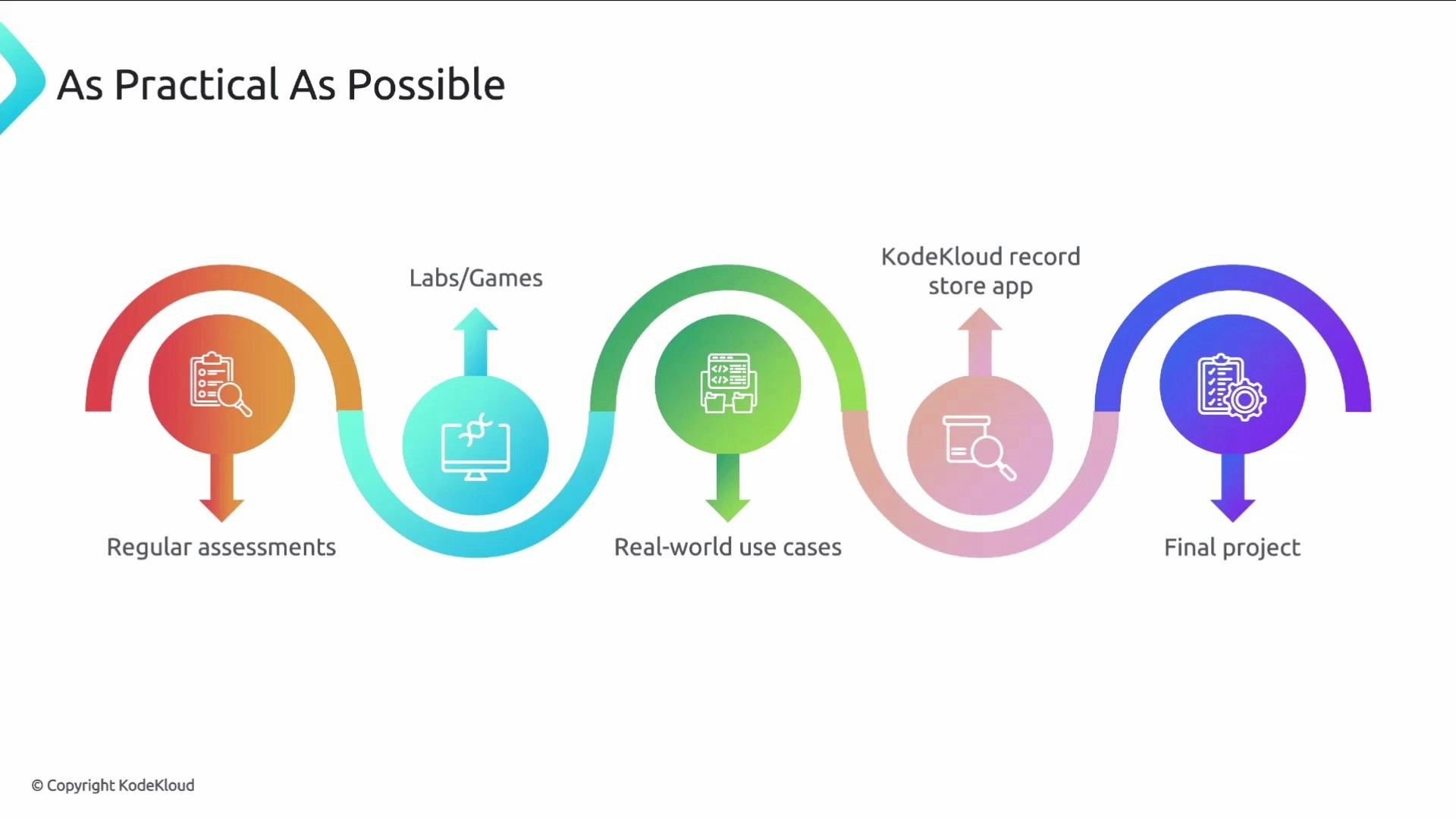
Throughout the course, the KodeKloud Record Store app serves as a companion application for labs and the capstone. You’ll:
* Fork and experiment with the app
* Complete tasks that apply SRE concepts (SLOs, monitoring, incident response, release engineering)
* Deliver a final project demonstrating practical, production-oriented SRE skills
By course end, you’ll have a practical toolkit and a completed capstone that showcases your ability to apply SRE principles in realistic environments.
## Final project and practical application
Throughout the course, the KodeKloud Record Store app serves as a companion application for labs and the capstone. You’ll:
* Fork and experiment with the app
* Complete tasks that apply SRE concepts (SLOs, monitoring, incident response, release engineering)
* Deliver a final project demonstrating practical, production-oriented SRE skills
By course end, you’ll have a practical toolkit and a completed capstone that showcases your ability to apply SRE principles in realistic environments.
 ## Additional resources and references
* [Kubernetes Basics](https://kubernetes.io/docs/concepts/overview/what-is-kubernetes/)
* [KodeKloud Learning Catalog](https://learn.kodekloud.com/)
* Consider reading SRE foundational materials and blogs to deepen understanding as you progress through the course.
## Additional resources and references
* [Kubernetes Basics](https://kubernetes.io/docs/concepts/overview/what-is-kubernetes/)
* [KodeKloud Learning Catalog](https://learn.kodekloud.com/)
* Consider reading SRE foundational materials and blogs to deepen understanding as you progress through the course.