> ## Documentation Index
> Fetch the complete documentation index at: https://notes.kodekloud.com/llms.txt
> Use this file to discover all available pages before exploring further.
# Istio on GKE and Anthos Service Mesh
> This article explains how Anthos Service Mesh on GKE enhances microservices communication with features like monitoring, security, and traffic management using a music festival analogy.
Modern applications often comprise dozens—or even hundreds—of microservices. On Google Kubernetes Engine (GKE), Anthos Service Mesh (a managed Istio platform) delivers secure, observable, and reliable service-to-service communication. In this article, we’ll use a music festival analogy to illustrate how a service mesh works and explore the key capabilities of Anthos Service Mesh on GKE.
## Festival Analogy: Visualizing a Service Mesh
Imagine you’re organizing a large‐scale music festival with multiple stages and performers:
* The festival = your application
* Each stage = a microservice
* Performers = service components
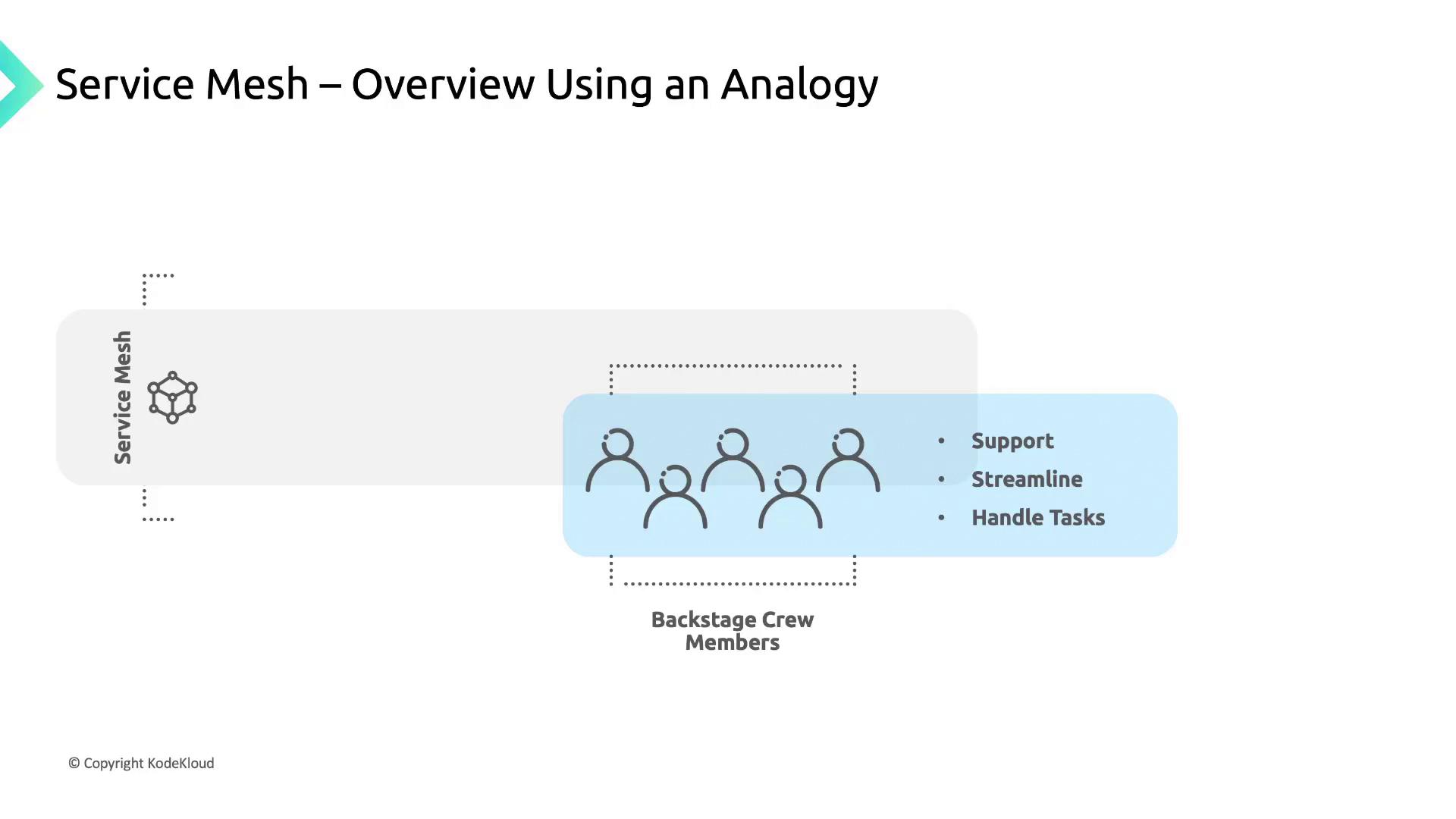
A **service mesh** is like the backstage crew, handling all cross‐stage concerns so performers can focus on their act.
***
## Core Functions of a Service Mesh
A service mesh adds an infrastructure layer alongside your services to handle essential concerns:
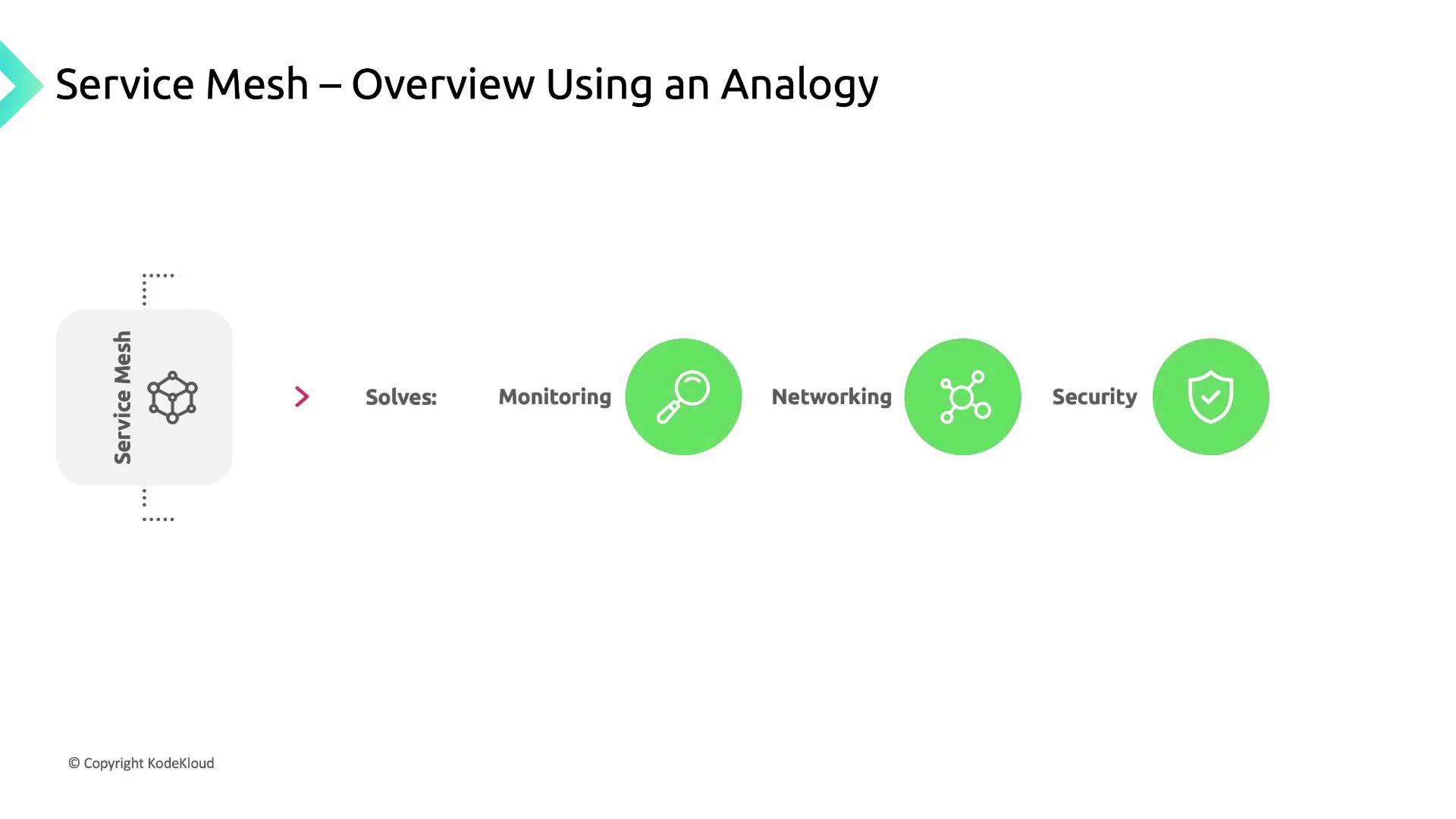
| Function | Description | Festival Role |
| ---------- | ----------------------------------------------------------- | -------------------------------------------------- |
| Monitoring | Captures performance metrics for each service | Metrics team tracks performer stats |
| Networking | Manages service‐to‐service communication and load balancing | Sound crew coordinates audio levels and crowd flow |
| Security | Enforces access control, encryption, and authentication | Security guards control backstage entry |
In our festival analogy:
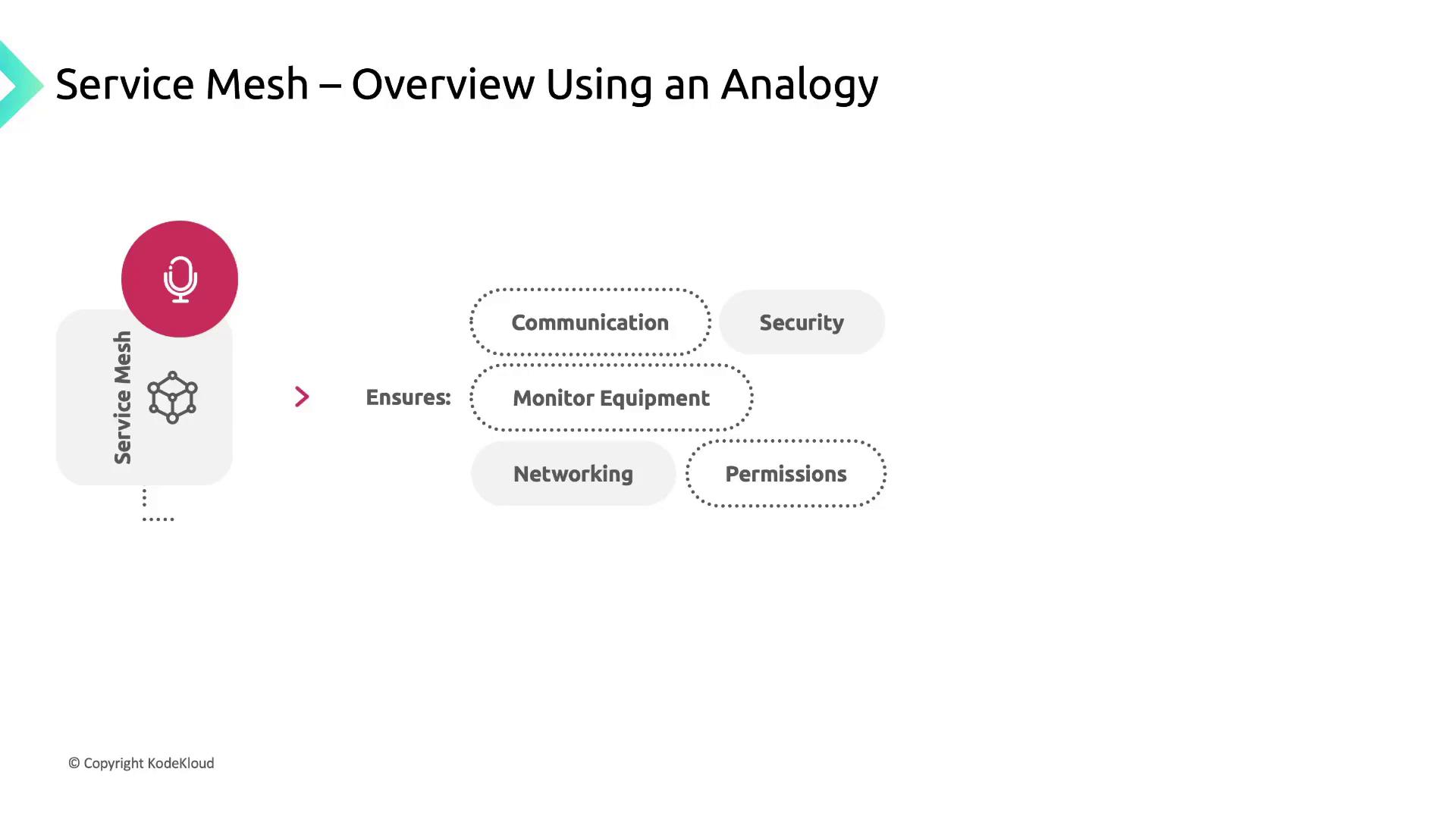
* Monitoring teams track each performer’s metrics.
* Networking crews coordinate sound systems and manage traffic between stages.
* Security teams ensure only authorized personnel access VIP areas.
### Dynamic Traffic Control & Observability
With a service mesh, you can:
* Throttle, block, or reroute requests in real time
* Configure retries, timeouts, and circuit breakers
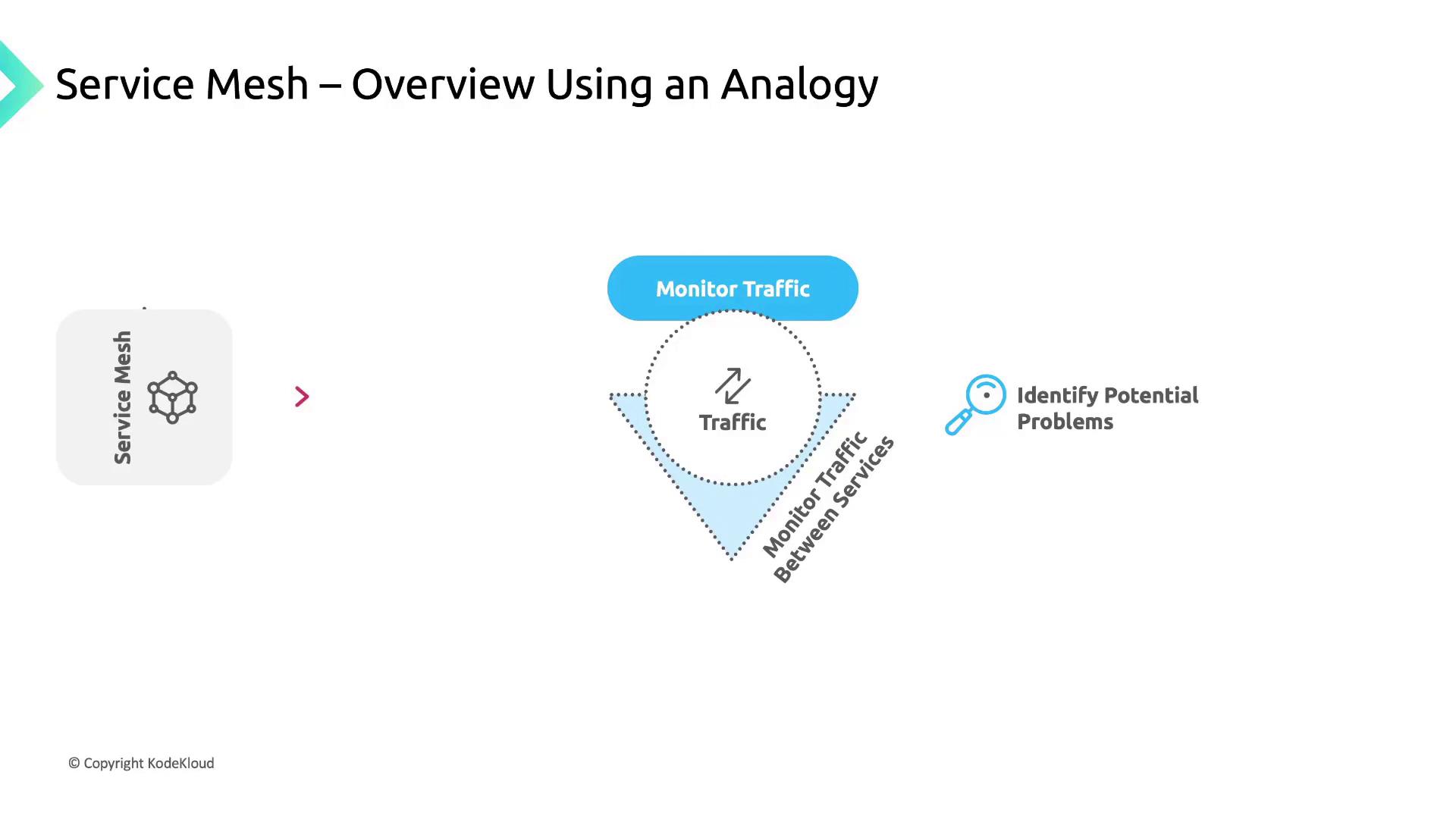
* Gather end‐to‐end metrics and distributed traces
Service meshes decouple the networking, security, and observability layers from application code. This lets developers focus purely on business logic.
***
## Anthos Service Mesh on GKE
As organizations adopt hybrid and multi‐cloud environments, operational consistency becomes critical. **[Anthos](https://cloud.google.com/anthos)** is Google Cloud’s unified platform for modernizing applications across diverse infrastructures. Anthos Service Mesh extends open‐source Istio with enterprise-grade features and deep GKE integration.
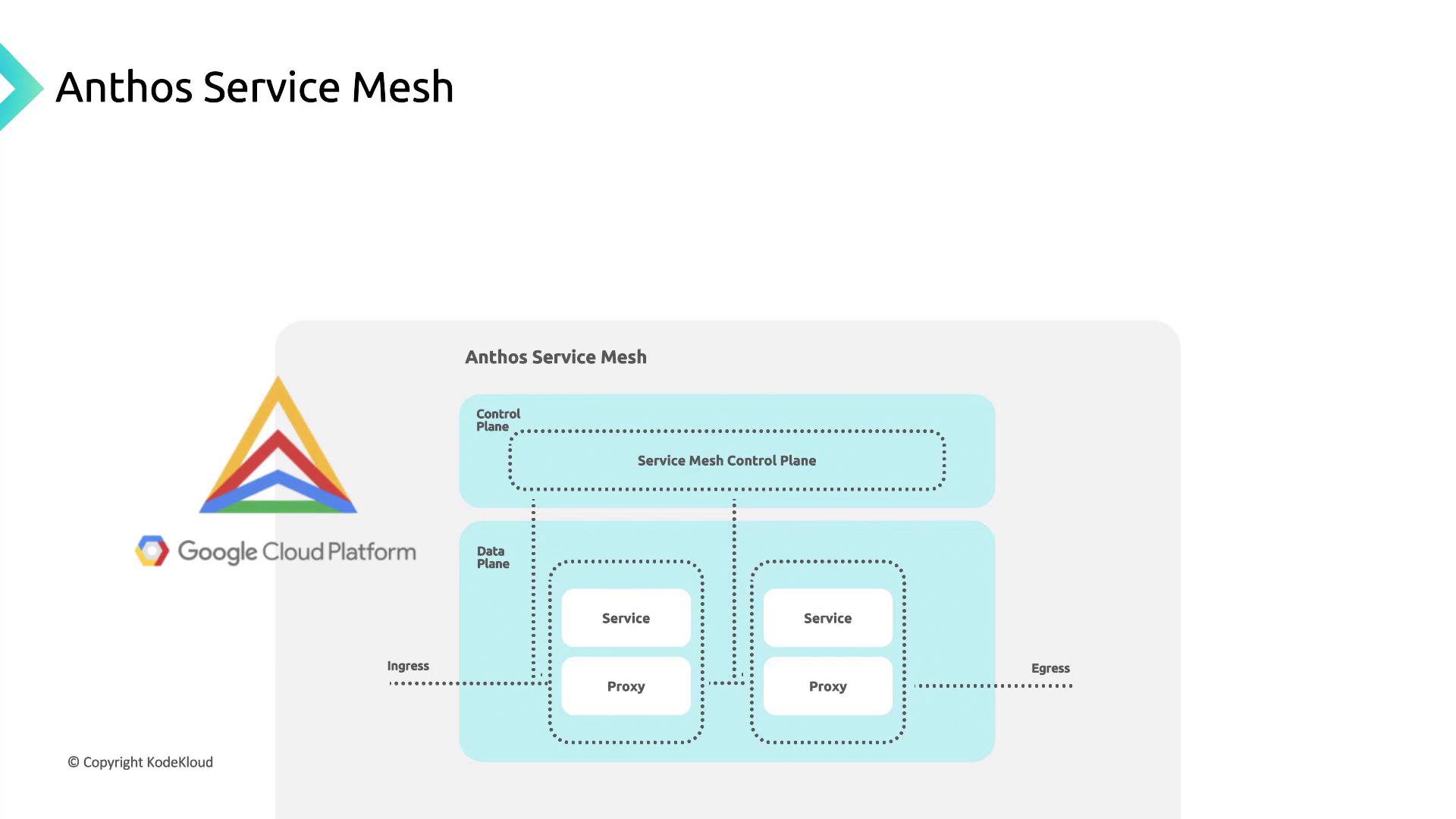
Deploying Anthos Service Mesh introduces additional control‐plane components and sidecar proxies. Plan for increased CPU and memory usage on your cluster nodes.
### Key Features of Anthos Service Mesh
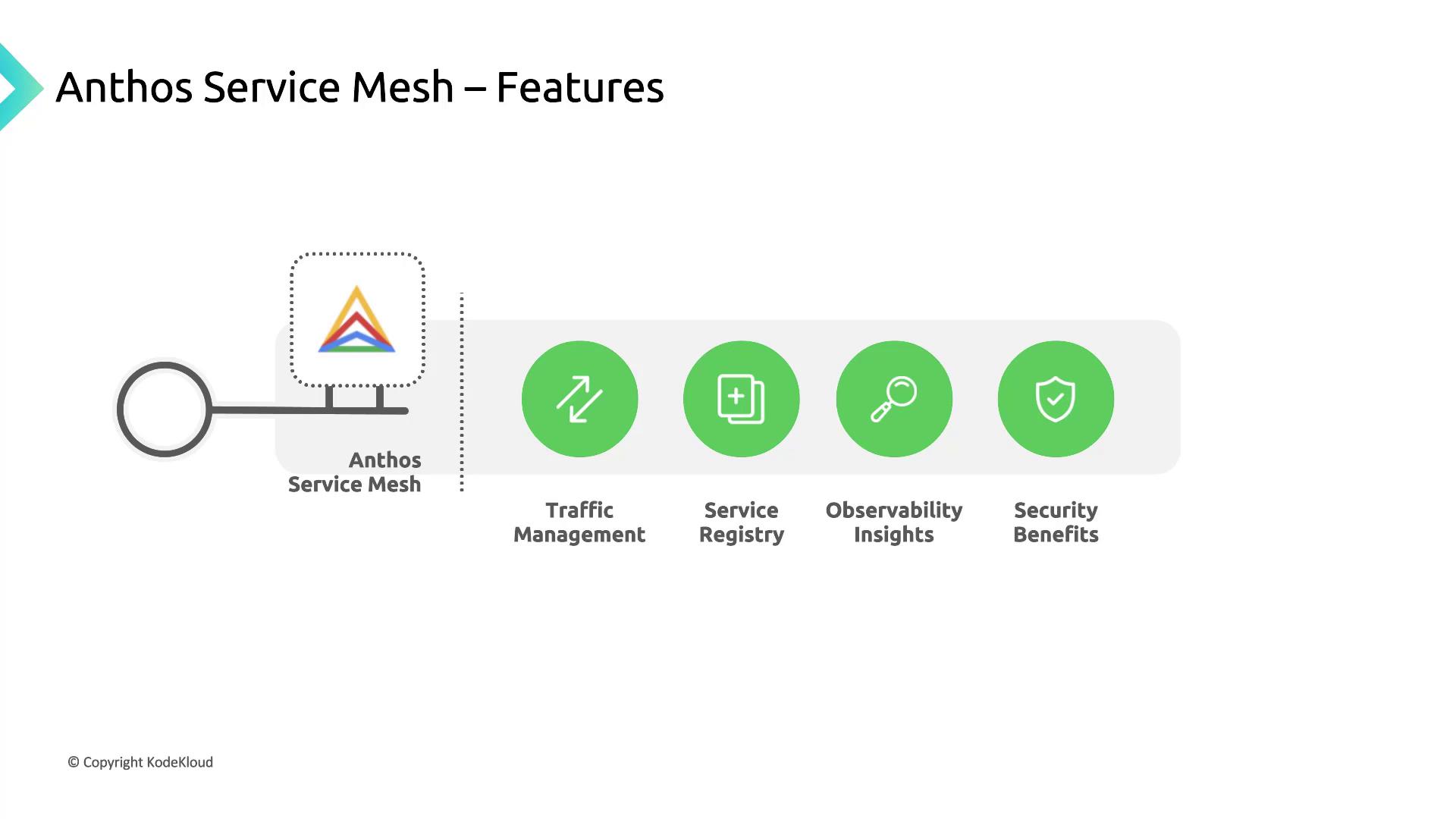
Anthos Service Mesh builds on Istio to provide:
* **Traffic Management**\
Fine‐grained routing, retries, fault injection, canary and A/B testing for inbound and outbound traffic.
* **Service Registry**\
A dynamic catalog of services and endpoints that keeps routing rules up to date.
* **Observability**\
Preconfigured dashboards in [Google Cloud Console](https://console.cloud.google.com) for metrics, logs, and distributed traces—offering a unified view of service health.
* **Security**\
Mutual TLS (mTLS) for encrypted service‐to‐service communication, policy‐based access control, and automated certificate management.
***
## Next Steps and References
To get started with Istio on GKE and Anthos Service Mesh:
1. Follow the [GKE Quickstart](https://cloud.google.com/kubernetes-engine/docs/quickstart).
2. Install Anthos Service Mesh using Google’s setup guide.
3. Explore [Istio’s documentation](https://istio.io/latest/docs/) for policy and telemetry recipes.
## Further Reading
* [Kubernetes Networking](https://kubernetes.io/docs/concepts/services-networking/)
* [Istio Traffic Management](https://istio.io/latest/docs/tasks/traffic-management/)
* [Anthos Service Mesh Overview](https://cloud.google.com/service-mesh/docs)
* [Google Cloud Observability](https://cloud.google.com/observability)
* [Istio Security](https://istio.io/latest/docs/concepts/security/)