> ## Documentation Index
> Fetch the complete documentation index at: https://notes.kodekloud.com/llms.txt
> Use this file to discover all available pages before exploring further.
# Scaling for Performance
> This article discusses the use of read replicas in Consul Enterprise to enhance performance in read-heavy environments.
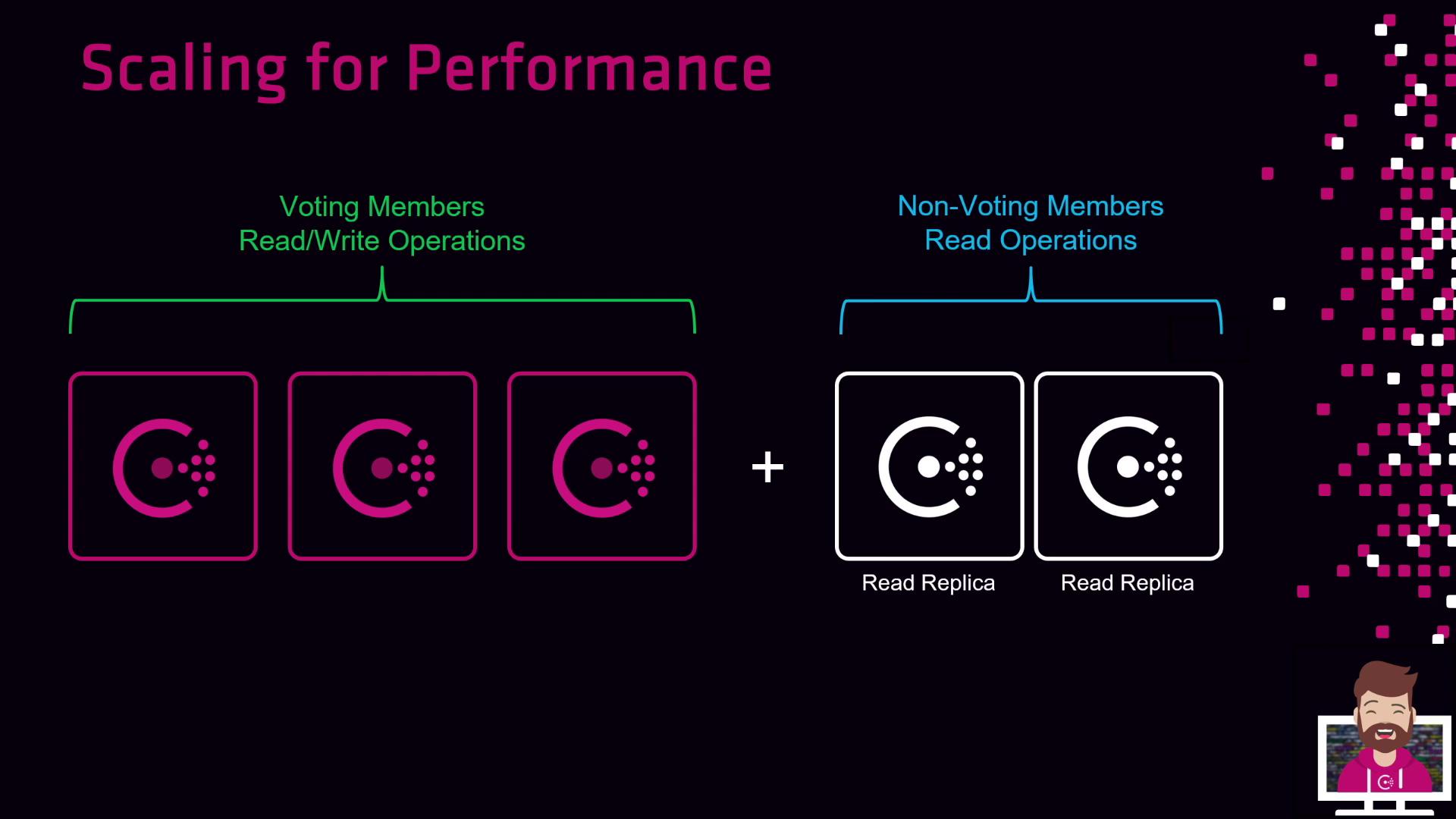
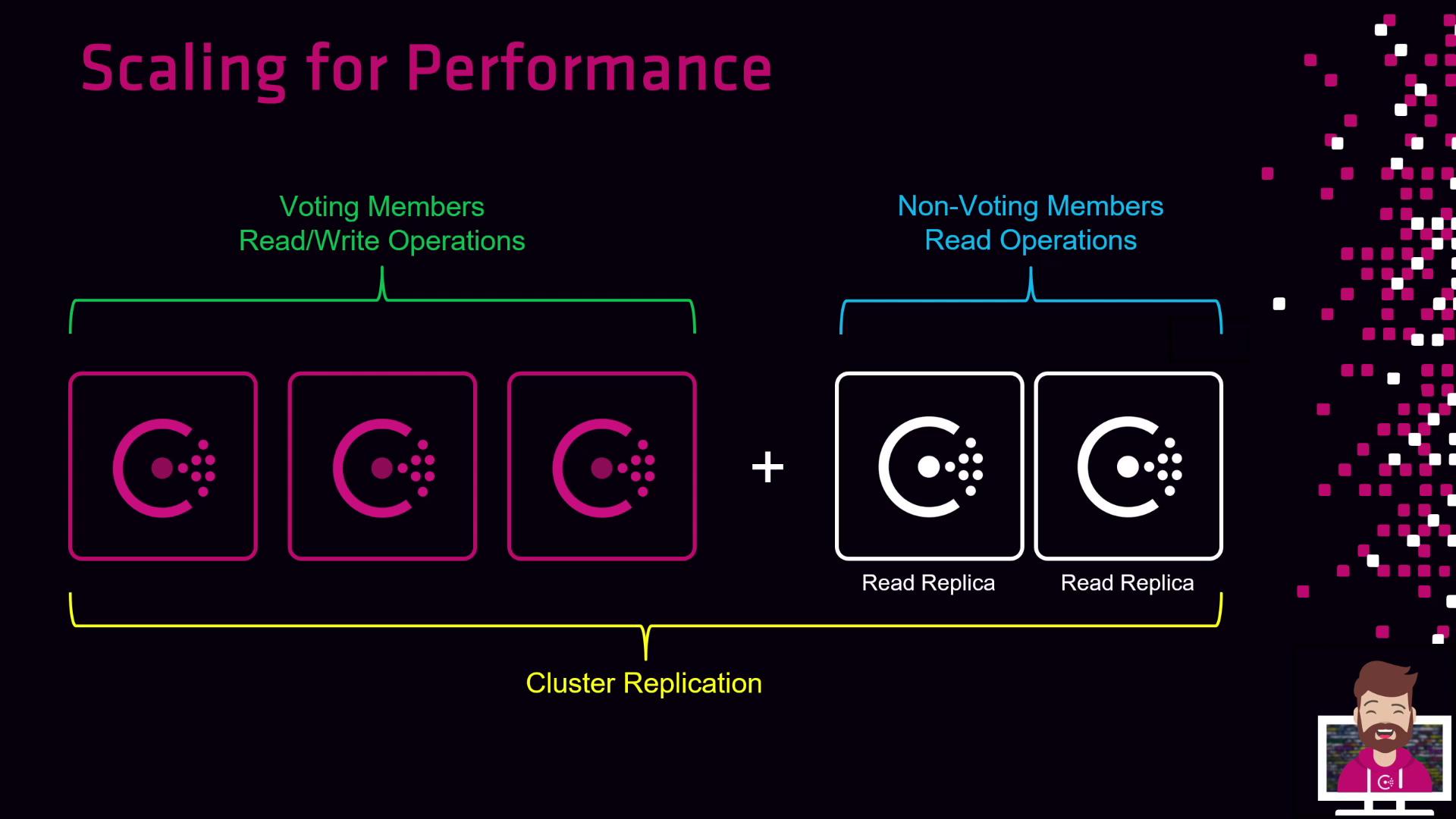
In modern, read-heavy environments, offloading queries from your primary Consul cluster can dramatically boost throughput and resilience. Consul Enterprise introduces **read replicas**—non-voting members dedicated to serving read requests. This feature allows you to scale out read operations without impacting the write performance or election process of your primary servers.
## What Are Read Replicas?
Read replicas in Consul Enterprise are special server agents that:
* **Serve read-only traffic**: Respond to queries without handling writes.
* **Stay in sync via replication**: Receive updates from the primary cluster.
* **Do not vote**: Excluded from leader elections, ensuring election integrity.
By directing read clients to these replicas, you preserve the performance of your voting servers and optimize overall cluster capacity.
Read replicas always reflect the latest cluster state but cannot process `acl replication up` or write-related API calls.
## Primary Cluster vs. Read Replicas
| Component | Role | Voting | Handles Writes | Handles Reads |
| --------------- | --------------- | ------ | -------------- | ------------- |
| Primary Servers | Core cluster | Yes | Yes | Yes |
| Read Replicas | Auxiliary nodes | No | No | Yes |
## Architecture Overview
A typical enhanced-read deployment includes:
1. **Primary Consul Servers**
* Usually 3 voting nodes
* Manage leader elections, writes, and replication
2. **Read Replica Nodes**
* Deployed alongside or in separate datacenters
* Subscribe to the Raft log for updates
* Serve only read requests
When read demand increases, simply provision more read replicas and update your service configurations or DNS entries to point read-only clients to these replicas. All write operations continue on your primary cluster, while replicas keep up-to-date via streaming replication.
Ensure your network allows bidirectional communication between primary servers and read replicas. Replication requires stable connectivity to avoid replication lag.
## Best Practices
* Deploy at least three voting servers for high availability.
* Spread read replicas across failure domains or datacenters.
* Monitor replication lag via the Consul telemetry API.
* Use DNS split-horizon or service mesh routing to direct read traffic.
## Links and References
* [Consul Read Replicas (Enterprise)](https://www.consul.io/docs/enterprise/replication/read-replicas)
* [Consul High Availability Patterns](https://www.consul.io/docs/platform/availability)
* [HashiCorp Consul Documentation](https://www.consul.io/docs)