> ## Documentation Index
> Fetch the complete documentation index at: https://notes.kodekloud.com/llms.txt
> Use this file to discover all available pages before exploring further.
# Benefits and Use Cases of Vault
> This article discusses the benefits and use cases of HashiCorp Vault for secure secrets management and data protection.
HashiCorp Vault is a unified secrets management solution designed to secure, store, and tightly control access to tokens, passwords, certificates, encryption keys, and other sensitive resources. Organizations adopt Vault to:
| Benefit | Description |
| ------------------------------ | -------------------------------------------------------------------------------------------------- |
| Consolidate static credentials | Store long-lived secrets (service accounts, API keys) centrally in Vault’s Key/Value engine. |
| Generate dynamic secrets | Issue short-lived, least-privileged credentials on demand and auto-revoke them after use. |
| API-driven automation | Leverage Vault’s HTTP API to integrate seamlessly with CI/CD pipelines (Jenkins, Terraform, etc.). |
| Identity-based access | Authenticate entities via trusted providers (AWS, Kubernetes) and issue scoped tokens. |
| Encryption as a service | Perform encrypt/decrypt operations via the Transit and Transform Engines. |
| Automated PKI | Programmatically generate, renew, and revoke X.509 certificates with the PKI Secrets Engine. |
Vault’s unified approach replaces fragmented tools (1Password, KeePass, cloud vaults) with a single, auditable control plane.
Below we dive deeper into key Vault use cases, each backed by strong API support and enterprise-grade security policies.
***
## Secure Data Management Use Cases
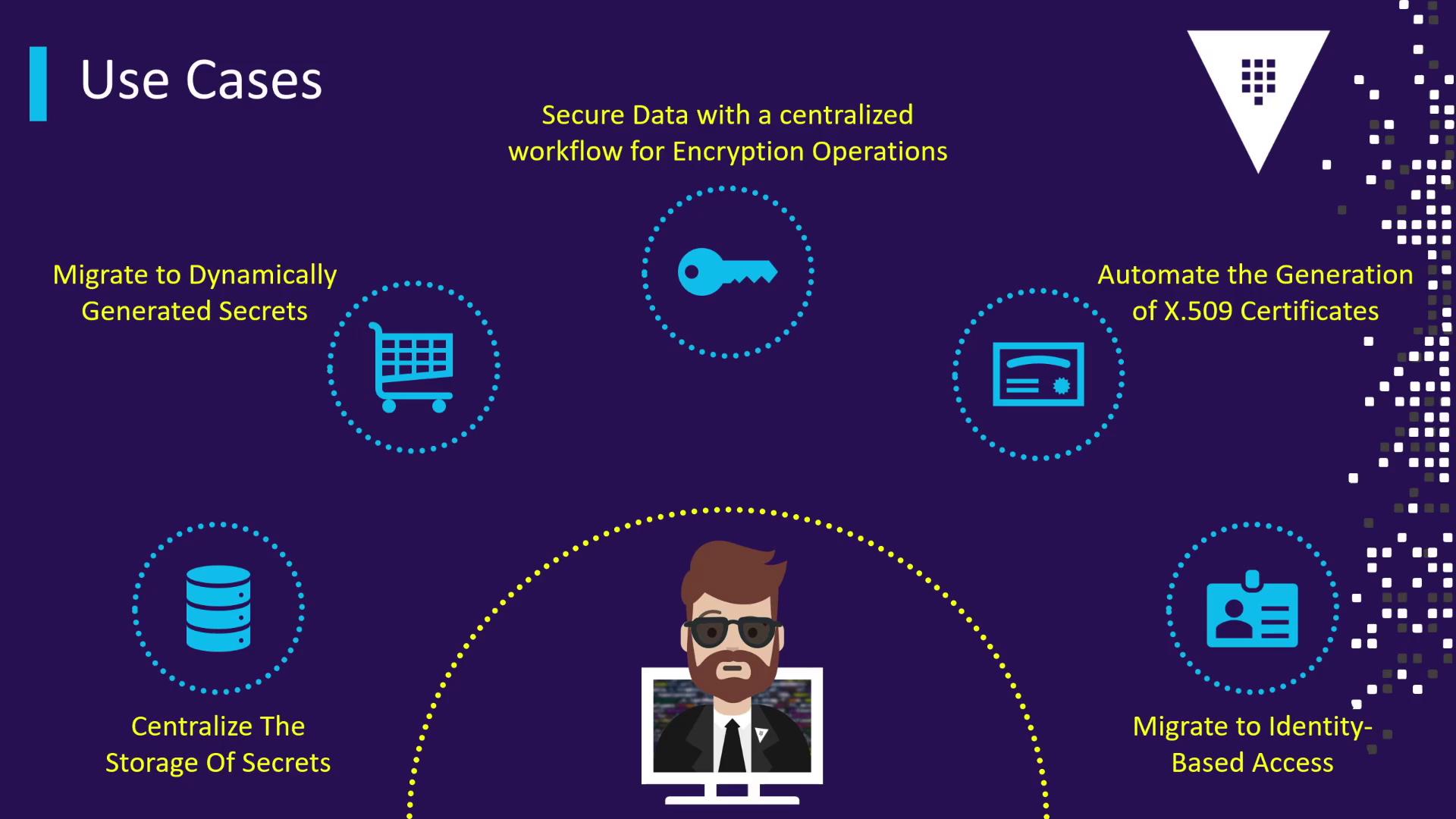
1. Centralized secret storage
2. Dynamic secret generation & renewal
3. Encryption operations via central workflows
4. Automated X.509 certificate issuance
5. Identity-based access control
Align these use cases with compliance standards (PCI-DSS, HIPAA, GDPR) by leveraging Vault’s audit logging and policy enforcement.
***
## Centralizing Secret Storage
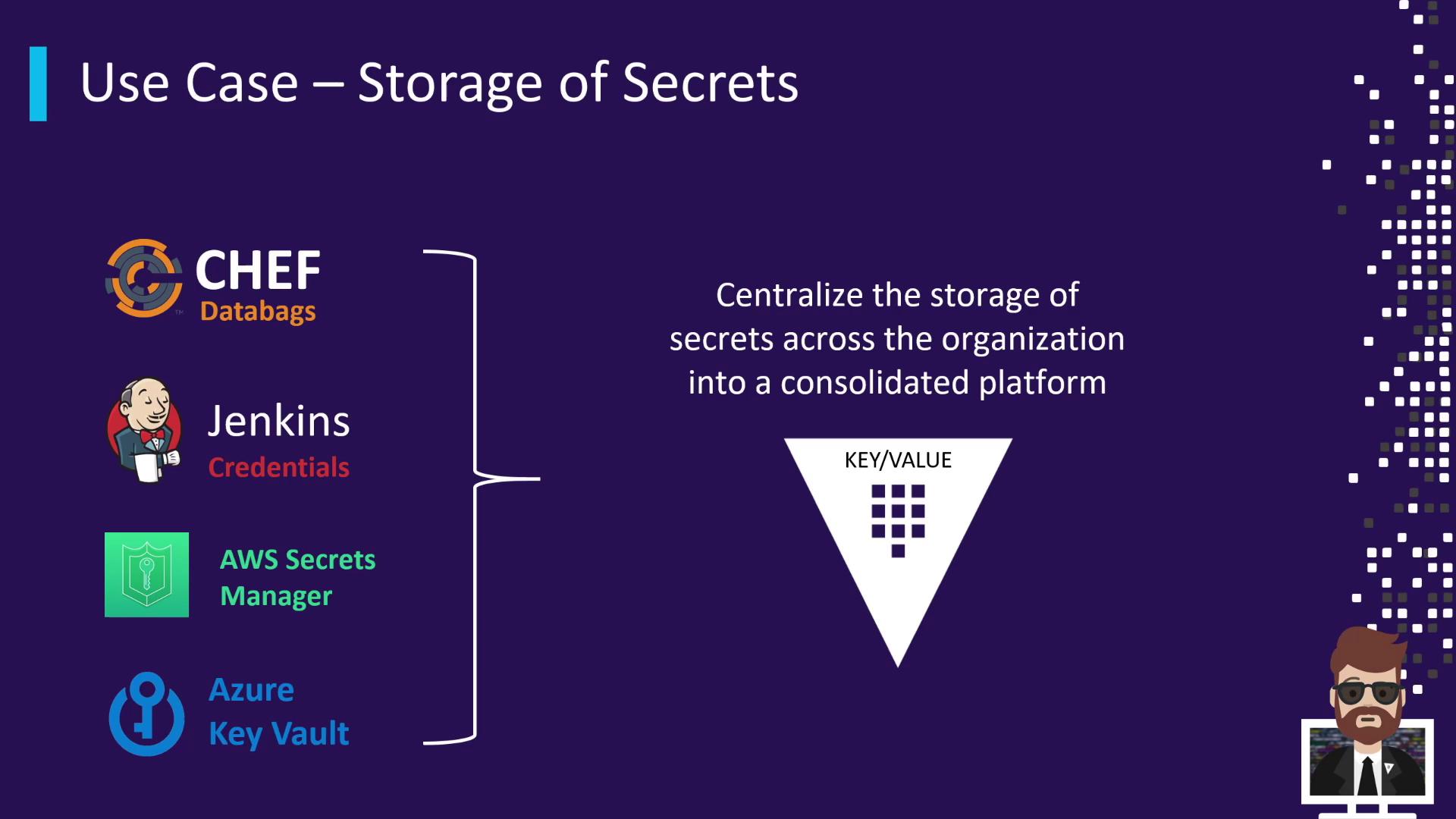
Many teams scatter secrets across Chef, Jenkins, AWS Secrets Manager, Azure Key Vault, and more. Vault’s Key/Value Secrets Engine consolidates all static credentials in a single namespace, simplifying policy management and audits.
Never commit Vault tokens or raw credentials to source control. Always retrieve secrets at runtime via the Vault API.
***
## Migrating to Dynamic Secrets
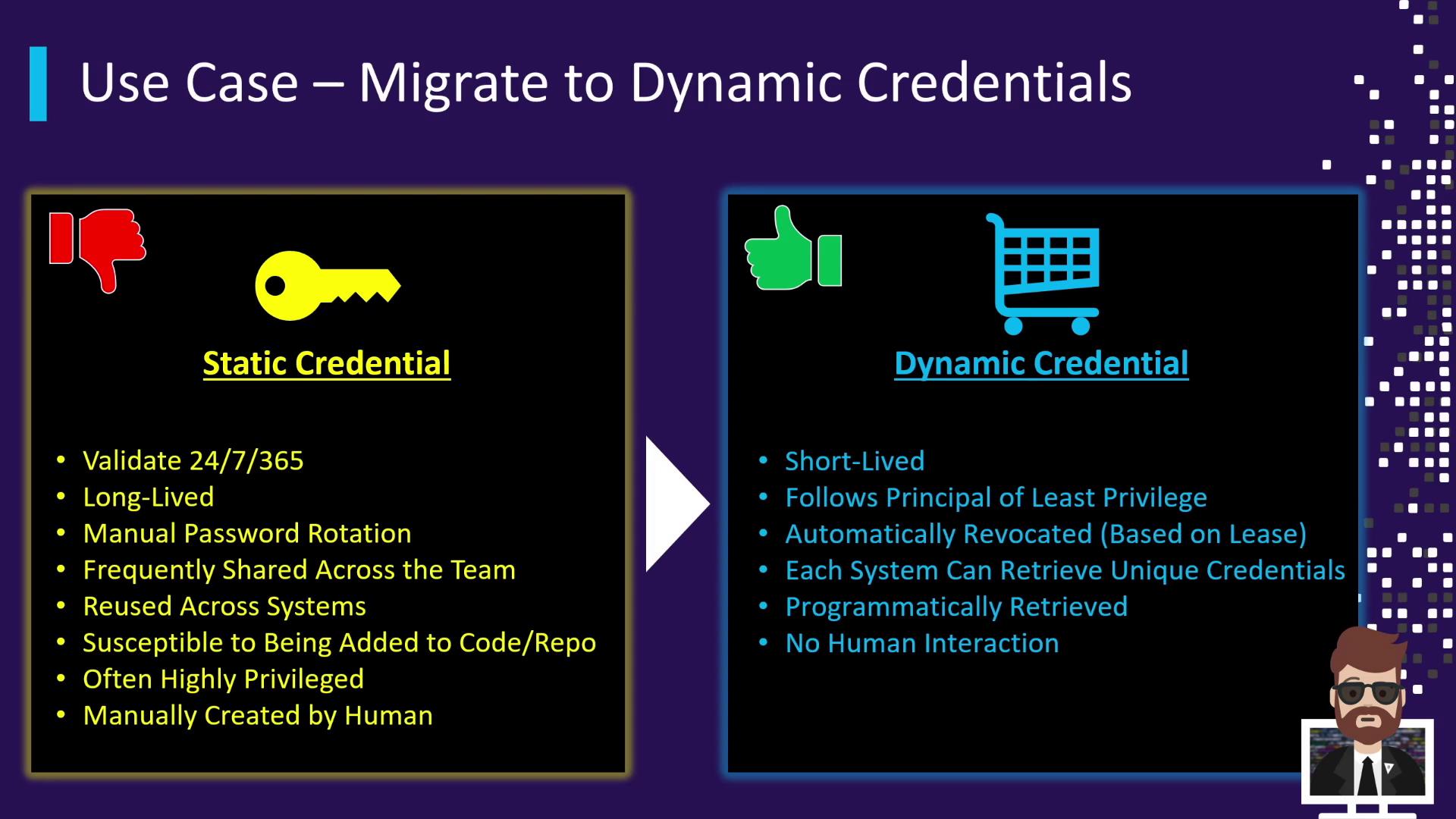
Dynamic secrets are generated on demand and have a defined lease time:
* Short-lived (e.g., 4-hour AWS credentials)
* Auto-rotated and programmatically retrieved
* Scoped by roles for least-privilege
* Auto-revoked at lease expiry
* Unique per requester
Moving from permanent credentials to dynamic secrets reduces blast radius and eliminates manual rotation tasks.
Ensure robust lease management: monitor and renew active leases to avoid service disruptions.
***
## Encrypting Data with a Centralized Workflow
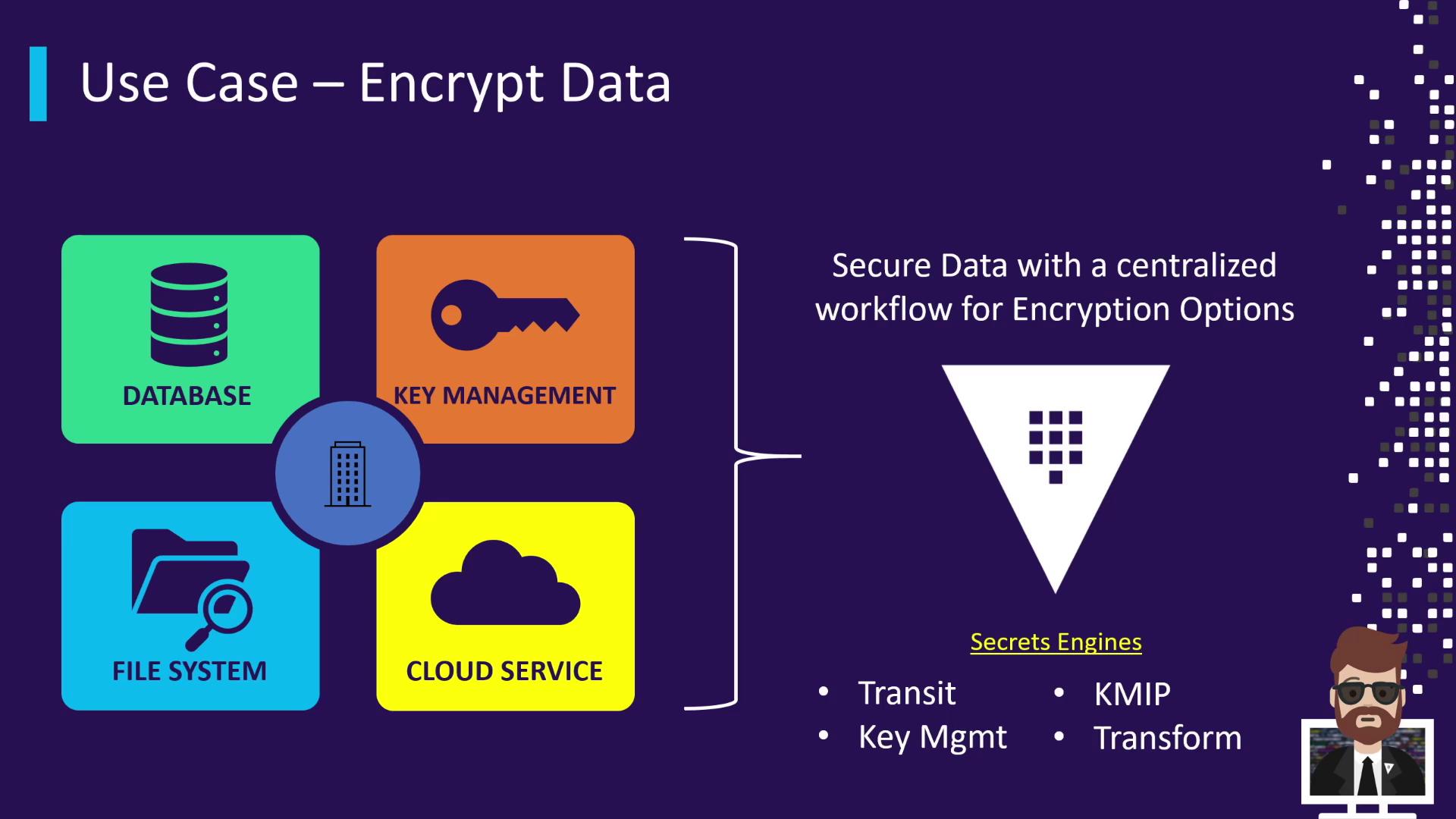
Vault’s Secrets Engines for encryption include:
| Engine | Capabilities |
| --------- | ------------------------------------------------ |
| Transit | Encrypt/decrypt, rewrap, sign/verify via API |
| Transform | Format-preserving encryption for structured data |
| KMIP | Act as a KMIP-compliant key manager |
| KMS | Proxy cloud-native KMS (AWS, Azure, GCP) |
Route all encryption calls through Vault to decouple cryptographic logic from applications, ensure compliance, and centralize key management.
The Transit Engine integrates with hardware security modules (HSMs) for FIPS-compliant encryption.
***
## Automated X.509 Certificate Management
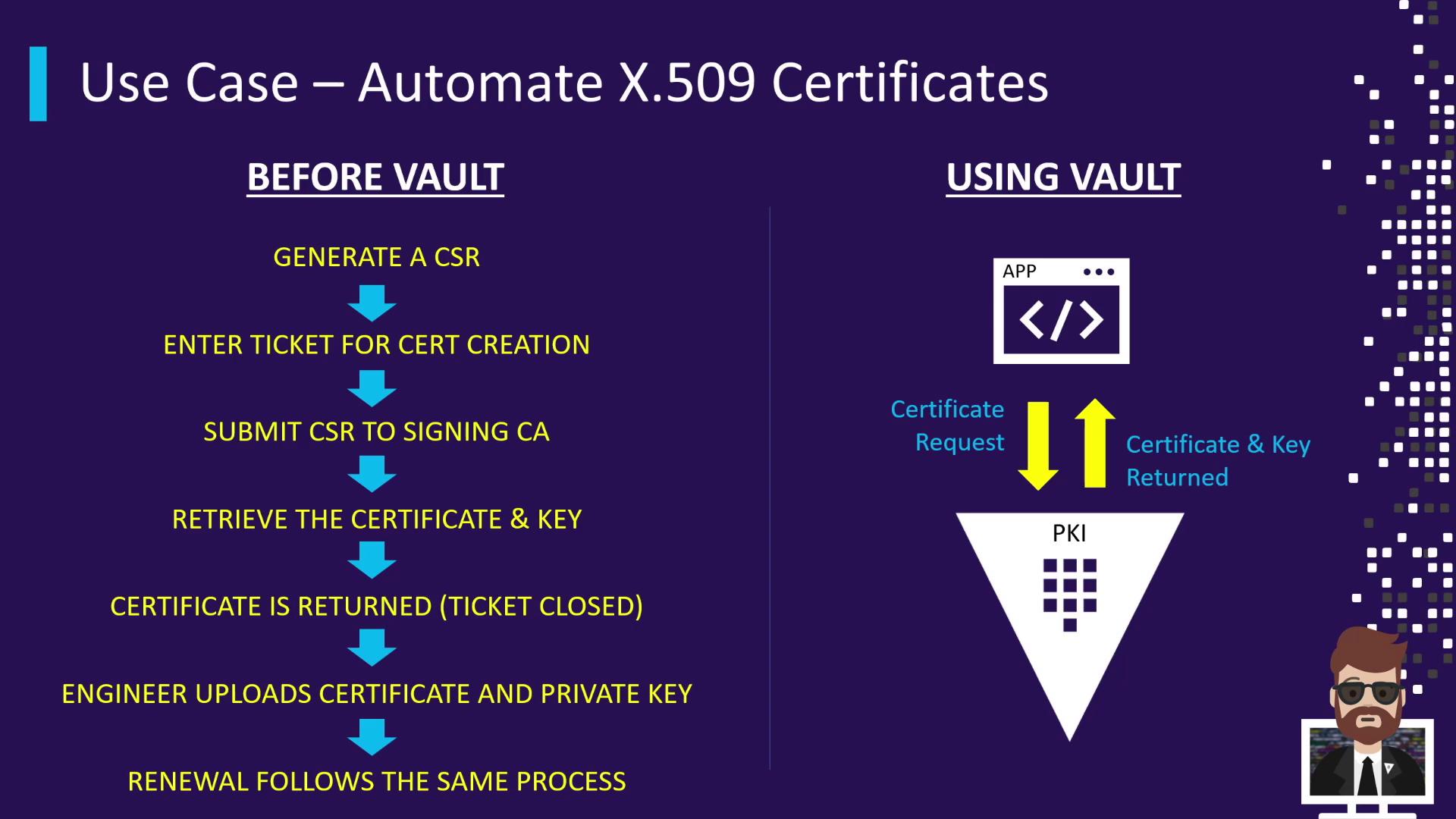
Vault’s PKI Secrets Engine offers:
* CSR submission via API
* Programmatic issuance of certificates and private keys
* Automated renewals and revocations
* No manual ticketing or key distribution
This fully automates TLS workflows and scales certificate management across microservices and edge devices.
See the [PKI Secrets Engine documentation](https://www.vaultproject.io/docs/secrets/pki) for CA setup and role configuration.
***
## Migrating to Identity-Based Access
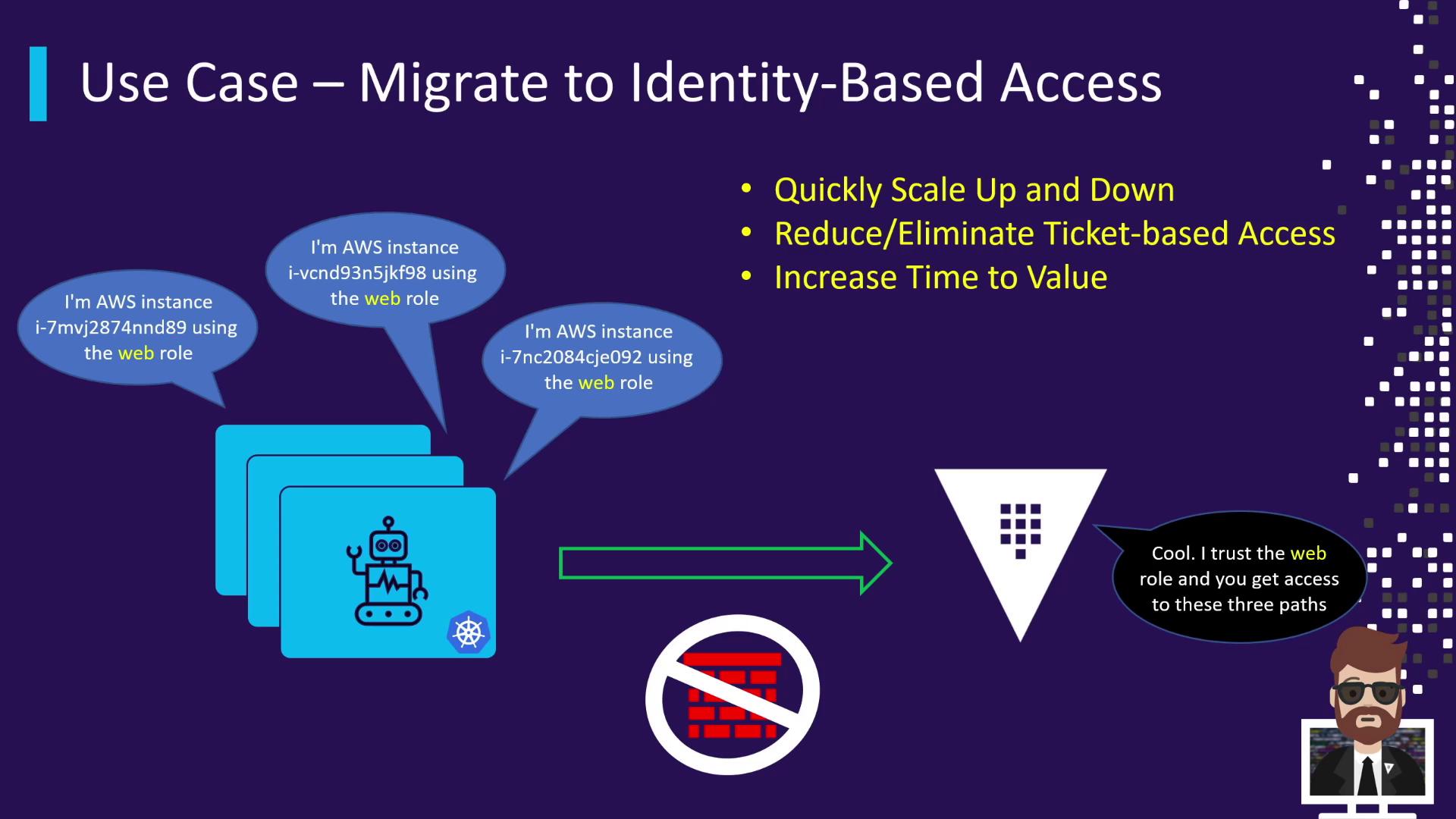
Instead of IP allow-lists or shared credentials, Vault leverages auth methods:
* AWS IAM, Kubernetes, GCP, Azure, LDAP, OIDC
* Entities present identity tokens (e.g., AWS instance metadata)
* Vault validates and issues scoped tokens
* Access is bound to specific paths and policies
This model eliminates firewall churn, automates onboarding, and secures ephemeral workloads.
Review the [Identity & Access methods](https://www.vaultproject.io/docs/auth) to choose the right integration for your environment.
***
## Links and References
* [Vault Overview](https://www.vaultproject.io/docs)
* [Transit Secrets Engine](https://www.vaultproject.io/docs/secrets/transit)
* [Transform Secrets Engine](https://www.vaultproject.io/docs/secrets/transform)
* [PKI Secrets Engine](https://www.vaultproject.io/docs/secrets/pki)
* [Auth Methods](https://www.vaultproject.io/docs/auth)
* [Vault GitHub Repository](https://github.com/hashicorp/vault)