

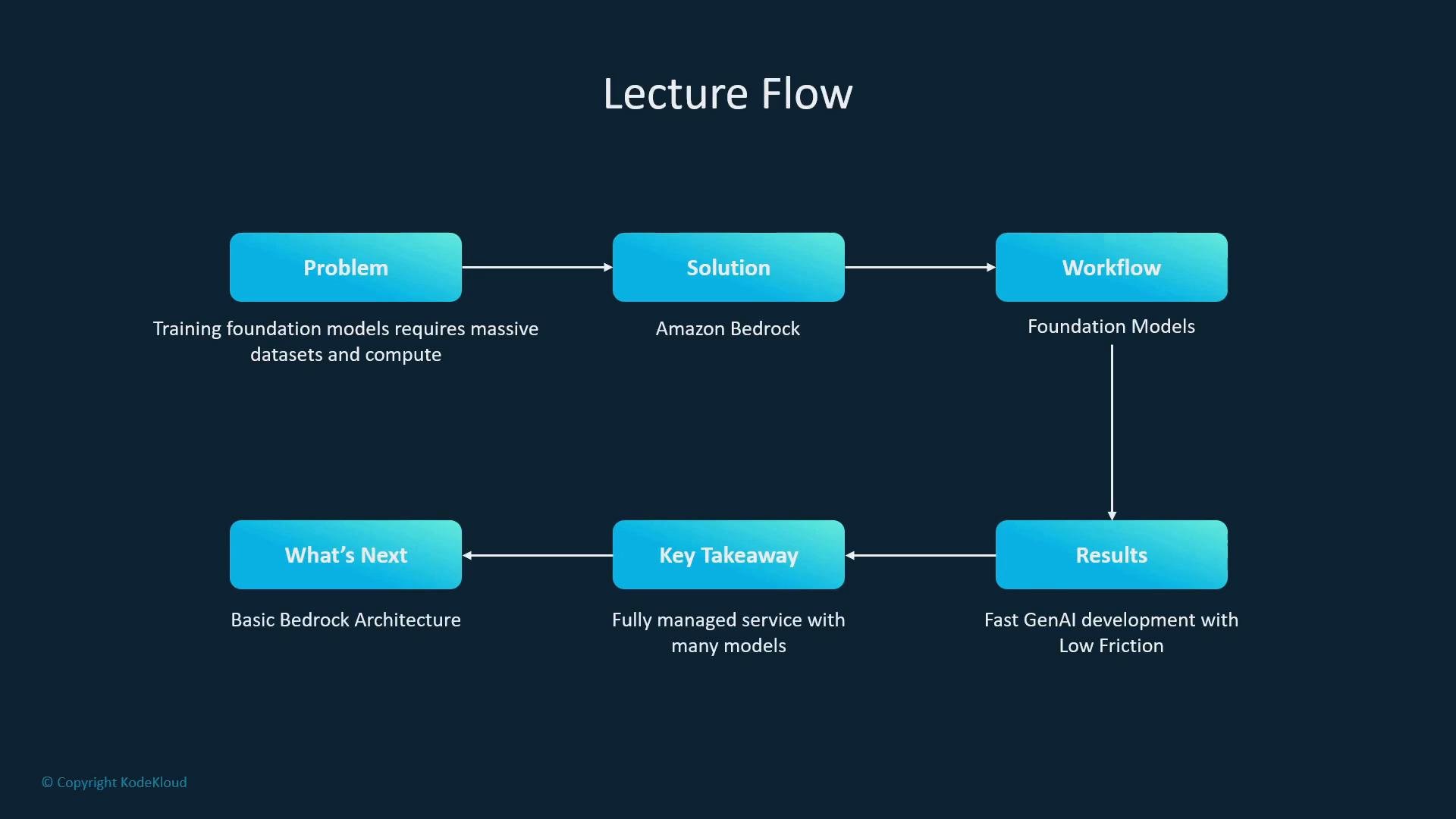
Why consuming foundation models is hard
Training foundation models from scratch requires massive datasets and enormous compute. Organizations such as Meta, OpenAI, and Anthropic can build these models, but most development teams cannot. That leads to a practical question: how can applications use these powerful models without building and operating the underlying infrastructure? Key practical challenges include: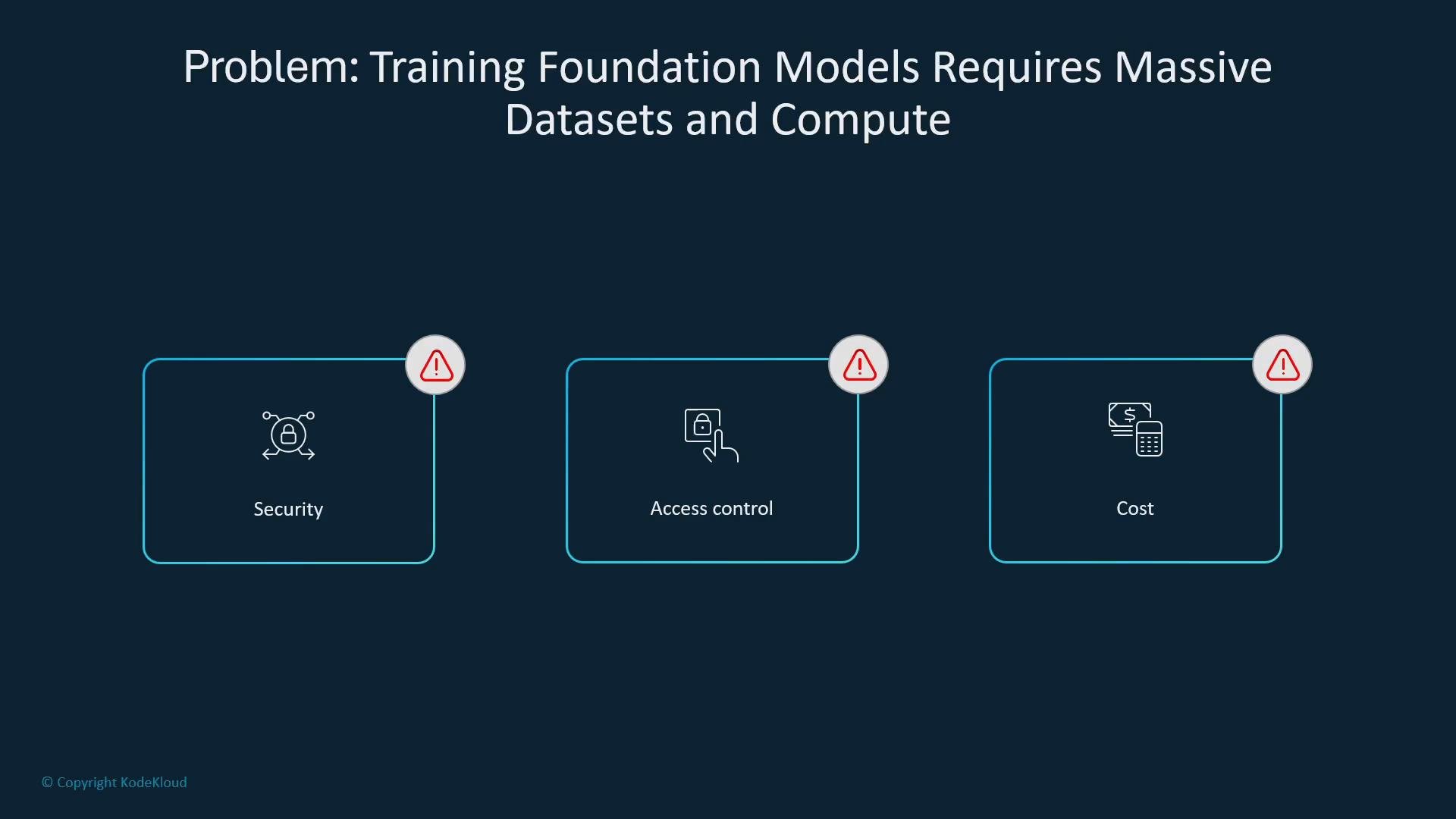
Solution: Amazon Bedrock
Amazon Bedrock is an AWS-managed service that provides a single runtime API to access multiple foundation models hosted on AWS. Instead of integrating separately with each vendor, your application speaks to Bedrock and specifies the model from the catalog. Bedrock routes the request to the hosted model and returns the response. Benefits at a glance: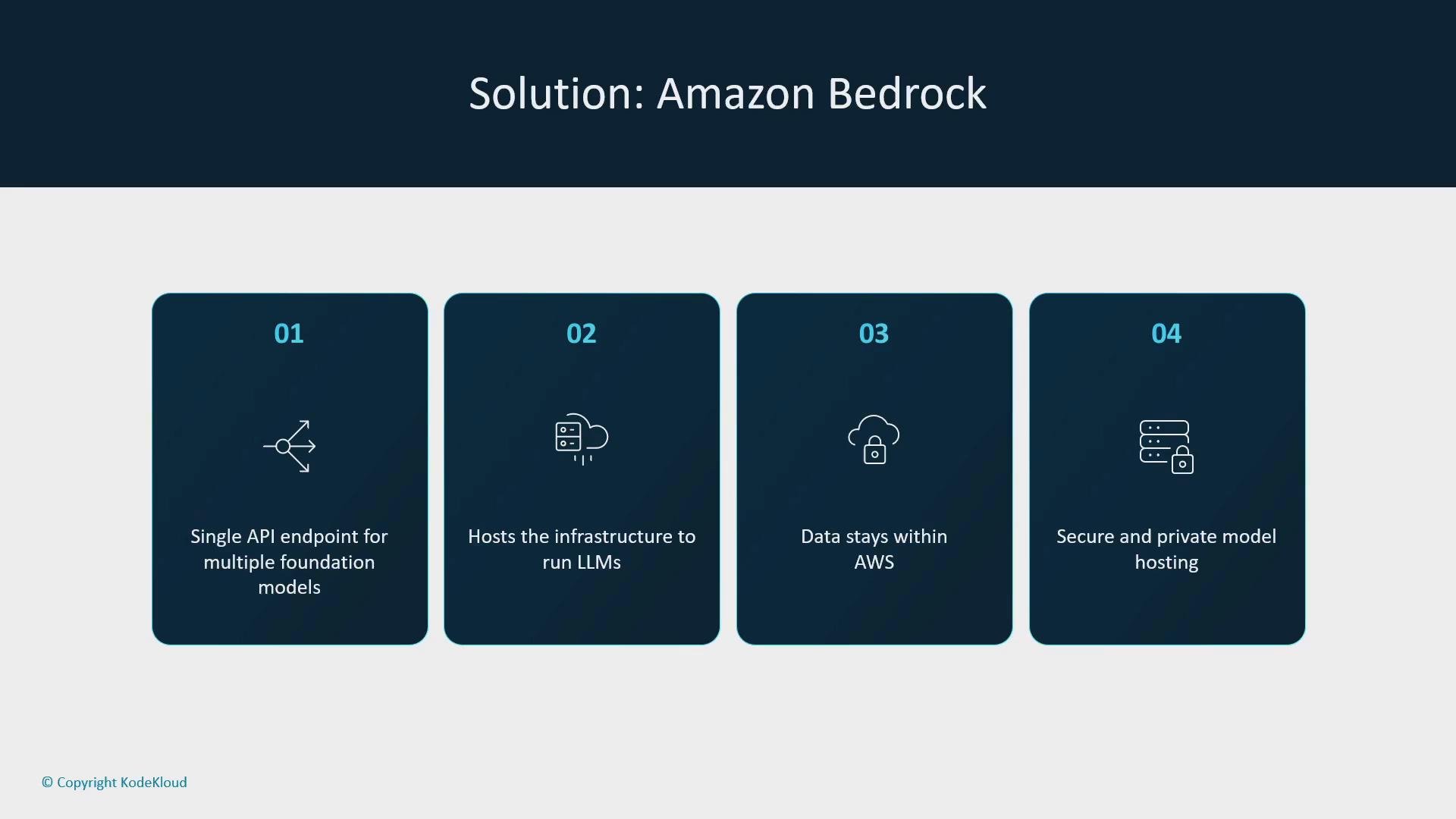
Important operational notes and best practices
- Region availability: Bedrock is not available in every AWS Region. Confirm availability using the AWS service region map before designing or deploying production systems.
Check region availability before you design your deployment. Model availability and the specific models in the catalog can vary by AWS Region.
- Data privacy: Data you pass to Bedrock remains within AWS and is not used by AWS to train the base foundation models. This reduces the risk of sending sensitive data to public third-party tools.
- Model catalog and regional variation: Each Region exposes a catalog of available models. The list of models and versions can differ between regions—inspect the region-specific catalog before you assume a model is available.
- Multimodal & multi-model workflows: Because Bedrock aggregates models from many vendors, you can compose workflows that route different modalities (text, image, audio) to different models while keeping a single integration point.
Bedrock’s availability, model catalog, and service-specific features may change over time. Validate regional model availability, pricing, and compliance controls for your organization before production rollout.
Using the model catalog and the Bedrock runtime API
When calling Bedrock, you select a model from the catalog and send your prompt to the Bedrock runtime API. Bedrock routes the request to the selected hosted model and returns the model response. Switching models is typically as simple as changing the model identifier in your API request. Example: conceptual pseudocode showing how model selection fits into a request:Summary and next steps
Amazon Bedrock reduces operational complexity for consuming foundation models by providing:- A single, managed API for multiple vendor models.
- Private hosting within AWS (data not used to train models).
- Simpler application integration and easy model switching.
- Show concrete Bedrock runtime API examples using the AWS SDK and signed requests.
- Walk through an end-to-end request/response example (including error handling and cost-control knobs).
- Demonstrate building multi-model, multimodal workflows with Bedrock.