In Bedrock, the term “foundation model” refers to a vendor-hosted model listed in the Bedrock catalog. Practitioners often shorten this to “model” — both terms mean the same hosted model instance available through Bedrock.
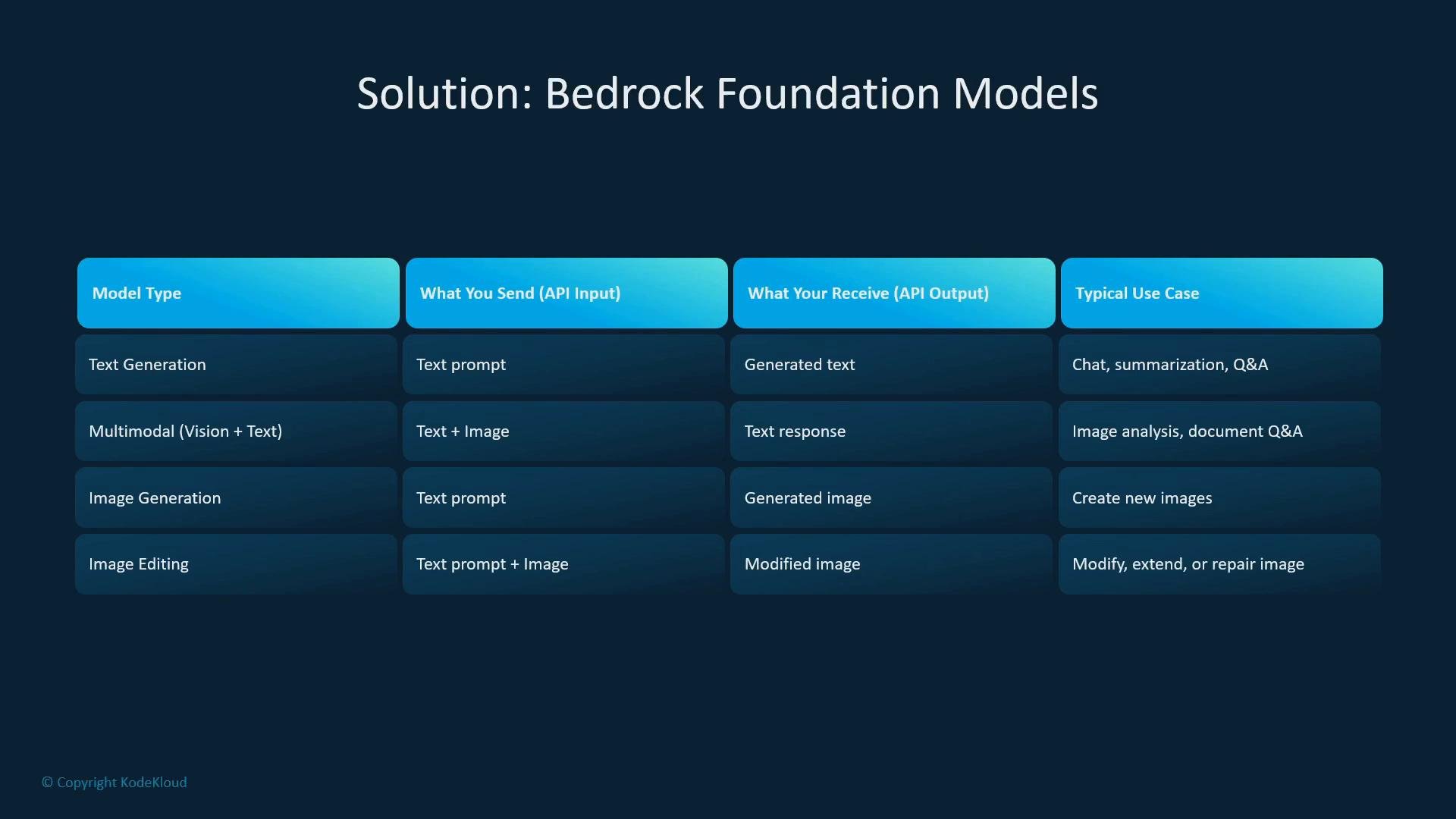
- Text generation: send text prompts to Bedrock and receive generated text (examples: summarization, chatbots, Q&A).
- Multimodal requests: submit text plus images (examples: image Q&A, product-photo categorization). The model typically returns a textual response for classification or description.
- Image generation: supply a text prompt and receive a generated image file (e.g., JPEG/PNG) for marketing and creative content.
- Image editing: send an existing image plus an instruction prompt, and receive the modified image (examples: object removal, inpainting).
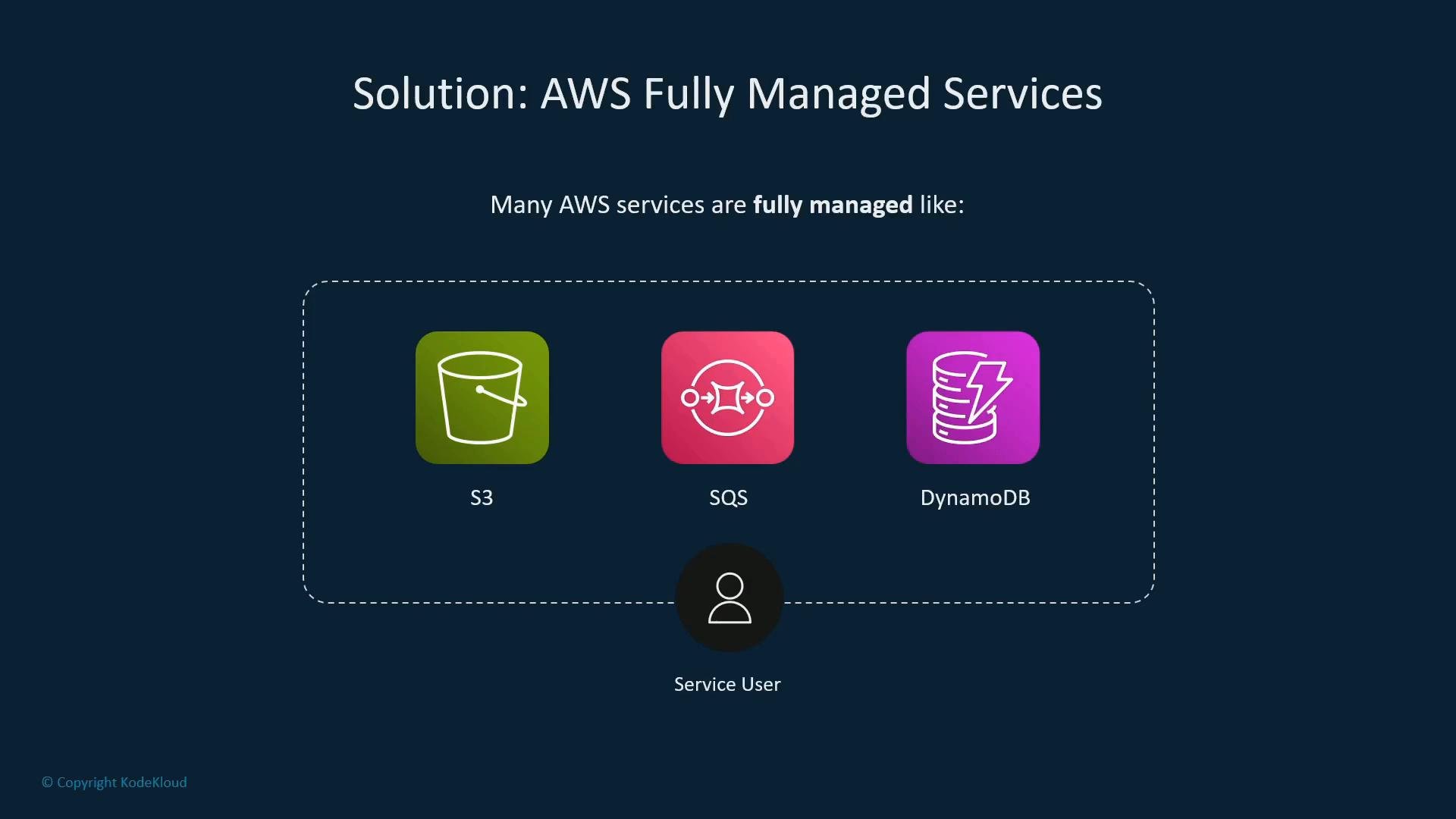
- You do not provision servers, configure availability zones, subnets, or manage failover.
- AWS handles capacity management, scaling, and high availability.
- To get started you only need to call the Bedrock Runtime API from your application, specifying a prompt and a model name.
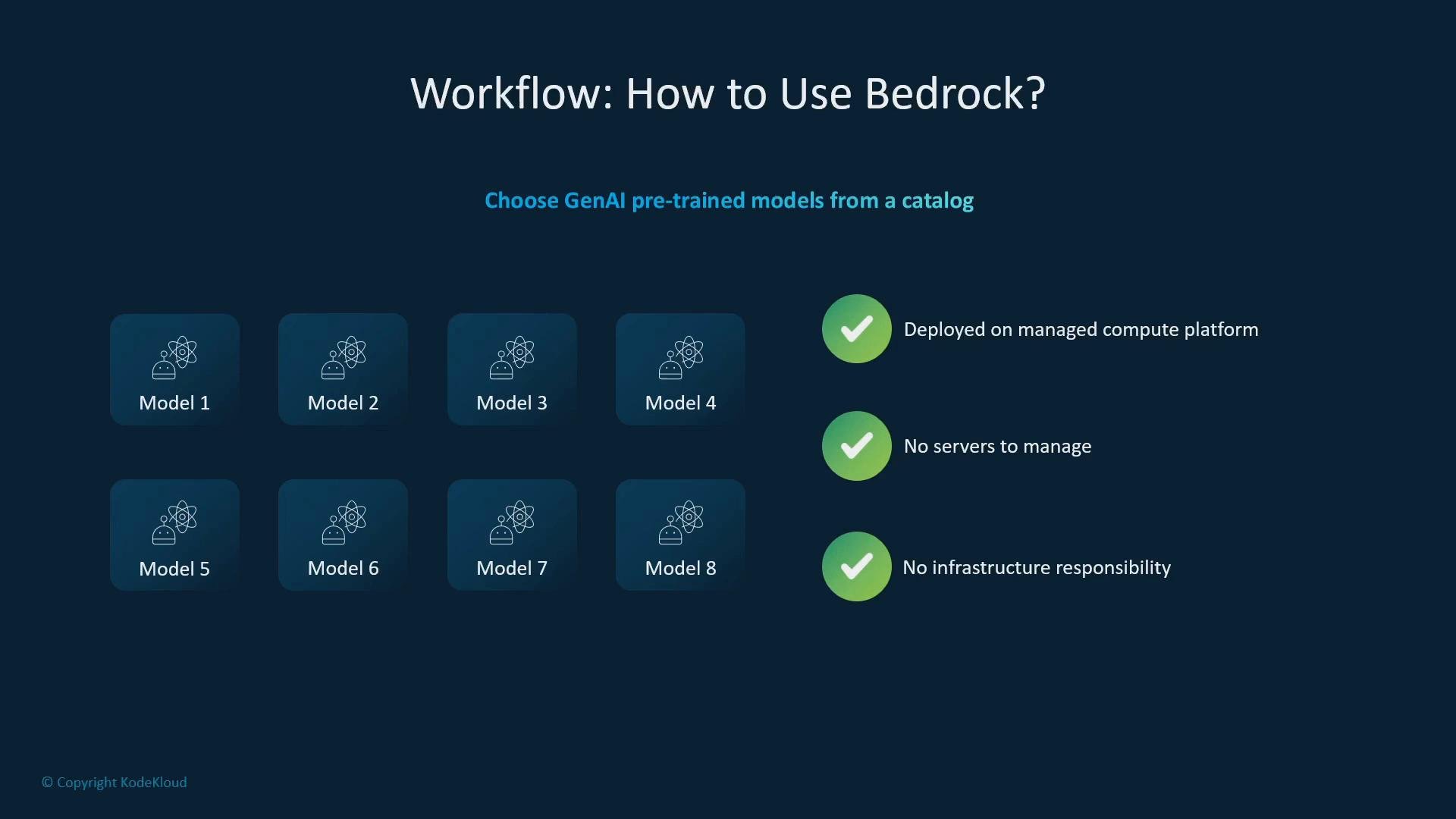
- Browse the Bedrock model catalog for the AWS Region you operate in — availability is region-specific.
- Check each model’s supported modalities (text, image, multimodal) and performance characteristics.
- Models listed in the catalog are pre-deployed on Bedrock’s managed compute; you will not manage the underlying infrastructure directly.
- End user interacts with your application (for example, a web or mobile UI).
- Your application server uses an AWS SDK or the Bedrock Runtime API to call Bedrock. (Clients should not call Bedrock directly.)
- The application supplies two key parameters:
- The prompt or input (text, image, or both).
- The Bedrock model name to route the request.
- Bedrock routes the prompt to the selected hosted model (for example,
meta-llama/llama-3-1-instruct-8b). - The model generates the response; Bedrock returns that response to your application, which decides how to present or use it.
- Data you want processed (for example, documents to be summarized) must be included in the prompt you send to Bedrock.
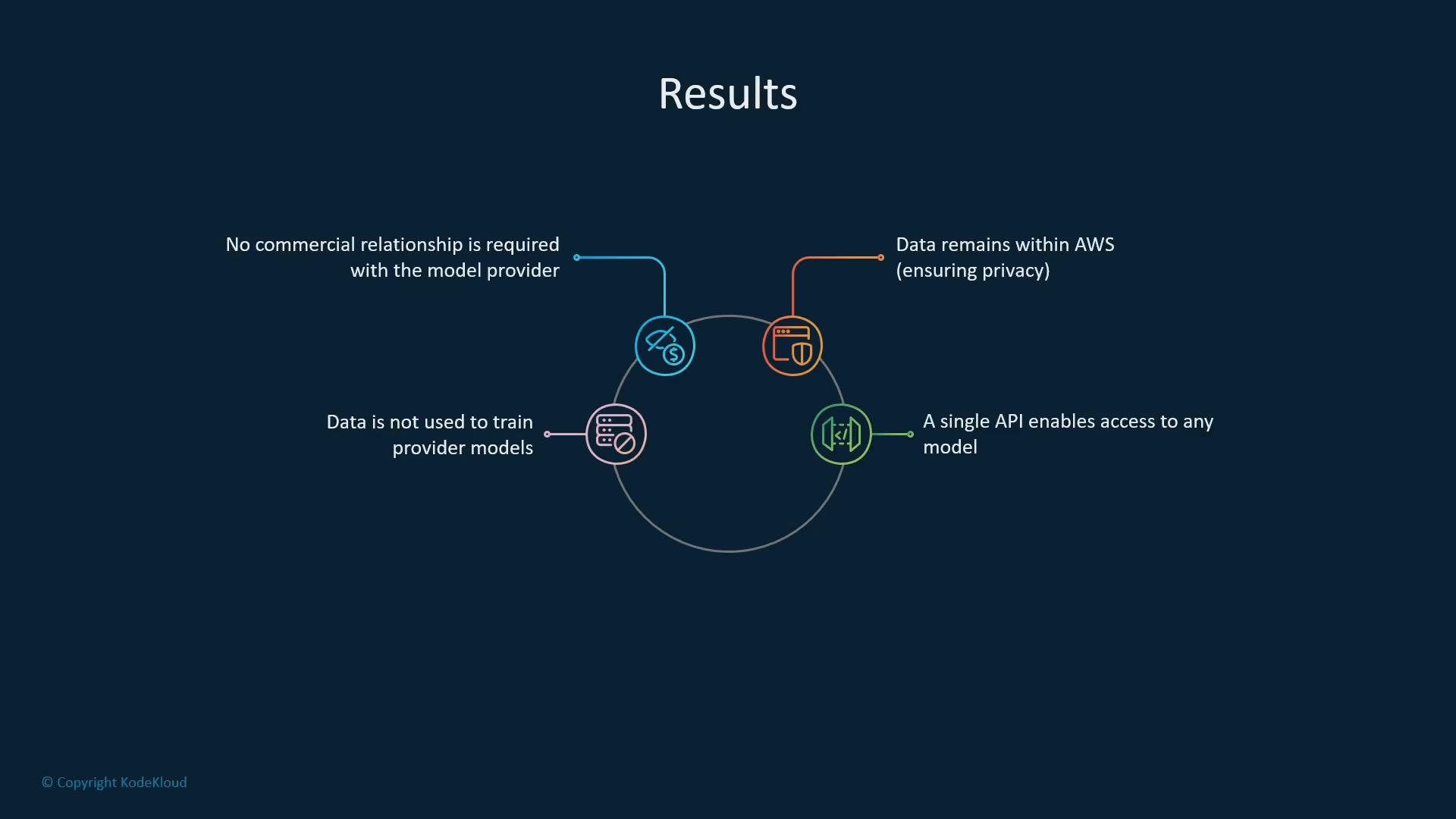
- Your contractual relationship is with AWS as the managed host; you are not required to enter separate commercial agreements with the model vendors to use models via Bedrock.
- AWS provides controls and documentation about data handling, retention, and whether data is used for model training. Review the official documentation and your AWS agreement for details.
Before sending sensitive or regulated data to Bedrock, confirm your organization’s compliance requirements and review the Bedrock data protection and retention policies: https://docs.aws.amazon.com/bedrock/latest/userguide/data-protection.html