> ## Documentation Index
> Fetch the complete documentation index at: https://notes.kodekloud.com/llms.txt
> Use this file to discover all available pages before exploring further.
# Advanced Networking Service Mesh and Multi Cluster
> This article discusses Kubernetes networking patterns, specifically Service Mesh and Multi-Cluster, and their benefits for cloud-native applications.
Two powerful Kubernetes networking patterns—Service Mesh and Multi-Cluster—can dramatically improve scalability, security, and availability for cloud-native applications. Although Company X doesn’t implement these in production today, mastering them offers deep insights into modern Kubernetes networking.
***
## Service Mesh
A Service Mesh is a dedicated infrastructure layer for handling service-to-service communication in microservices environments. Offloading networking logic to the mesh lets developers focus on application code, while the mesh provides:
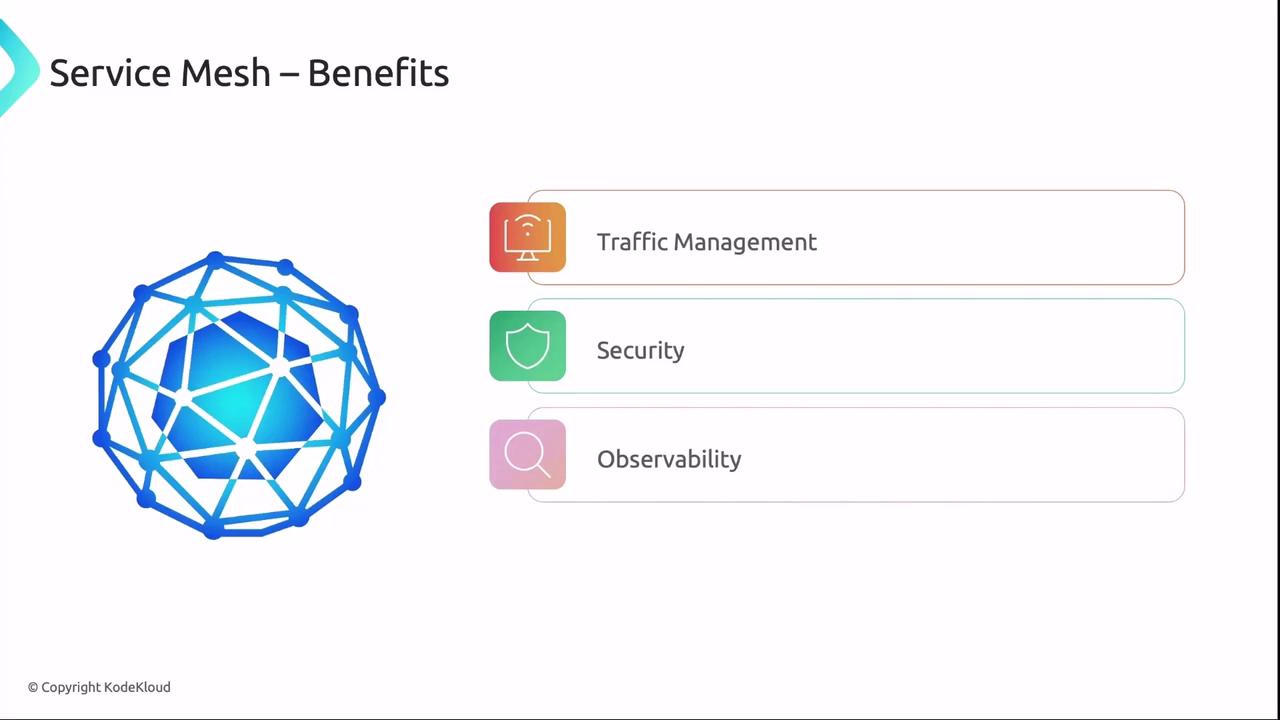
* Traffic Management
* Security
* Observability
Service Mesh isn’t part of Company X’s current stack, but understanding it is crucial for complex microservices landscapes.
### Key Benefits
| Benefit | Description |
| ------------------ | ------------------------------------------------------------------- |
| Traffic Management | Canary releases, A/B testing, blue/green deployments |
| Security | mTLS encryption, automatic certificate rotation, policy enforcement |
| Observability | Metrics, logs, distributed tracing for deep insights |
### Popular Providers
| Provider | Description | Website |
| -------- | ------------------------------------------------------------ | --------------------------------- |
| Istio | Rich feature set, Envoy integration for complex environments | [istio.io](https://istio.io/) |
| Linkerd | Lightweight, high-performance, minimal operational overhead | [linkerd.io](https://linkerd.io/) |
| Cilium | eBPF-powered mesh combining networking and security | [cilium.io](https://cilium.io/) |
### Core Architecture
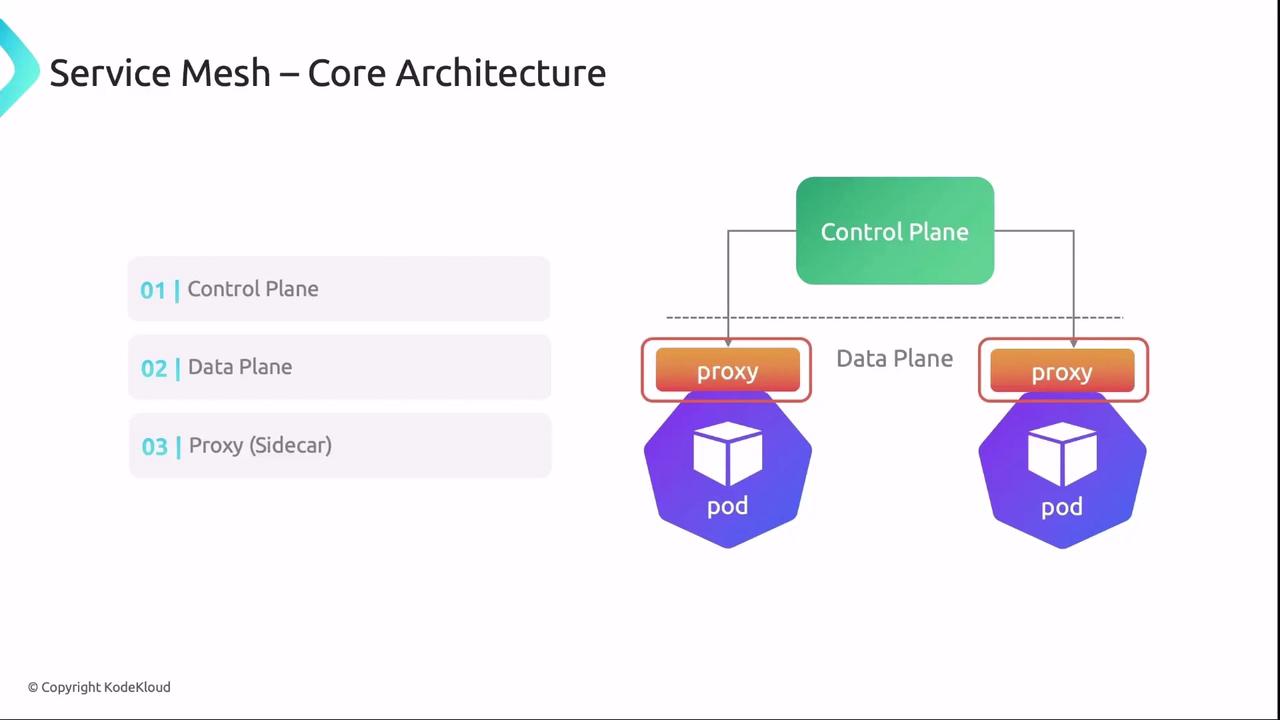
Service Mesh consists of three main components:
1. **Control Plane**\
Manages service discovery, configuration distribution, policy enforcement, and telemetry aggregation.
2. **Data Plane**\
Sidecar proxies (e.g., Envoy) intercept and control all network traffic for each service instance.
3. **Sidecar Proxy**\
Enforces routing rules, load balancing, security policies, and collects telemetry in each pod.
Proper certificate lifecycle management is critical for mTLS. Misconfigured certificates can lead to downtime or security gaps.
### Use Cases
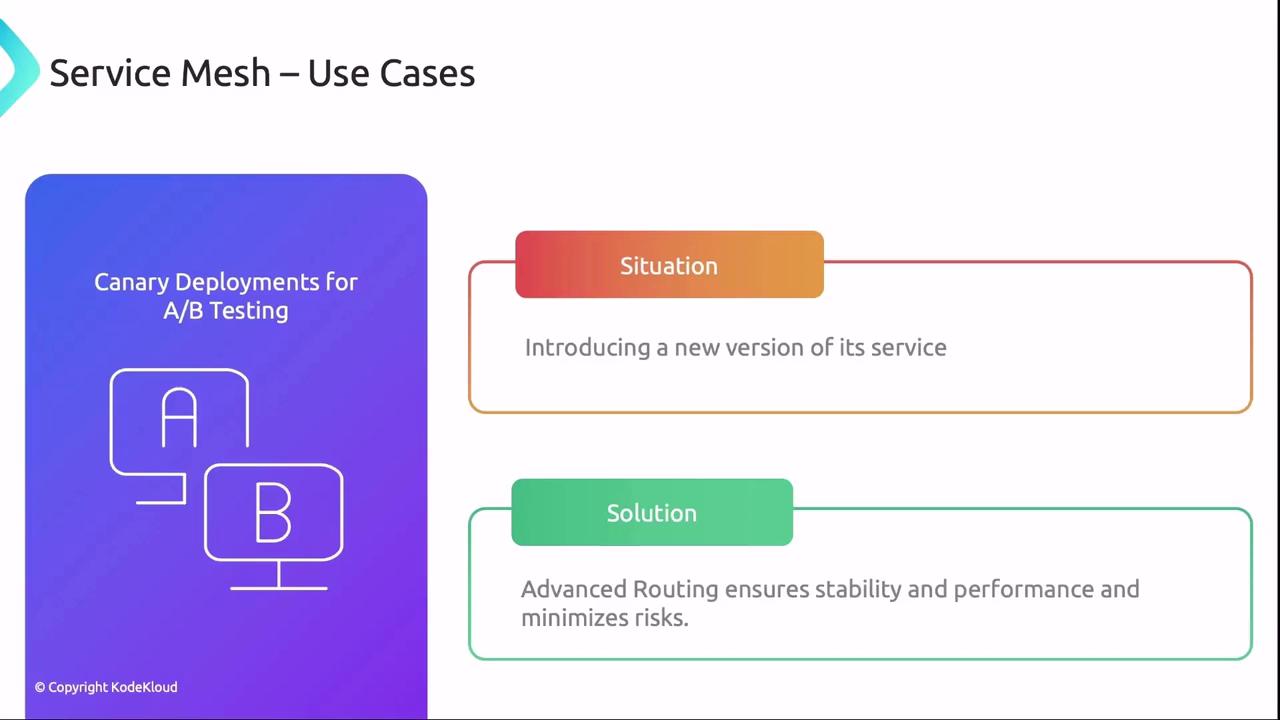
1. **Canary Deployments for A/B Testing**\
Gradually shift a small percentage of traffic to a new version before full rollout.
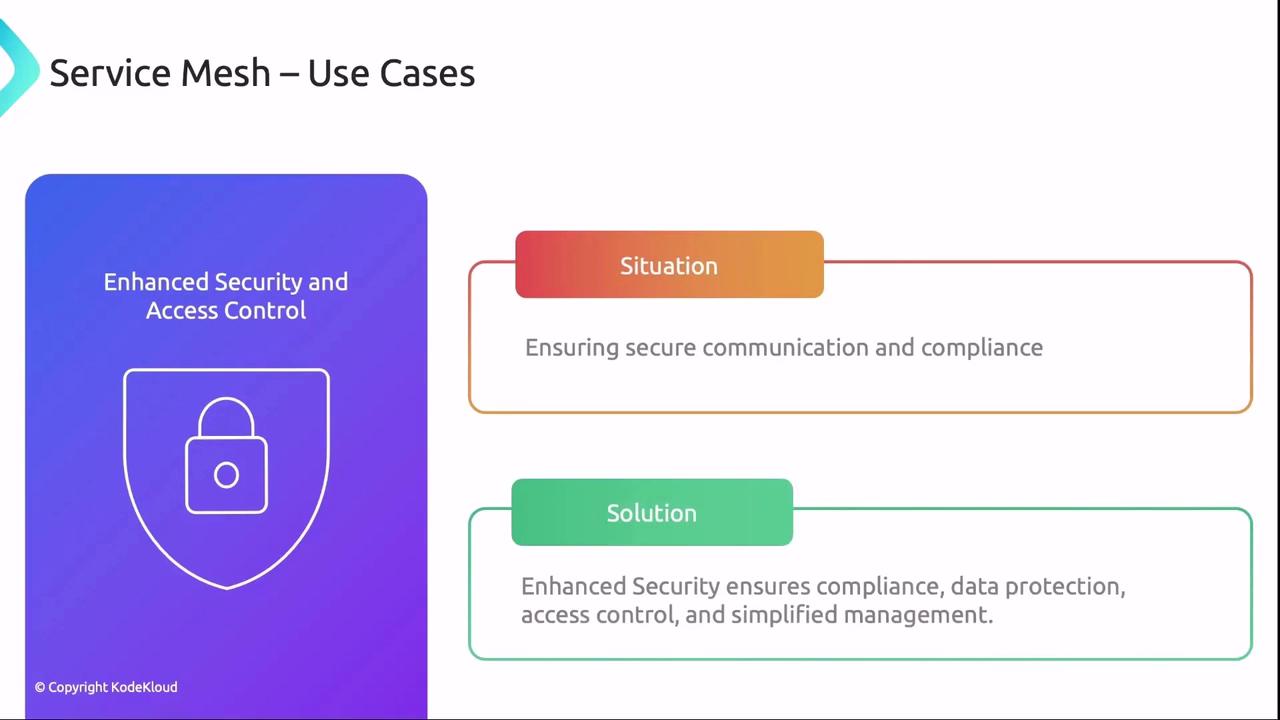
2. **Enhanced Security & Compliance**\
Automatically enforce mTLS, RBAC, and network policies for sensitive data flows.
3. **High Availability**\
Detect unhealthy instances and reroute traffic to healthy pods, ensuring continuous service.
***
## Multi-Cluster
Operating multiple Kubernetes clusters—either independently or as a cohesive system—enables:
| Use Case | Benefit |
| ---------------------- | --------------------------------------------------------------- |
| High Availability & DR | Regional distribution with automatic failover |
| Scalability | Horizontally scale workloads across clusters |
| Compliance & Isolation | Dedicated clusters for regulated or sensitive workloads |
| Resource Management | Tailor clusters for specific performance or cost requirements |
| Hybrid Deployments | Combine on-premises and multiple clouds to avoid vendor lock-in |
| Unified Management | Centralized control via Federation or Anthos |
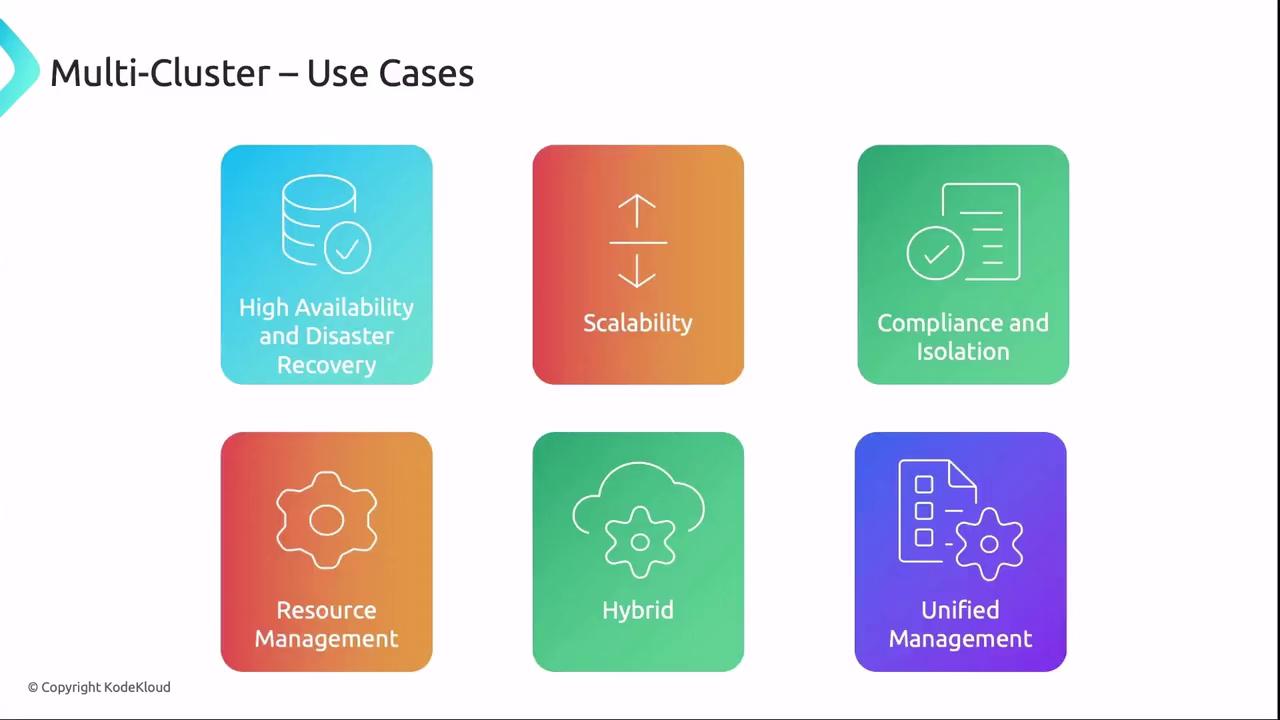
Key tools for Multi-Cluster control:
* Kubernetes Federation ([docs](https://kubernetes.io/docs/concepts/cluster-administration/federation/))
* Google Anthos ([cloud.google.com/anthos](https://cloud.google.com/anthos))
***
## Combining Service Mesh and Multi-Cluster
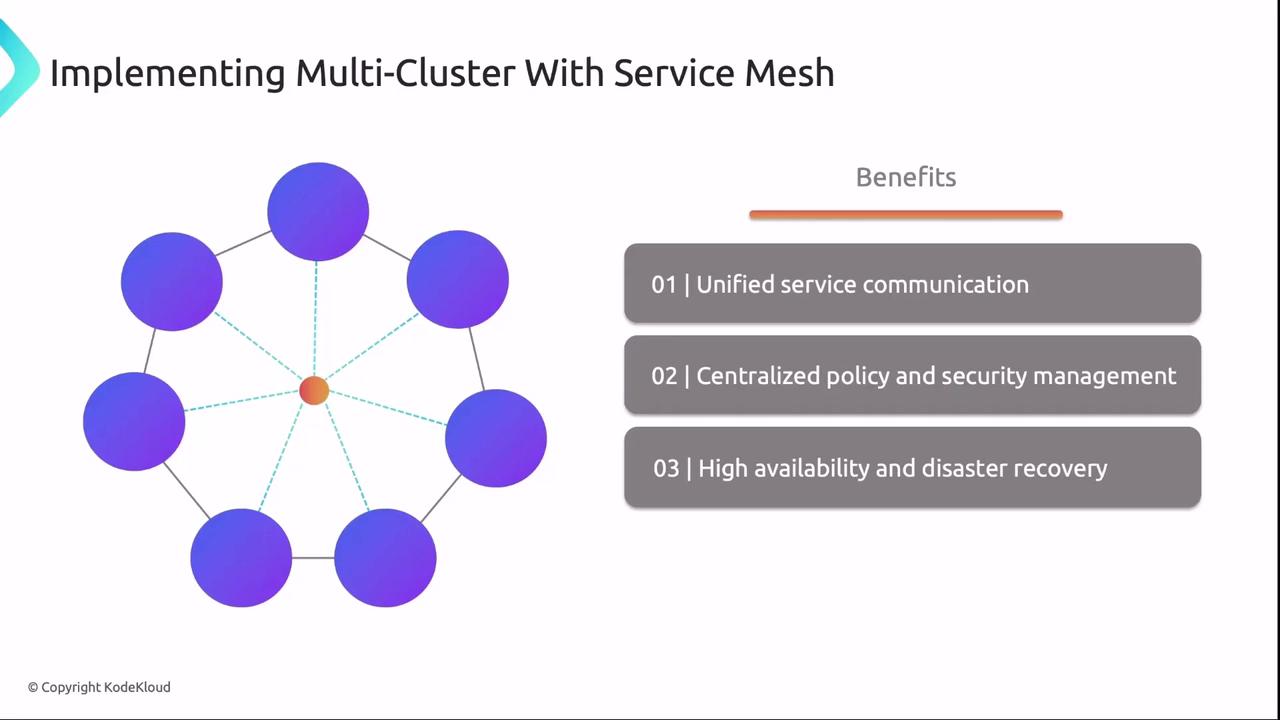
Merging Service Mesh with Multi-Cluster delivers:
* **Unified Service Communication**\
Cross-cluster service discovery and secure connectivity.
* **Centralized Policy & Security**\
Single policy definition enforced across all clusters with mTLS.
* **Global High Availability**\
Dynamic traffic routing ensures uptime even if an entire cluster fails.
* **Consolidated Observability**\
Centralized logging, metrics, and tracing from every cluster.
***
## Cilium Cluster Mesh
Since Company X uses Cilium as its CNI, Cilium Cluster Mesh extends networking and security across clusters with eBPF:
* Seamless service discovery and connectivity
* Consistent network policies and encryption
* Cross-cluster load balancing and failover
* Unified observability
Cilium Cluster Mesh requires host kernel support for eBPF features.
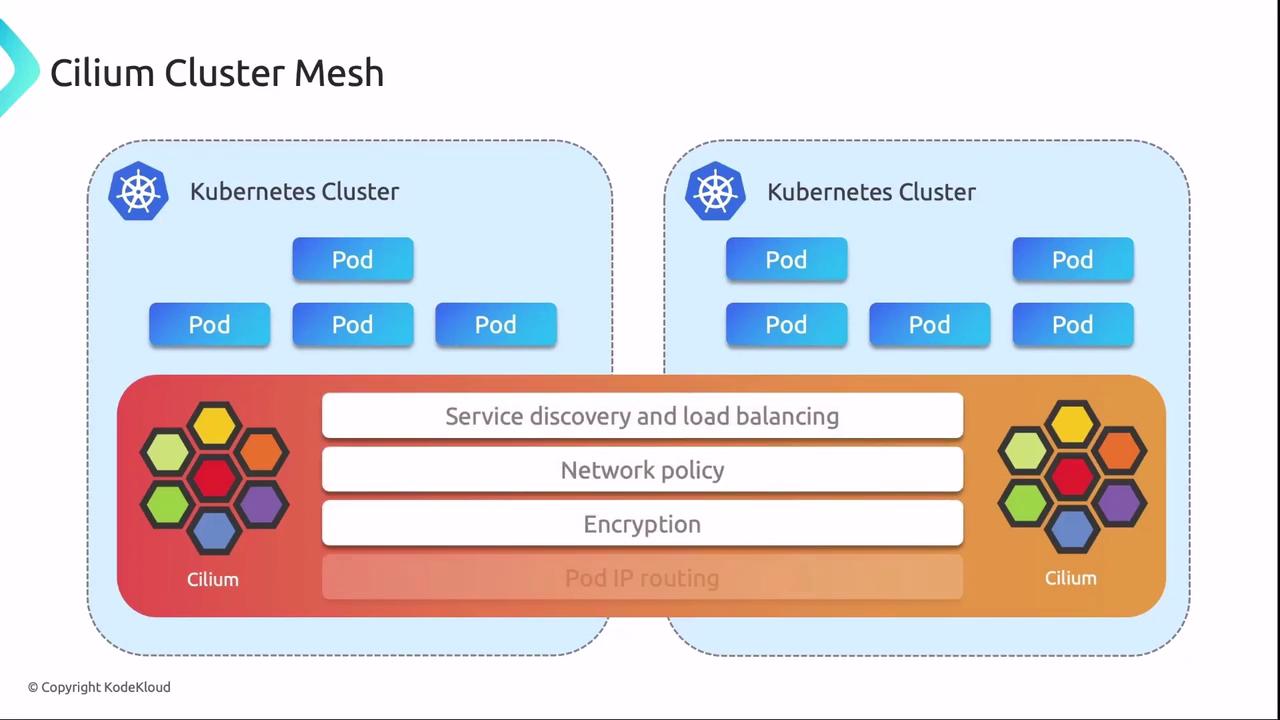
Getting started only requires multiple clusters running Cilium and network connectivity between them.
***
## Conclusion
Service Mesh and Multi-Cluster architectures provide:
* Advanced traffic management, mTLS security, and observability
* Geographic high availability, scalability, and operational flexibility
* A unified, resilient platform when used together, especially with Cilium Cluster Mesh
***
## Links and References
* [Kubernetes Documentation](https://kubernetes.io/docs/)
* [Istio Service Mesh](https://istio.io/)
* [Linkerd Service Mesh](https://linkerd.io/)
* [Cilium Project](https://cilium.io/)
* [eBPF Foundation](https://ebpf.io/)
* [Kubernetes Federation](https://kubernetes.io/docs/concepts/cluster-administration/federation/)
* [Anthos by Google Cloud](https://cloud.google.com/anthos)