> ## Documentation Index
> Fetch the complete documentation index at: https://notes.kodekloud.com/llms.txt
> Use this file to discover all available pages before exploring further.
# Understanding and Using tools
> Describes LangChain tools, their difference from RAG, and how to use external APIs and runtimes for live data, computation, and agent workflows.
Having implemented retrieval-augmented generation (RAG) and built chains for summarization and retrieval, it's time to focus on tools — what they are, why they matter, and how they differ from RAG.
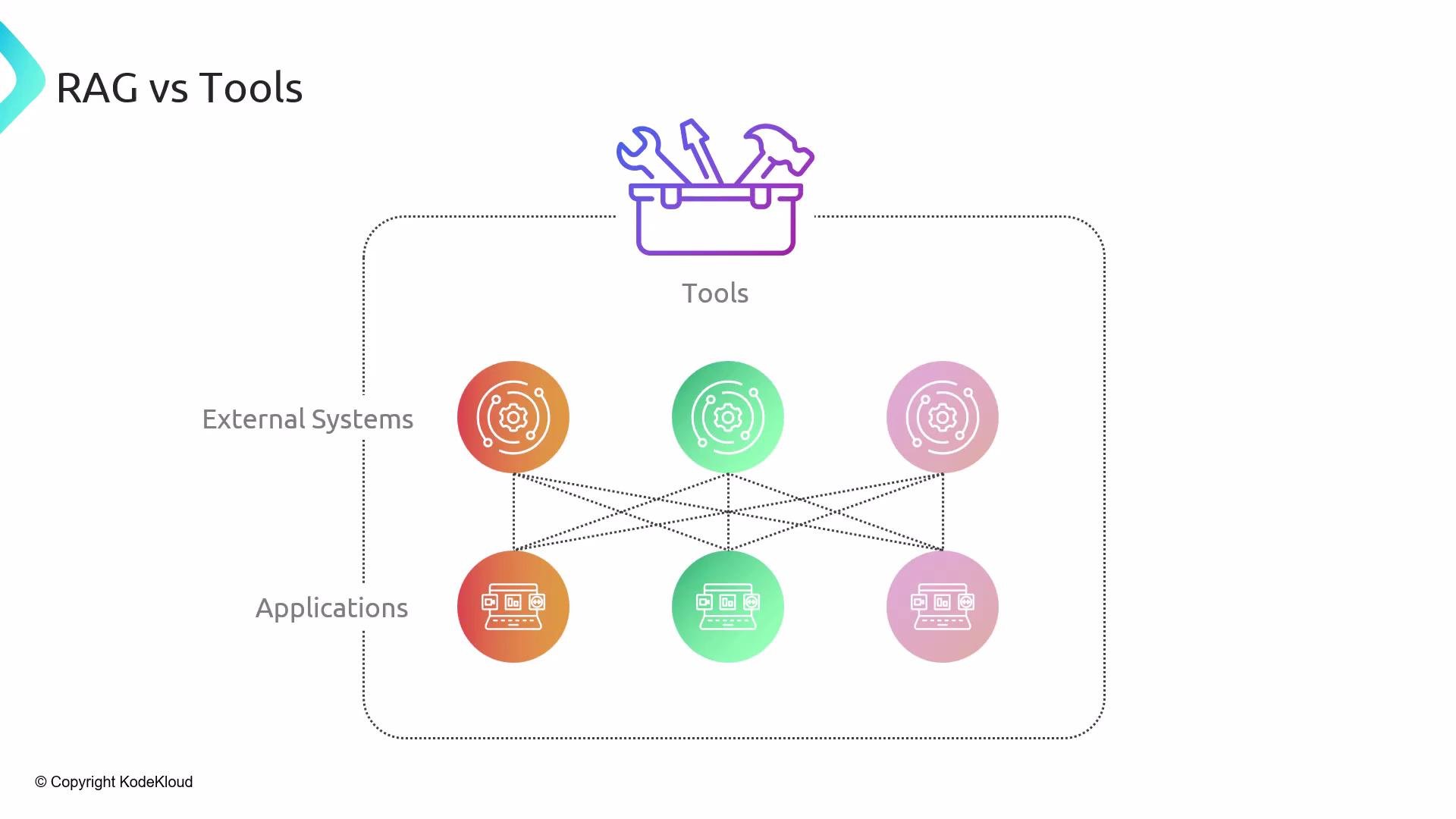
[LangChain](https://python.langchain.com/en/latest/) provides a set of tools to integrate large language models (LLMs) with external systems. In production, LLMs rarely operate alone; they often need access to up-to-date information, computation, or services outside of pre-indexed content.
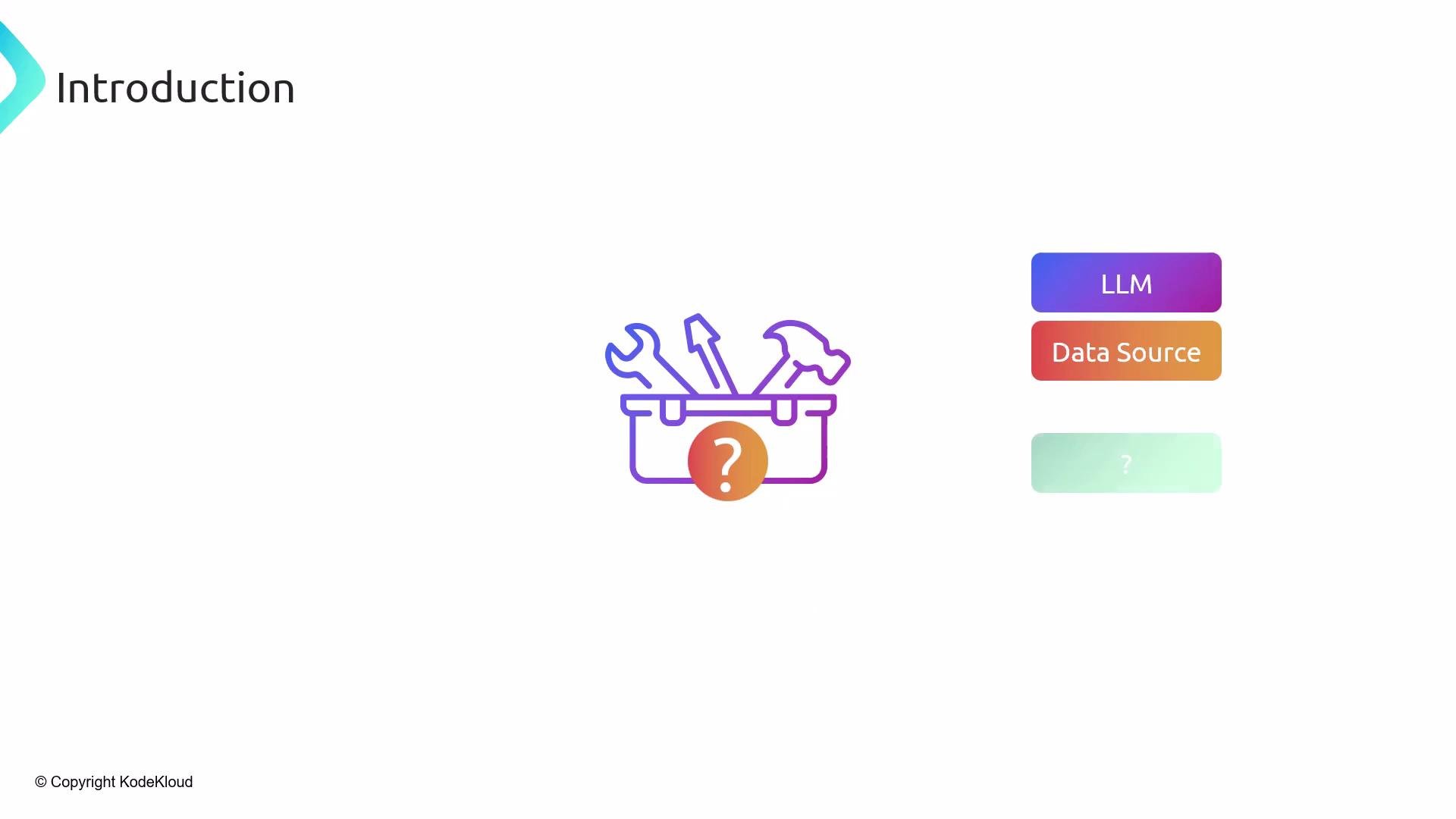 We always need an LLM, and we frequently use a data source (for example, documents stored in a vector database). But many real-world tasks need integration points to external systems — tooling that either supplies live data or performs on-demand computation.
Example: an airline chatbot
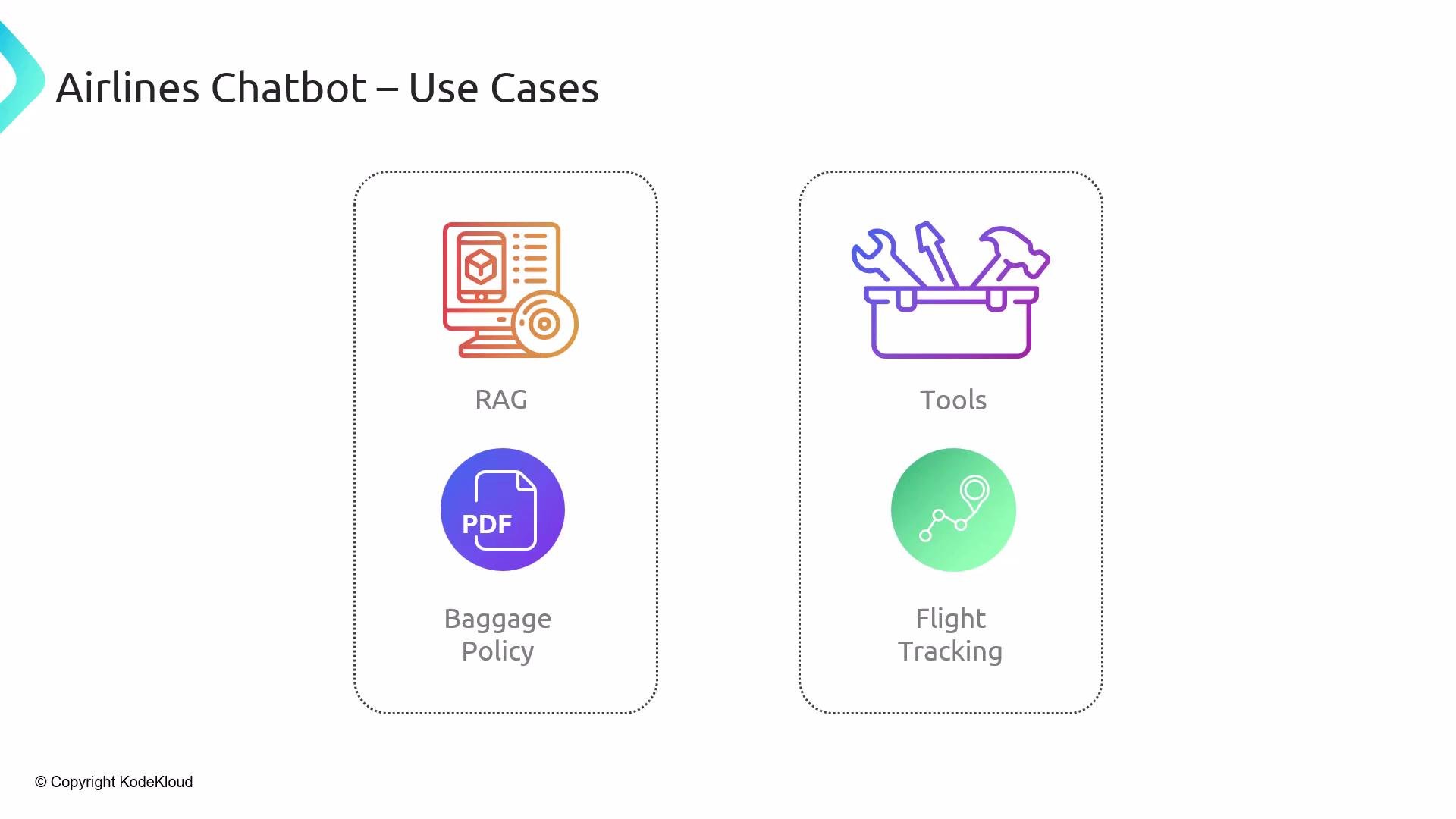
* Customer asks, “What is the baggage policy?” — this typically triggers RAG: retrieve relevant policy text from an indexed document (vector DB), inject it into the prompt, and generate an answer.
* Customer asks, “When is my flight expected to arrive?” — that requires current status from a flight-tracking API; the answer depends on live data, not the stored PDF.
We always need an LLM, and we frequently use a data source (for example, documents stored in a vector database). But many real-world tasks need integration points to external systems — tooling that either supplies live data or performs on-demand computation.
Example: an airline chatbot
* Customer asks, “What is the baggage policy?” — this typically triggers RAG: retrieve relevant policy text from an indexed document (vector DB), inject it into the prompt, and generate an answer.
* Customer asks, “When is my flight expected to arrive?” — that requires current status from a flight-tracking API; the answer depends on live data, not the stored PDF.
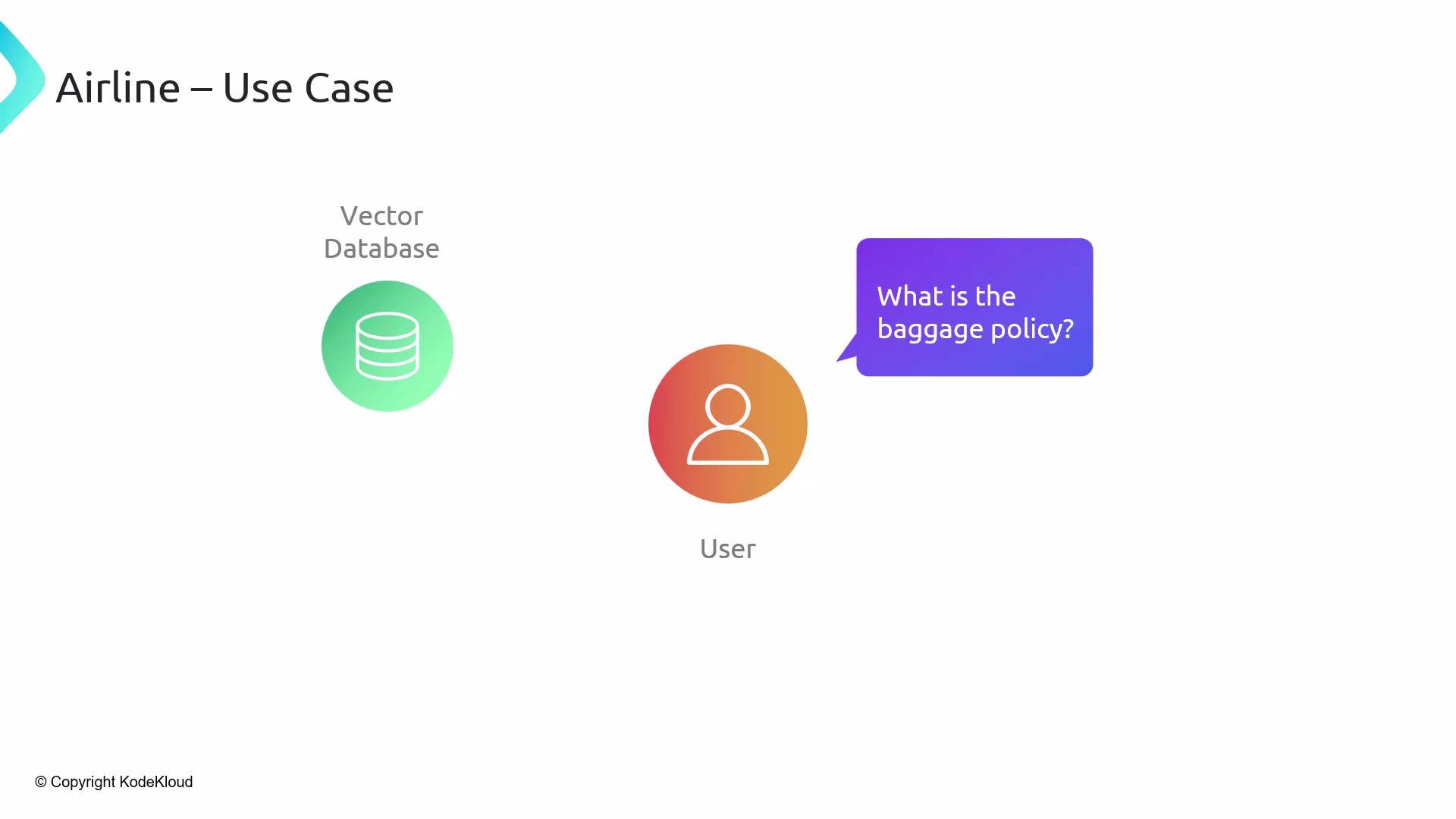 For live queries like the flight status, you must call an external API. This is the job of tools: they let your LangChain application interact with real-time services, streaming data sources, or specialized compute environments.
 What is a tool?
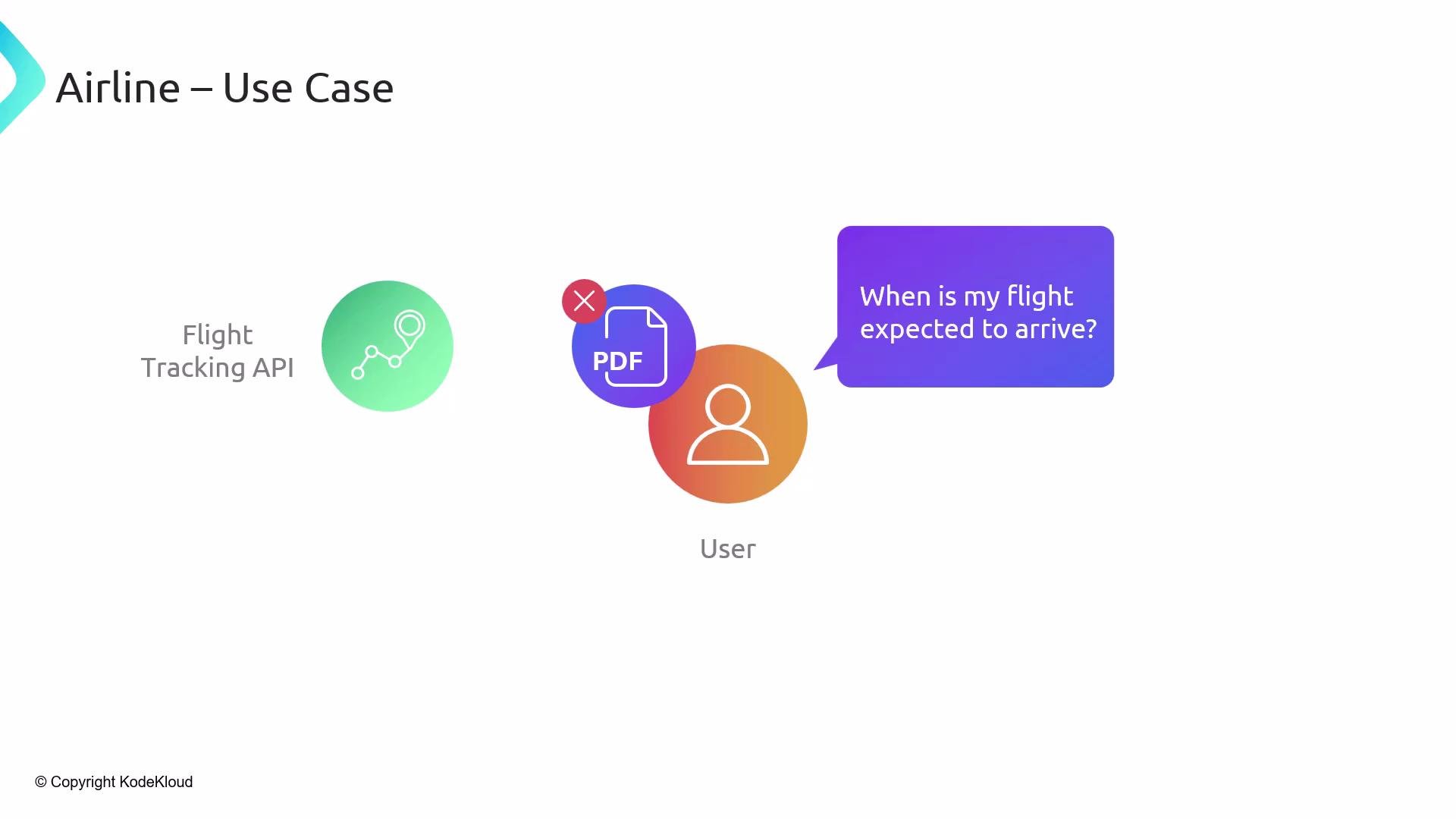
* In LangChain, a tool is a configurable module that exposes some external capability to your chain.
* Tools can fetch live data, call APIs, run custom logic, or execute code in a runtime (for example, Python).
* Agents — autonomous components that plan and pick actions — depend on tools to perform operations that the LLM cannot do by generation alone.
What is a tool?
* In LangChain, a tool is a configurable module that exposes some external capability to your chain.
* Tools can fetch live data, call APIs, run custom logic, or execute code in a runtime (for example, Python).
* Agents — autonomous components that plan and pick actions — depend on tools to perform operations that the LLM cannot do by generation alone.
 Common tool examples
* Wikipedia — fetch and summarize articles ([Wikipedia](https://en.wikipedia.org/))
* Web search — perform live internet queries
* YouTube — retrieve transcripts or summarizations ([YouTube](https://www.youtube.com/))
* Python runtime — run code for numerical computation or data processing ([Python](https://www.python.org/))
* Custom tools — wrappers for internal APIs or business logic
Common tool examples
* Wikipedia — fetch and summarize articles ([Wikipedia](https://en.wikipedia.org/))
* Web search — perform live internet queries
* YouTube — retrieve transcripts or summarizations ([YouTube](https://www.youtube.com/))
* Python runtime — run code for numerical computation or data processing ([Python](https://www.python.org/))
* Custom tools — wrappers for internal APIs or business logic
 YouTube is a common case: fetch a transcript, summarize salient points, or answer questions about the video in real time.
 A Python runtime as a tool is especially powerful:
* Run complex simulations, perform statistical analyses, or generate structured outputs.
* Return results to the LLM for further reasoning or response composition.
* Wrap domain-specific functions as callable tools to preserve business logic and ensure repeatability.
When to use RAG vs Tools
* RAG: augment prompts with context retrieved from preprocessed, indexed data (vector databases, document stores). Best for static or slowly changing content (policies, manuals, archived logs).
* Tools: interact with live systems or perform computation that must occur at query time (APIs, streaming data, heavy algorithms).
A Python runtime as a tool is especially powerful:
* Run complex simulations, perform statistical analyses, or generate structured outputs.
* Return results to the LLM for further reasoning or response composition.
* Wrap domain-specific functions as callable tools to preserve business logic and ensure repeatability.
When to use RAG vs Tools
* RAG: augment prompts with context retrieved from preprocessed, indexed data (vector databases, document stores). Best for static or slowly changing content (policies, manuals, archived logs).
* Tools: interact with live systems or perform computation that must occur at query time (APIs, streaming data, heavy algorithms).
 Key distinctions
* RAG is usually asynchronous and batch-driven: documents get vectorized over time, and retrieval happens during queries.
* Tools provide synchronous access to external capabilities and real-time data.
* For heavy computation or real-time decision-making, delegate to tools (e.g., a Python tool). For retrieving policy text or archived content, use RAG.
Example recap
* Baggage policy → RAG (static documentation)
* Flight tracking → Tool (flight-tracking API / real-time data)
Key distinctions
* RAG is usually asynchronous and batch-driven: documents get vectorized over time, and retrieval happens during queries.
* Tools provide synchronous access to external capabilities and real-time data.
* For heavy computation or real-time decision-making, delegate to tools (e.g., a Python tool). For retrieving policy text or archived content, use RAG.
Example recap
* Baggage policy → RAG (static documentation)
* Flight tracking → Tool (flight-tracking API / real-time data)
 Quick reference: RAG vs Tools
| Capability | Best For | Typical Example |
| -----------------------------------: | --------------------------------------------- | ------------------------------------------------------------- |
| Retrieval-Augmented Generation (RAG) | Static or pre-indexed content | `Search a company's archived policy PDFs` |
| Tools | Real-time data, external APIs, or computation | `Call a flight-tracking API` or `Execute a Python simulation` |
RAG is ideal for retrieving pre-indexed, relatively static content. Use tools when you need real-time data, live API calls, or external computation.
Next steps
* We will demonstrate concrete tool implementations and how to wire them into LangChain chains.
* After the demos, we’ll dive into agents: how they plan, decide which tools to call, and orchestrate multi-step workflows.
Links and references
* [LangChain Documentation](https://python.langchain.com/en/latest/)
* [Wikipedia](https://en.wikipedia.org/)
* [YouTube](https://www.youtube.com/)
* [Python](https://www.python.org/)
Quick reference: RAG vs Tools
| Capability | Best For | Typical Example |
| -----------------------------------: | --------------------------------------------- | ------------------------------------------------------------- |
| Retrieval-Augmented Generation (RAG) | Static or pre-indexed content | `Search a company's archived policy PDFs` |
| Tools | Real-time data, external APIs, or computation | `Call a flight-tracking API` or `Execute a Python simulation` |
RAG is ideal for retrieving pre-indexed, relatively static content. Use tools when you need real-time data, live API calls, or external computation.
Next steps
* We will demonstrate concrete tool implementations and how to wire them into LangChain chains.
* After the demos, we’ll dive into agents: how they plan, decide which tools to call, and orchestrate multi-step workflows.
Links and references
* [LangChain Documentation](https://python.langchain.com/en/latest/)
* [Wikipedia](https://en.wikipedia.org/)
* [YouTube](https://www.youtube.com/)
* [Python](https://www.python.org/)