> ## Documentation Index
> Fetch the complete documentation index at: https://notes.kodekloud.com/llms.txt
> Use this file to discover all available pages before exploring further.
# Course Introduction
> Introductory course on mathematics for computing covering linear algebra, calculus, optimization, backpropagation, and probability with practical examples and hands-on applications.
Have you ever wondered how devices can recognize faces, predict the weather, navigate cars, or extract insights from huge datasets—often outperforming humans at specific tasks? The answer lies in mathematics: the foundational language that enables computers and intelligent systems to reason, learn, and optimize.
In this course we’ll demystify those mathematical ideas and show how they are applied in real-world computing systems such as computer vision, recommendation engines, and optimization pipelines. Expect practical intuition, hands-on examples, and conceptual clarity so you can use mathematics confidently in applied projects.
Hi — I’m Alan Chapman, and I’ll guide you through the Mathematics for Computing course. Below is an overview of what you’ll learn and how the course is structured.
 What this course covers
* Linear algebra: vectors, matrices, and tensors — the data structures used to represent images, audio, and model parameters.
* Calculus: derivatives, gradients, and partial derivatives — the math of change used to optimize models and tune parameters.
* Gradient-based optimization and backpropagation: how models learn by propagating error gradients through layered architectures.
* Probability and statistics: modeling uncertainty, Bayes’ theorem, and statistical inference for decision-making and estimation.
* Practical examples and intuition: applying theory to real problems in machine learning, graphics, and optimization.
Learning outcomes
* Build and manipulate vector/matrix/tensor representations.
* Compute gradients and partial derivatives for multivariable functions.
* Explain and implement backpropagation and basic gradient descent algorithms.
* Use probability distributions and Bayes’ theorem to reason under uncertainty.
* Translate mathematical concepts into working code and model implementations.
Module 1 — Linear Algebra
Linear algebra provides the language for structured data and transformations. You’ll learn:
* Vector and matrix operations: addition, scalar multiplication, dot products, and matrix multiplication.
* Matrix decompositions and their uses (conceptual overview).
* Tensors and higher-dimensional arrays used in deep learning frameworks.
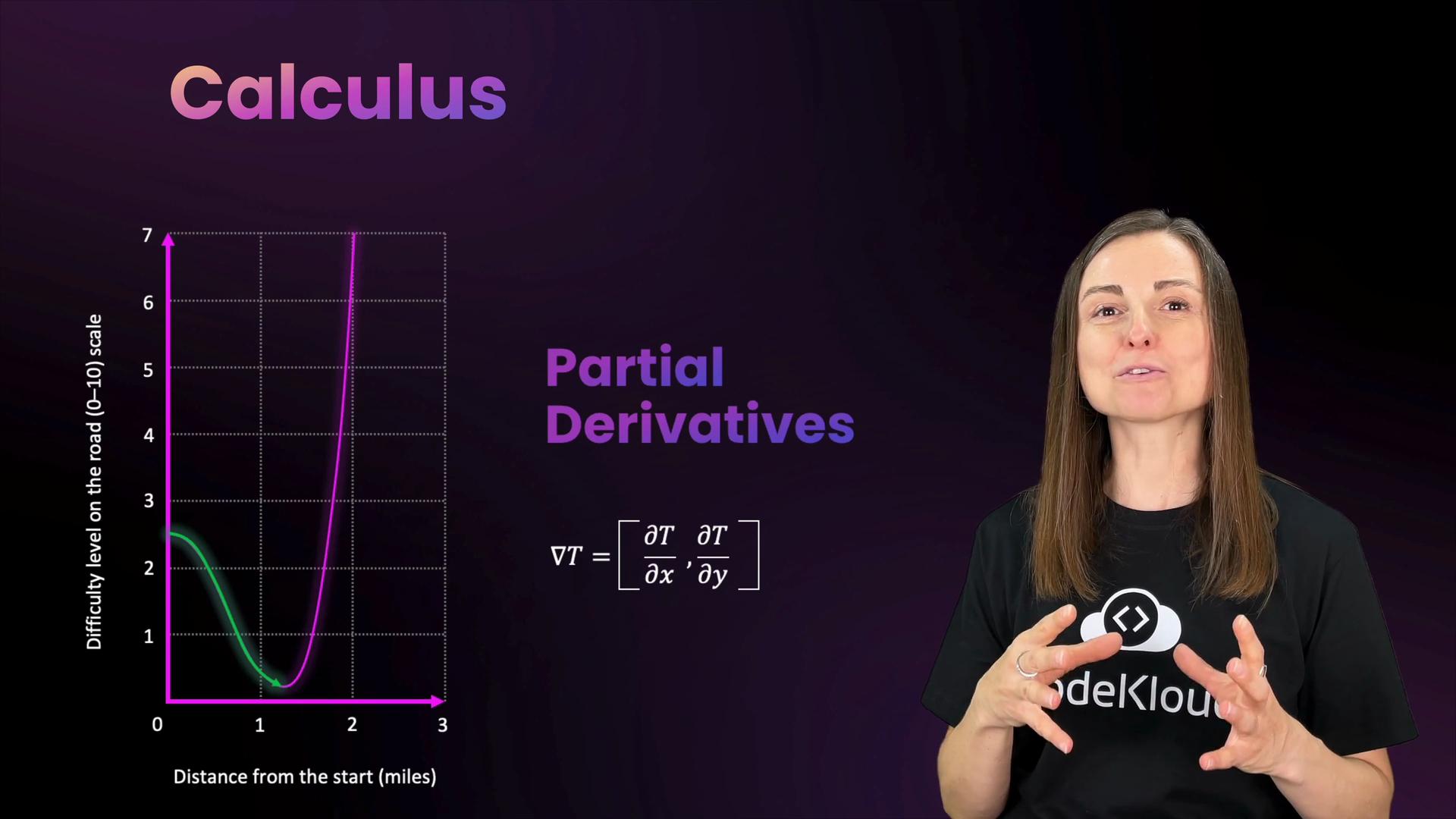
Module 2 — Calculus and Gradients
Calculus explains how outputs change when inputs vary. Key topics include:
* Single-variable derivatives and gradients.
* Partial derivatives for multivariable functions.
* Using gradients in optimization algorithms such as gradient descent.
What this course covers
* Linear algebra: vectors, matrices, and tensors — the data structures used to represent images, audio, and model parameters.
* Calculus: derivatives, gradients, and partial derivatives — the math of change used to optimize models and tune parameters.
* Gradient-based optimization and backpropagation: how models learn by propagating error gradients through layered architectures.
* Probability and statistics: modeling uncertainty, Bayes’ theorem, and statistical inference for decision-making and estimation.
* Practical examples and intuition: applying theory to real problems in machine learning, graphics, and optimization.
Learning outcomes
* Build and manipulate vector/matrix/tensor representations.
* Compute gradients and partial derivatives for multivariable functions.
* Explain and implement backpropagation and basic gradient descent algorithms.
* Use probability distributions and Bayes’ theorem to reason under uncertainty.
* Translate mathematical concepts into working code and model implementations.
Module 1 — Linear Algebra
Linear algebra provides the language for structured data and transformations. You’ll learn:
* Vector and matrix operations: addition, scalar multiplication, dot products, and matrix multiplication.
* Matrix decompositions and their uses (conceptual overview).
* Tensors and higher-dimensional arrays used in deep learning frameworks.
Module 2 — Calculus and Gradients
Calculus explains how outputs change when inputs vary. Key topics include:
* Single-variable derivatives and gradients.
* Partial derivatives for multivariable functions.
* Using gradients in optimization algorithms such as gradient descent.
 Module 3 — Optimization and Backpropagation
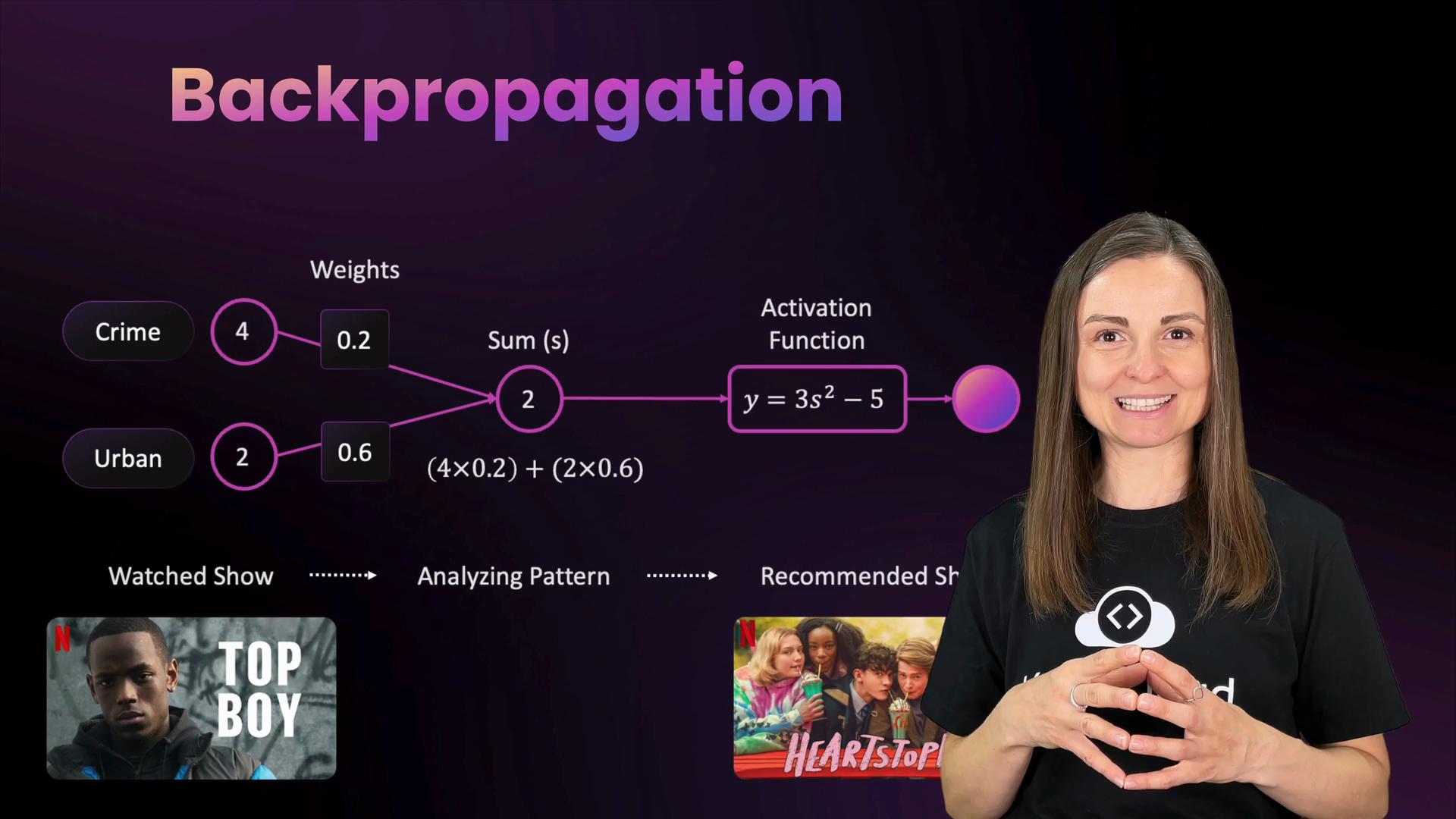
Gradient-based optimization is the backbone of modern machine learning. We’ll cover:
* Gradient descent variants (batch, stochastic, mini-batch).
* Backpropagation: computing gradients efficiently through layered models.
* Practical considerations: learning rates, momentum, and convergence.
Example: Simple gradient descent pseudocode
```text theme={null}
initialize parameters θ
repeat until convergence:
compute gradient g = ∇_θ Loss(θ)
θ = θ - η * g # η is the learning rate
```
Module 3 — Optimization and Backpropagation
Gradient-based optimization is the backbone of modern machine learning. We’ll cover:
* Gradient descent variants (batch, stochastic, mini-batch).
* Backpropagation: computing gradients efficiently through layered models.
* Practical considerations: learning rates, momentum, and convergence.
Example: Simple gradient descent pseudocode
```text theme={null}
initialize parameters θ
repeat until convergence:
compute gradient g = ∇_θ Loss(θ)
θ = θ - η * g # η is the learning rate
```
 Module 4 — Probability and Statistics
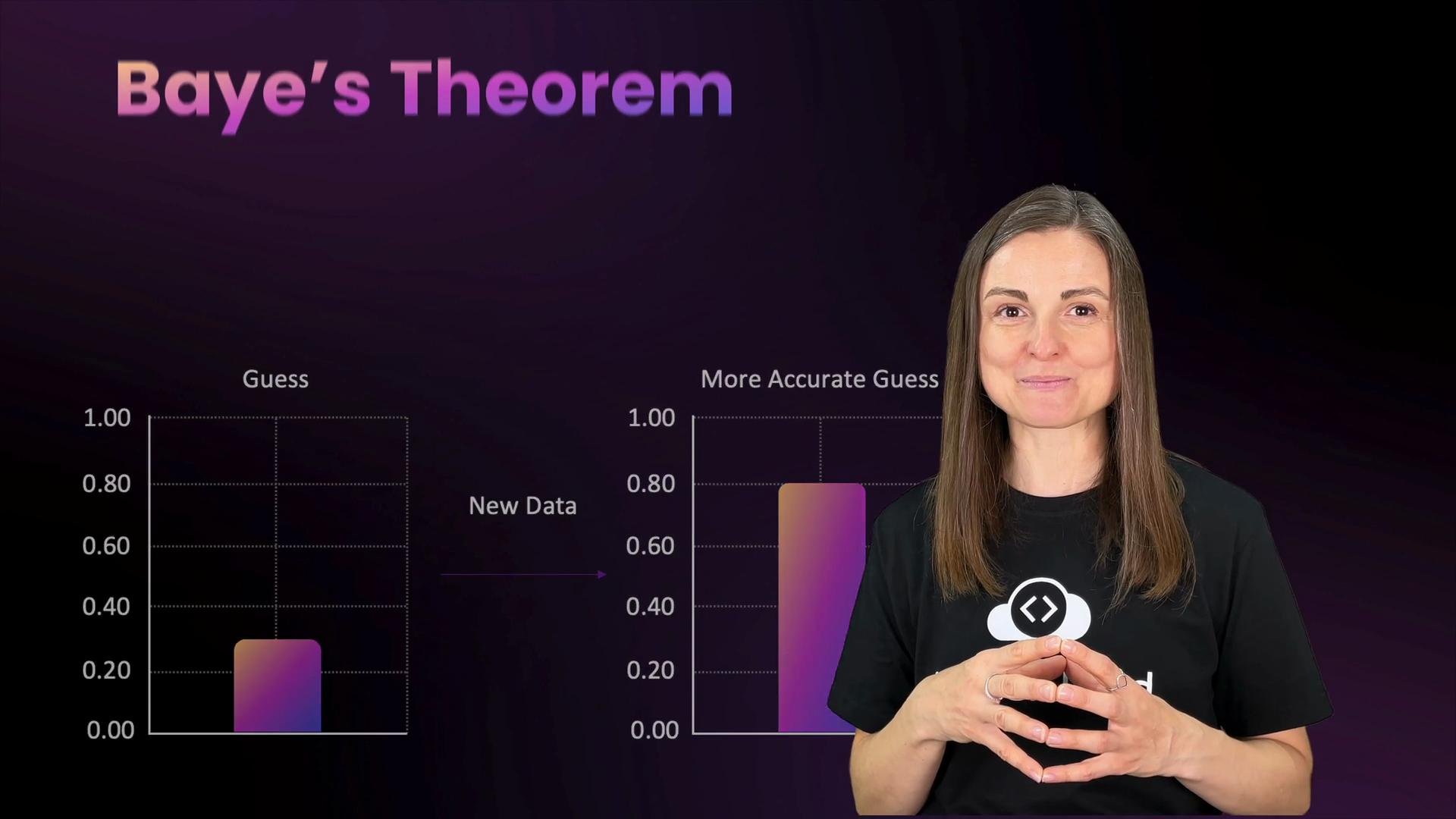
Reasoning under uncertainty is essential for robust systems. You’ll study:
* Probability distributions and expectations.
* Bayes’ theorem and Bayesian thinking for updating beliefs.
* Statistical inference and hypothesis testing for data-driven decisions.
Module 4 — Probability and Statistics
Reasoning under uncertainty is essential for robust systems. You’ll study:
* Probability distributions and expectations.
* Bayes’ theorem and Bayesian thinking for updating beliefs.
* Statistical inference and hypothesis testing for data-driven decisions.
 Community and learning format
This course emphasizes hands-on learning and discussion. You’ll work through examples, implement algorithms, and participate in a supportive community where you can ask questions and share solutions.
This course focuses on the core mathematical concepts that enable computing systems. Expect hands-on examples and intuitive explanations to help bridge theory and practice.
Course roadmap (at-a-glance)
| Module | Core concepts | Practical examples |
| ------------------- | ------------------------------------------- | ------------------------------------------------ |
| Linear Algebra | Vectors, matrices, tensors | Image representation, matrix transforms |
| Calculus | Derivatives, gradients, partial derivatives | Loss functions, sensitivity analysis |
| Optimization | Gradient descent, backpropagation | Training neural networks, tuning hyperparameters |
| Probability & Stats | Distributions, Bayes' theorem, inference | Classification confidence, filtering noisy data |
Further reading and references
* 3Blue1Brown — Essence of Linear Algebra (video series): [https://www.3blue1brown.com/](https://www.3blue1brown.com/)
* MIT OpenCourseWare — Linear Algebra: [https://ocw.mit.edu/courses/18-06-linear-algebra/](https://ocw.mit.edu/courses/18-06-linear-algebra/)
* Deep Learning Book — Goodfellow, Bengio, Courville: [https://www.deeplearningbook.org/](https://www.deeplearningbook.org/)
* Khan Academy — Calculus and Probability: [https://www.khanacademy.org/](https://www.khanacademy.org/)
Are you ready to explore how mathematics unlocks computing? Let’s get started.
Community and learning format
This course emphasizes hands-on learning and discussion. You’ll work through examples, implement algorithms, and participate in a supportive community where you can ask questions and share solutions.
This course focuses on the core mathematical concepts that enable computing systems. Expect hands-on examples and intuitive explanations to help bridge theory and practice.
Course roadmap (at-a-glance)
| Module | Core concepts | Practical examples |
| ------------------- | ------------------------------------------- | ------------------------------------------------ |
| Linear Algebra | Vectors, matrices, tensors | Image representation, matrix transforms |
| Calculus | Derivatives, gradients, partial derivatives | Loss functions, sensitivity analysis |
| Optimization | Gradient descent, backpropagation | Training neural networks, tuning hyperparameters |
| Probability & Stats | Distributions, Bayes' theorem, inference | Classification confidence, filtering noisy data |
Further reading and references
* 3Blue1Brown — Essence of Linear Algebra (video series): [https://www.3blue1brown.com/](https://www.3blue1brown.com/)
* MIT OpenCourseWare — Linear Algebra: [https://ocw.mit.edu/courses/18-06-linear-algebra/](https://ocw.mit.edu/courses/18-06-linear-algebra/)
* Deep Learning Book — Goodfellow, Bengio, Courville: [https://www.deeplearningbook.org/](https://www.deeplearningbook.org/)
* Khan Academy — Calculus and Probability: [https://www.khanacademy.org/](https://www.khanacademy.org/)
Are you ready to explore how mathematics unlocks computing? Let’s get started.