> ## Documentation Index
> Fetch the complete documentation index at: https://notes.kodekloud.com/llms.txt
> Use this file to discover all available pages before exploring further.
# Who regulates Open source
> This article discusses the governance, licensing, and roles within open source projects, highlighting community collaboration and regulatory bodies.
Open source is a collaborative methodology driven by communities and individual contributors. Unlike proprietary software, no single authority governs all open source projects. Instead, various non-profit organizations and standards bodies help ensure licensing compliance, legal clarity, and best practices.
## Community-Driven Governance
At its core, open source relies on developers, organizations, and users working together to build and maintain software. As projects grow, they often establish governance models—such as benevolent dictator, meritocratic, or democratic processes—to streamline decision-making and manage contributions.
## Licensing and Legal Oversight
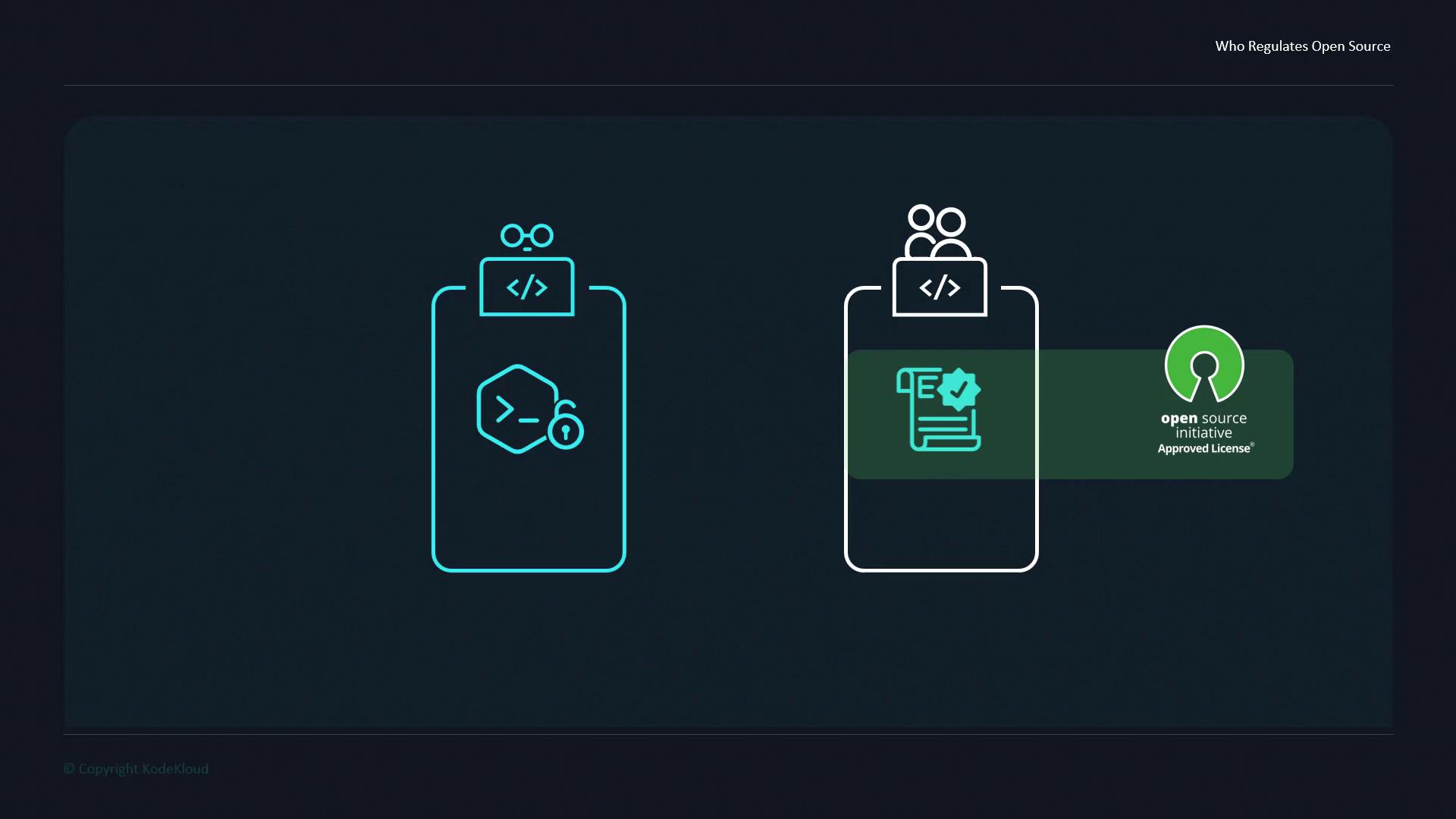
While the original creator retains copyright, contributors can modify and redistribute code under an open source license. To maintain consistency and legal soundness, many licenses are reviewed and approved by organizations like the [Open Source Initiative (OSI)](https://opensource.org) and cataloged in the [SPDX License List](https://spdx.org/licenses/).
## Core Roles in Open Source Projects
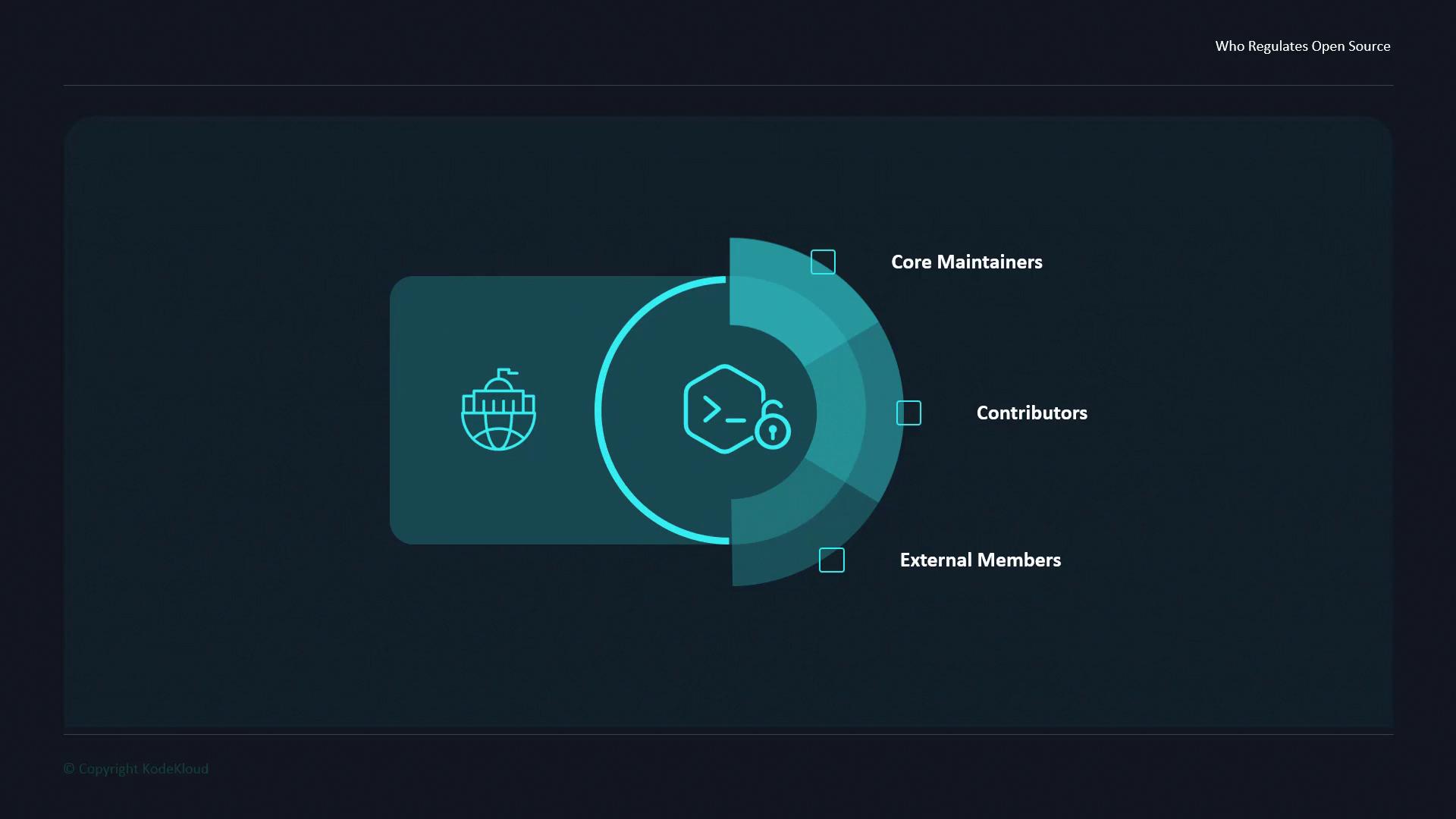
As communities form around a project, three primary roles typically emerge:
| Role | Responsibilities |
| ---------------- | ------------------------------------------------------------------------------ |
| Core Maintainers | Oversee releases, review and merge pull requests, and set the project roadmap. |
| Contributors | Submit code, documentation, tests, and other improvements. |
| External Members | Use the software, report issues, request features, and provide feedback. |
Each open source project may adopt its own governance model—tailored to its community size, goals, and culture—to guide decision-making and conflict resolution.
## Links and References
* [Open Source Initiative (OSI)](https://opensource.org)
* [SPDX License List](https://spdx.org/licenses/)
* [Open Source Definition (OSD)](https://opensource.org/osd/)