> ## Documentation Index
> Fetch the complete documentation index at: https://notes.kodekloud.com/llms.txt
> Use this file to discover all available pages before exploring further.
# DevOps Practices in Platform Engineering
> Overview of DevOps and SRE practices for platform engineering, emphasizing flow, feedback, automation, SLOs, observability, and building platform teams to improve developer velocity and reliability
Welcome. This lesson continues the fundamentals of platform engineering by focusing on DevOps practices that are essential for building and operating a platform that scales.
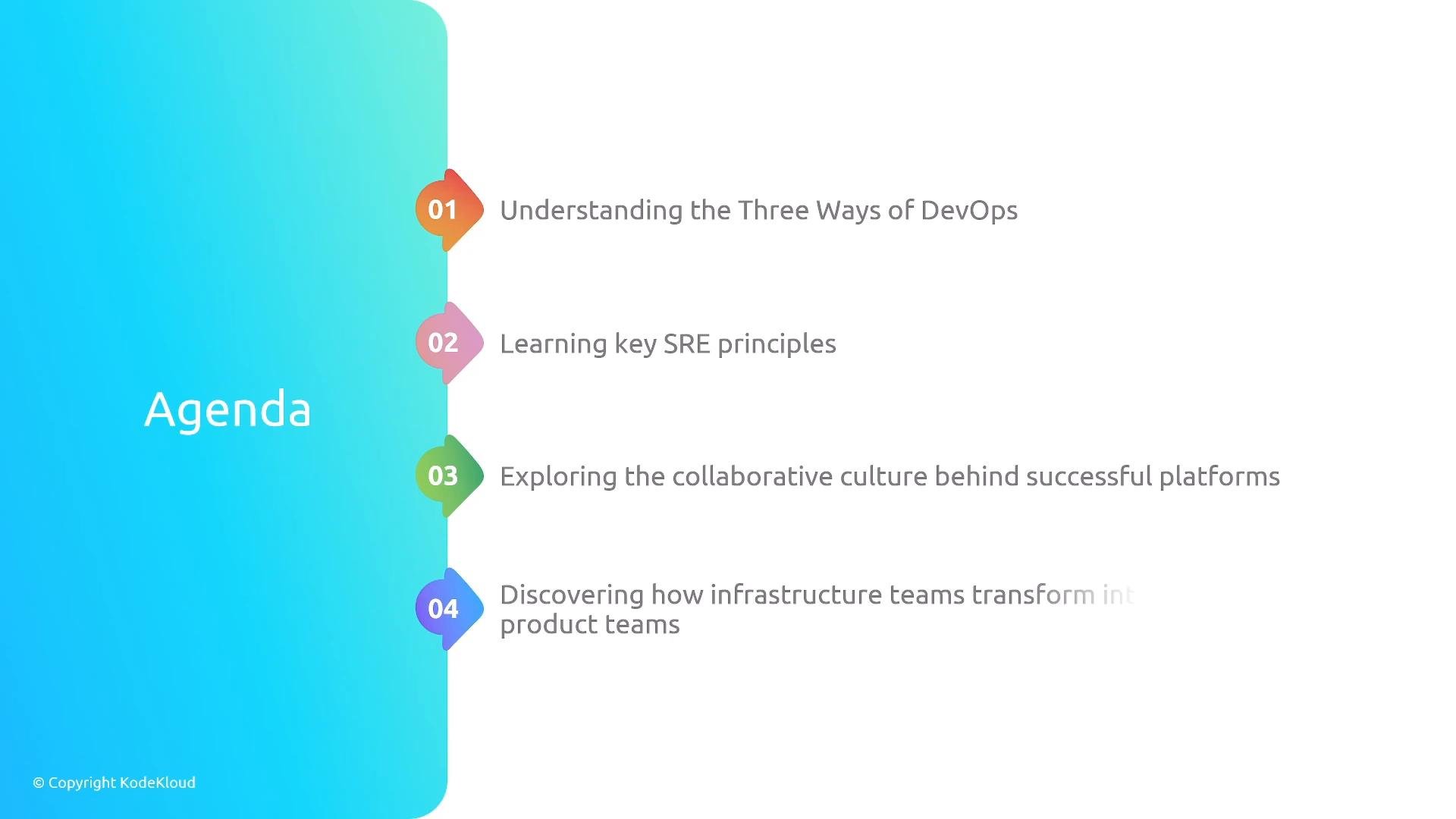
Agenda
* The Three Ways of DevOps: flow, feedback, and experimentation
* Key SRE principles: reduction of toil, incident management, SLOs/SLIs, observability
* Building a collaborative platform culture
* How infrastructure teams transform into platform product teams
 Why platform engineering and DevOps belong together
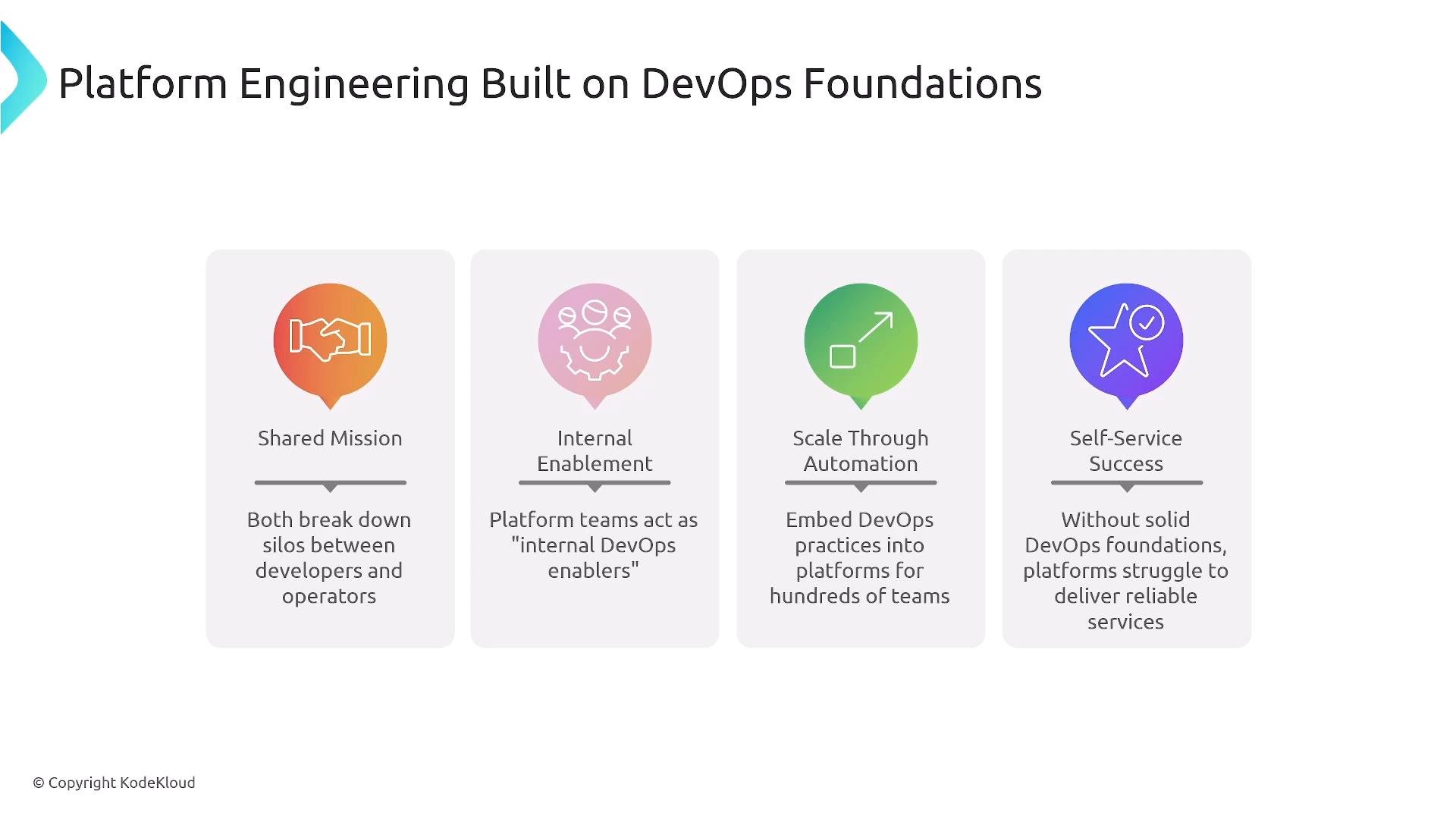
Platform engineering does not replace DevOps — it amplifies and operationalizes it across the company. A successful platform product embeds developer ergonomics, SRE targets, and automation so teams can safely move faster.
Four key connections between platform engineering and DevOps:
* Shared mission across teams — align on developer experience and reliability goals.
* Break down silos — enable cross-functional collaboration (dev, ops, QA, security).
* Scale through automation — treat repetitive work as code and automate it.
* Drive self-service success — enable internal consumers to do more without asking.
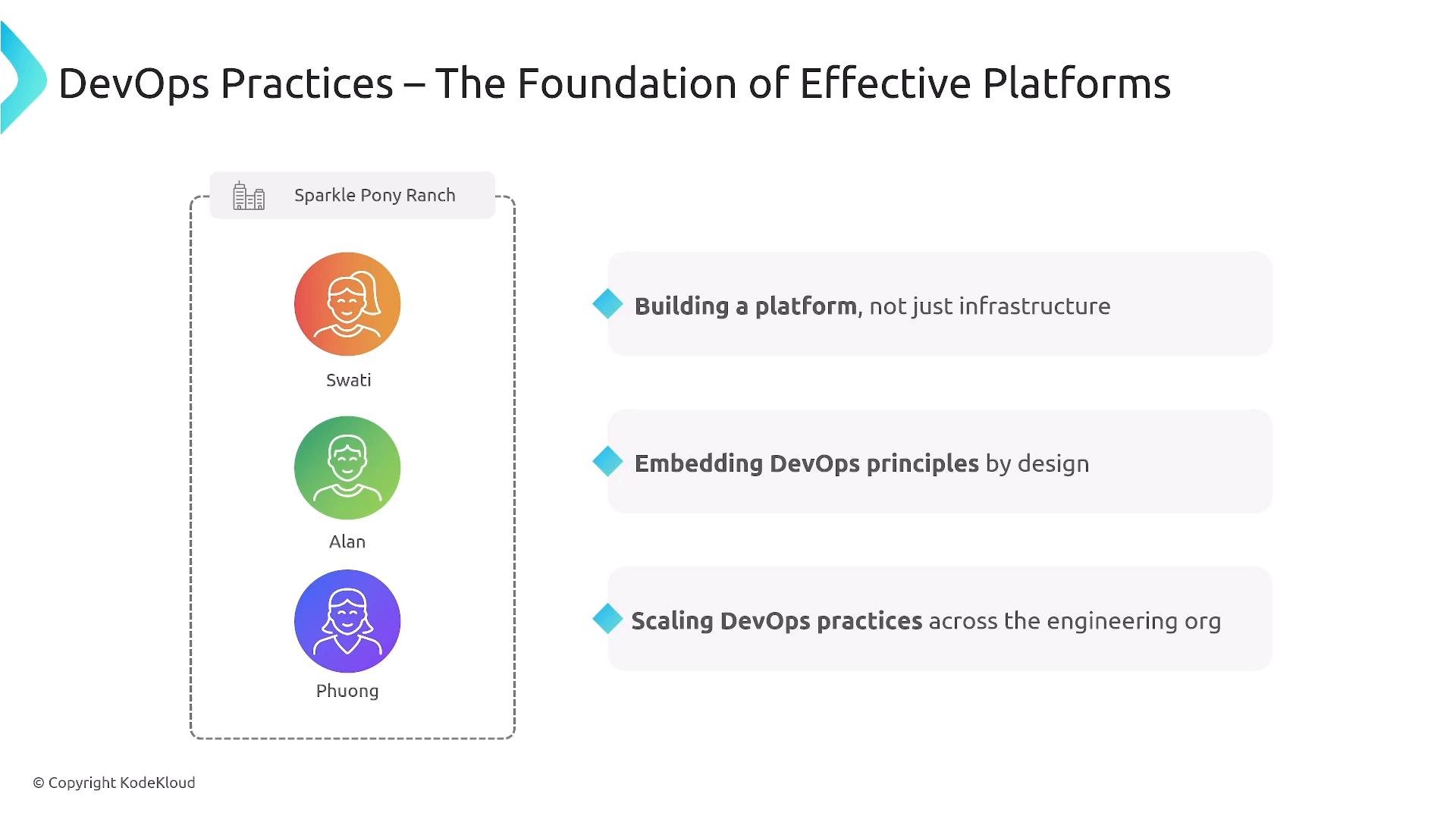
At Sparkle Pony Ranch, the platform team combines complementary skills:
* Swati: deep DevOps and CI/CD automation
* Alan: infrastructure and IaC (infrastructure-as-code)
* Phuong: developer workflows and cloud-native platform integration
Why platform engineering and DevOps belong together
Platform engineering does not replace DevOps — it amplifies and operationalizes it across the company. A successful platform product embeds developer ergonomics, SRE targets, and automation so teams can safely move faster.
Four key connections between platform engineering and DevOps:
* Shared mission across teams — align on developer experience and reliability goals.
* Break down silos — enable cross-functional collaboration (dev, ops, QA, security).
* Scale through automation — treat repetitive work as code and automate it.
* Drive self-service success — enable internal consumers to do more without asking.
At Sparkle Pony Ranch, the platform team combines complementary skills:
* Swati: deep DevOps and CI/CD automation
* Alan: infrastructure and IaC (infrastructure-as-code)
* Phuong: developer workflows and cloud-native platform integration
 Platform teams succeed when they treat the platform as a product: define key user journeys, instrument reliability targets, and continuously measure developer experience.
Three Ways of DevOps — foundation for platform design
The “Three Ways” (from The Phoenix Project) are practical principles to embed in platform architecture: Flow, Feedback, and Continuous Experimentation.
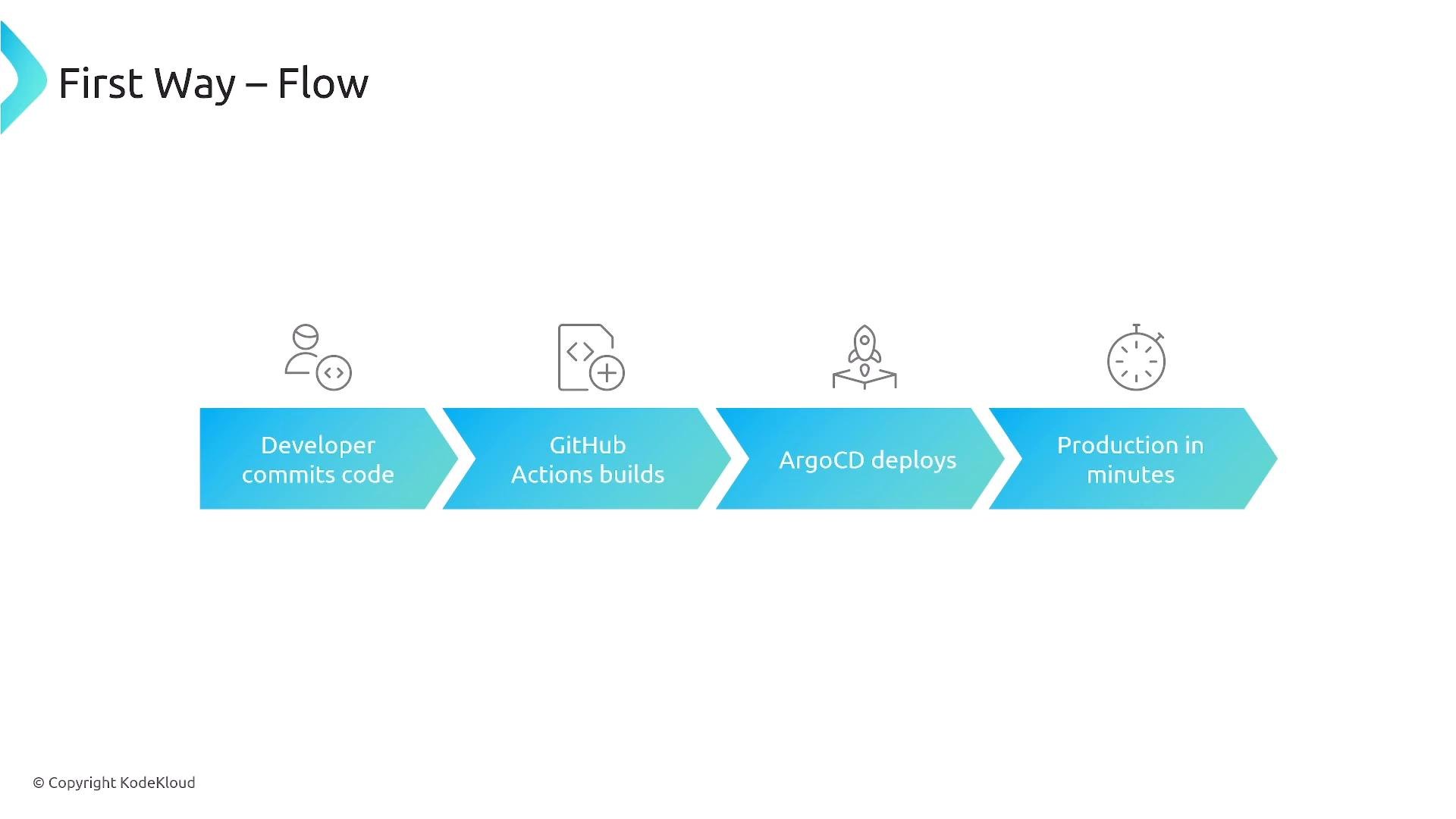
1. First Way — Flow
* Goal: optimize frictionless workflows from code to production.
* Approach: automate verification, CI/CD, and promote continuous delivery so commits move rapidly through build, test, and deployment.
Typical flow: developer commits → CI builds the artifact → a GitOps operator (e.g., Argo CD) applies manifests → production in minutes.
Platform teams succeed when they treat the platform as a product: define key user journeys, instrument reliability targets, and continuously measure developer experience.
Three Ways of DevOps — foundation for platform design
The “Three Ways” (from The Phoenix Project) are practical principles to embed in platform architecture: Flow, Feedback, and Continuous Experimentation.
1. First Way — Flow
* Goal: optimize frictionless workflows from code to production.
* Approach: automate verification, CI/CD, and promote continuous delivery so commits move rapidly through build, test, and deployment.
Typical flow: developer commits → CI builds the artifact → a GitOps operator (e.g., Argo CD) applies manifests → production in minutes.
 Infrastructure automation follows the same pattern: changes to IaC (for example, Terraform) should trigger plan, tests/validation, peer review, and safe promotion to production-like environments with verification gates.
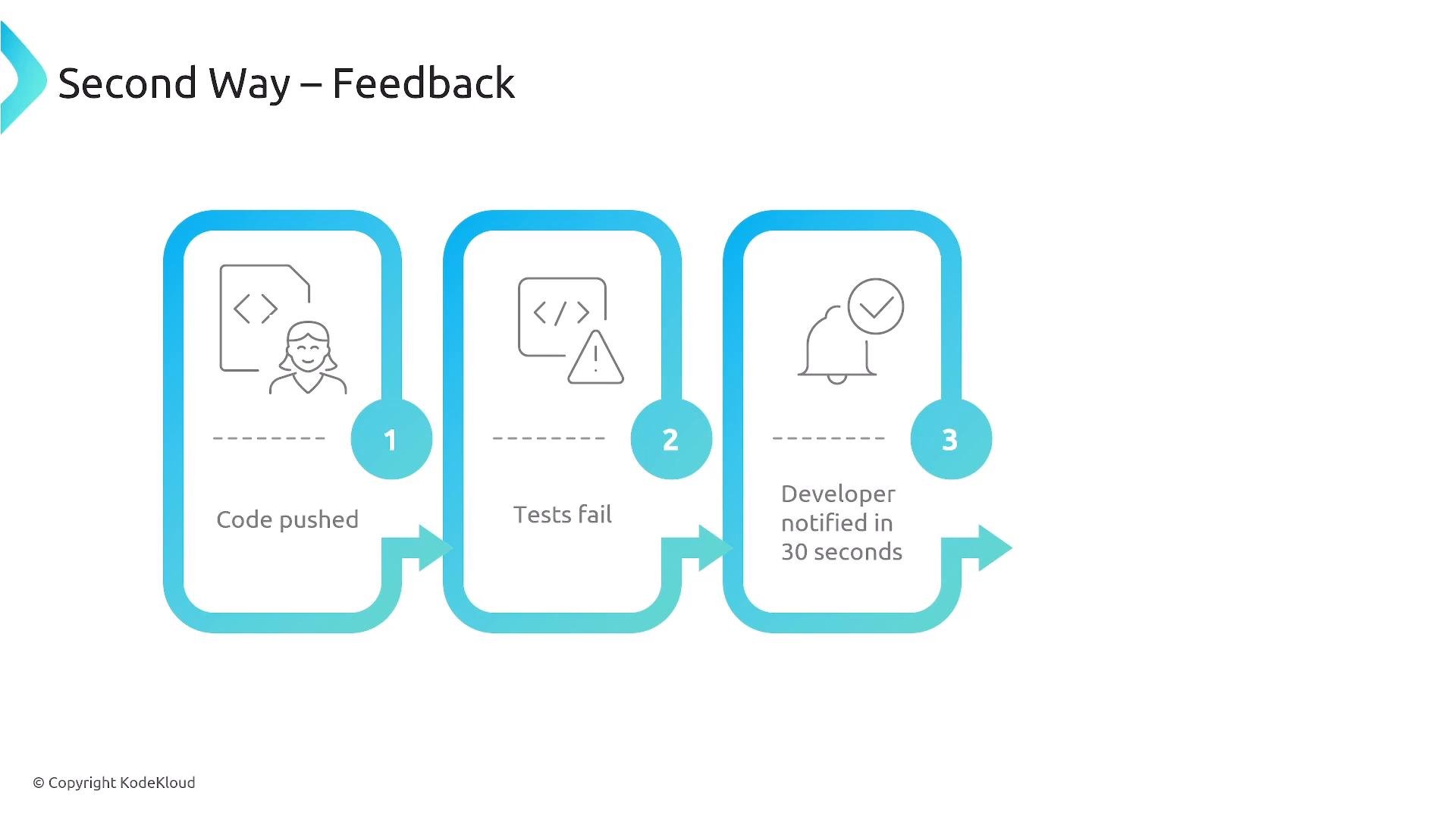
2. Second Way — Feedback
* Goal: provide rapid, continuous feedback at every stage of the delivery pipeline.
* Approach: shorten the time from change to verification and notification so engineers quickly know success or failure and can iterate.
Fast feedback helps teams detect regressions early, rely on observability, and maintain production readiness.
Infrastructure automation follows the same pattern: changes to IaC (for example, Terraform) should trigger plan, tests/validation, peer review, and safe promotion to production-like environments with verification gates.
2. Second Way — Feedback
* Goal: provide rapid, continuous feedback at every stage of the delivery pipeline.
* Approach: shorten the time from change to verification and notification so engineers quickly know success or failure and can iterate.
Fast feedback helps teams detect regressions early, rely on observability, and maintain production readiness.
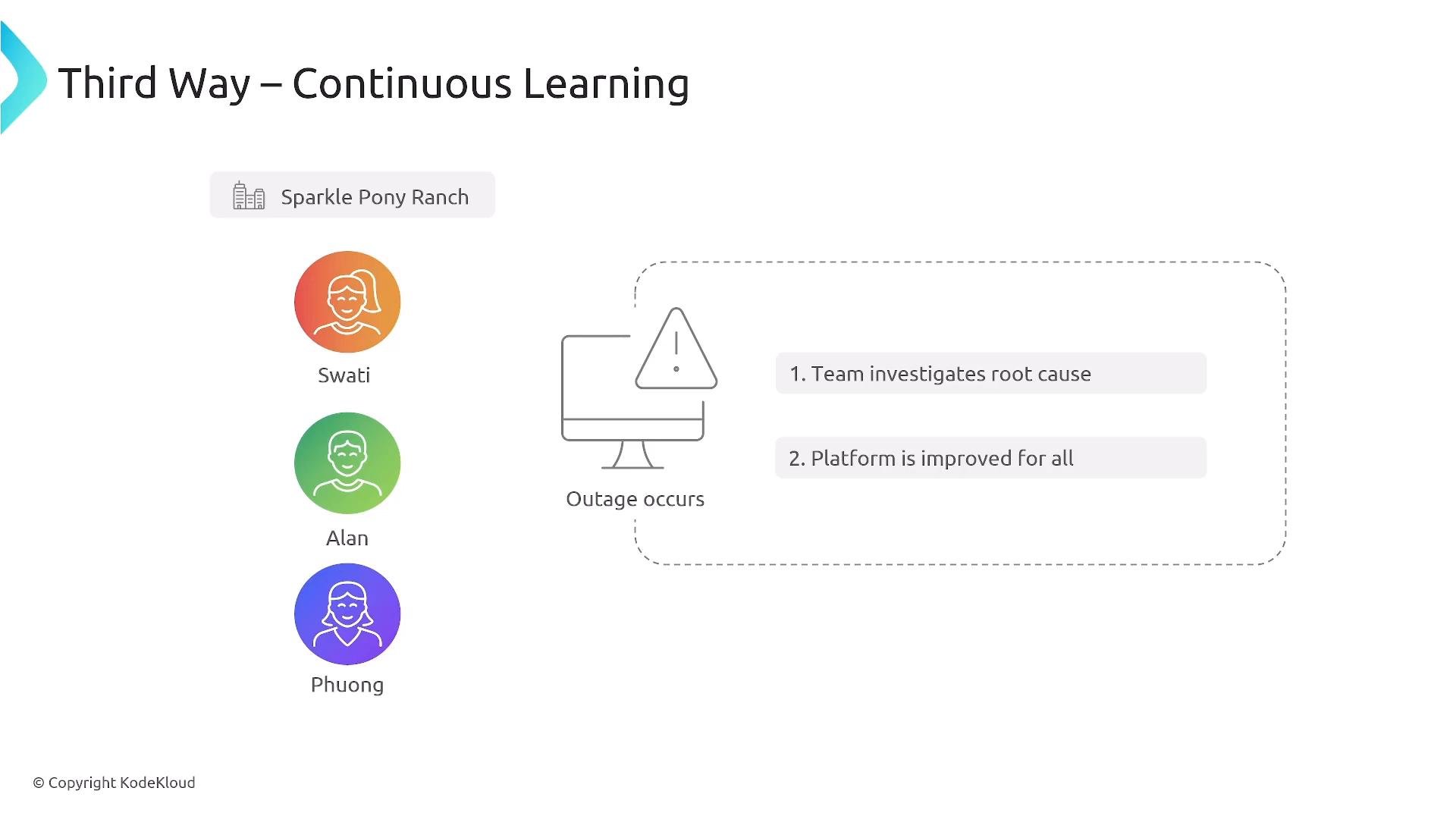
 3. Third Way — Continuous Learning and Experimentation
* Goal: create a culture of experimentation and learning from failures.
* Approach: run blameless postmortems, capture root causes, and harden the platform to reduce repeat incidents.
Platform teams should convert incidents into product improvements so platform reliability and developer productivity both increase.
3. Third Way — Continuous Learning and Experimentation
* Goal: create a culture of experimentation and learning from failures.
* Approach: run blameless postmortems, capture root causes, and harden the platform to reduce repeat incidents.
Platform teams should convert incidents into product improvements so platform reliability and developer productivity both increase.
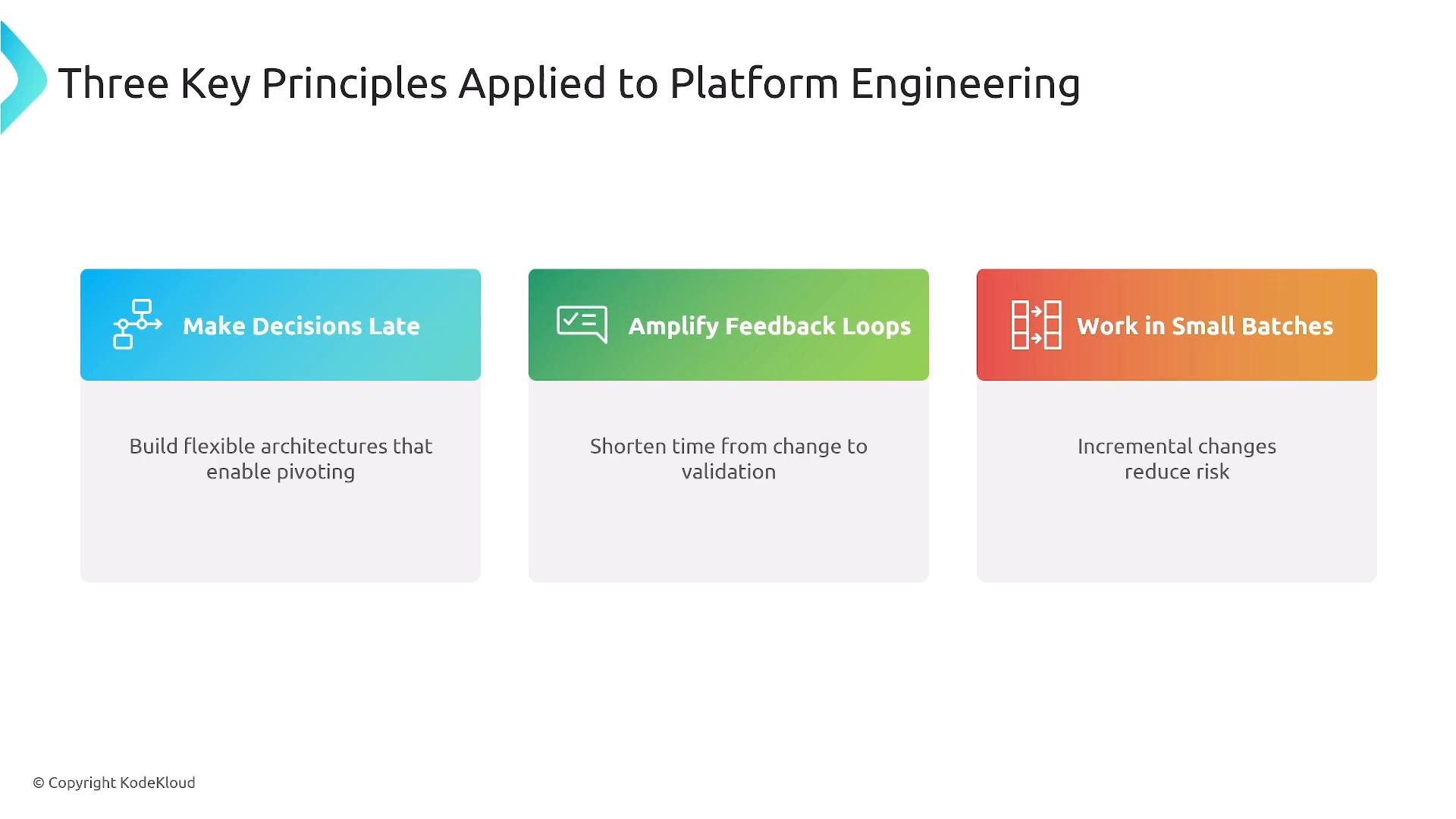
 Key operating practices derived from the Three Ways
* Defer irreversible decisions: only commit to provider-specific or heavyweight capabilities when they solve a real need.
* Amplify feedback loops: instrument and automate checks so verification is fast and reliable.
* Work in small batches: keep changes small and frequent to reduce risk and simplify rollbacks.
Key operating practices derived from the Three Ways
* Defer irreversible decisions: only commit to provider-specific or heavyweight capabilities when they solve a real need.
* Amplify feedback loops: instrument and automate checks so verification is fast and reliable.
* Work in small batches: keep changes small and frequent to reduce risk and simplify rollbacks.
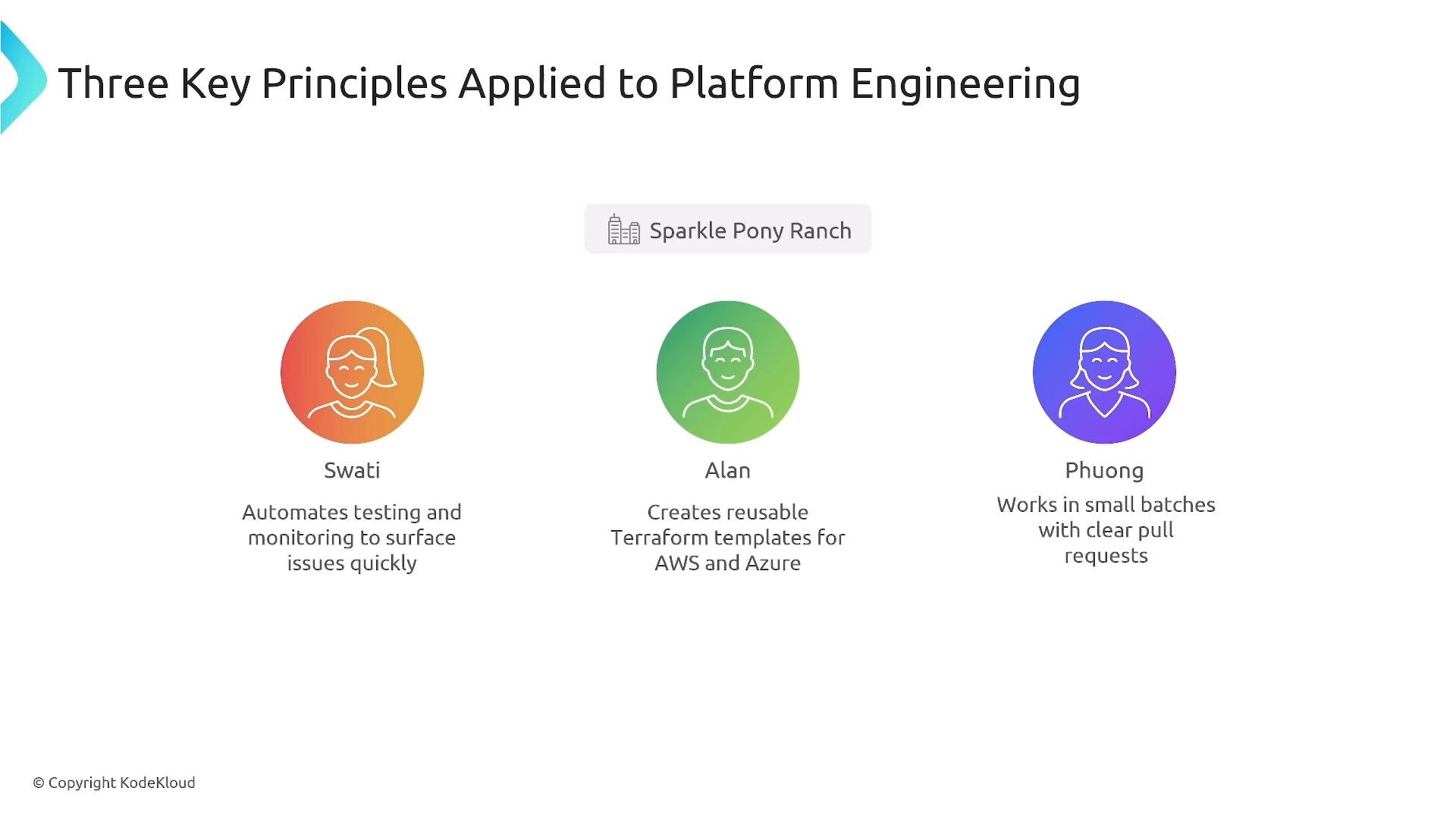
 Concrete role examples (Sparkle Pony Ranch)
* Alan: builds declarative, reusable Terraform modules to provision cloud infrastructure.
* Swati: automates CI/CD tests and reliability checks, integrating quick feedback into pipelines.
* Phuong: delivers small feature increments to developer-facing tools (for example, a developer portal like Backstage) through frequent, well-scoped pull requests.
Concrete role examples (Sparkle Pony Ranch)
* Alan: builds declarative, reusable Terraform modules to provision cloud infrastructure.
* Swati: automates CI/CD tests and reliability checks, integrating quick feedback into pipelines.
* Phuong: delivers small feature increments to developer-facing tools (for example, a developer portal like Backstage) through frequent, well-scoped pull requests.
 Outcomes: faster validation, smaller blast radius
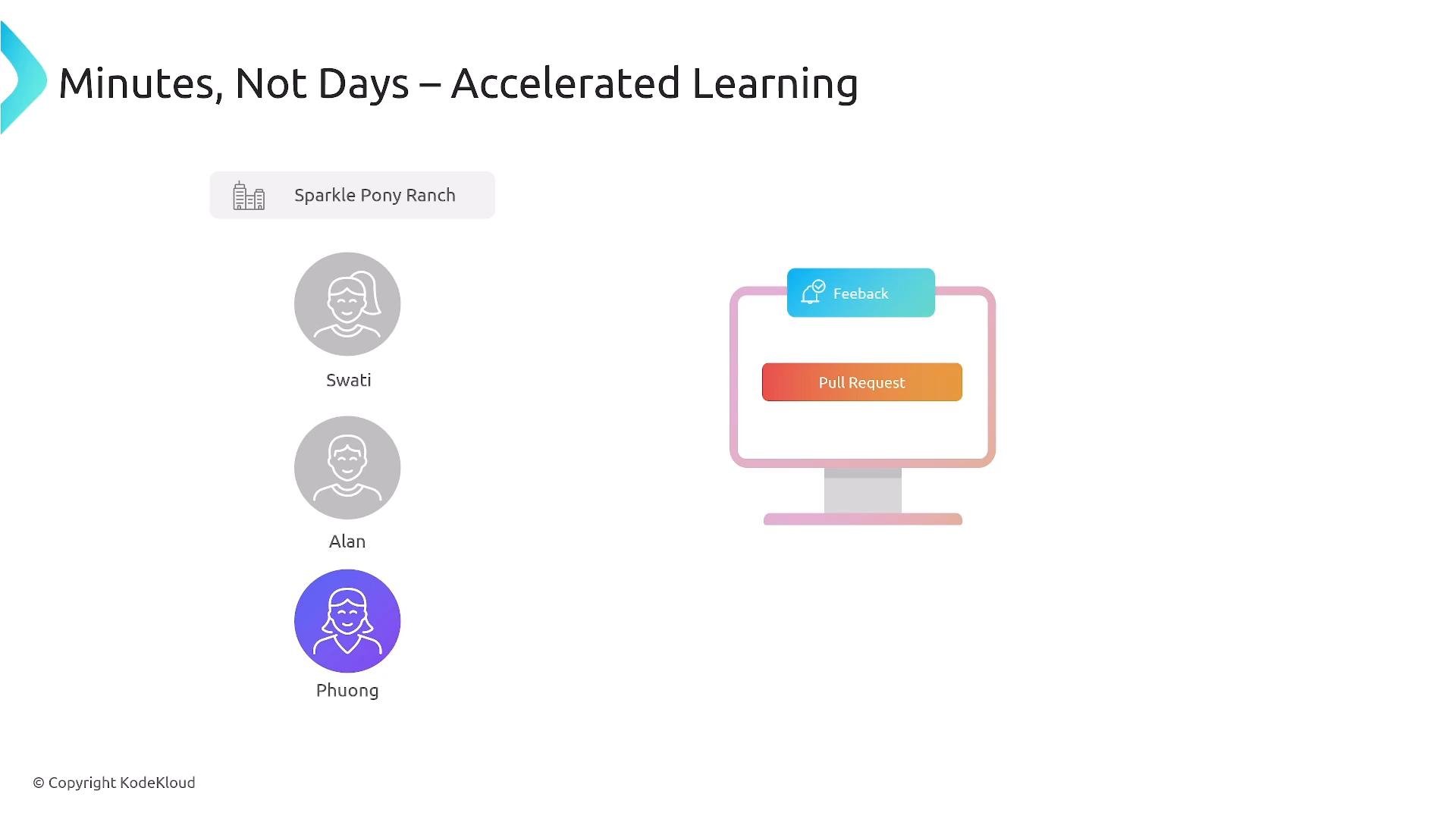
These practices create a platform that is reliable, evolves quickly, and enables developers to ship with confidence: smaller changes, faster reviews, easier rollbacks, and reduced blast radius. Short feedback cycles let teams validate in minutes rather than days.
Outcomes: faster validation, smaller blast radius
These practices create a platform that is reliable, evolves quickly, and enables developers to ship with confidence: smaller changes, faster reviews, easier rollbacks, and reduced blast radius. Short feedback cycles let teams validate in minutes rather than days.
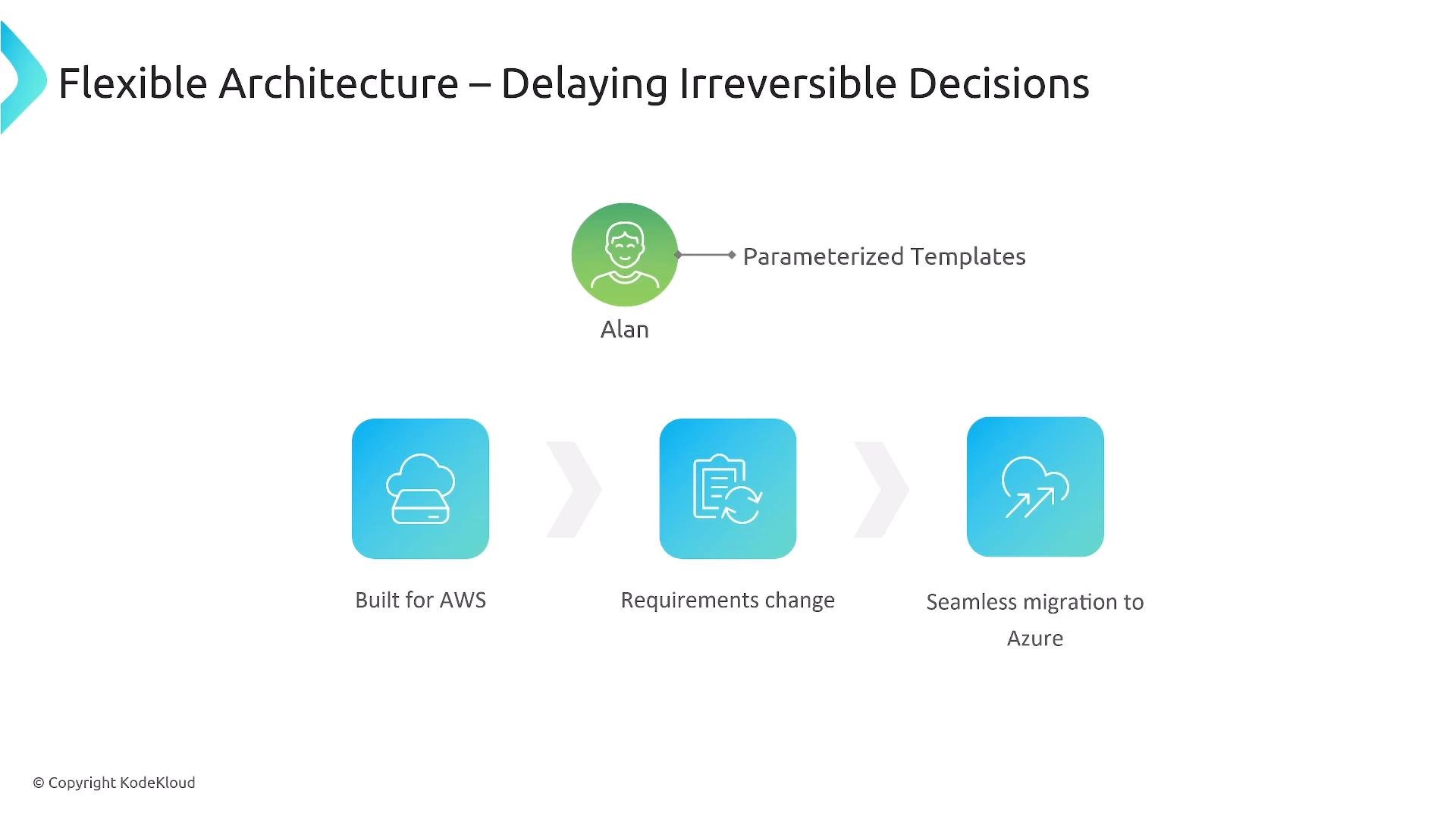
 Flexible architecture and parameterized templates
Parameterized IaC templates let you delay irreversible decisions and simplify migration planning. For example, reusable Terraform modules capture services, configurations, and constraints in code so you can reason about architecture and map requirements to another provider later. Note that provider-specific APIs will require adaptation during a cloud migration.
Flexible architecture and parameterized templates
Parameterized IaC templates let you delay irreversible decisions and simplify migration planning. For example, reusable Terraform modules capture services, configurations, and constraints in code so you can reason about architecture and map requirements to another provider later. Note that provider-specific APIs will require adaptation during a cloud migration.
 Site Reliability Engineering (SRE) fundamentals
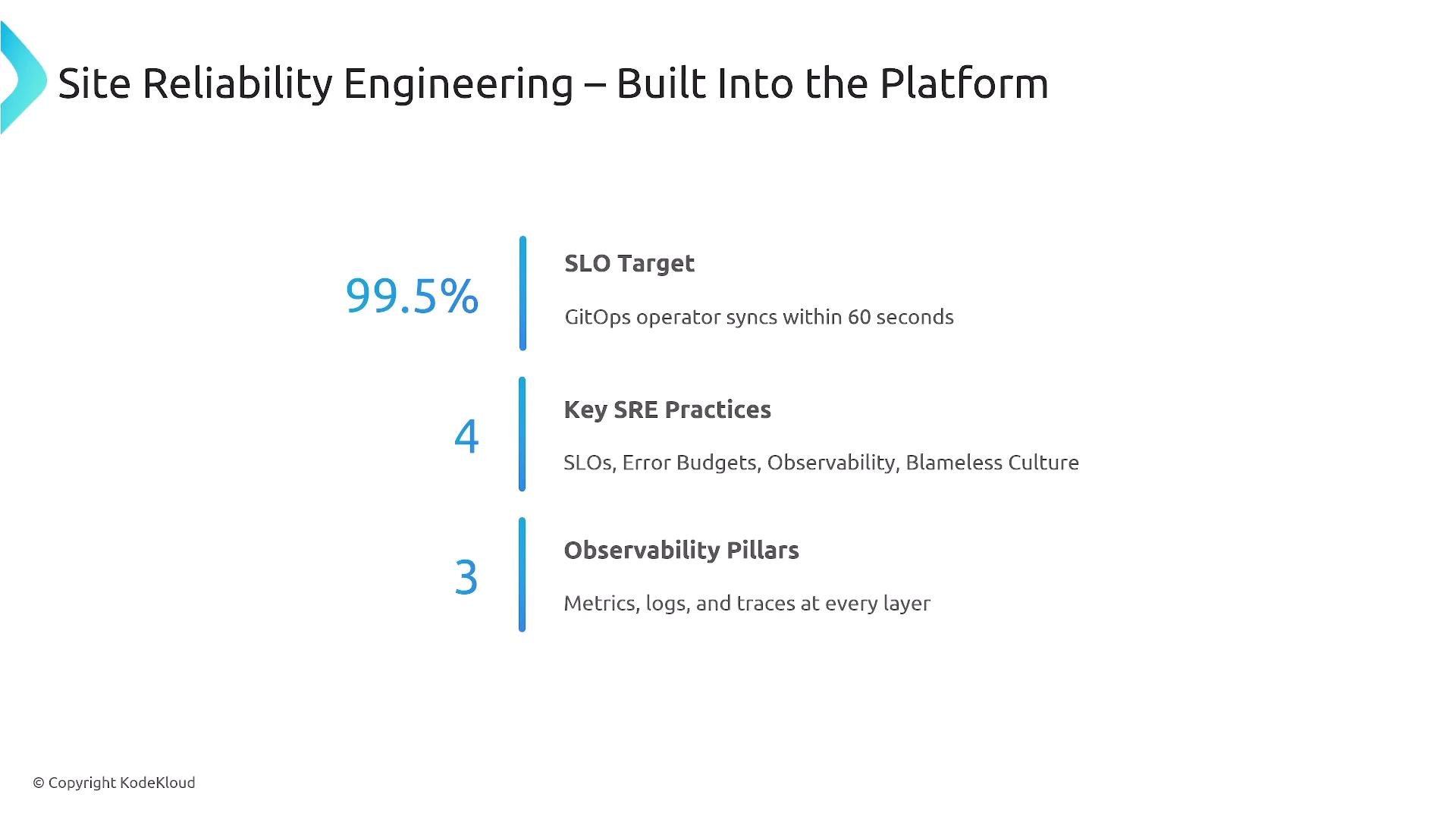
Embed SRE practices directly into the platform so reliability becomes measurable and actionable:
| SRE Concept | Purpose | Example |
| - | - | - |
| SLO / SLI | Define and measure acceptable reliability | `99.5%` availability for platform APIs |
| Error budget | Balance feature velocity vs. reliability | Allow limited risk for rapid delivery until budget exhausted |
| Observability | Diagnose and verify behavior across stack | Metrics, logs, traces for CI/CD, control plane, and services |
| Incident practices | Runbooks, blameless postmortems, on-call rotation | Fast incident triage and continuous improvement |
Sparkle Pony Ranch sets SLOs for CI/CD throughput and platform availability; when an SLO is breached, the team treats incidents as product gaps and iterates.
Site Reliability Engineering (SRE) fundamentals
Embed SRE practices directly into the platform so reliability becomes measurable and actionable:
| SRE Concept | Purpose | Example |
| - | - | - |
| SLO / SLI | Define and measure acceptable reliability | `99.5%` availability for platform APIs |
| Error budget | Balance feature velocity vs. reliability | Allow limited risk for rapid delivery until budget exhausted |
| Observability | Diagnose and verify behavior across stack | Metrics, logs, traces for CI/CD, control plane, and services |
| Incident practices | Runbooks, blameless postmortems, on-call rotation | Fast incident triage and continuous improvement |
Sparkle Pony Ranch sets SLOs for CI/CD throughput and platform availability; when an SLO is breached, the team treats incidents as product gaps and iterates.
 SLOs are tools, not targets to game. Use them to guide trade-offs between velocity and stability, and adjust error budgets responsibly to protect users and developer productivity.
Culture and organizational practices
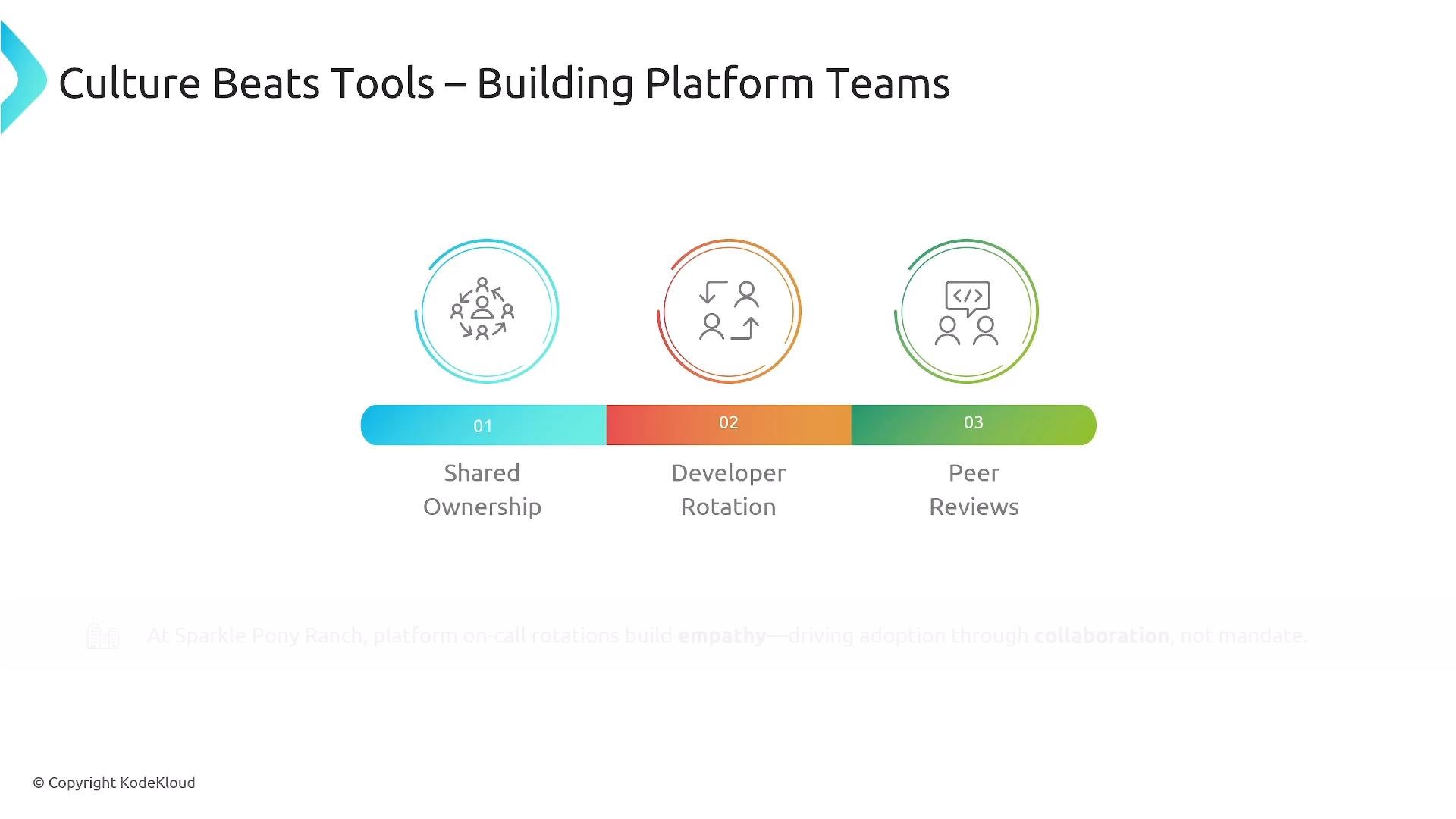
Tools are necessary, but culture determines success. Platform engineering benefits from:
* Shared ownership — developers, operators, QA, DBAs, and architects collaborate on platform outcomes.
* Developer rotation through platform on-call — increases empathy for running services in production.
* Peer reviews and automation — senior engineers maintain quality through design reviews and automated checks.
* Adoption through collaboration — demonstrate value and enable teams rather than enforce usage.
SLOs are tools, not targets to game. Use them to guide trade-offs between velocity and stability, and adjust error budgets responsibly to protect users and developer productivity.
Culture and organizational practices
Tools are necessary, but culture determines success. Platform engineering benefits from:
* Shared ownership — developers, operators, QA, DBAs, and architects collaborate on platform outcomes.
* Developer rotation through platform on-call — increases empathy for running services in production.
* Peer reviews and automation — senior engineers maintain quality through design reviews and automated checks.
* Adoption through collaboration — demonstrate value and enable teams rather than enforce usage.
 Summary — practical checklist
* Design for flow: automate CI/CD and GitOps for repeatable deployments.
* Build fast feedback loops: tests, observability, and notifications that surface failures quickly.
* Embrace continuous experimentation: blameless postmortems and platform hardening after incidents.
* Use parameterized templates: delay irreversible choices and keep migration options open.
* Embed SRE: define SLOs/SLIs, manage error budgets, and instrument metrics/logs/traces.
* Foster shared ownership and developer empathy through rotations and collaboration.
These foundations let a platform product team (like Sparkle Pony Ranch — Swati, Alan, and Phuong) scale DevOps practices across an organization and deliver better developer velocity with predictable reliability.
Summary — practical checklist
* Design for flow: automate CI/CD and GitOps for repeatable deployments.
* Build fast feedback loops: tests, observability, and notifications that surface failures quickly.
* Embrace continuous experimentation: blameless postmortems and platform hardening after incidents.
* Use parameterized templates: delay irreversible choices and keep migration options open.
* Embed SRE: define SLOs/SLIs, manage error budgets, and instrument metrics/logs/traces.
* Foster shared ownership and developer empathy through rotations and collaboration.
These foundations let a platform product team (like Sparkle Pony Ranch — Swati, Alan, and Phuong) scale DevOps practices across an organization and deliver better developer velocity with predictable reliability.
 Links and references
* The Phoenix Project overview: [https://en.wikipedia.org/wiki/The\_Phoenix\_Project](https://en.wikipedia.org/wiki/The_Phoenix_Project)
* GitOps with Argo CD: [https://learn.kodekloud.com/user/courses/gitops-with-argocd](https://learn.kodekloud.com/user/courses/gitops-with-argocd)
* Terraform basics course: [https://learn.kodekloud.com/user/courses/terraform-basics-training-course](https://learn.kodekloud.com/user/courses/terraform-basics-training-course)
* Backstage developer portal: [https://learn.kodekloud.com/user/courses/certified-backstage-associate-cba](https://learn.kodekloud.com/user/courses/certified-backstage-associate-cba)
Keep the Three Ways — Flow, Feedback, and Continuous Experimentation — at the center of platform design to increase developer velocity and organizational reliability.
This documentation is built and hosted on [Mintlify](https://mintlify.com), a developer documentation platform.
Links and references
* The Phoenix Project overview: [https://en.wikipedia.org/wiki/The\_Phoenix\_Project](https://en.wikipedia.org/wiki/The_Phoenix_Project)
* GitOps with Argo CD: [https://learn.kodekloud.com/user/courses/gitops-with-argocd](https://learn.kodekloud.com/user/courses/gitops-with-argocd)
* Terraform basics course: [https://learn.kodekloud.com/user/courses/terraform-basics-training-course](https://learn.kodekloud.com/user/courses/terraform-basics-training-course)
* Backstage developer portal: [https://learn.kodekloud.com/user/courses/certified-backstage-associate-cba](https://learn.kodekloud.com/user/courses/certified-backstage-associate-cba)
Keep the Three Ways — Flow, Feedback, and Continuous Experimentation — at the center of platform design to increase developer velocity and organizational reliability.
This documentation is built and hosted on [Mintlify](https://mintlify.com), a developer documentation platform.