> ## Documentation Index
> Fetch the complete documentation index at: https://notes.kodekloud.com/llms.txt
> Use this file to discover all available pages before exploring further.
# Continuous DeliveryDeployment Basics
> Overview of continuous delivery and deployment practices, workflows, strategies, validation gates, rollback mechanisms, feature flags, and automation for safe repeatable production releases
In this lesson we cover the CD portion of the CI/CD lifecycle: how artifacts move through release environments into production, and the practices that make releases fast, safe, and repeatable.
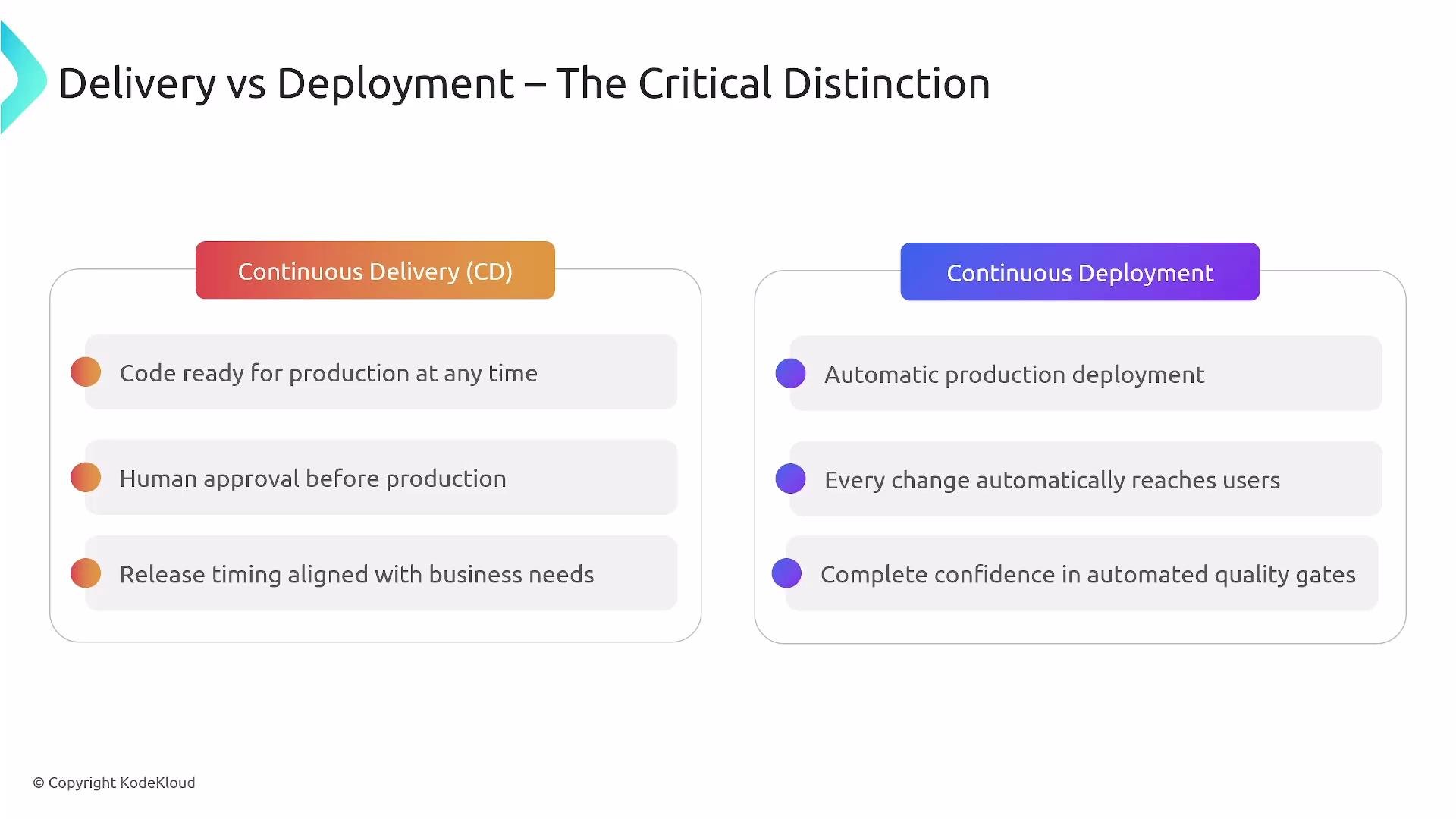
Continuous delivery and continuous deployment are related but distinct:
* Continuous delivery: every change is built and kept in a deployable state. Promotion to production is possible at any time but may require a human decision or business timing. Artifacts are promoted through environments (dev → QA → staging → pre-production) and typically stop before production.
* Continuous deployment: every change that passes automated gates is deployed all the way to production automatically. This requires strong automated tests, security checks, release automation, observability, and rollback processes.
 Rollback capability is critical — it's not enough to create artifacts or backups; you must regularly test restores and rollback procedures so they work when needed. A robust rollback system often indicates a solid deployment process.
Core deployment workflow
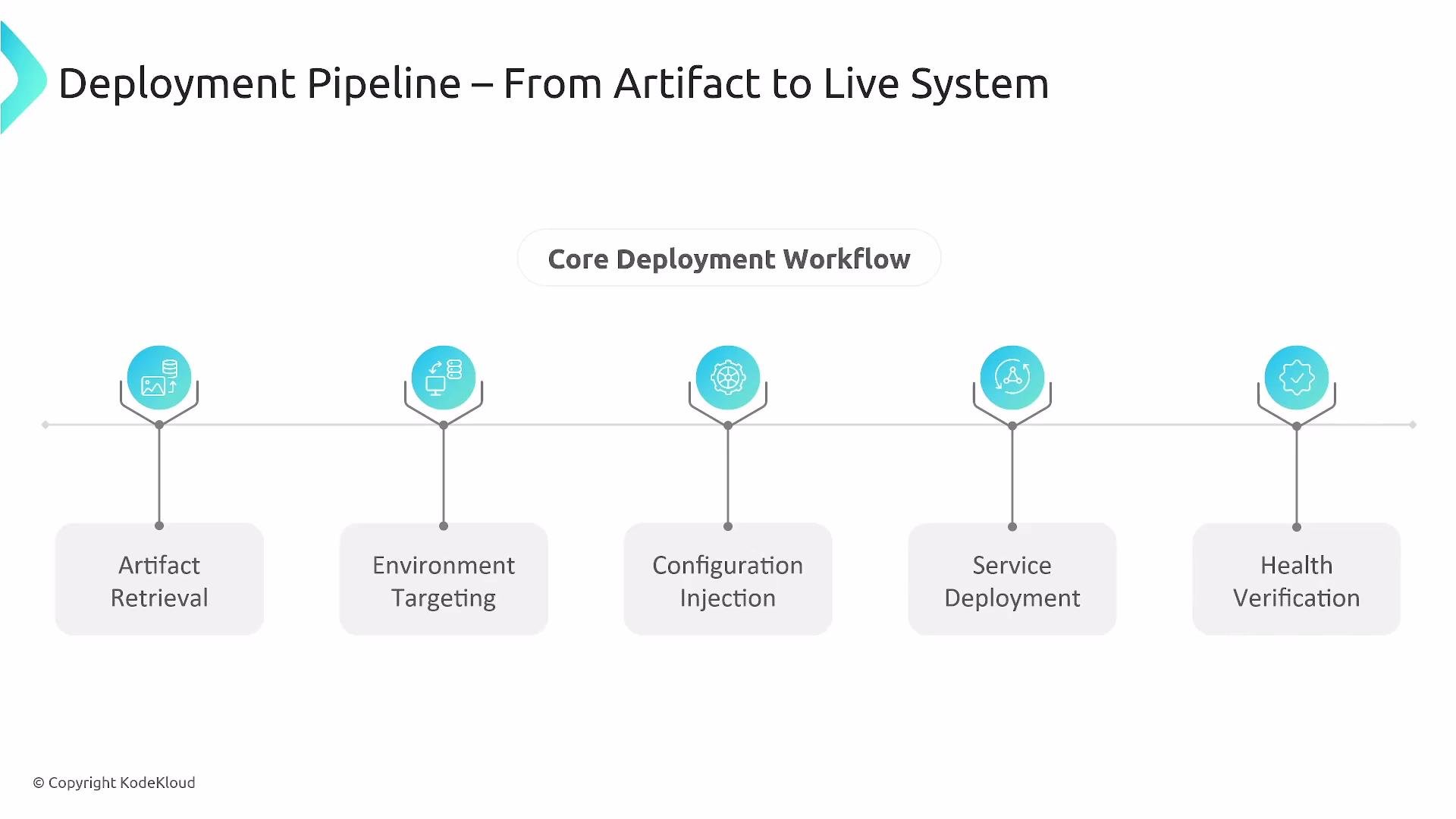
A minimal, repeatable process for moving an artifact to production:
* Retrieve the artifact from the artifact repository.
* Target the appropriate environment (dev, QA, staging, pre-prod).
* Apply environment-specific configuration (secrets, resource limits, feature flags).
* Deploy or update instances/services.
* Run verification (smoke tests, health checks, performance checks).
* Confirm deployment success or trigger rollback.
Rollback capability is critical — it's not enough to create artifacts or backups; you must regularly test restores and rollback procedures so they work when needed. A robust rollback system often indicates a solid deployment process.
Core deployment workflow
A minimal, repeatable process for moving an artifact to production:
* Retrieve the artifact from the artifact repository.
* Target the appropriate environment (dev, QA, staging, pre-prod).
* Apply environment-specific configuration (secrets, resource limits, feature flags).
* Deploy or update instances/services.
* Run verification (smoke tests, health checks, performance checks).
* Confirm deployment success or trigger rollback.
 Environment progression and validation
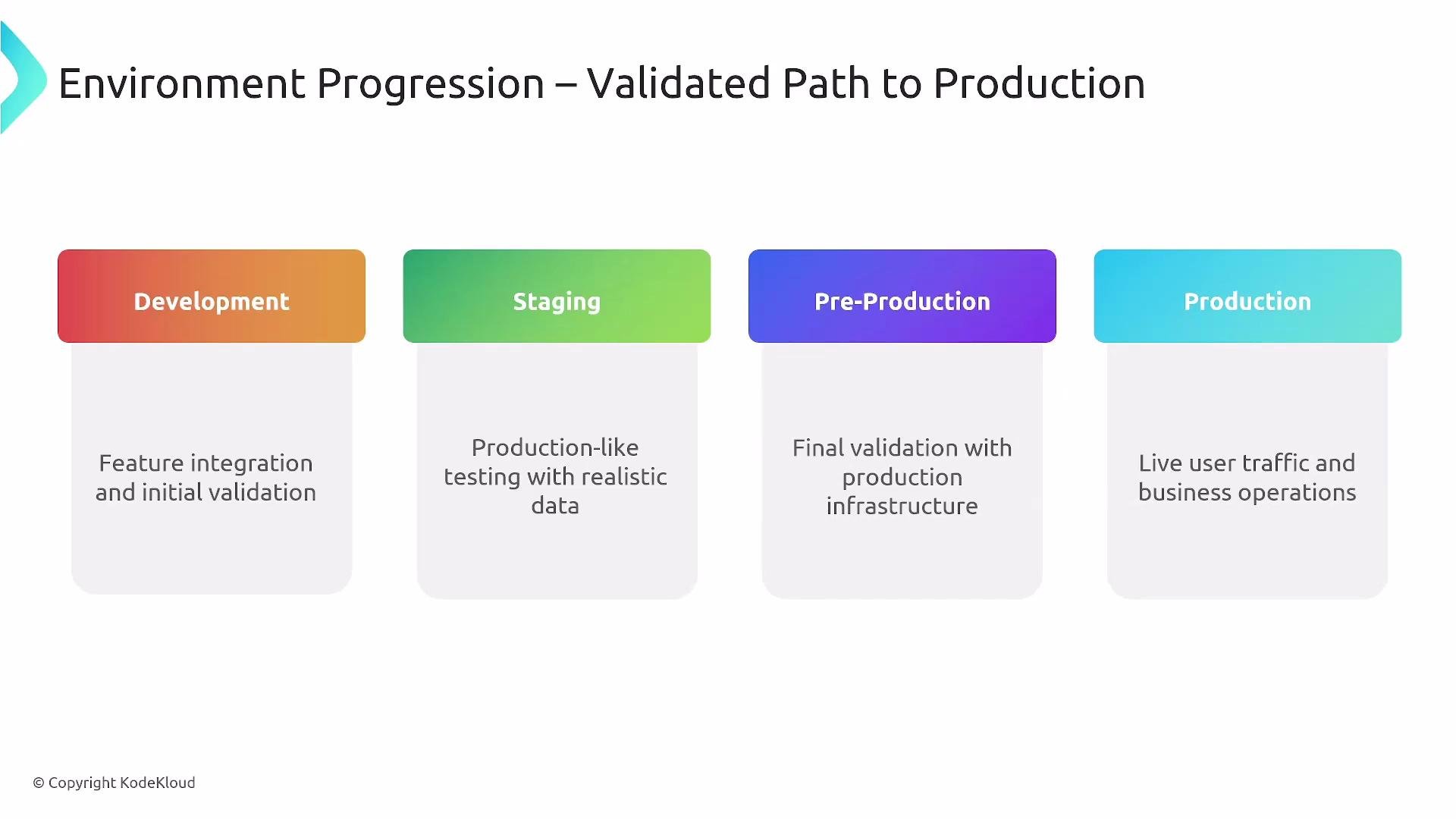
Environments and validation stages differ by organization, but a common progression is:
| Stage | Purpose | Typical automated checks |
| - | - | - |
| Development | Iterative coding, feature development | Unit tests, linting, local integration checks |
| Staging | Integrated testing with production-like config | Integration tests, end-to-end tests, smoke tests |
| Pre-production | Final validation on production-like infra/data | Performance tests, security scans, data migration dry-runs |
| Production | Live traffic and real users | Canary/observability checks, business KPI monitoring |
Each stage should have validation gates that grow stricter as you approach production.
Environment progression and validation
Environments and validation stages differ by organization, but a common progression is:
| Stage | Purpose | Typical automated checks |
| - | - | - |
| Development | Iterative coding, feature development | Unit tests, linting, local integration checks |
| Staging | Integrated testing with production-like config | Integration tests, end-to-end tests, smoke tests |
| Pre-production | Final validation on production-like infra/data | Performance tests, security scans, data migration dry-runs |
| Production | Live traffic and real users | Canary/observability checks, business KPI monitoring |
Each stage should have validation gates that grow stricter as you approach production.
 Selecting a deployment strategy
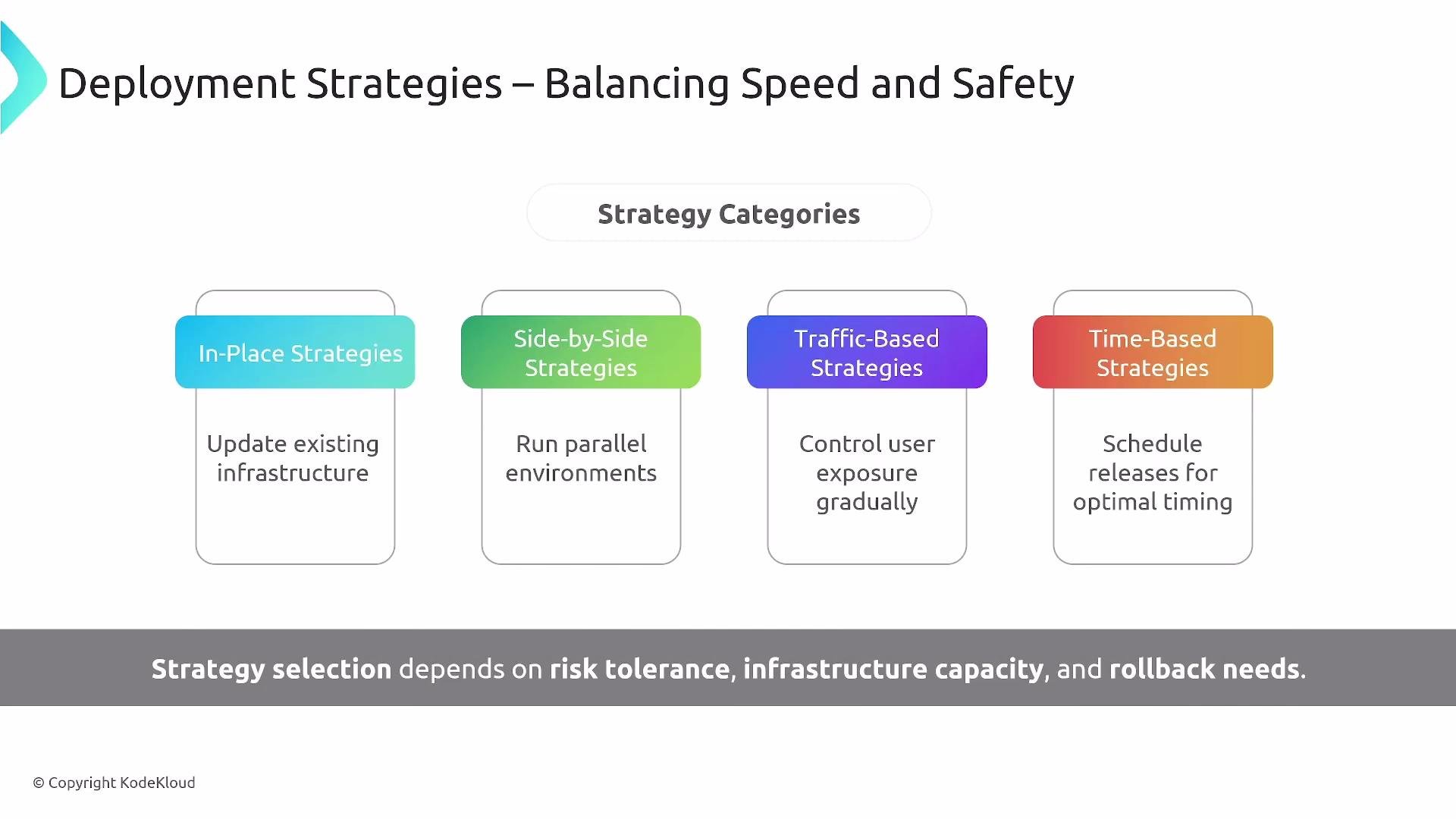
Choose a strategy based on risk tolerance, infrastructure capacity and cost, rollback speed, and the observability you have in place.
| Strategy family | How it works | Pros | Cons |
| - | -: | - | - |
| In-place / Rolling updates | Replace instances progressively (one or a batch at a time) | Low infra overhead, continuous availability | Mixed-version traffic, slower rollback |
| Side-by-side / Blue-green | Provision parallel environment and switch traffic | Instant rollback, clear separation | Higher infra cost |
| Traffic-based (canary, A/B) | Route a small % of traffic to new version and ramp up | Limits blast radius, realistic validation | Requires traffic management and strong observability |
| Time-based | Observe for a fixed duration before progressing | Adds deterministic observation window | May delay rollout, needs good metrics |
Selecting a deployment strategy
Choose a strategy based on risk tolerance, infrastructure capacity and cost, rollback speed, and the observability you have in place.
| Strategy family | How it works | Pros | Cons |
| - | -: | - | - |
| In-place / Rolling updates | Replace instances progressively (one or a batch at a time) | Low infra overhead, continuous availability | Mixed-version traffic, slower rollback |
| Side-by-side / Blue-green | Provision parallel environment and switch traffic | Instant rollback, clear separation | Higher infra cost |
| Traffic-based (canary, A/B) | Route a small % of traffic to new version and ramp up | Limits blast radius, realistic validation | Requires traffic management and strong observability |
| Time-based | Observe for a fixed duration before progressing | Adds deterministic observation window | May delay rollout, needs good metrics |
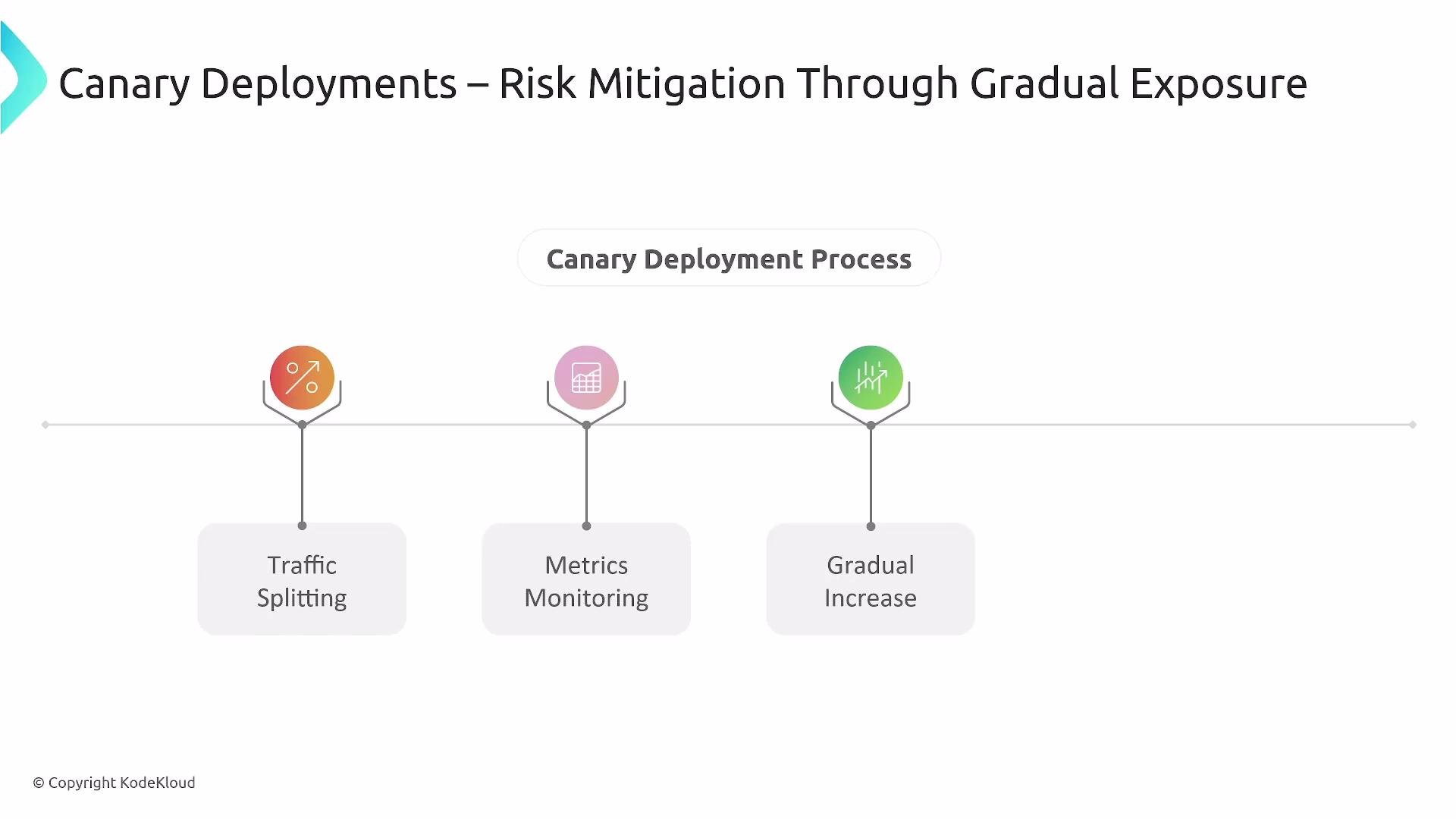
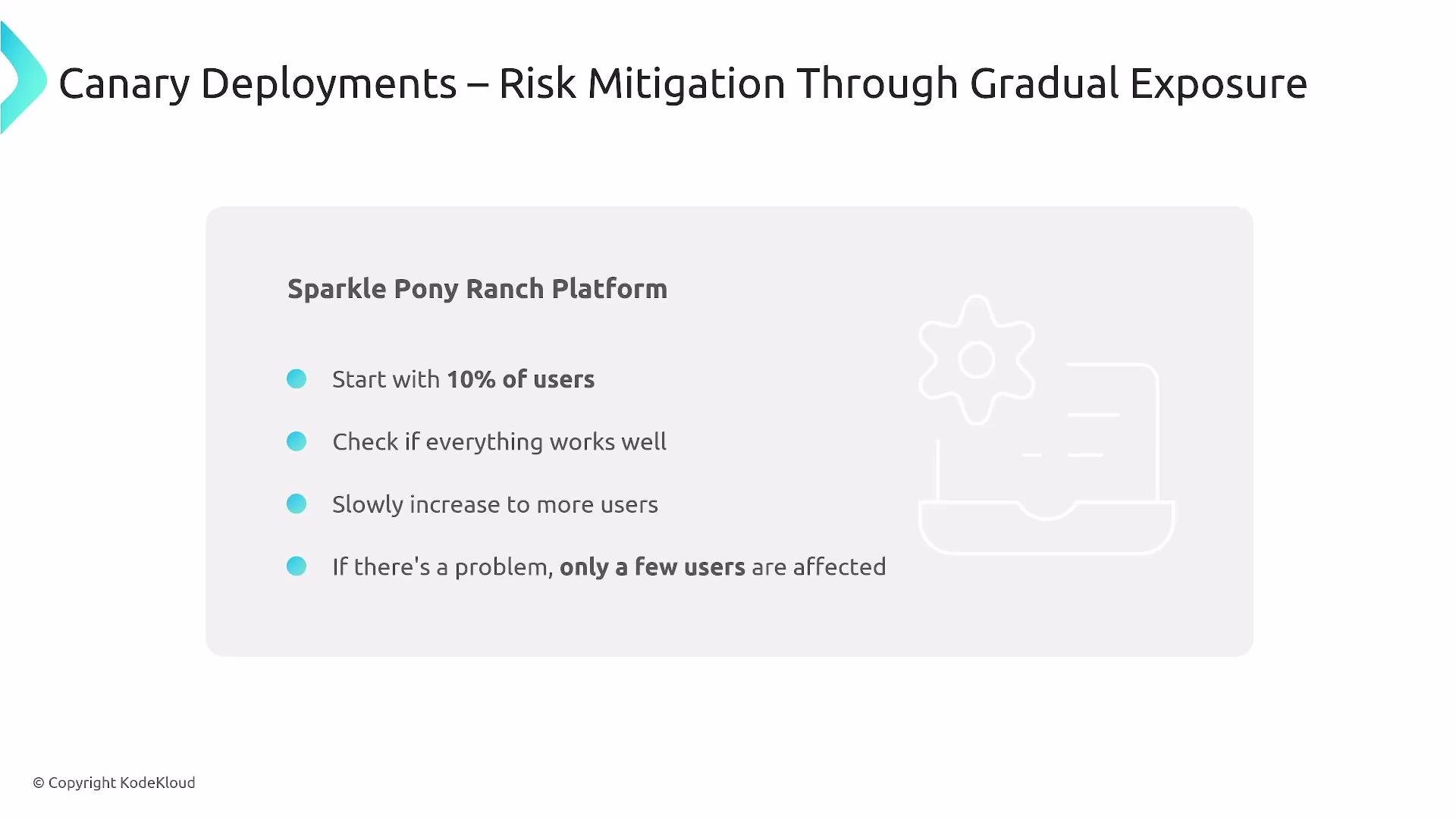
 Canary deployment (example)
* Start by routing a small percentage (e.g., 5–10%) of traffic to the new version.
* Monitor key metrics (error rates, latency, business KPIs).
* Gradually increase traffic if metrics remain healthy; abort and roll back on degradation.
This approach provides controlled exposure and fast rollback when issues appear.
Canary deployment (example)
* Start by routing a small percentage (e.g., 5–10%) of traffic to the new version.
* Monitor key metrics (error rates, latency, business KPIs).
* Gradually increase traffic if metrics remain healthy; abort and roll back on degradation.
This approach provides controlled exposure and fast rollback when issues appear.
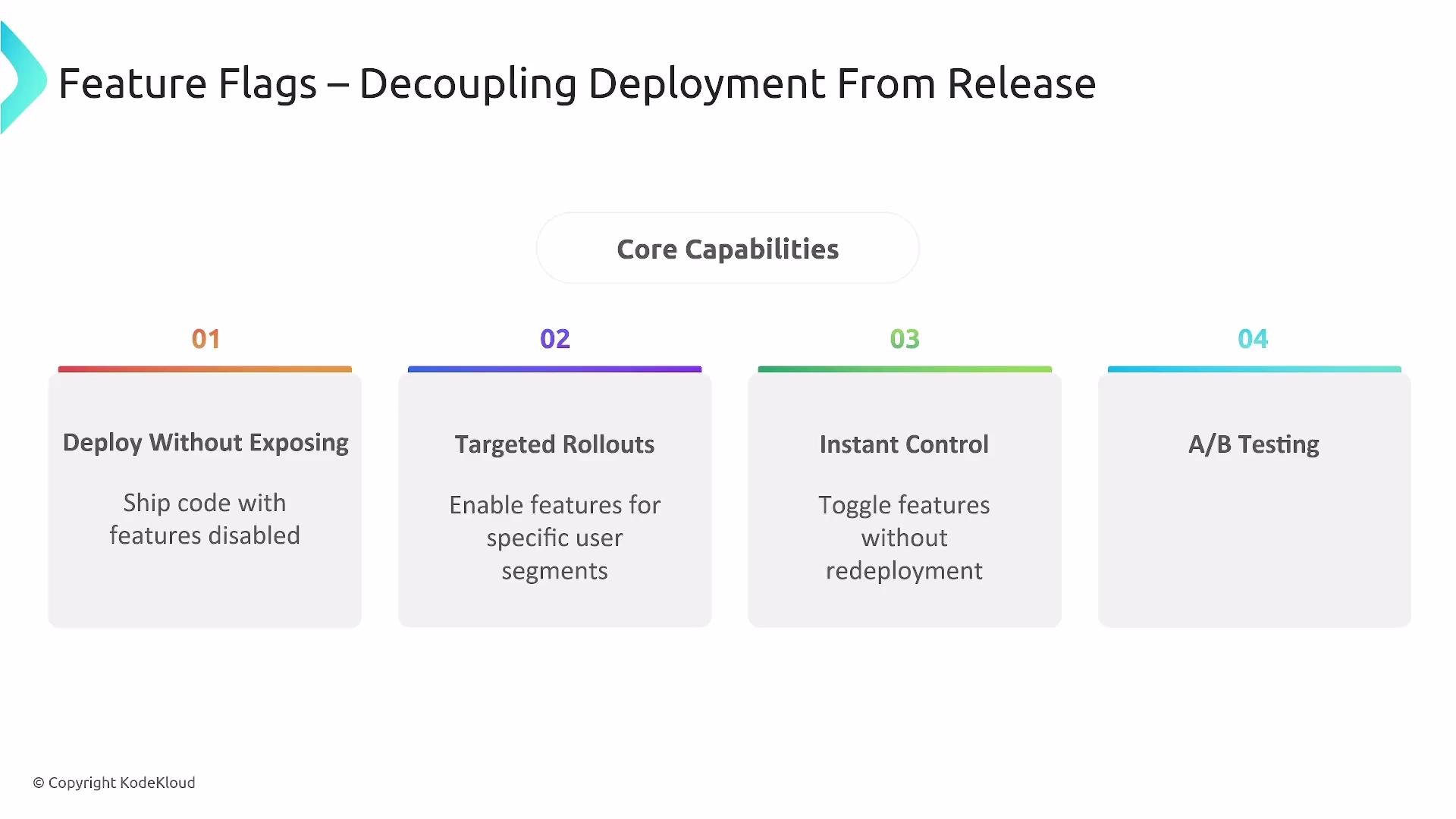
 Feature flags
* Allow shipping code that is disabled or hidden until toggled on.
* Enable targeted rollouts, A/B tests, and immediate disablement when issues occur.
* Combine feature flags with canary or traffic strategies for finely controlled rollouts.
Feature flags
* Allow shipping code that is disabled or hidden until toggled on.
* Enable targeted rollouts, A/B tests, and immediate disablement when issues occur.
* Combine feature flags with canary or traffic strategies for finely controlled rollouts.
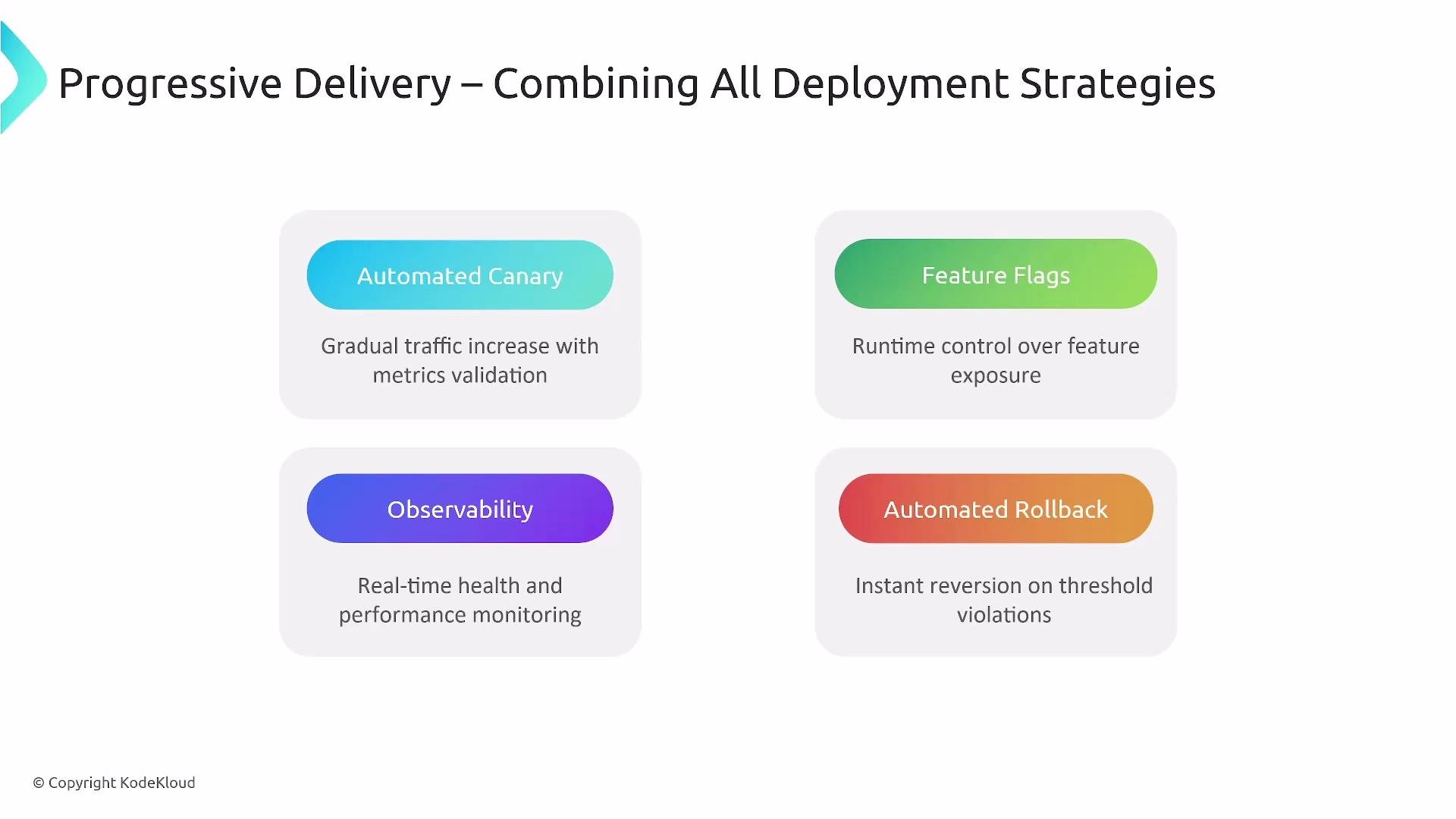
 Progressive delivery
 blends automated canaries, feature flags, strong observability, and automated rollback to let teams release quickly while minimizing risk.
Progressive delivery
Progressive delivery blends automated canaries, feature flags, strong observability, and automated rollback to let teams release quickly while minimizing risk.
 Automate everything you can
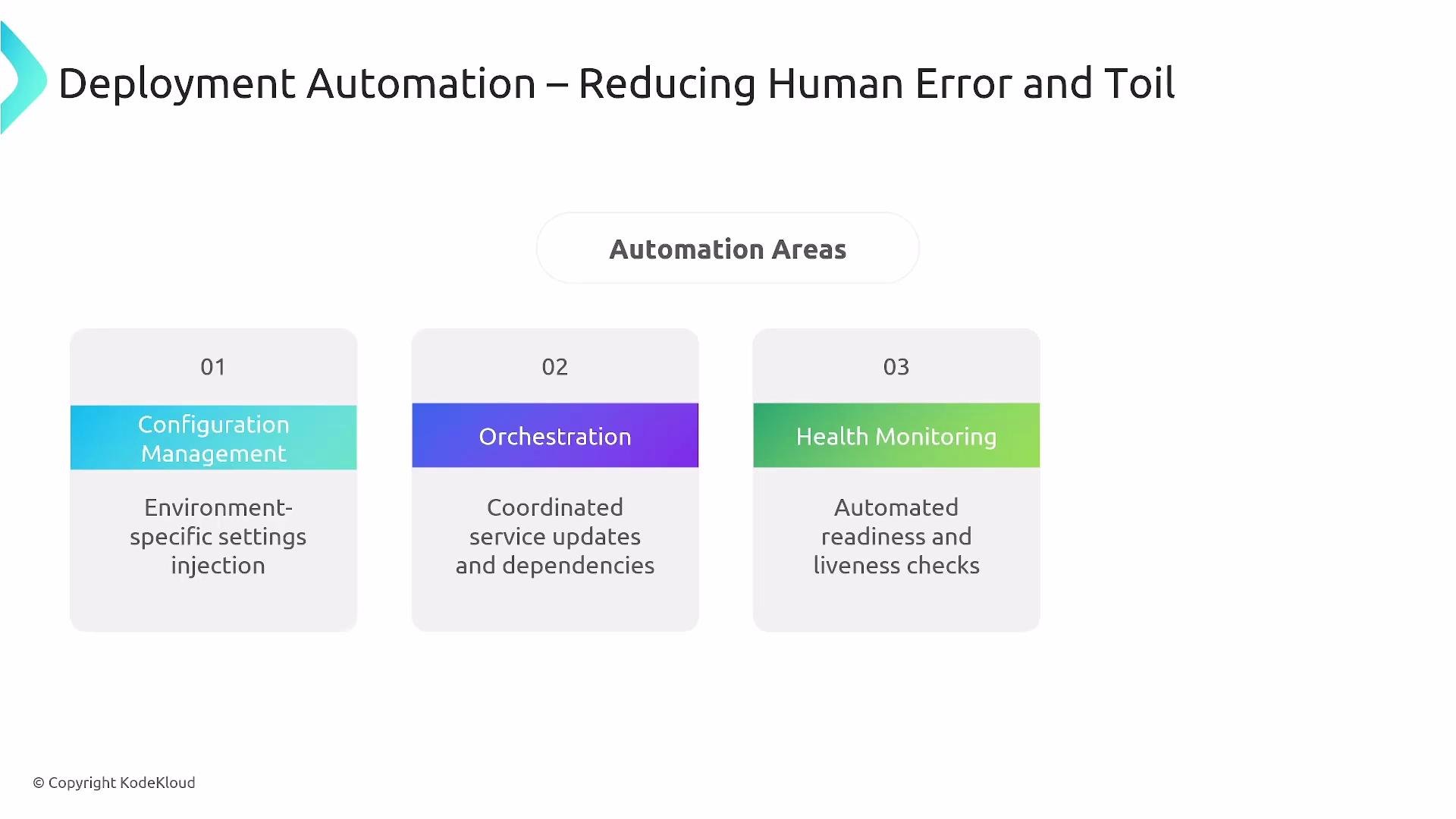
* Automate configuration management, orchestration, and health monitoring to reduce human error and toil.
* Define explicit failure triggers in quality gates (smoke tests, performance tests, security checks, business validation) so rollbacks or pauses are automatic when thresholds are breached.
* Measure rollback cost in time, money, and resources to choose appropriate strategies.
Automate everything you can
* Automate configuration management, orchestration, and health monitoring to reduce human error and toil.
* Define explicit failure triggers in quality gates (smoke tests, performance tests, security checks, business validation) so rollbacks or pauses are automatic when thresholds are breached.
* Measure rollback cost in time, money, and resources to choose appropriate strategies.
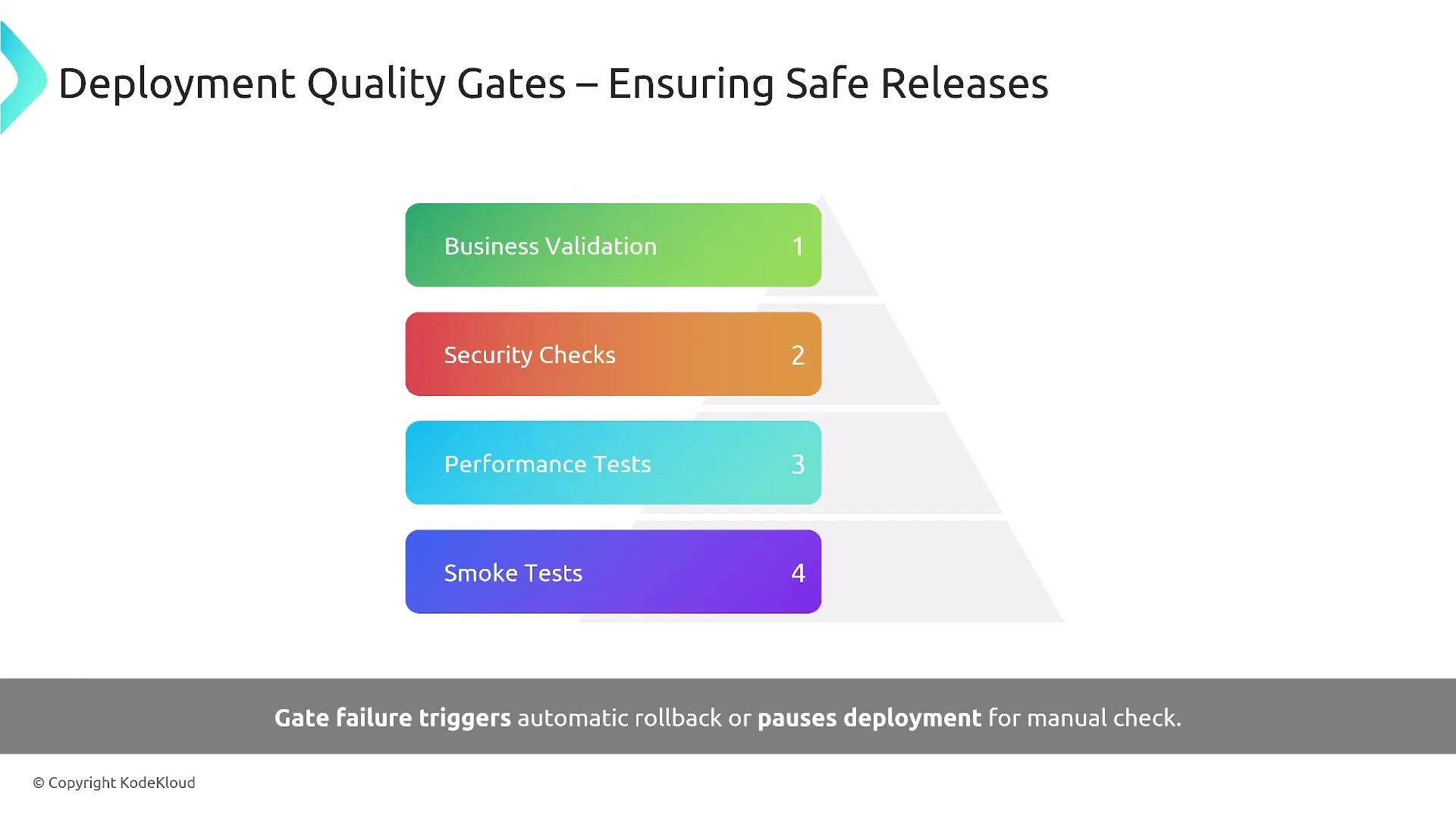
 Deployment quality gates
* Typical gates: smoke tests, performance tests, security checks, and business validation.
* If a gate fails, either automatically rollback or pause promotion for manual review, depending on policy.
Deployment quality gates
* Typical gates: smoke tests, performance tests, security checks, and business validation.
* If a gate fails, either automatically rollback or pause promotion for manual review, depending on policy.
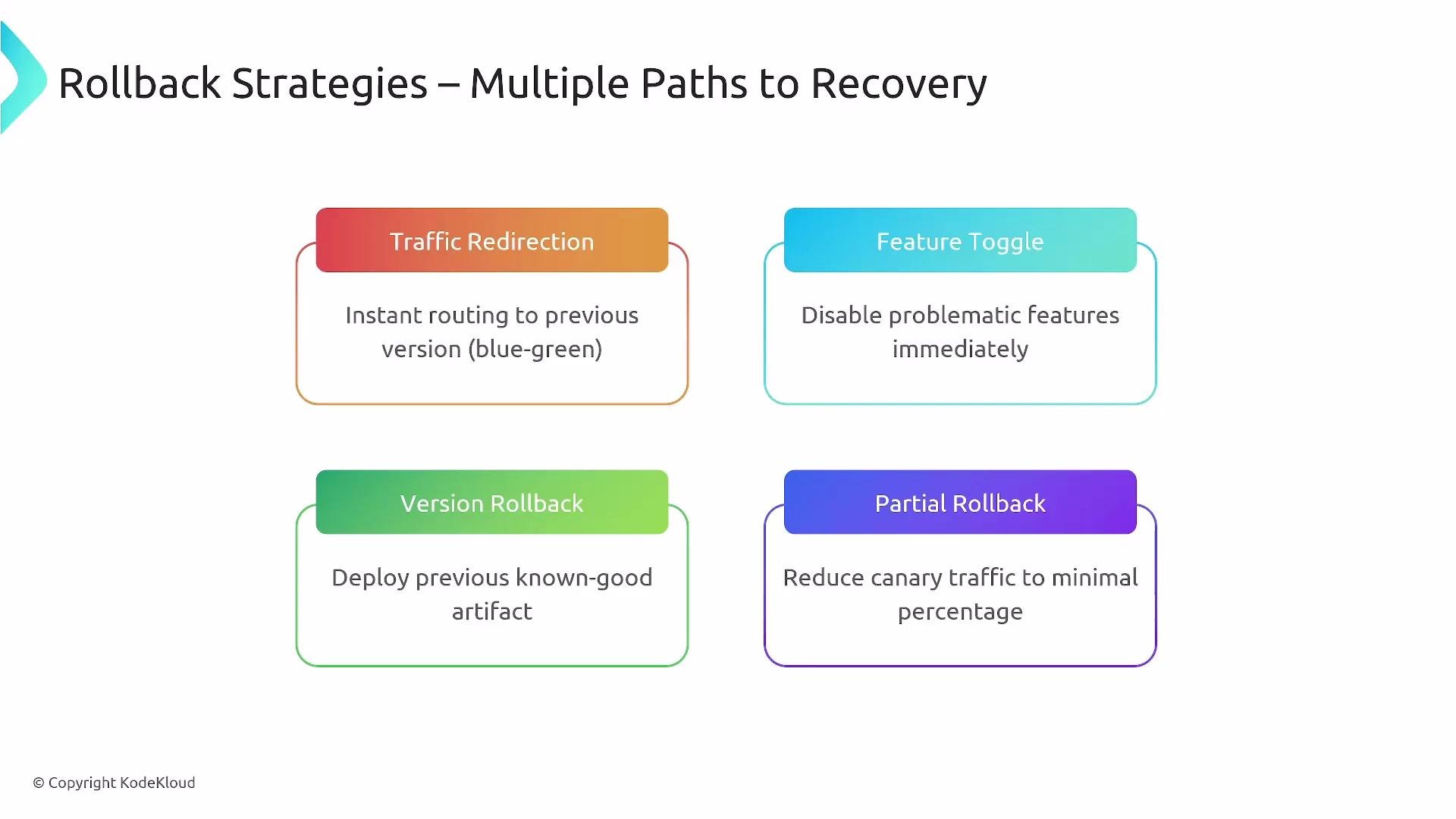
 Rollback options
* Traffic redirection: route traffic back to the previous environment.
* Feature toggles: disable the new feature instantly.
* Version rollback: redeploy a known-good version.
* Partial rollback: scale down the fraction of systems or traffic receiving the change.
Rollback options
* Traffic redirection: route traffic back to the previous environment.
* Feature toggles: disable the new feature instantly.
* Version rollback: redeploy a known-good version.
* Partial rollback: scale down the fraction of systems or traffic receiving the change.
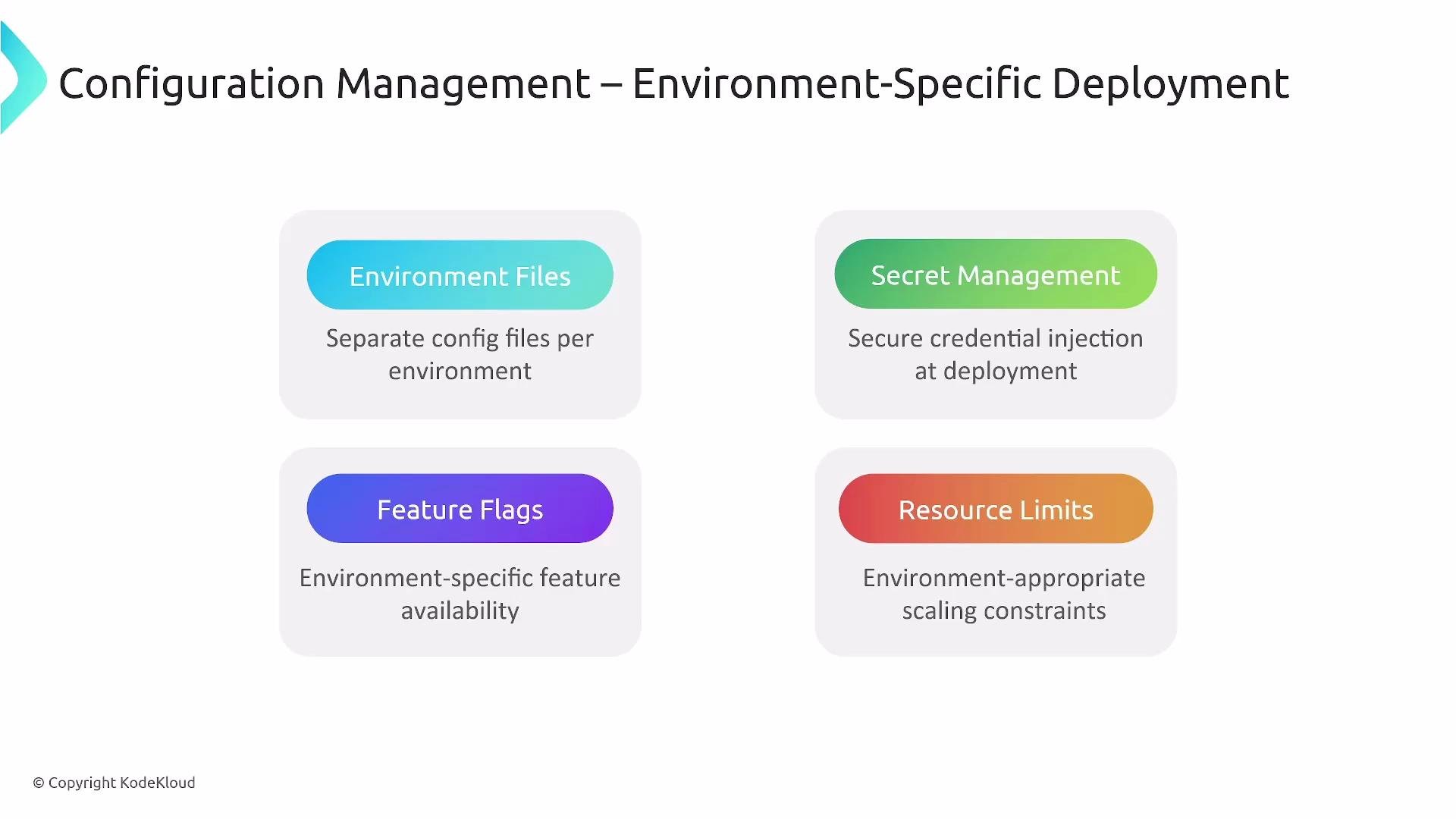
 Environment-specific configuration
* Keep environment files, secrets, and resource limits appropriate and versioned for each environment.
* Feature flags, API keys, database endpoints, and capacity settings typically differ between environments and must be managed securely.
* Treat database migrations as first-class changes: coordinate, version, and test migrations to avoid release failures.
Environment-specific configuration
* Keep environment files, secrets, and resource limits appropriate and versioned for each environment.
* Feature flags, API keys, database endpoints, and capacity settings typically differ between environments and must be managed securely.
* Treat database migrations as first-class changes: coordinate, version, and test migrations to avoid release failures.
 Orchestration and platform tooling
Orchestrators and platform services automate release workflows, approvals, access control, audit logging, and runtime security. Tools like [Spinnaker](https://spinnaker.io/) and other release orchestration platforms help ensure only approved and tested artifacts reach production, and they automate rollbacks and cross-region coordination.
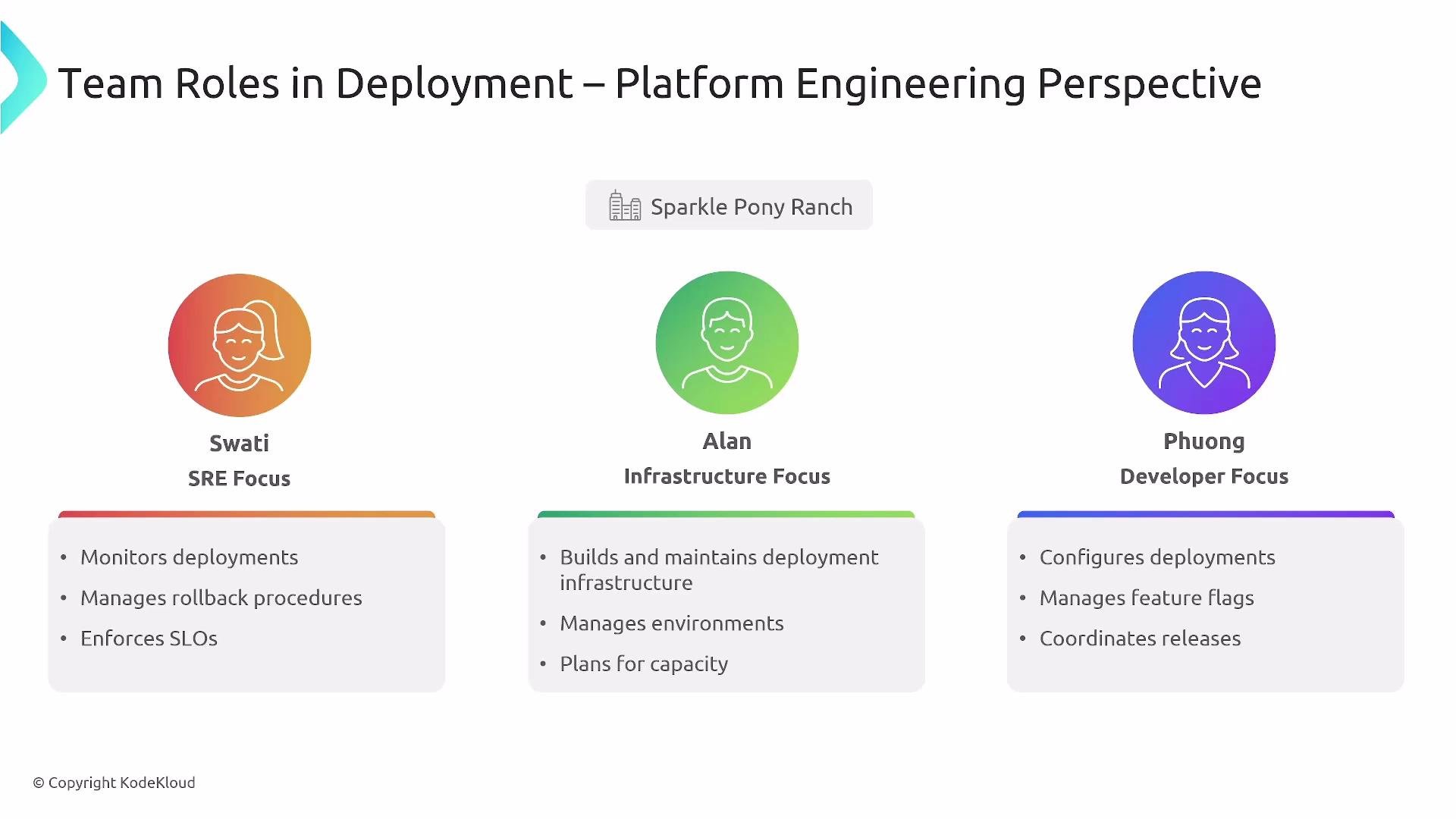
Team roles in a platform context
| Role | Primary focus | Responsibilities |
| - | -: | - |
| SREs | Reliability and runbooks | Ensure deployments meet SLA/rollback requirements; own incident response |
| Infrastructure / Platform engineers | Capacity, security, orchestration | Provide validated platform services, access controls, and automation |
| Developers / Product teams | Features and business outcomes | Control feature flags, coordinate release timing, and validate business metrics |
Orchestration and platform tooling
Orchestrators and platform services automate release workflows, approvals, access control, audit logging, and runtime security. Tools like [Spinnaker](https://spinnaker.io/) and other release orchestration platforms help ensure only approved and tested artifacts reach production, and they automate rollbacks and cross-region coordination.
Team roles in a platform context
| Role | Primary focus | Responsibilities |
| - | -: | - |
| SREs | Reliability and runbooks | Ensure deployments meet SLA/rollback requirements; own incident response |
| Infrastructure / Platform engineers | Capacity, security, orchestration | Provide validated platform services, access controls, and automation |
| Developers / Product teams | Features and business outcomes | Control feature flags, coordinate release timing, and validate business metrics |
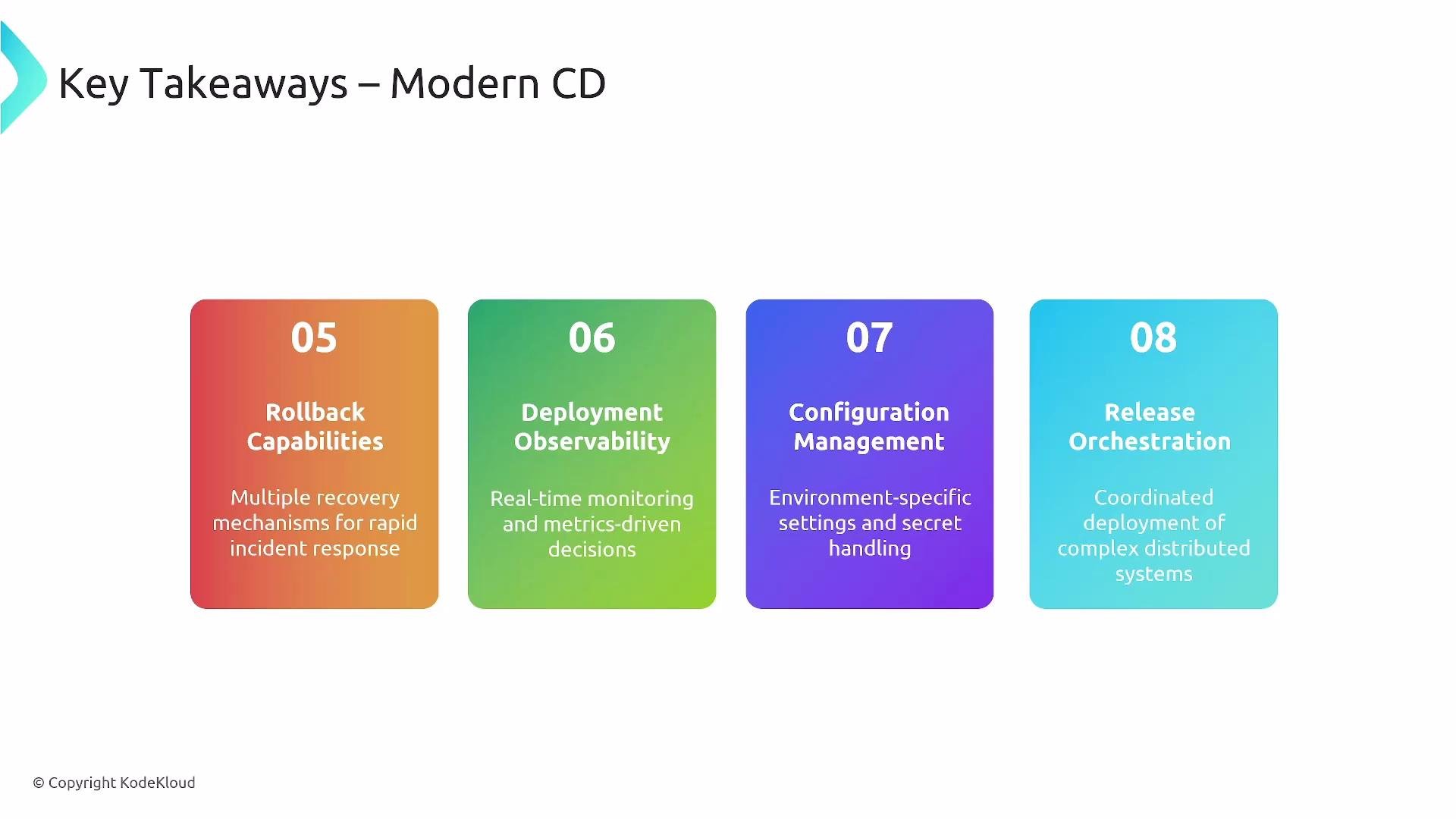
 Key takeaways
* Artifact deployment across environments is the heart of CD/CD processes.
* Continuous delivery keeps artifacts production-ready; continuous deployment pushes approved changes to production automatically.
* Common deployment approaches: rolling, blue-green, canary (traffic-based), feature flags, linear/in-place, and batch updates. Each balances cost, safety, and speed.
* Make validation and automated quality gates progressively stricter from dev → production.
* Prioritize rollback capability: deployability is valuable, but fast, tested recovery is essential.
* Track metrics and observability for every deployment; use them to trigger automated rollbacks where appropriate.
* Manage configuration and secrets per environment; treat migrations with the same discipline as code.
* CI/CD automation is core to internal developer platforms and platform engineering—enabling frequent, safe, low-effort releases.
Key takeaways
* Artifact deployment across environments is the heart of CD/CD processes.
* Continuous delivery keeps artifacts production-ready; continuous deployment pushes approved changes to production automatically.
* Common deployment approaches: rolling, blue-green, canary (traffic-based), feature flags, linear/in-place, and batch updates. Each balances cost, safety, and speed.
* Make validation and automated quality gates progressively stricter from dev → production.
* Prioritize rollback capability: deployability is valuable, but fast, tested recovery is essential.
* Track metrics and observability for every deployment; use them to trigger automated rollbacks where appropriate.
* Manage configuration and secrets per environment; treat migrations with the same discipline as code.
* CI/CD automation is core to internal developer platforms and platform engineering—enabling frequent, safe, low-effort releases.
 Bottom line
Continuous delivery and continuous deployment enable rapid, safe releases with minimal manual effort when backed by automated gates, robust rollback strategies, environment-aware configuration management, and strong observability. This is the core promise of platform engineering: secure, testable, high-quality releases into production.
Links and references
* [Kubernetes Documentation](https://kubernetes.io/docs/)
* [Spinnaker](https://spinnaker.io/)
This documentation is built and hosted on [Mintlify](https://mintlify.com), a developer documentation platform.
Bottom line
Continuous delivery and continuous deployment enable rapid, safe releases with minimal manual effort when backed by automated gates, robust rollback strategies, environment-aware configuration management, and strong observability. This is the core promise of platform engineering: secure, testable, high-quality releases into production.
Links and references
* [Kubernetes Documentation](https://kubernetes.io/docs/)
* [Spinnaker](https://spinnaker.io/)
This documentation is built and hosted on [Mintlify](https://mintlify.com), a developer documentation platform.