> ## Documentation Index
> Fetch the complete documentation index at: https://notes.kodekloud.com/llms.txt
> Use this file to discover all available pages before exploring further.
# Continuous Integration Basics
> Overview of continuous integration merge, test, main workflow, CI pipelines, test strategies, platform engineering enablement and metrics to ensure reliable automated software integration.
Welcome. This lesson explains the merge → test → main workflow—the backbone of modern software teams—and lays a practical foundation for platform engineers and developers building reliable CI pipelines.
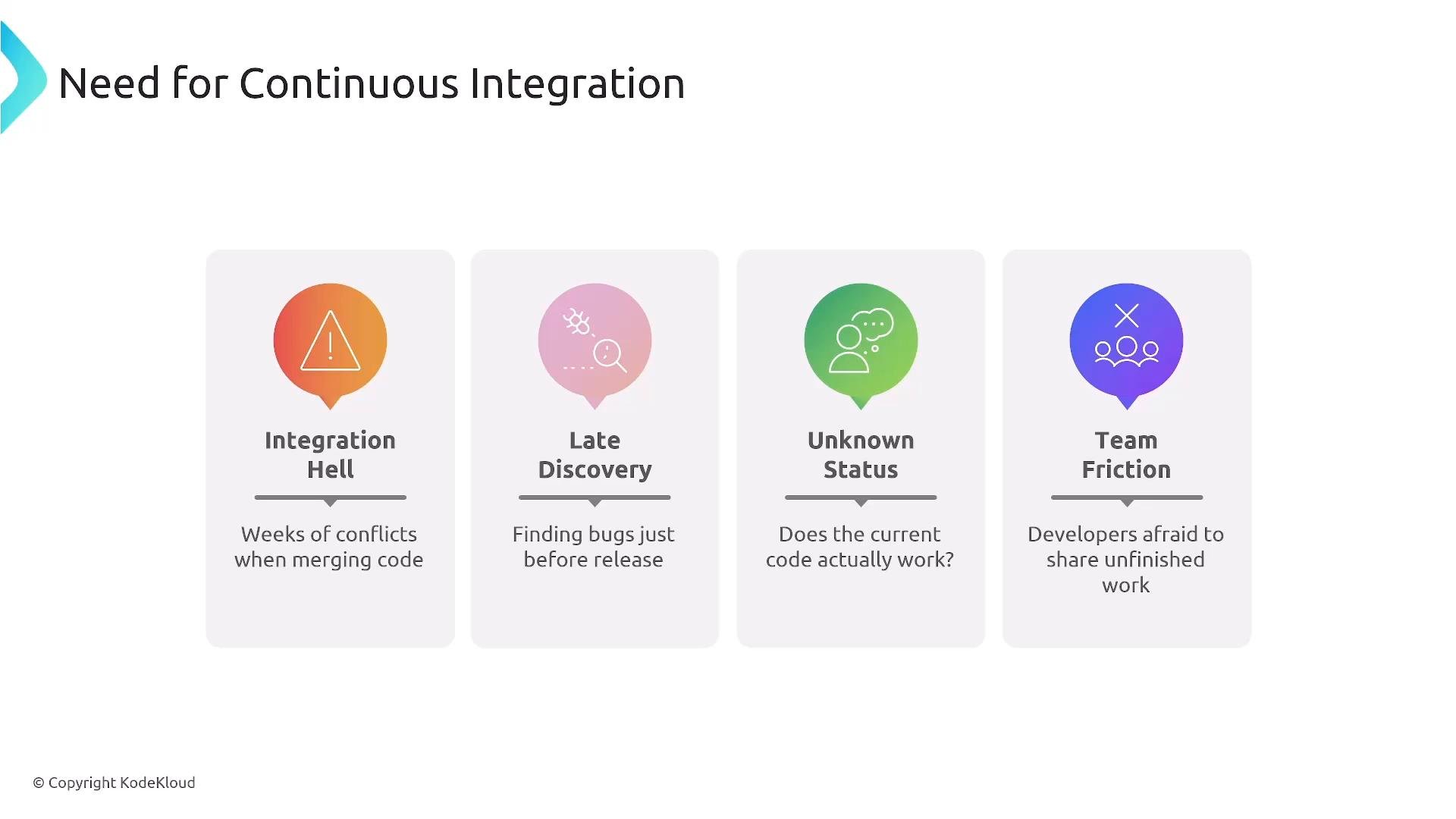
Continuous integration (CI) reduces integration risk by validating changes upstream so downstream activities become simpler, faster, and more reliable. Historically, teams faced "integration hell": late discovery of breakages, uncertain release status, and friction as developers hesitated to merge changes into the shared codebase.
 ## What is Continuous Integration?
Continuous integration means integrate early and integrate often—ideally multiple times per day. Frequent merges produce smaller, easier-to-review changes and much faster feedback loops. In practice, teams protect `main` (or other protected branches) by blocking merges until automated CI checks pass, preventing broken code from entering the shared foundation.
Continuous integration is both a technical process and a team discipline. Automate validation so developers spend less time debugging integration problems and more time delivering features.
## What is Continuous Integration?
Continuous integration means integrate early and integrate often—ideally multiple times per day. Frequent merges produce smaller, easier-to-review changes and much faster feedback loops. In practice, teams protect `main` (or other protected branches) by blocking merges until automated CI checks pass, preventing broken code from entering the shared foundation.
Continuous integration is both a technical process and a team discipline. Automate validation so developers spend less time debugging integration problems and more time delivering features.
 ## The merge → test → main pattern
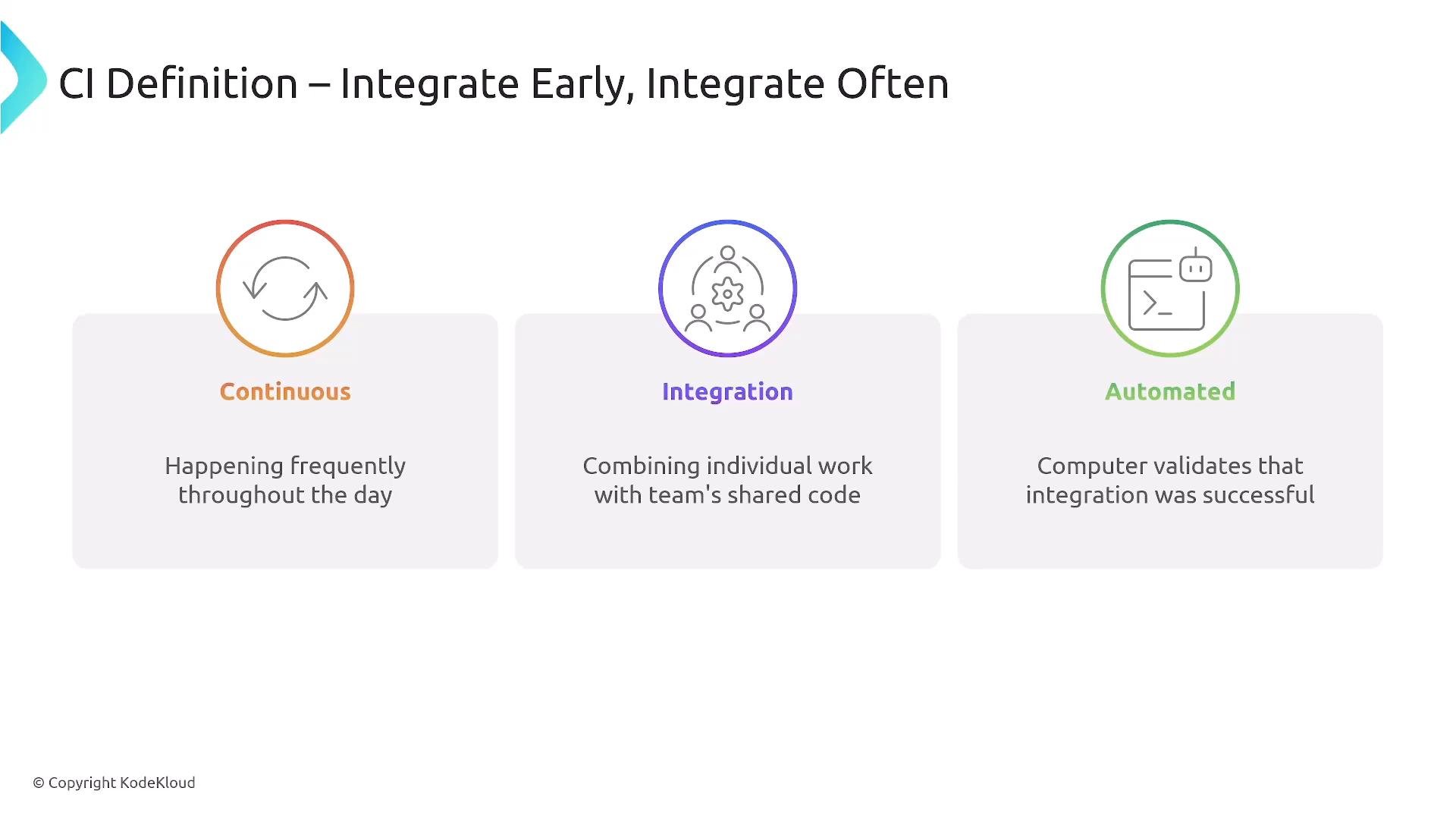
Typical merge workflows follow a simple, repeatable pattern:
1. Write code in a feature branch.
2. Push the branch to the shared repository and open a pull request (PR).
3. Run automated tests and checks on the combined code (the PR branch merged with current `main`).
4. Accept or reject the merge based on CI results.
This ensures every change is validated before it becomes part of `main`.
## The merge → test → main pattern
Typical merge workflows follow a simple, repeatable pattern:
1. Write code in a feature branch.
2. Push the branch to the shared repository and open a pull request (PR).
3. Run automated tests and checks on the combined code (the PR branch merged with current `main`).
4. Accept or reject the merge based on CI results.
This ensures every change is validated before it becomes part of `main`.
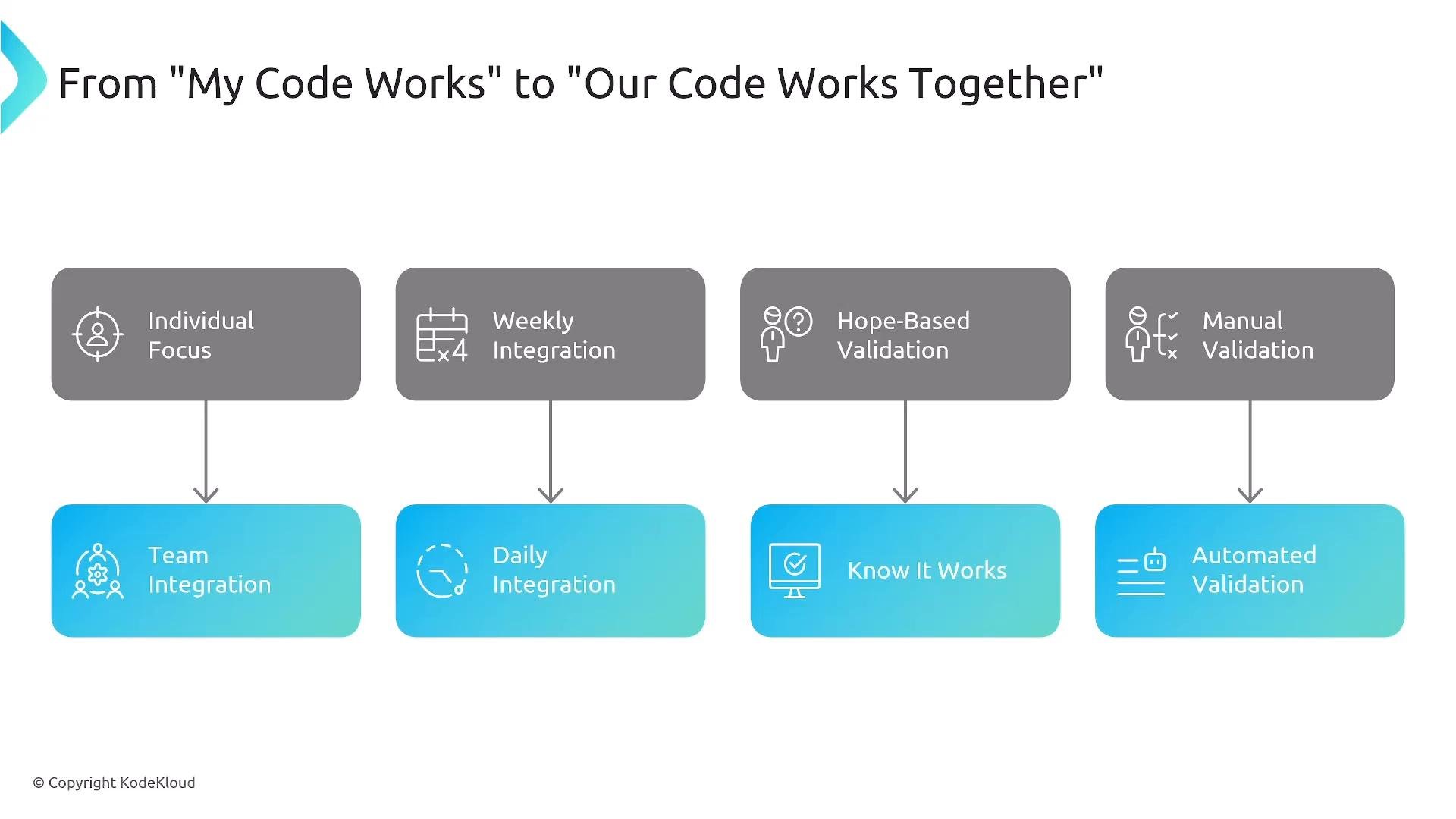
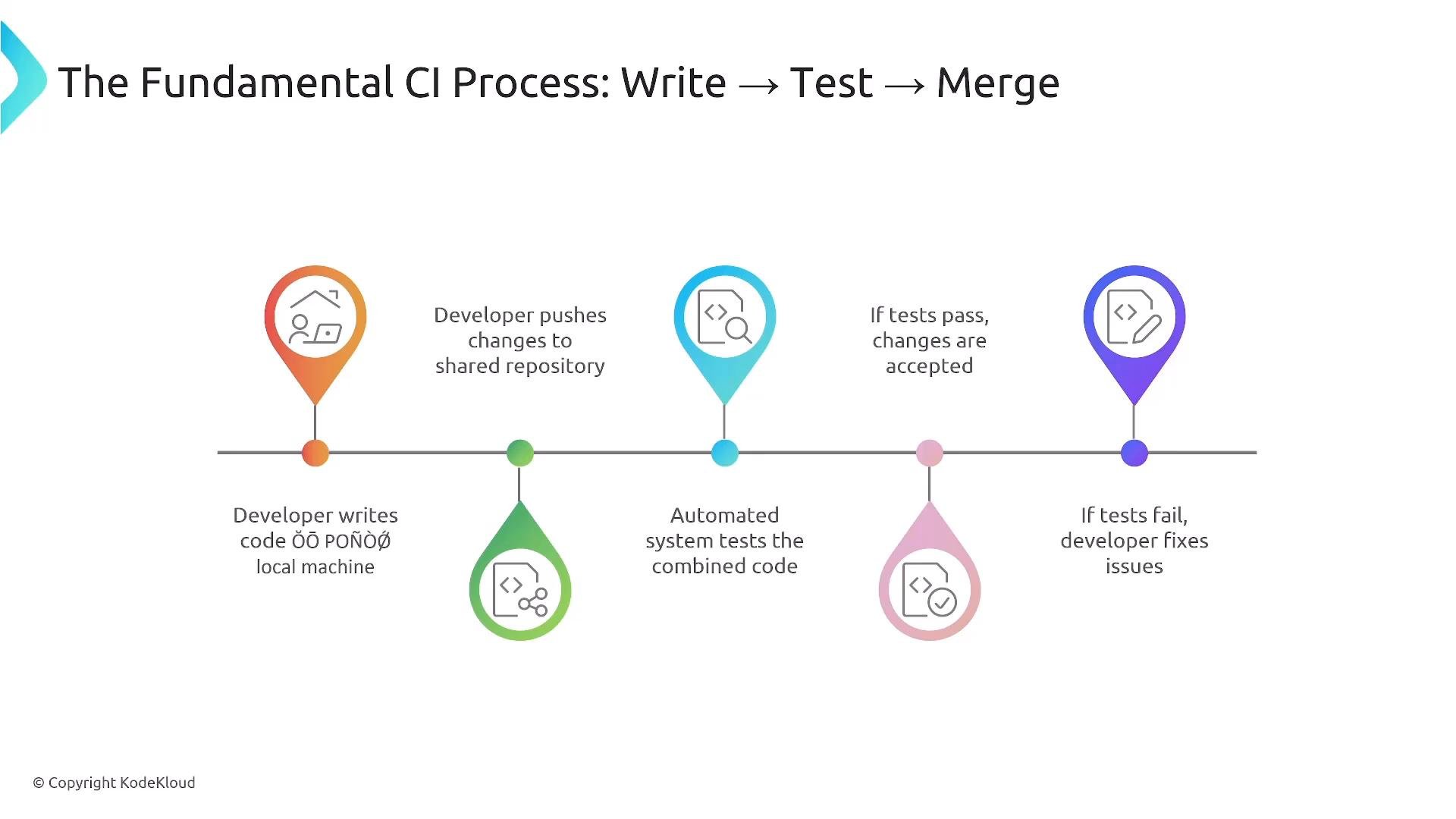 Without CI, individuals and teams often work in isolation and only discover integration problems late in the cycle. CI replaces the fragile statement “My code works” with the stronger guarantee “Our code works together” by providing an automated, repeatable integration pipeline that protects the team while enabling individual experimentation.
 ## Cultural and process shifts with CI
Adopting CI changes how teams operate:
* Weekly integration → daily (or more frequent) merges.
* Hope-based validation → verifiable automated checks.
* Manual validation → reproducible CI pipelines.
* Individual ownership → shared responsibility for quality.
## Cultural and process shifts with CI
Adopting CI changes how teams operate:
* Weekly integration → daily (or more frequent) merges.
* Hope-based validation → verifiable automated checks.
* Manual validation → reproducible CI pipelines.
* Individual ownership → shared responsibility for quality.
 Platform engineers can streamline adoption by providing standard pipelines, out-of-the-box tooling, scalable CI infrastructure, and monitoring so development teams can follow best practices without heavy setup.
## Test strategy and the validation pyramid
CI pipelines commonly structure tests into layers to optimize speed and confidence:
| Layer | Purpose | When to run |
| - | - | - |
| Unit tests | Fast, narrow scope tests providing immediate feedback | On every commit / PR |
| Integration tests | Validate interactions between components (databases, services) | On PR or separate CI stage |
| System / E2E tests | Validate end-to-end behavior in a production-like environment | Nightly, gated stage, or pre-release |
Design pipelines to favor fast unit feedback while running broader integration/system tests in later stages or parallelized runners.
Platform engineers can streamline adoption by providing standard pipelines, out-of-the-box tooling, scalable CI infrastructure, and monitoring so development teams can follow best practices without heavy setup.
## Test strategy and the validation pyramid
CI pipelines commonly structure tests into layers to optimize speed and confidence:
| Layer | Purpose | When to run |
| - | - | - |
| Unit tests | Fast, narrow scope tests providing immediate feedback | On every commit / PR |
| Integration tests | Validate interactions between components (databases, services) | On PR or separate CI stage |
| System / E2E tests | Validate end-to-end behavior in a production-like environment | Nightly, gated stage, or pre-release |
Design pipelines to favor fast unit feedback while running broader integration/system tests in later stages or parallelized runners.
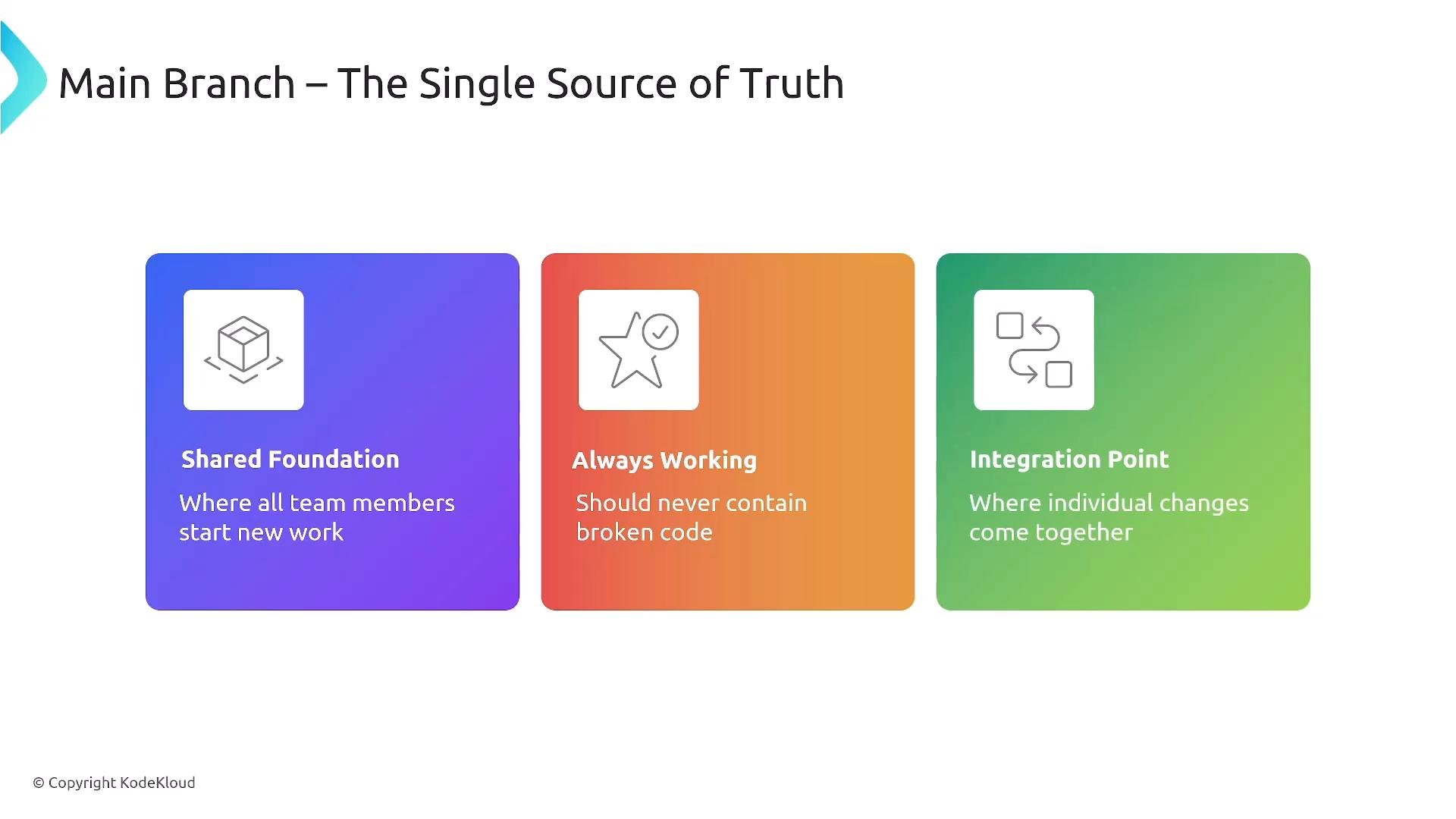 Protect the `main` branch. Keep it deployable: require PR reviews, CI gates, and automated checks so `main` remains a reliable single source of truth.
## Feature-branch workflow (recommended)
A simple, practical feature-branch workflow:
* Create a feature branch from `main`:
```bash theme={null}
git checkout -b feature/my-change
```
* Push and open a PR:
```bash theme={null}
git push -u origin feature/my-change
# Open PR in your hosting platform (GitHub, GitLab, Bitbucket)
```
* CI runs tests against the PR; if all checks pass and reviewers approve, merge into `main`.
Enforce policies (protected branch, required checks) to prevent incomplete or failing code from being merged.
## Automated builds: reproducible artifacts
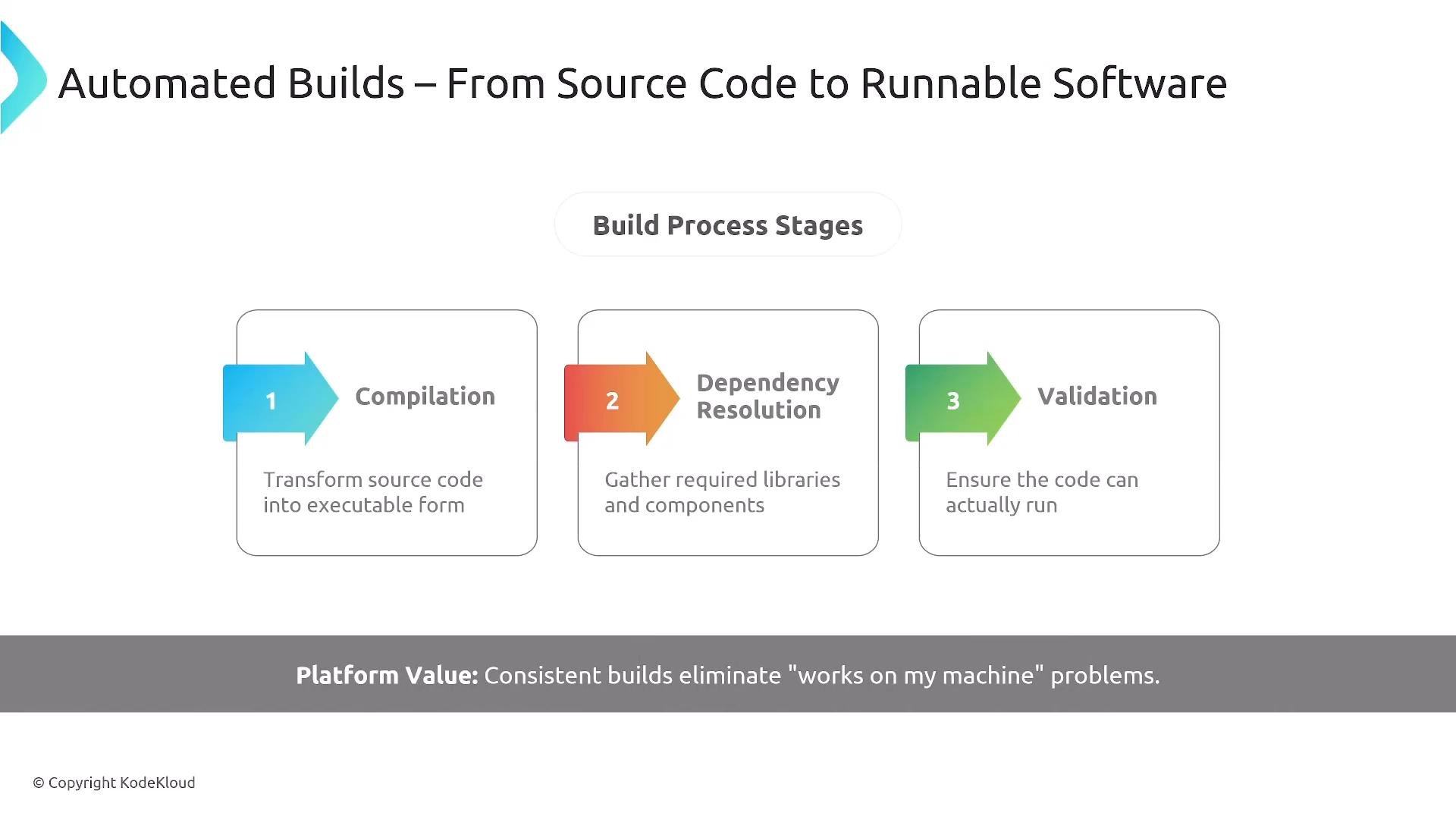
CI should produce consistent, repeatable builds: resolving dependencies, compiling, running static analysis, and packaging artifacts. Reproducible builds eliminate "works on my machine" problems and make rollbacks and deployments predictable.
Protect the `main` branch. Keep it deployable: require PR reviews, CI gates, and automated checks so `main` remains a reliable single source of truth.
## Feature-branch workflow (recommended)
A simple, practical feature-branch workflow:
* Create a feature branch from `main`:
```bash theme={null}
git checkout -b feature/my-change
```
* Push and open a PR:
```bash theme={null}
git push -u origin feature/my-change
# Open PR in your hosting platform (GitHub, GitLab, Bitbucket)
```
* CI runs tests against the PR; if all checks pass and reviewers approve, merge into `main`.
Enforce policies (protected branch, required checks) to prevent incomplete or failing code from being merged.
## Automated builds: reproducible artifacts
CI should produce consistent, repeatable builds: resolving dependencies, compiling, running static analysis, and packaging artifacts. Reproducible builds eliminate "works on my machine" problems and make rollbacks and deployments predictable.
 ### Example: minimal CI job (GitHub Actions)
This simplified example demonstrates running a build and unit tests on a push or PR:
```yaml theme={null}
name: CI
on: [push, pull_request]
jobs:
build-and-test:
runs-on: ubuntu-latest
steps:
- uses: actions/checkout@v4
- name: Set up Node
uses: actions/setup-node@v4
with:
node-version: '18'
- name: Install dependencies
run: npm ci
- name: Run unit tests
run: npm test
```
## Fast feedback and batch size
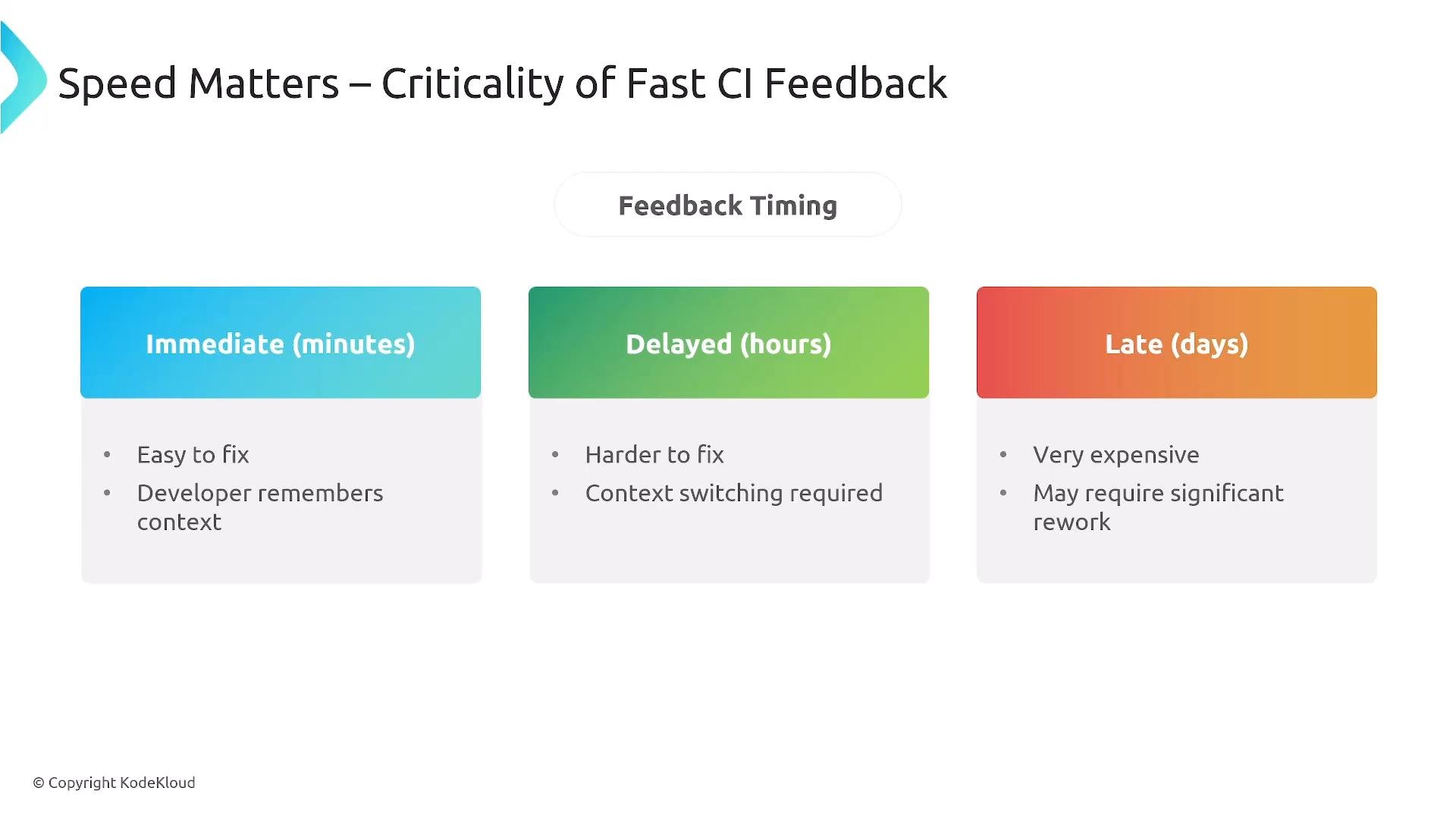
Fast feedback is critical. Small batches and quick CI results help developers retain context and fix issues immediately. Delayed CI increases context switching and the cost of fixes.
### Example: minimal CI job (GitHub Actions)
This simplified example demonstrates running a build and unit tests on a push or PR:
```yaml theme={null}
name: CI
on: [push, pull_request]
jobs:
build-and-test:
runs-on: ubuntu-latest
steps:
- uses: actions/checkout@v4
- name: Set up Node
uses: actions/setup-node@v4
with:
node-version: '18'
- name: Install dependencies
run: npm ci
- name: Run unit tests
run: npm test
```
## Fast feedback and batch size
Fast feedback is critical. Small batches and quick CI results help developers retain context and fix issues immediately. Delayed CI increases context switching and the cost of fixes.
 ## Team benefits and platform enablement
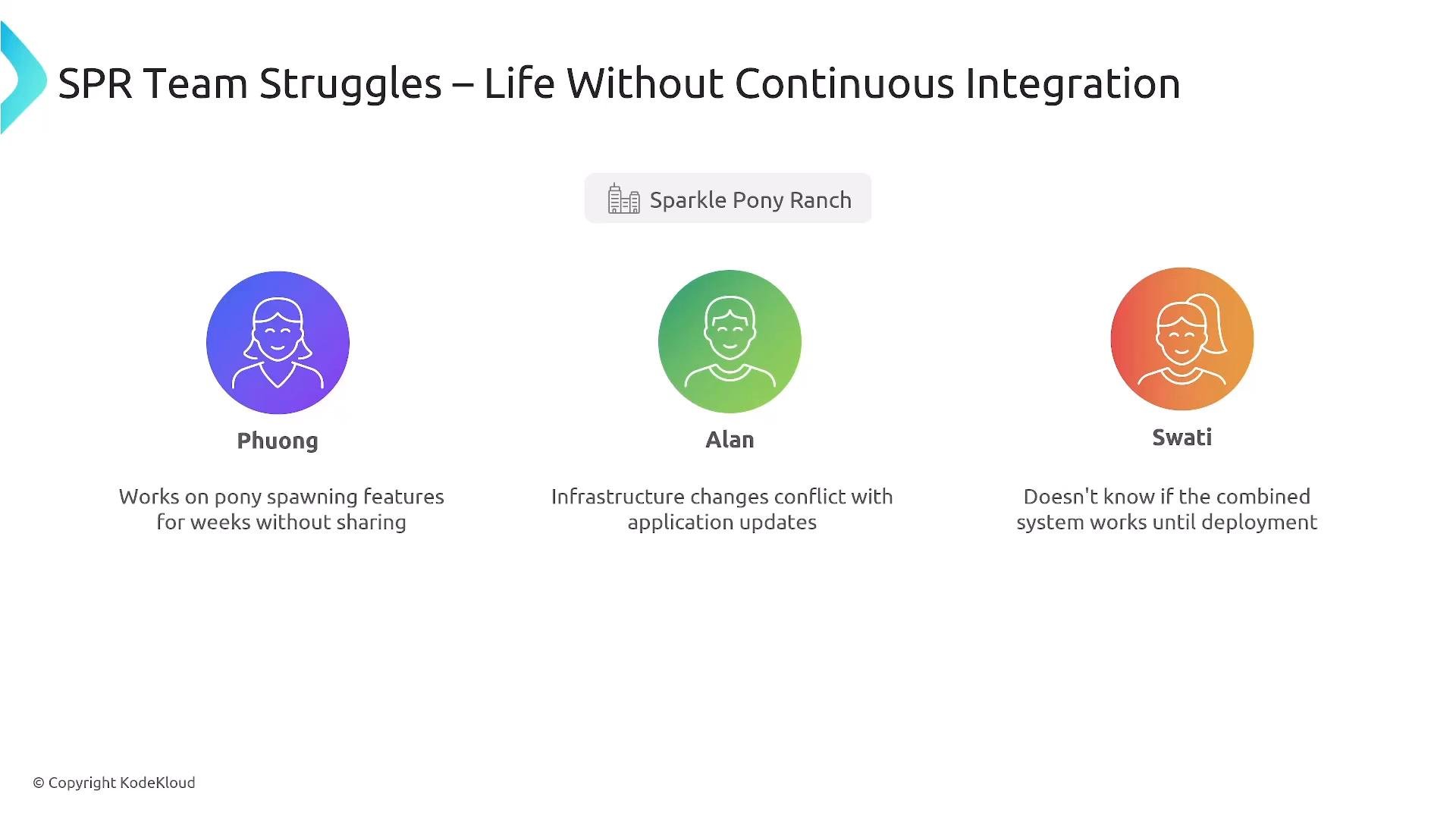
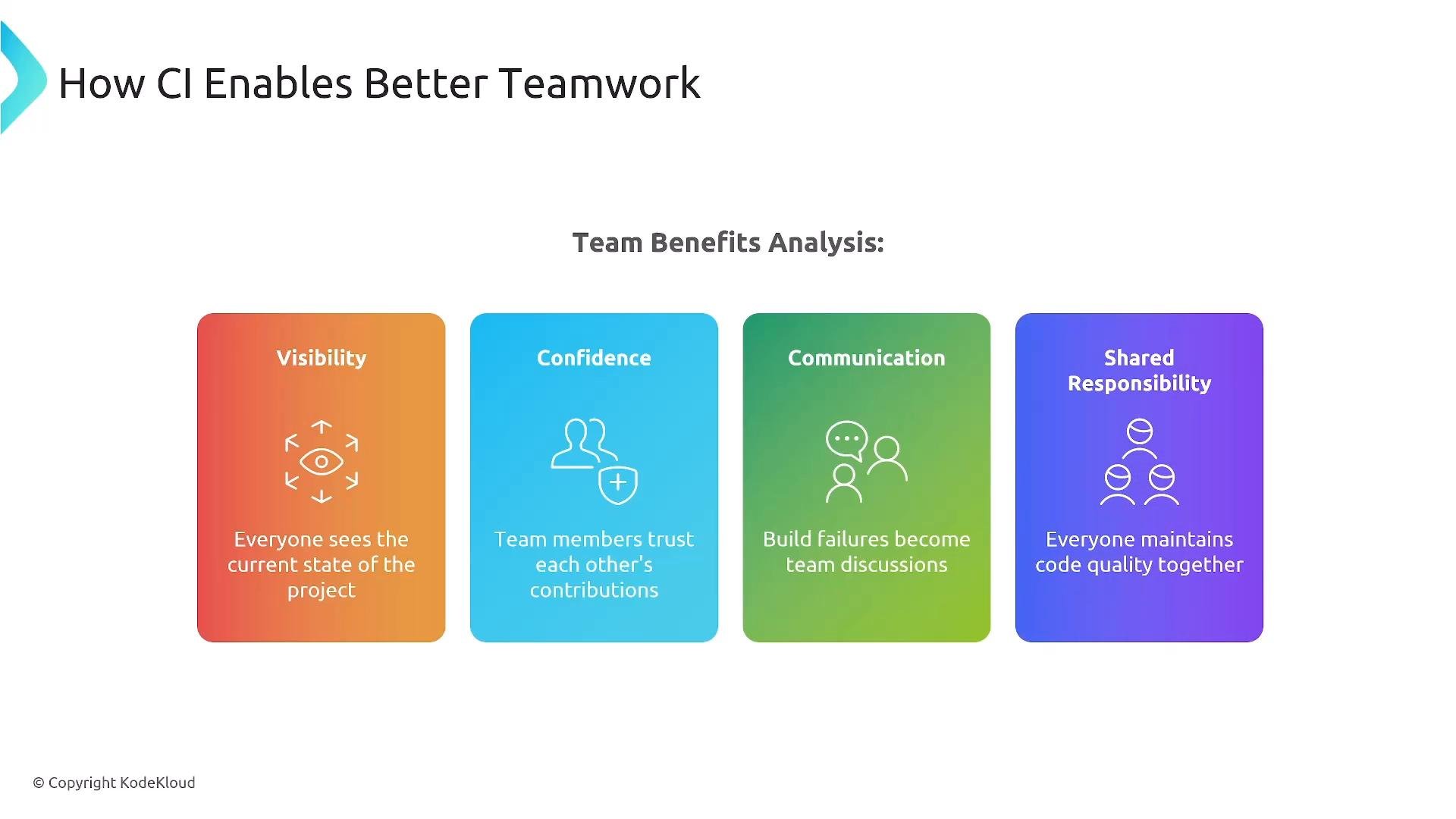
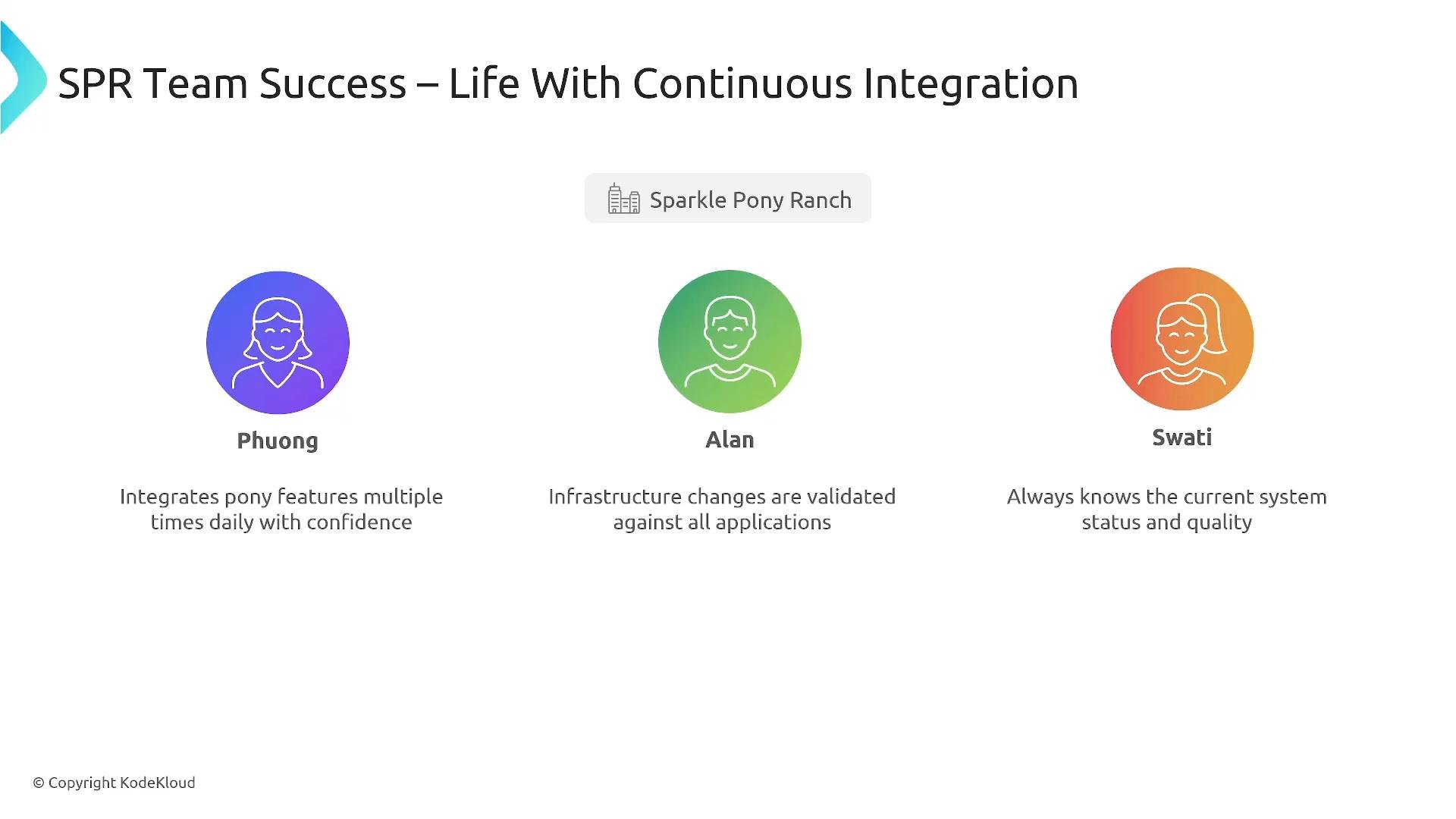
CI improves teamwork by increasing visibility, confidence, and shared responsibility. A solid platform lets developers (Phuong), infrastructure engineers (Alan), and platform owners (Swati) operate with less stress and higher throughput.
## Team benefits and platform enablement
CI improves teamwork by increasing visibility, confidence, and shared responsibility. A solid platform lets developers (Phuong), infrastructure engineers (Alan), and platform owners (Swati) operate with less stress and higher throughput.
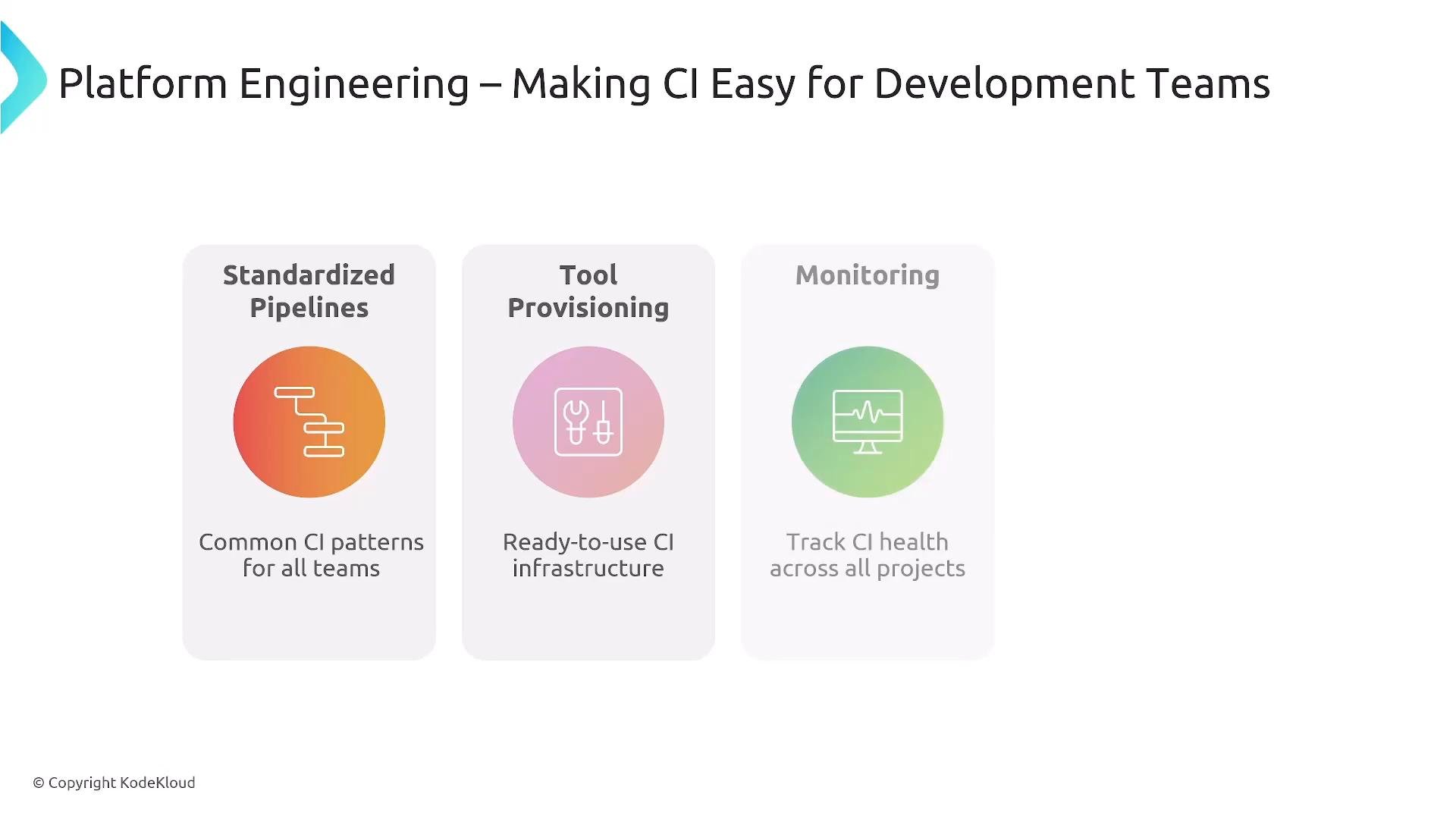
 Platform engineering responsibilities include:
* Standardized pipelines and templates for common languages and frameworks.
* Tool provisioning and managed CI runners (e.g., self-hosted runners, autoscaling agents).
* Observability and metrics to monitor CI health.
* Documentation and onboarding to remove knowledge gaps.
Platform engineering responsibilities include:
* Standardized pipelines and templates for common languages and frameworks.
* Tool provisioning and managed CI runners (e.g., self-hosted runners, autoscaling agents).
* Observability and metrics to monitor CI health.
* Documentation and onboarding to remove knowledge gaps.
 ## Common CI challenges and mitigation
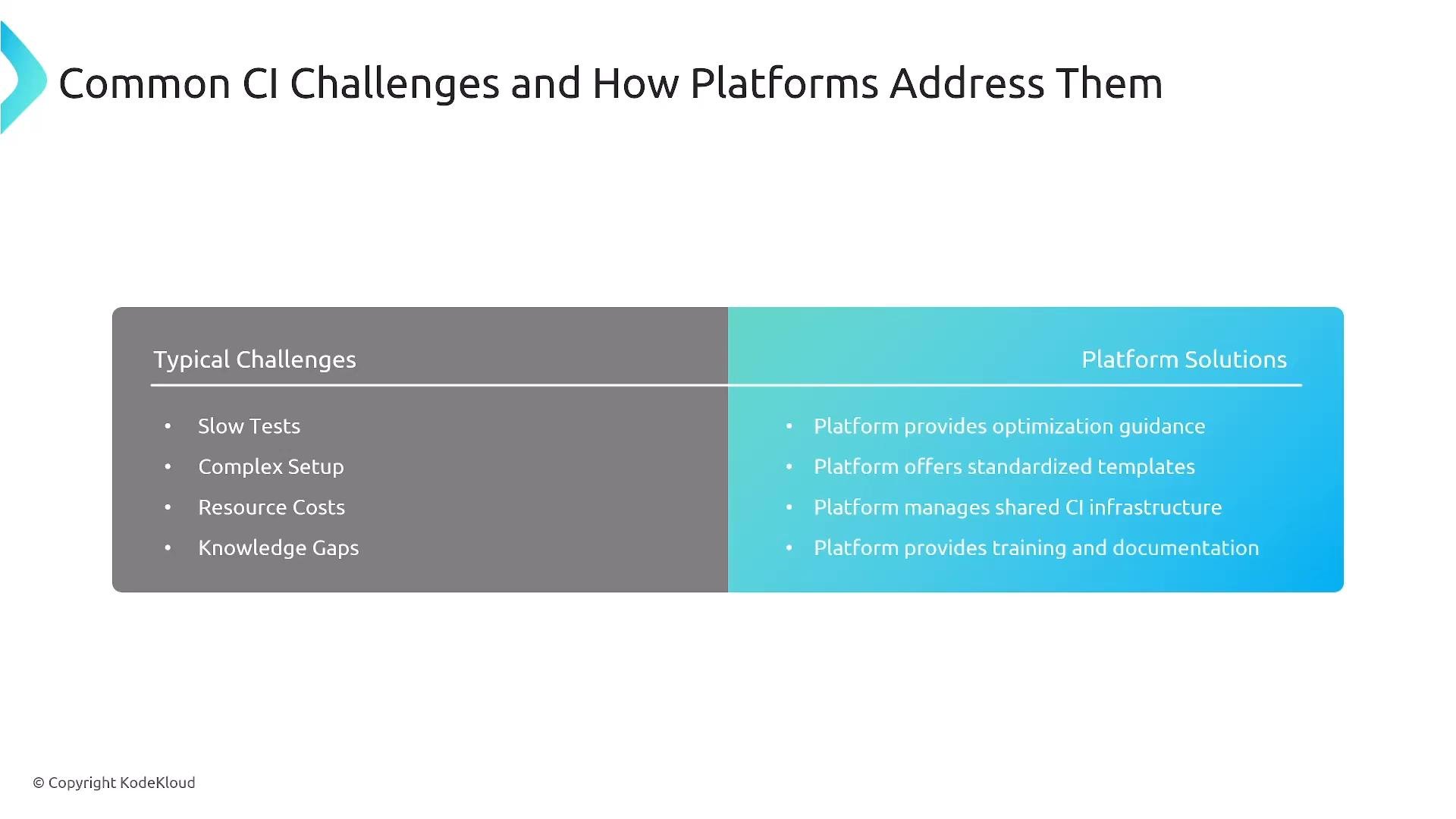
Typical challenges and platform responses:
| Challenge | Platform solution |
| -: | - |
| Slow tests | Provide testing best practices, parallelization, and fast unit suites |
| Complex setup | Offer standard CI templates and developer-facing tooling |
| Resource cost | Use scalable runners, cache artifacts, and scale-to-zero strategies |
| Knowledge gaps | Maintain docs, runbooks, and training programs |
## Common CI challenges and mitigation
Typical challenges and platform responses:
| Challenge | Platform solution |
| -: | - |
| Slow tests | Provide testing best practices, parallelization, and fast unit suites |
| Complex setup | Offer standard CI templates and developer-facing tooling |
| Resource cost | Use scalable runners, cache artifacts, and scale-to-zero strategies |
| Knowledge gaps | Maintain docs, runbooks, and training programs |
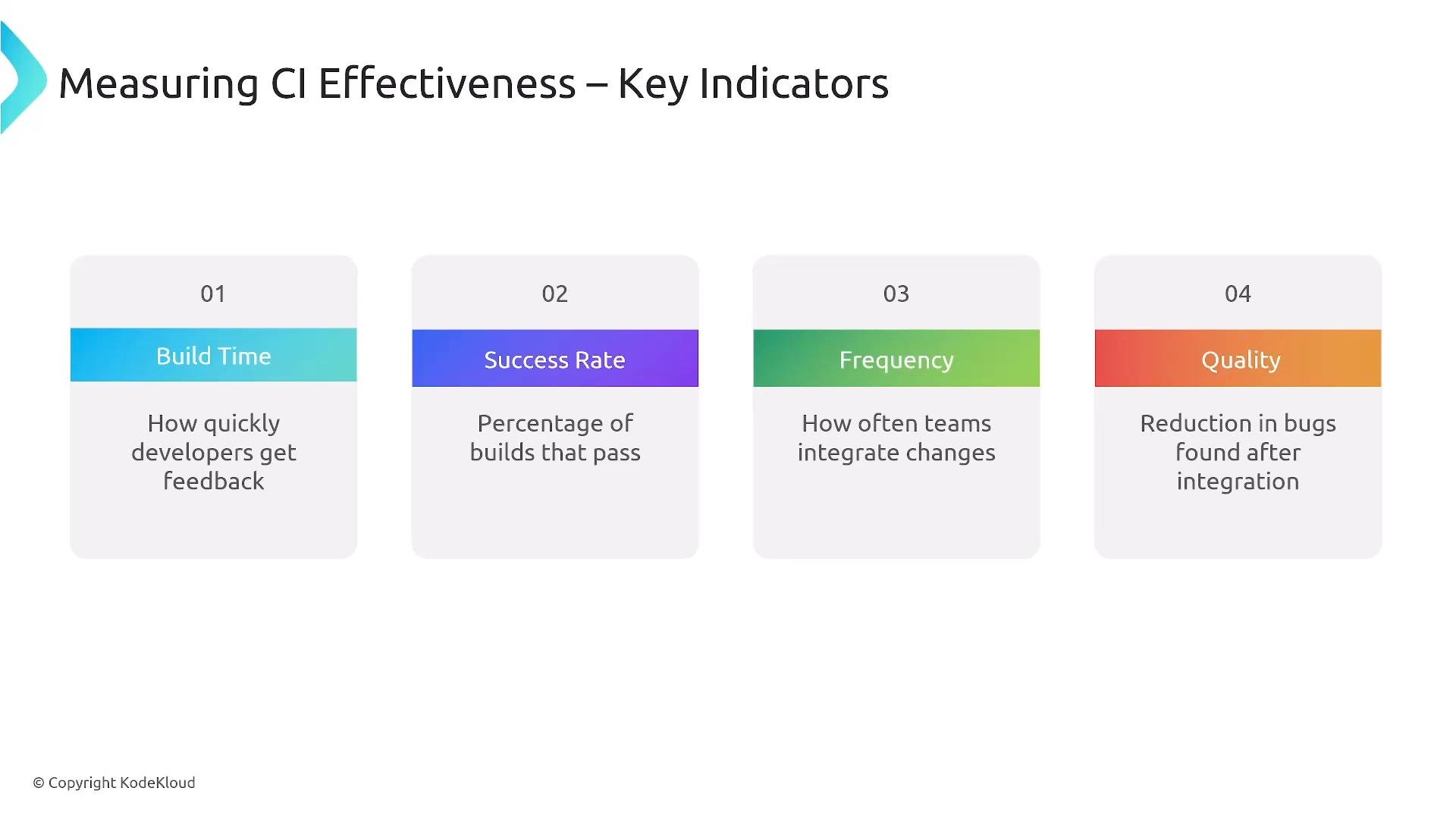
 ## Measure CI effectiveness
Track quantitative indicators and use them to drive improvements:
| Metric | What it tells you |
| -: | - |
| Build time | How quickly developers get feedback |
| Merge success rate | Percent of successful merges on first try |
| Integration frequency | How often changes reach `main` |
| Post-merge defects | Bugs discovered after merge (quality) |
Aim for shorter build times, higher success rates, more frequent confident commits, and fewer post-merge bugs.
## Measure CI effectiveness
Track quantitative indicators and use them to drive improvements:
| Metric | What it tells you |
| -: | - |
| Build time | How quickly developers get feedback |
| Merge success rate | Percent of successful merges on first try |
| Integration frequency | How often changes reach `main` |
| Post-merge defects | Bugs discovered after merge (quality) |
Aim for shorter build times, higher success rates, more frequent confident commits, and fewer post-merge bugs.
 ## Key takeaways
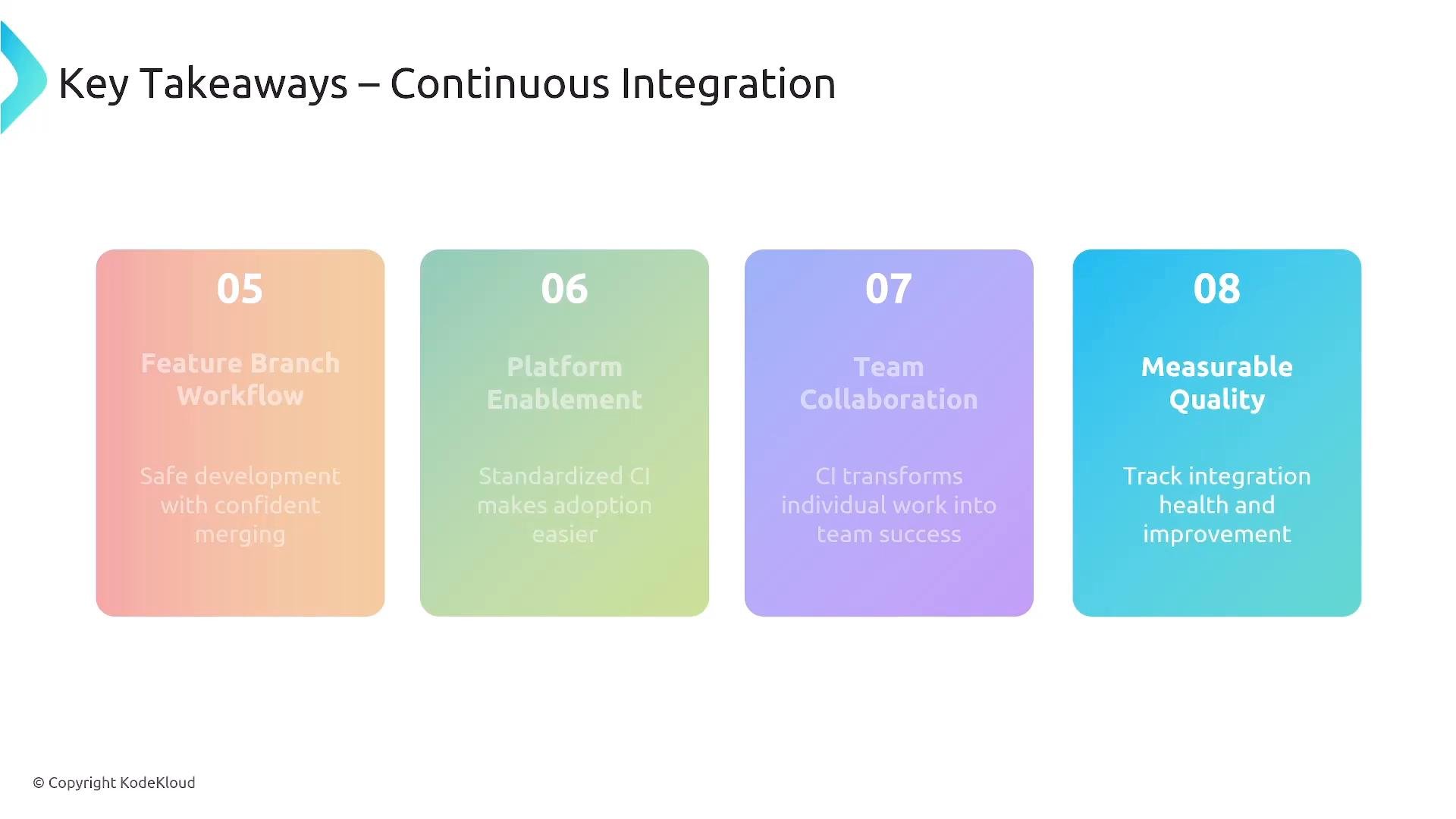
* Embed CI into the platform philosophy so testing and validation are automated and immediate.
* Protect `main` and keep it deployable by gating merges with CI and reviews.
* Use a feature-branch workflow that’s safe, fast, and structured.
* Enable cross-functional collaboration and collect measurable CI metrics to drive continuous improvement.
## Key takeaways
* Embed CI into the platform philosophy so testing and validation are automated and immediate.
* Protect `main` and keep it deployable by gating merges with CI and reviews.
* Use a feature-branch workflow that’s safe, fast, and structured.
* Enable cross-functional collaboration and collect measurable CI metrics to drive continuous improvement.
 Track integration health and apply data-driven optimizations so CI becomes a predictable, low-risk process rather than a risky integration event. As a core component of platform engineering, CI is essential to modern software delivery.
 Thanks for reading. Future lessons will cover Continuous Delivery (CD) and deployment strategies.
## Links and references
* [Jenkins](https://www.jenkins.io/)
* [Prometheus](https://prometheus.io/)
* [Grafana](https://grafana.com/)
* [Kubernetes Documentation](https://kubernetes.io/docs/)
This documentation is built and hosted on [Mintlify](https://mintlify.com), a developer documentation platform.
Thanks for reading. Future lessons will cover Continuous Delivery (CD) and deployment strategies.
## Links and references
* [Jenkins](https://www.jenkins.io/)
* [Prometheus](https://prometheus.io/)
* [Grafana](https://grafana.com/)
* [Kubernetes Documentation](https://kubernetes.io/docs/)
This documentation is built and hosted on [Mintlify](https://mintlify.com), a developer documentation platform.