> ## Documentation Index
> Fetch the complete documentation index at: https://notes.kodekloud.com/llms.txt
> Use this file to discover all available pages before exploring further.
# Introduction
> Hands-on timed CKS mock exam series offering multi-cluster scenario practice to prepare Kubernetes administrators for security tasks, runtime detection, supply chain hardening, and exam readiness
Hello — I’m Nourhan Mohamed from KodeKloud. Welcome to the Ultimate CKS Mock Exam series.
This course is built for candidates who are already comfortable with Kubernetes administration and who are preparing to take the Certified Kubernetes Security Specialist (CKS) exam. If your CKS exam is approaching, this mock exam series is designed to simulate the real exam environment and reinforce hands-on security skills across the full Kubernetes stack.
Before you begin
* You should already be familiar with Kubernetes core concepts and administration workflows (cluster architecture, `kubectl`, scheduling, networking, storage, and troubleshooting).
* If you have not completed the Certified Kubernetes Administrator (CKA) curriculum or you’re not confident with cluster administration, stop and complete CKA-level preparation first. The CKS builds on those fundamentals and focuses specifically on securing clusters, workloads, and runtime environments.
 Why CKA first
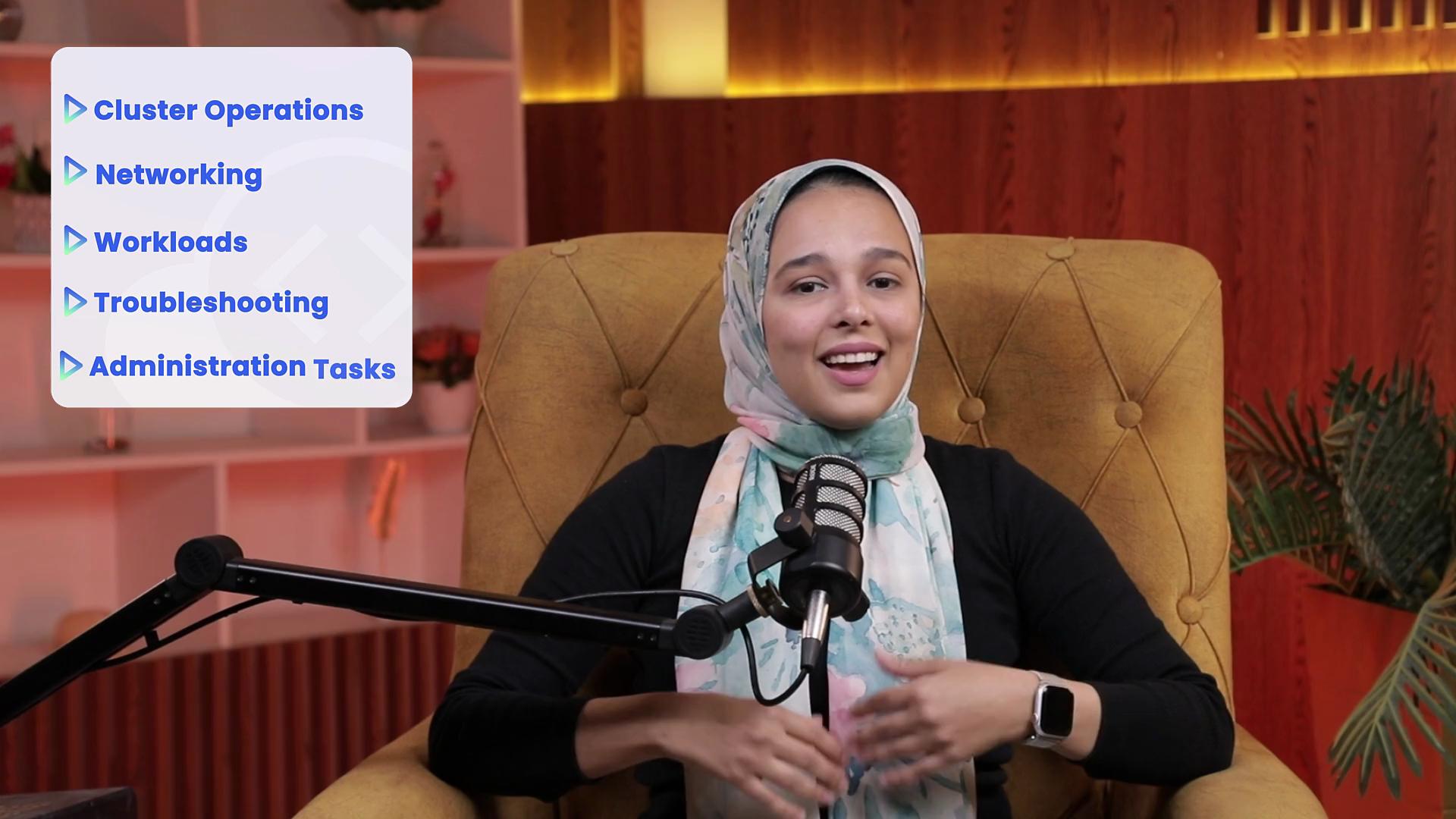
Prioritize the [CKA](https://learn.kodekloud.com/user/courses/cka-certification-course-certified-kubernetes-administrator)-level skills (cluster architecture, `kubectl` usage, control plane components, and troubleshooting) before attempting CKS-focused security tasks — the CKS assumes those fundamentals.
Course format and environment
This series contains multiple, full-length, scenario-based mock exams that mirror the CKS testing model. Each mock exam:
* Is hands-on and timed.
* Uses multiple Kubernetes clusters, with a student node provided as your starting point. From there, you’ll SSH into other clusters and nodes as needed.
* Includes 16 realistic tasks covering cluster and workload security, runtime detection, supply chain protection, and incident response.
Example interaction in the exam lab (you’ll work from a shell similar to this):
```bash theme={null}
root@controlPlane ~ ⮞ kubectl get pod -n crypto-monitor
NAME READY STATUS RESTARTS AGE
suspicious-app-596699676-fxlvp 1/1 Running 0 94s
root@controlPlane ~ ⮞ systemctl status kubelet
● kubelet.service - kubelet: The Kubernetes Node Agent
Loaded: loaded (/lib/systemd/system/kubelet.service; enabled; vendor preset: enabled)
Active: active (running) since Wed 2026-07-15 10:02:13 UTC; 2min 30s ago
```
Core CKS domains and weightings
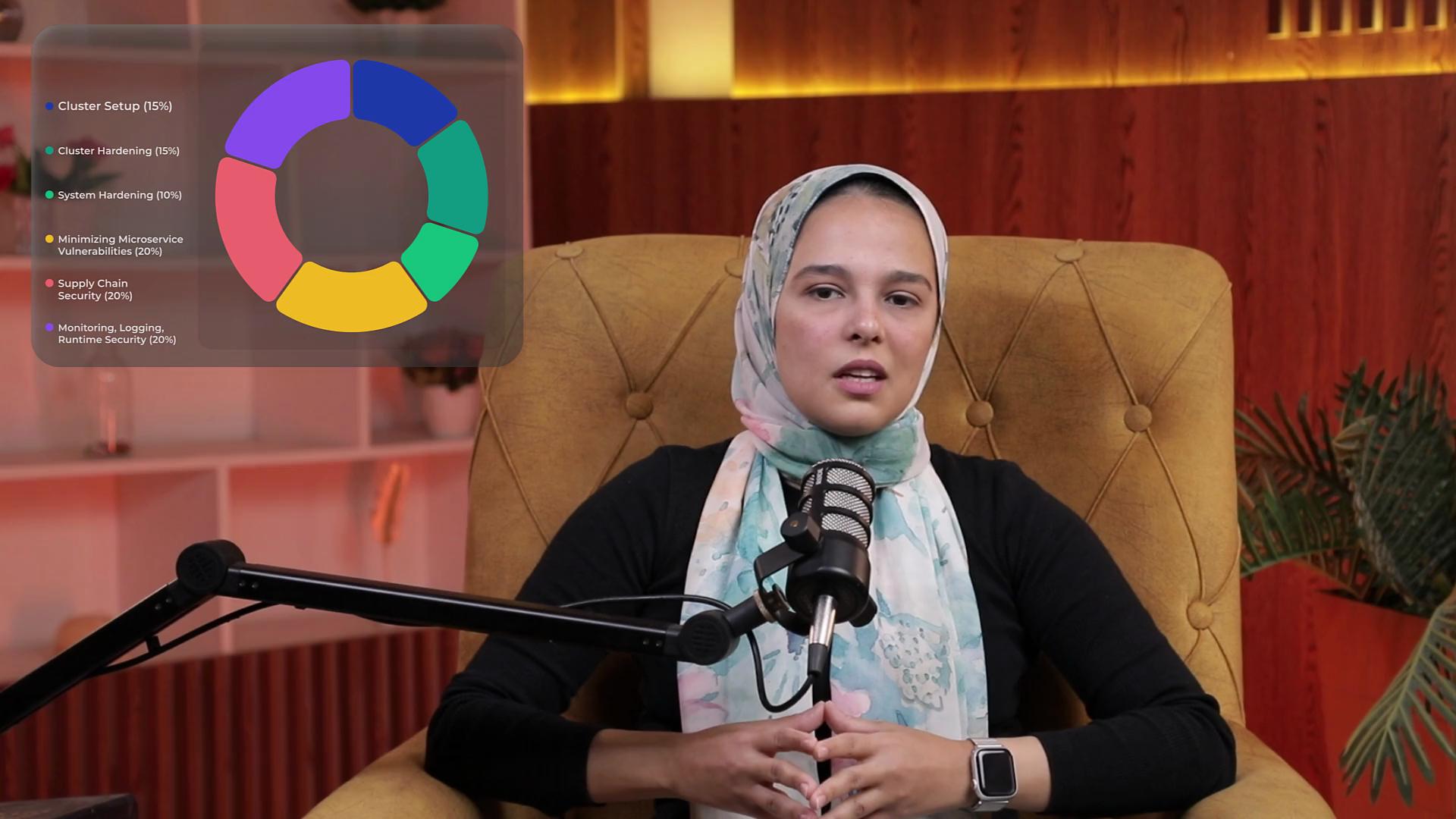
The CKS exam evaluates your security skills across six domains. Below is a concise summary of each domain, its weighting, and a short description of the security focus so you can prioritize study and practice.
| Domain | Weight | Focus |
| ----------------------------------------- | -----: | ------------------------------------------------------------------------------- |
| Cluster setup | 15% | Secure installation, control plane configuration, and secure defaults. |
| Cluster hardening | 15% | API access control, RBAC, admission controls, and control plane hardening. |
| System hardening | 10% | Host-level security, kernel hardening, and minimizing the node attack surface. |
| Minimizing microservice vulnerabilities | 20% | Pod security, container configuration, secrets management, and least privilege. |
| Supply chain security | 20% | Image provenance, scanning, SBOMs, signing, and secure build pipelines. |
| Monitoring, logging, and runtime security | 20% | Detection, alerting, forensics, and runtime protection (e.g., Falco). |
Why CKA first
Prioritize the [CKA](https://learn.kodekloud.com/user/courses/cka-certification-course-certified-kubernetes-administrator)-level skills (cluster architecture, `kubectl` usage, control plane components, and troubleshooting) before attempting CKS-focused security tasks — the CKS assumes those fundamentals.
Course format and environment
This series contains multiple, full-length, scenario-based mock exams that mirror the CKS testing model. Each mock exam:
* Is hands-on and timed.
* Uses multiple Kubernetes clusters, with a student node provided as your starting point. From there, you’ll SSH into other clusters and nodes as needed.
* Includes 16 realistic tasks covering cluster and workload security, runtime detection, supply chain protection, and incident response.
Example interaction in the exam lab (you’ll work from a shell similar to this):
```bash theme={null}
root@controlPlane ~ ⮞ kubectl get pod -n crypto-monitor
NAME READY STATUS RESTARTS AGE
suspicious-app-596699676-fxlvp 1/1 Running 0 94s
root@controlPlane ~ ⮞ systemctl status kubelet
● kubelet.service - kubelet: The Kubernetes Node Agent
Loaded: loaded (/lib/systemd/system/kubelet.service; enabled; vendor preset: enabled)
Active: active (running) since Wed 2026-07-15 10:02:13 UTC; 2min 30s ago
```
Core CKS domains and weightings
The CKS exam evaluates your security skills across six domains. Below is a concise summary of each domain, its weighting, and a short description of the security focus so you can prioritize study and practice.
| Domain | Weight | Focus |
| ----------------------------------------- | -----: | ------------------------------------------------------------------------------- |
| Cluster setup | 15% | Secure installation, control plane configuration, and secure defaults. |
| Cluster hardening | 15% | API access control, RBAC, admission controls, and control plane hardening. |
| System hardening | 10% | Host-level security, kernel hardening, and minimizing the node attack surface. |
| Minimizing microservice vulnerabilities | 20% | Pod security, container configuration, secrets management, and least privilege. |
| Supply chain security | 20% | Image provenance, scanning, SBOMs, signing, and secure build pipelines. |
| Monitoring, logging, and runtime security | 20% | Detection, alerting, forensics, and runtime protection (e.g., Falco). |
 What you’ll practice
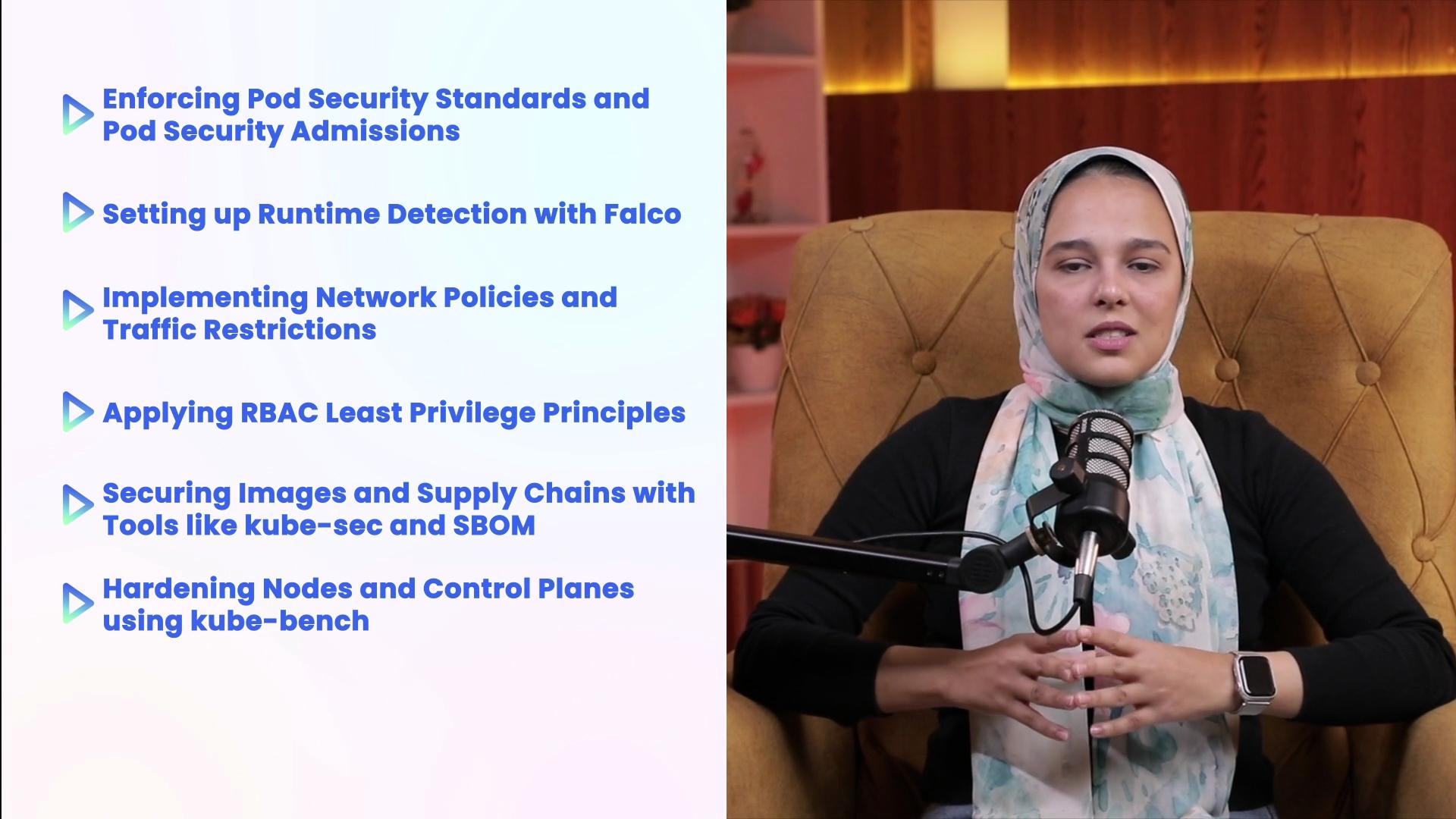
Typical tasks and tools included in each mock exam reflect real-world responsibilities and CKS learning objectives:
* Enforcing pod security standards and admission controls (e.g., Pod Security Admission, OPA/Gatekeeper).
* Implementing network segmentation and network policies.
* Applying least-privilege access with RBAC and service accounts.
* Managing secrets securely and validating encryption at rest.
* Runtime detection and response using tools such as [Falco](https://falco.org).
* Supply chain hardening with image scanning and SBOMs, e.g., [Trivy](https://github.com/aquasecurity/trivy).
* Node and control plane hardening using tools like [kube-bench](https://github.com/aquasecurity/kube-bench).
* Securing ingress and service-to-service traffic with TLS/mTLS and service mesh options such as [Istio](https://istio.io).
Each mock exam is designed to reflect the difficulty and scope of the actual CKS exam, providing realistic practice in a timed, multi-cluster environment.
What you’ll practice
Typical tasks and tools included in each mock exam reflect real-world responsibilities and CKS learning objectives:
* Enforcing pod security standards and admission controls (e.g., Pod Security Admission, OPA/Gatekeeper).
* Implementing network segmentation and network policies.
* Applying least-privilege access with RBAC and service accounts.
* Managing secrets securely and validating encryption at rest.
* Runtime detection and response using tools such as [Falco](https://falco.org).
* Supply chain hardening with image scanning and SBOMs, e.g., [Trivy](https://github.com/aquasecurity/trivy).
* Node and control plane hardening using tools like [kube-bench](https://github.com/aquasecurity/kube-bench).
* Securing ingress and service-to-service traffic with TLS/mTLS and service mesh options such as [Istio](https://istio.io).
Each mock exam is designed to reflect the difficulty and scope of the actual CKS exam, providing realistic practice in a timed, multi-cluster environment.
 Logistics and scoring
* Duration: 2 hours per mock exam (matches the real exam time constraints and pressure).
* Tasks per exam: 16 hands-on tasks that require command-line work, configuration edits, policy creation, and investigative troubleshooting.
* Environment: Multiple clusters and nodes; you will begin on a student node and connect to other targets as required.
Who should take this series
* Candidates who have completed CKA-level training and are now focused on Kubernetes security.
* Engineers responsible for cluster security, DevSecOps professionals, and incident responders who need hands-on practice.
* Anyone preparing to pass the CKS and wanting realistic, timed practice with exam-style scenarios.
What you’ll gain
* Practical experience securing Kubernetes clusters end-to-end.
* Improved confidence responding to runtime incidents and hardening clusters.
* Familiarity with common security tooling and best practices required for the CKS.
Links and references
* [Certified Kubernetes Administrator (CKA) — KodeKloud](https://learn.kodekloud.com/user/courses/cka-certification-course-certified-kubernetes-administrator)
* [Falco — runtime security](https://falco.org)
* [Trivy — vulnerability scanner](https://github.com/aquasecurity/trivy)
* [kube-bench — CIS benchmark checks](https://github.com/aquasecurity/kube-bench)
* [Istio — service mesh with mTLS](https://istio.io)
* [Kubernetes Documentation — Concepts and Tasks](https://kubernetes.io/docs/)
Ready to begin?
If you’ve completed your CKA-level preparation and you’re comfortable administering clusters, proceed with the mock exams to validate and sharpen your CKS-level security skills. Good luck — and use each exam as a chance to identify gaps and focus further study.
This concludes the introduction to the CKS full mock exam series.
Logistics and scoring
* Duration: 2 hours per mock exam (matches the real exam time constraints and pressure).
* Tasks per exam: 16 hands-on tasks that require command-line work, configuration edits, policy creation, and investigative troubleshooting.
* Environment: Multiple clusters and nodes; you will begin on a student node and connect to other targets as required.
Who should take this series
* Candidates who have completed CKA-level training and are now focused on Kubernetes security.
* Engineers responsible for cluster security, DevSecOps professionals, and incident responders who need hands-on practice.
* Anyone preparing to pass the CKS and wanting realistic, timed practice with exam-style scenarios.
What you’ll gain
* Practical experience securing Kubernetes clusters end-to-end.
* Improved confidence responding to runtime incidents and hardening clusters.
* Familiarity with common security tooling and best practices required for the CKS.
Links and references
* [Certified Kubernetes Administrator (CKA) — KodeKloud](https://learn.kodekloud.com/user/courses/cka-certification-course-certified-kubernetes-administrator)
* [Falco — runtime security](https://falco.org)
* [Trivy — vulnerability scanner](https://github.com/aquasecurity/trivy)
* [kube-bench — CIS benchmark checks](https://github.com/aquasecurity/kube-bench)
* [Istio — service mesh with mTLS](https://istio.io)
* [Kubernetes Documentation — Concepts and Tasks](https://kubernetes.io/docs/)
Ready to begin?
If you’ve completed your CKA-level preparation and you’re comfortable administering clusters, proceed with the mock exams to validate and sharpen your CKS-level security skills. Good luck — and use each exam as a chance to identify gaps and focus further study.
This concludes the introduction to the CKS full mock exam series.