

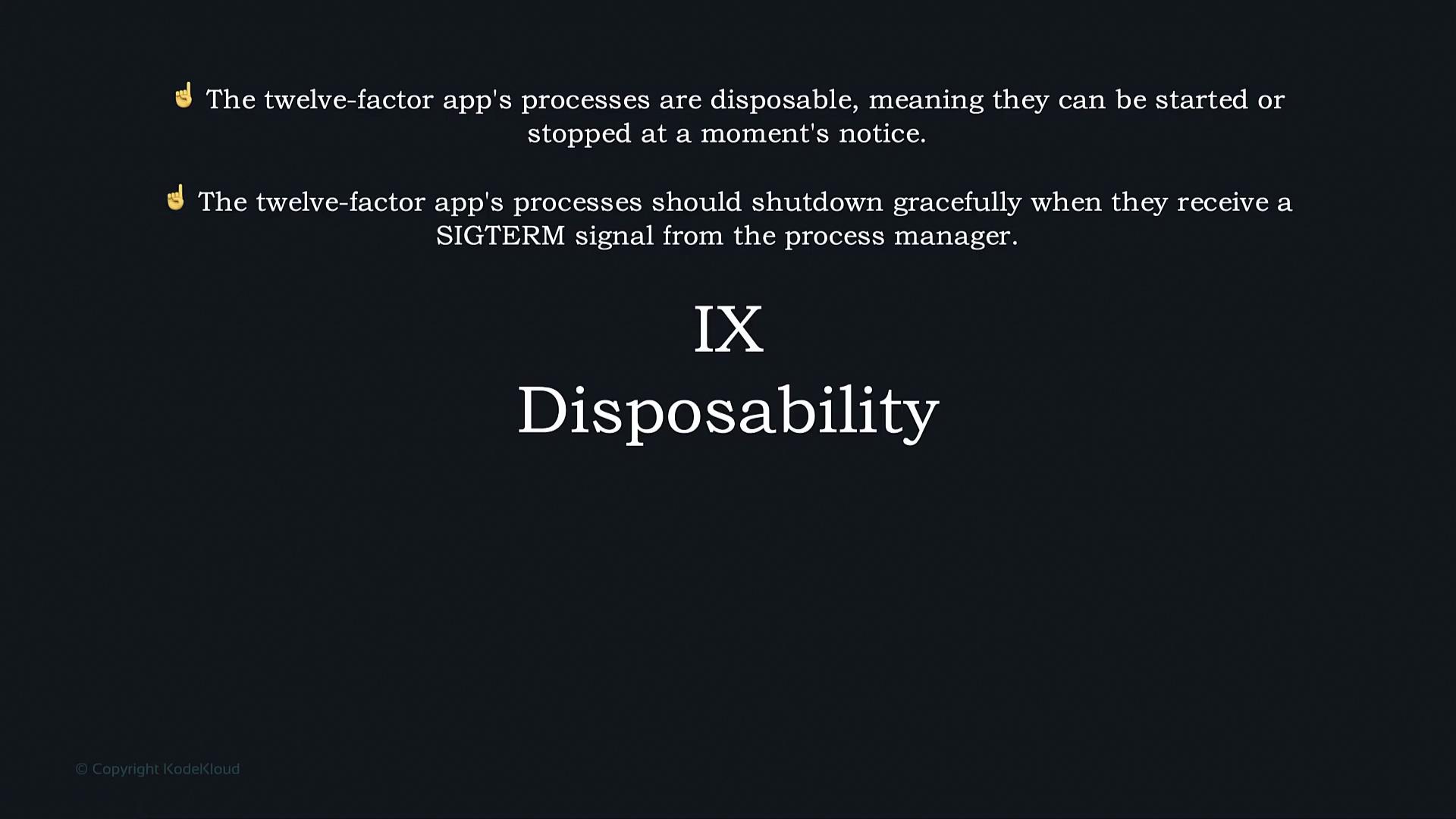
Disposability is not just about fast startups; it also emphasizes graceful shutdowns to handle ongoing work seamlessly.
Graceful Shutdown in Docker Containers
A practical example of disposability can be observed in Docker’s handling of container shutdowns. When executing thedocker stop command, Docker sends a SIGTERM signal to the container to initiate a graceful shutdown. If the container does not respond within a certain grace period, Docker then sends a SIGKILL signal to forcefully terminate the process. This two-step mechanism ensures that the container has ample time to complete processing any active requests before termination.
Practical Application
For instance, consider a Flask application. It should be engineered to intercept the SIGTERM signal and begin a controlled shutdown process. This design ensures that any ongoing tasks are completed before the application terminates, thereby maintaining service continuity and protecting data integrity.Ensure your application handles SIGTERM signals properly to prevent abrupt terminations that might lead to data loss or resource leaks. Design your termination routines to complete current transactions before shutting down completely.