

- Ghost users and stale access
- Over the past 18 months, 47 people left the company. Thirty-one of them still have active organization memberships on GitHub.
- Six of those former employees still have repository admin access on production codebases.
- Three left behind personal access tokens (PATs) that never expired; two of those tokens are still used by CI pipelines that no one maintains.
- Uncontrolled tokens and credentials
- A security audit found 340 active personal access tokens across the organizations.
- Eighty-nine of them have never been used. Twelve include the
reposcope, granting full repository control. - For 23 tokens, no one can identify the creator.
- Runaway cost
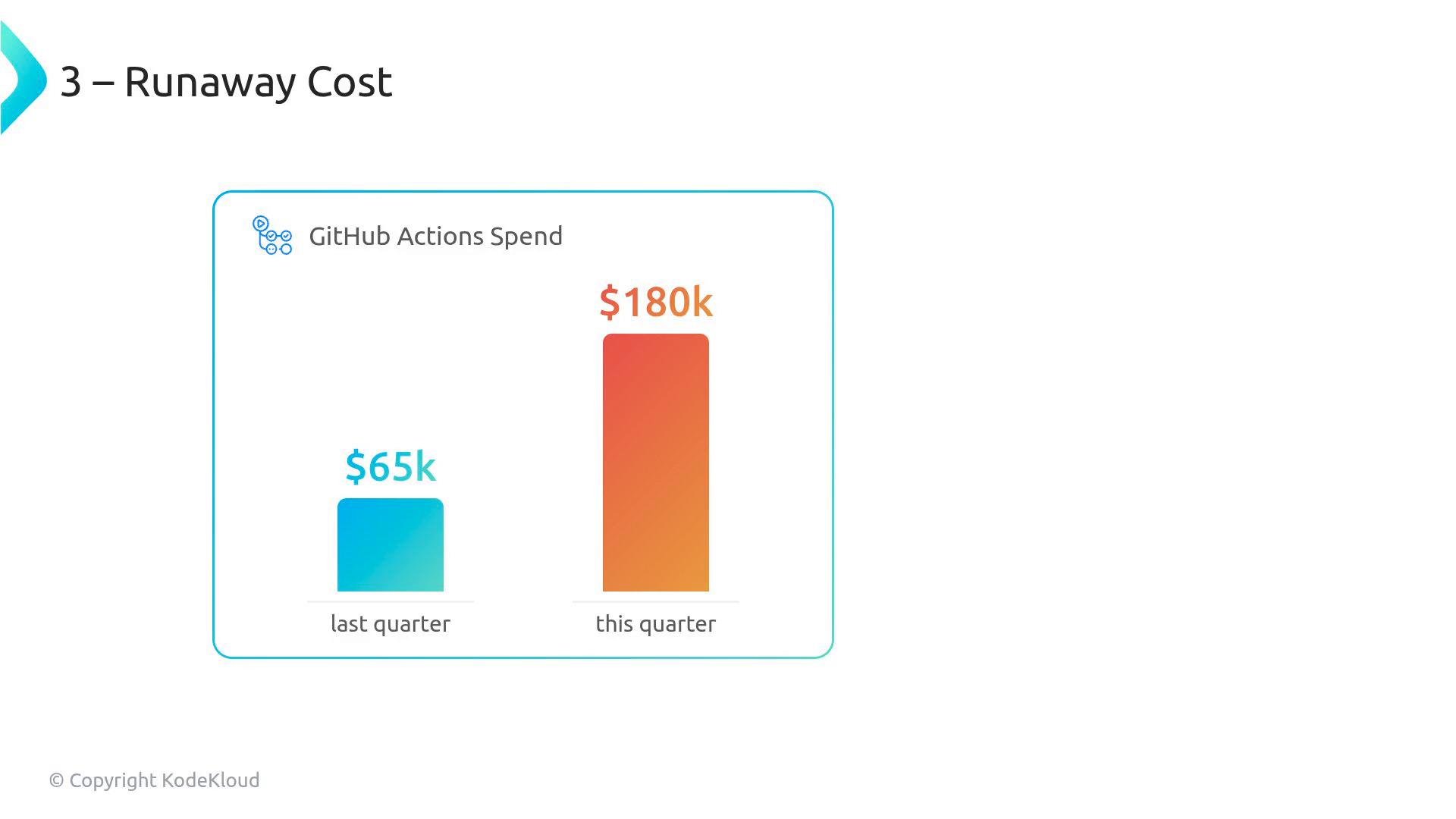
- The engineering finance report shows GitHub Actions spending jumped to around $180,000 this quarter from roughly $65,000 last quarter.
- Nobody can immediately explain the increase.
- Secrets committed to repositories
- During a pre-acquisition review, the acquiring company’s security team scanned the target’s repositories and found 14 hardcoded credentials committed over the past two years: three AWS keys, one Stripe API key, and two internal database passwords.
- Two AWS keys were still valid. The discovery nearly derailed the deal.
Left unchecked, these issues lead to: unauthorized access, data leaks, expensive CI bills, failed audits, and increased M&A risk. Effective GitHub Enterprise administration is the countermeasure.
What this lesson will cover: practical, scalable controls and processes for GitHub Enterprise administration — including identity lifecycle management, PAT governance, Actions cost controls, and secrets detection/remediation. Expect hands-on techniques and policy patterns you can adopt or adapt.
- GitHub Actions overview: https://docs.github.com/en/actions
- Personal access tokens (GitHub Docs): https://docs.github.com/en/authentication/keeping-your-account-and-data-secure/creating-a-personal-access-token
- Best practices for secrets scanning and management: https://docs.github.com/en/code-security/secret-scanning