

According to a CNCF report, AI empowers operations and development teams to work smarter and faster—boosting speed and quality while reducing effort in testing and troubleshooting.
Technology Timeline: 2001–2023
Review these key milestones to understand the evolution from virtualization to AI-enhanced cloud-native engineering: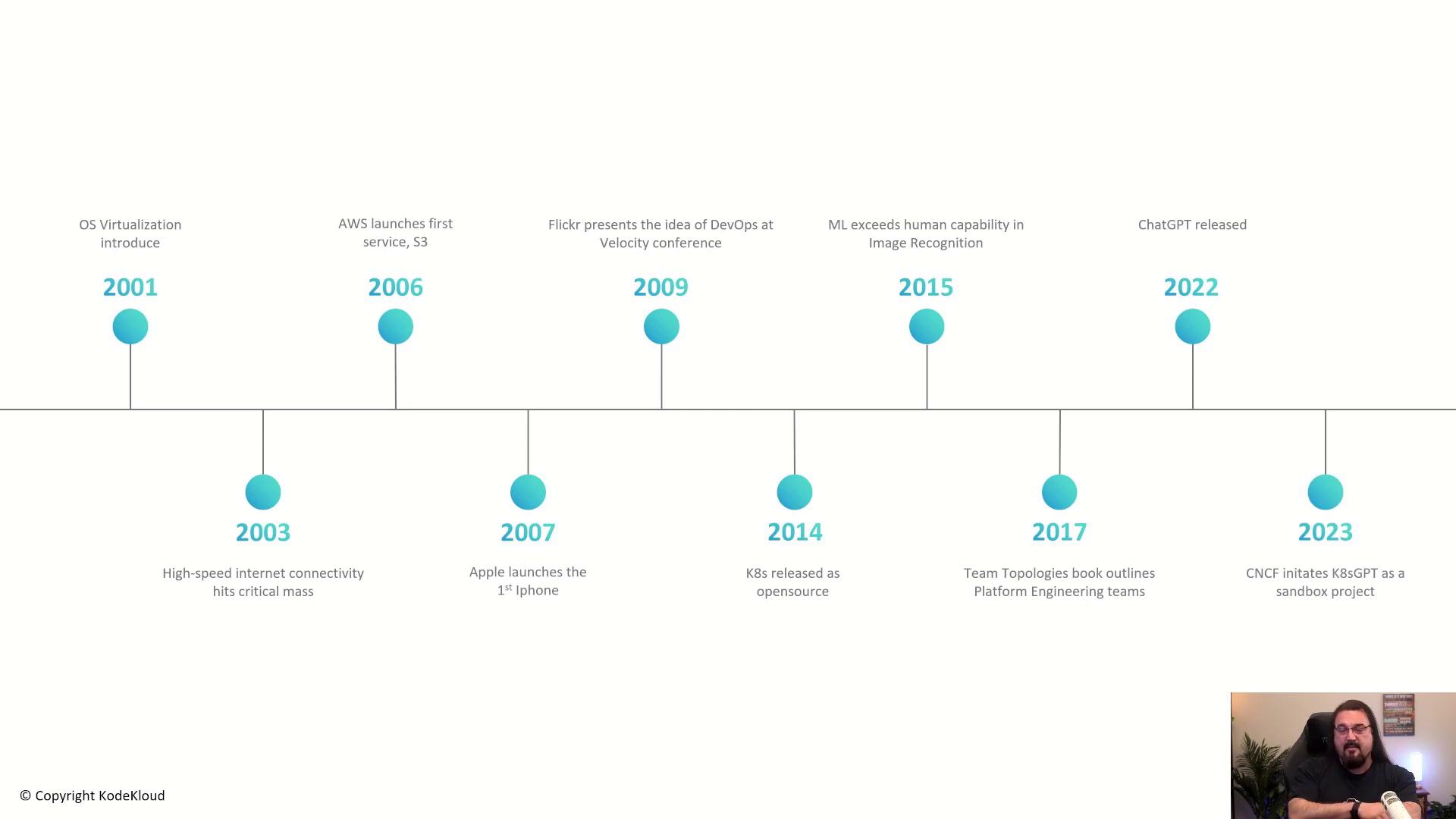
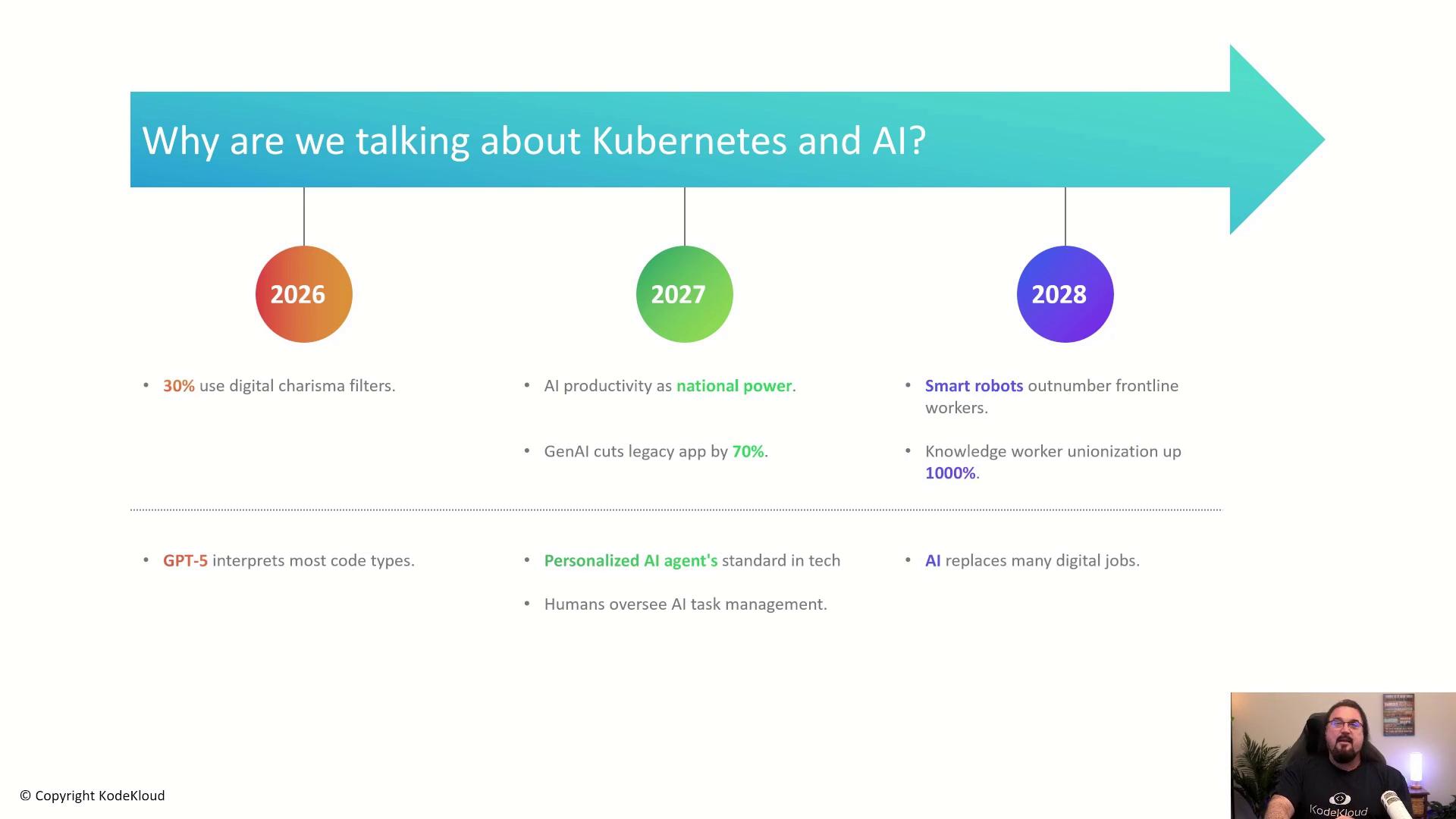
Future Projections: 2026–2028
Anticipate these AI-driven trends in Kubernetes and DevOps: • 2026 – Real-time Digital Charisma Filters (DeepFakes) correct visual and audio presentation issues during virtual meetings.• 2026 – Launch of GPT-5 delivers advanced code interpretation, automated test generation, and reflective analysis.
• 2027 – AI-driven productivity becomes a national competitiveness metric; generative AI reduces legacy app modernization effort by up to 70%.
• 2028 – Autonomous agents and robotics dominate retail, manufacturing, and logistics, driving new dynamics in knowledge worker organization.
• Beyond – Personalized AI assistants become standard partners for provisioning, architecture research, and documentation, under human ethical oversight.
AI tools should operate under human oversight to ensure ethical compliance, unbiased decision-making, and security best practices.