

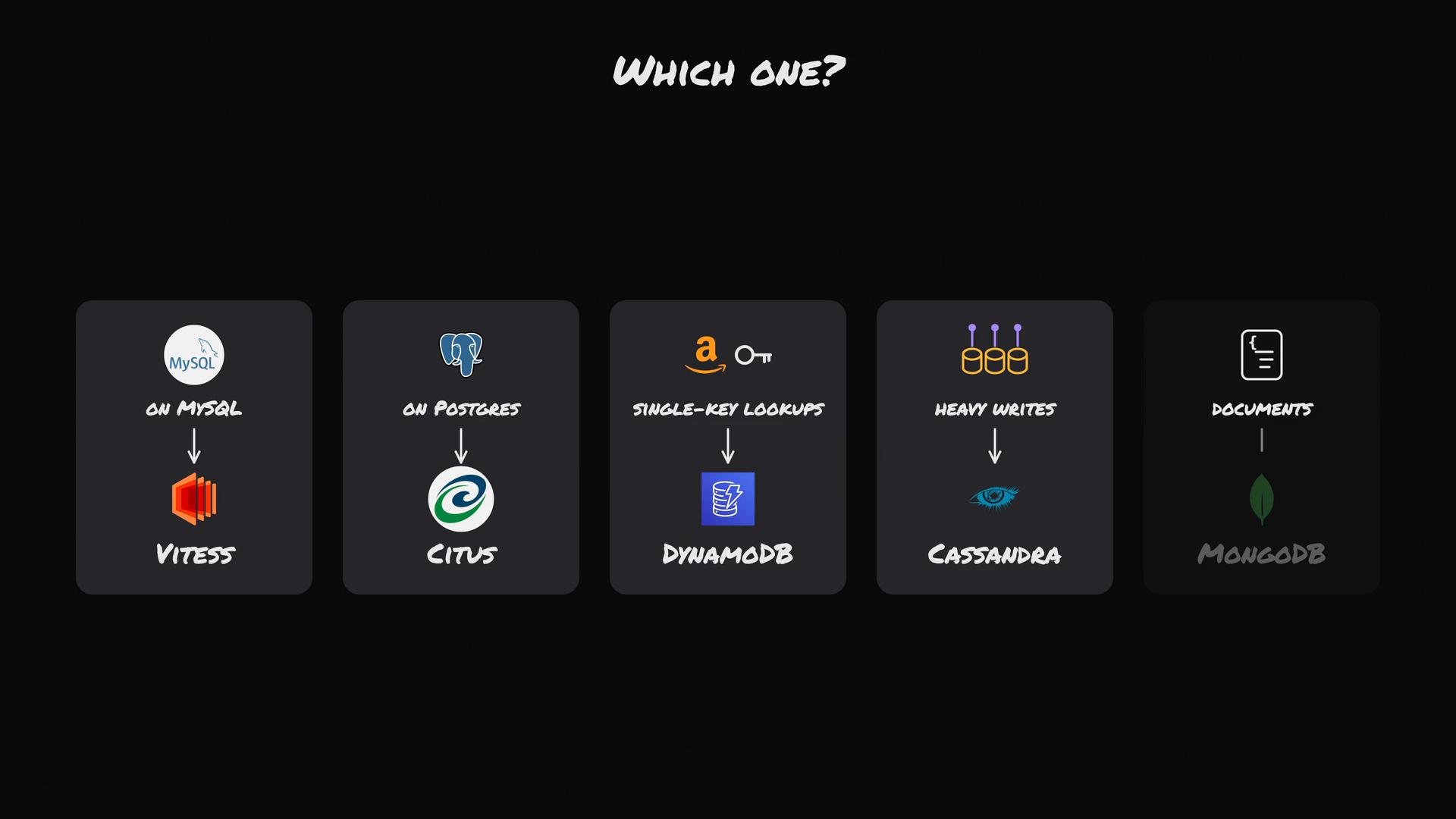
- If you already run MySQL, adopt Vitess for sharding and topology management.
- If you already run Postgres, adopt Citus to distribute Postgres across nodes.
- If you’re starting fresh on AWS and your access pattern is mostly single-key lookups, consider DynamoDB.
- For extremely heavy, distributed write workloads, evaluate Cassandra.
- For document-oriented collections that naturally migrate between shards, use MongoDB.
Sharding-aware databases automate routing and data movement, but some responsibilities still fall to your application.
- You must choose the shard key (for example,
user_id) — the database won’t pick it for you. - You must keep queries targeted. Queries that include the shard key (e.g., “get Chris’s profile by user ID”) go to a single shard; queries that omit it (e.g., “everyone who joined between two dates”) become scatter-gathers and contact many shards.
- You must mitigate leader hotspots. Hot shards still require application techniques like salting keys, request routing, or caching to avoid single-node bottlenecks.
- You must handle denormalization and updates. If Leo changes his name, your application must find and update every denormalized copy.
- It changes the shape of every query and many tables permanently.
- The shard key is especially hard to change later — changing it typically requires moving nearly every row to different shards.
- Migration and application changes are complex and error-prone if not planned and automated carefully.
- Move to a larger instance size.
- Add read replicas to scale reads.
- Introduce a cache (e.g., Redis, CDN) for hot access patterns like popular posts.
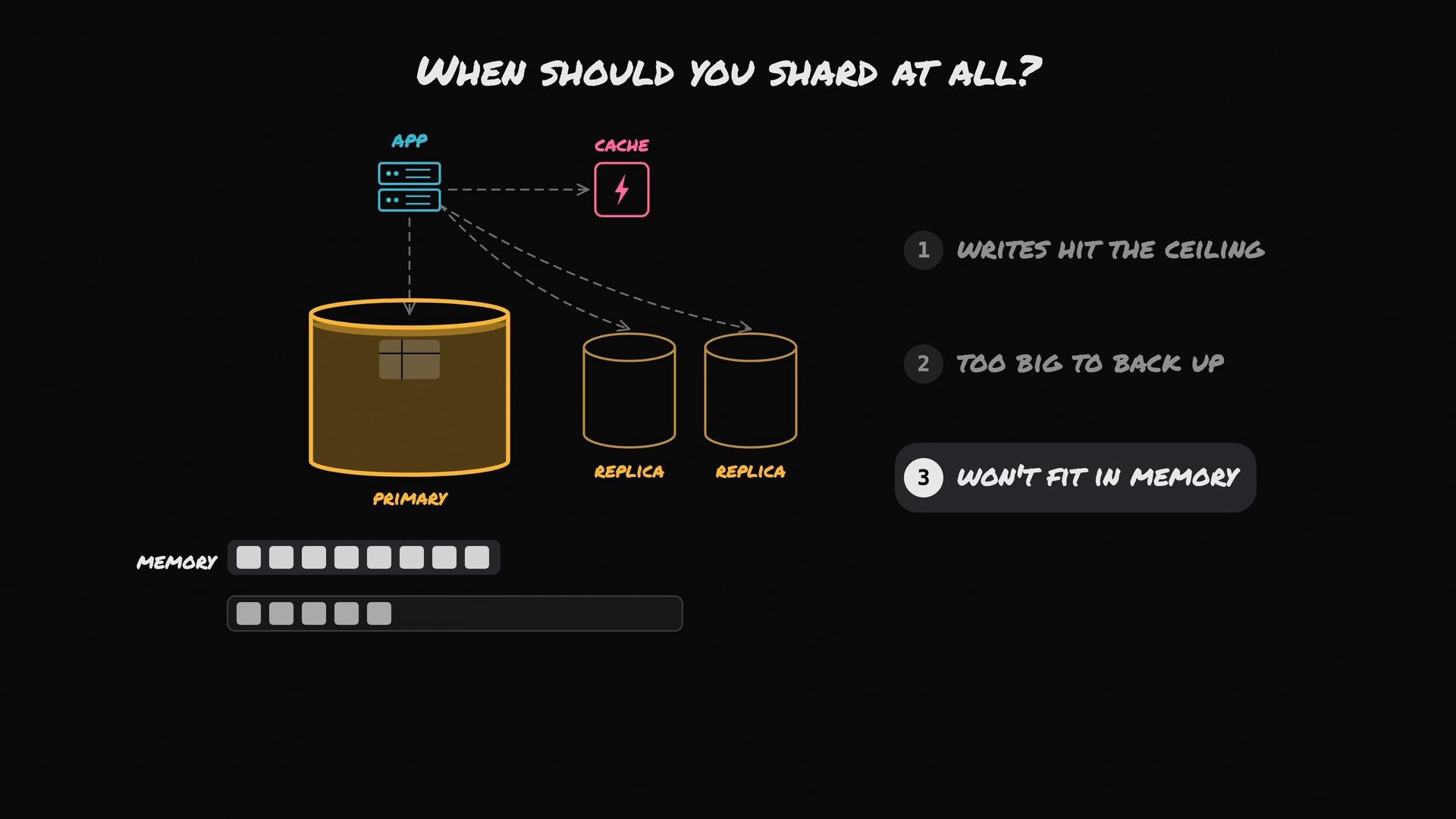
Sharding permanently changes your system’s architecture. Delay it as long as possible. When you do shard, spend most of your effort choosing the correct shard key and planning/automating data migration and the required application changes.