

Container Orchestration Explained
A container orchestrator manages the lifecycle of containers by performing key functions such as:- Identifying available resources or servers to schedule and run containers.
- Creating and deploying container instances.
- Monitoring container health and replacing or restarting containers if they crash.
- Distributing and load balancing applications across multiple servers.
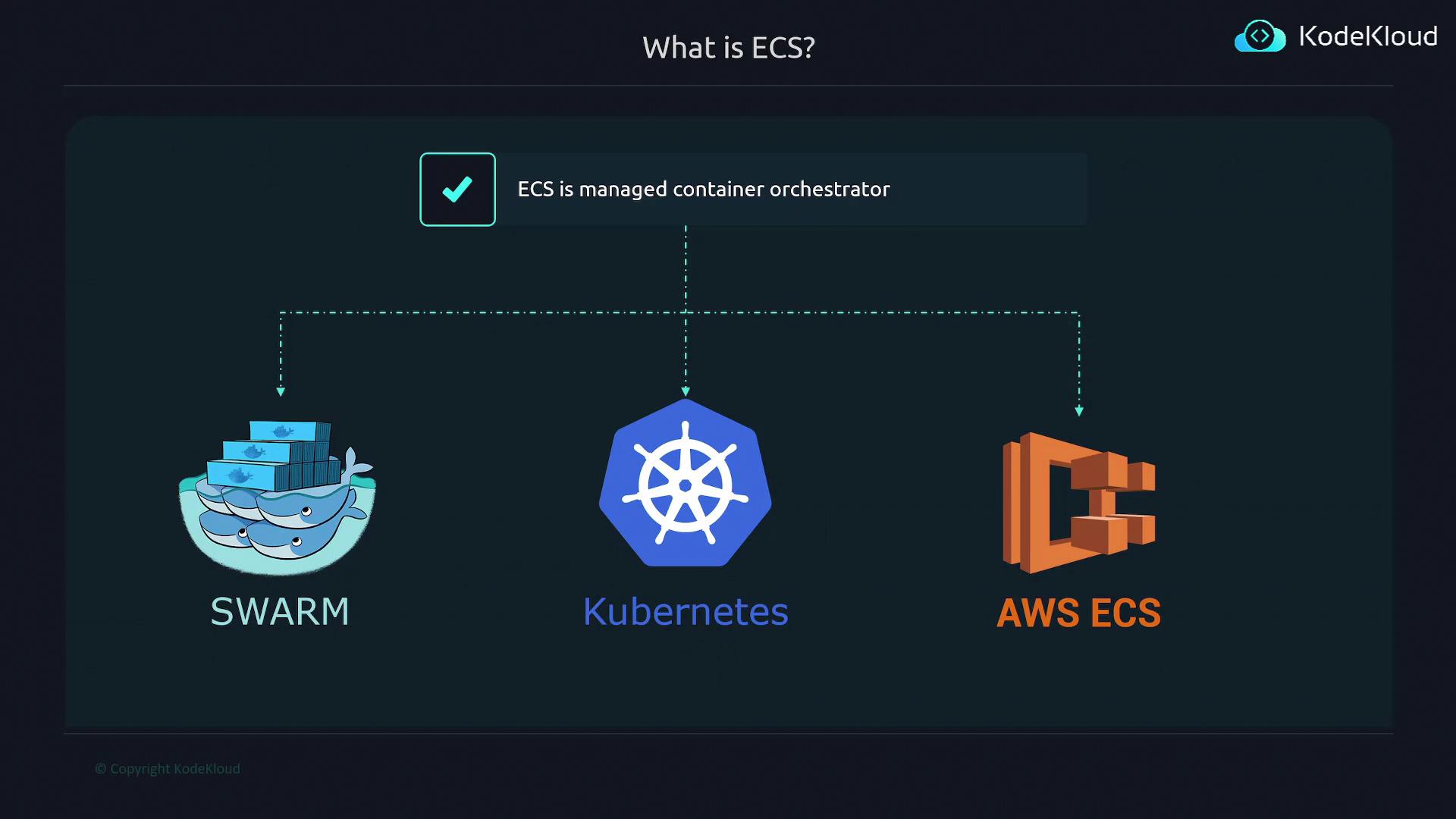
Using a single server environment with tools like Docker or Docker Compose may work during development, but in a production setting, it creates a single point of failure.
Advantages of Using ECS
Deploying an application on one server only risks downtime if that server fails. ECS overcomes this limitation by distributing your application across several servers. In the event of a server failure, the orchestrator ensures that other containers take over, providing high availability. Another significant benefit is auto scaling. Imagine a scenario where your small application experiences a sudden spike in traffic. ECS automatically provisions additional container instances to handle the increased load. Once the demand subsides, it scales down the resources to optimize costs.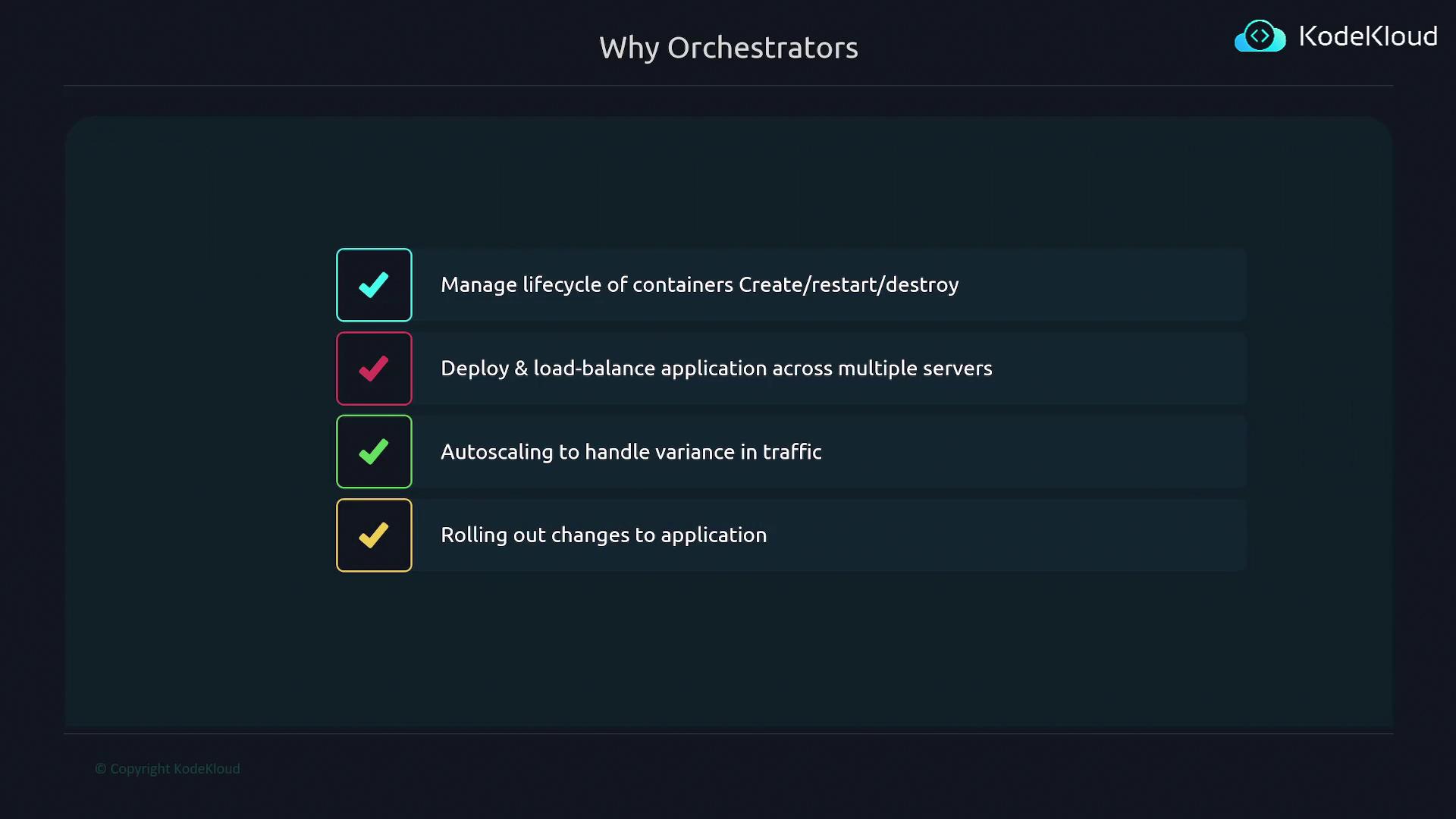
Seamless Application Updates
When you update your application’s code, ECS enables smooth rollouts with minimal disruption. This streamlined update process ensures that new changes are deployed efficiently across your environment, preserving the user experience and reducing downtime.Summary
ECS automates key processes in container management, including:- Container lifecycle management
- Deployment and load balancing
- Auto scaling based on demand
- Seamless rollout of application updates