

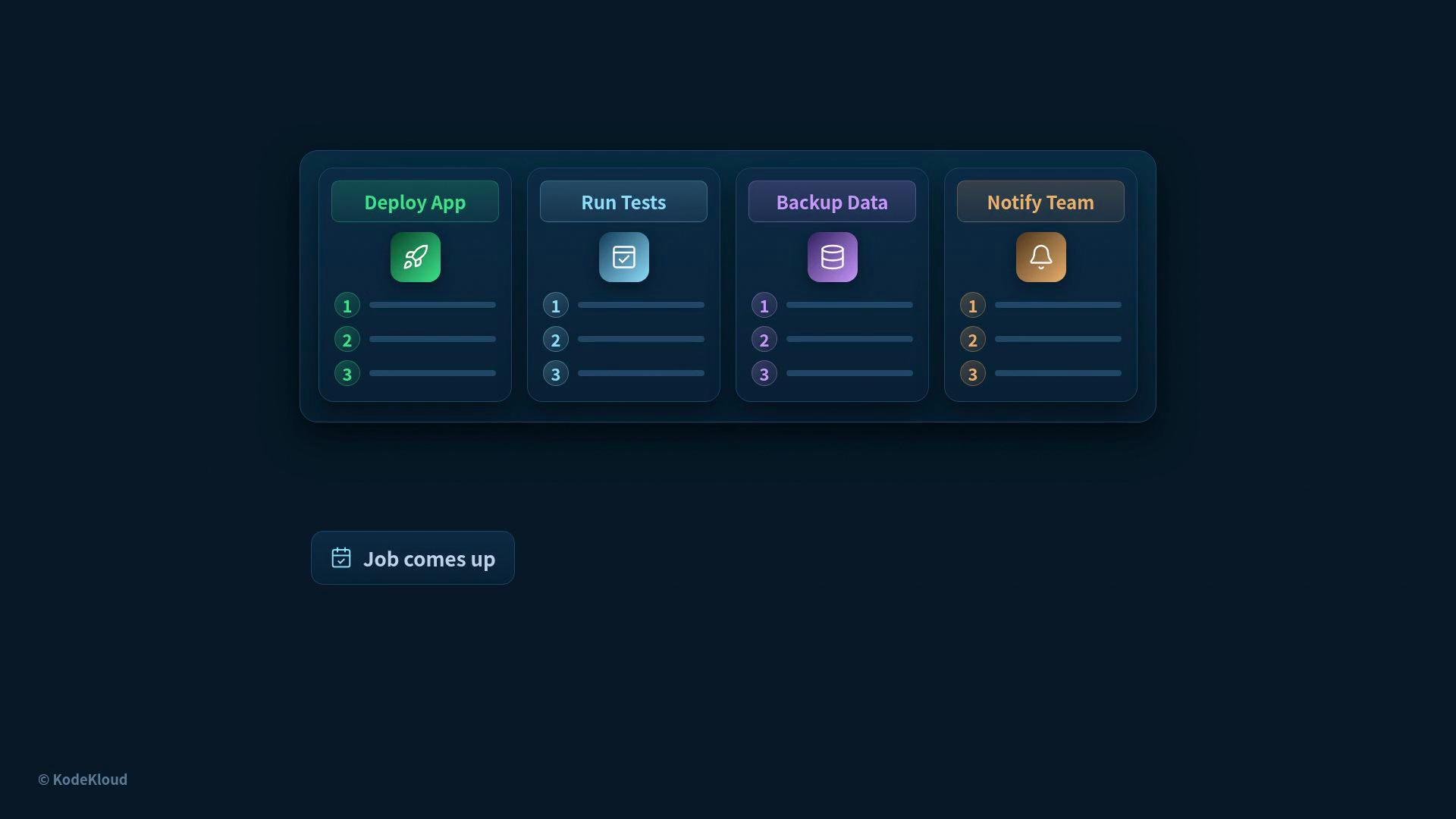
skill.md that tells the loop exactly when and how to perform a particular task.
A skill is not a long manual — it’s a compact recipe. Keep skills focused so the loop can load and execute them quickly.
What goes in a skill.md
Askill.md file has three simple parts:
A minimal
skill.md might look like this:
description is especially important: it acts like a label that says, “use me for this kind of task.” The loop watches the current task and loads a skill only when that description matches the job.
If a job needs more than one skill,
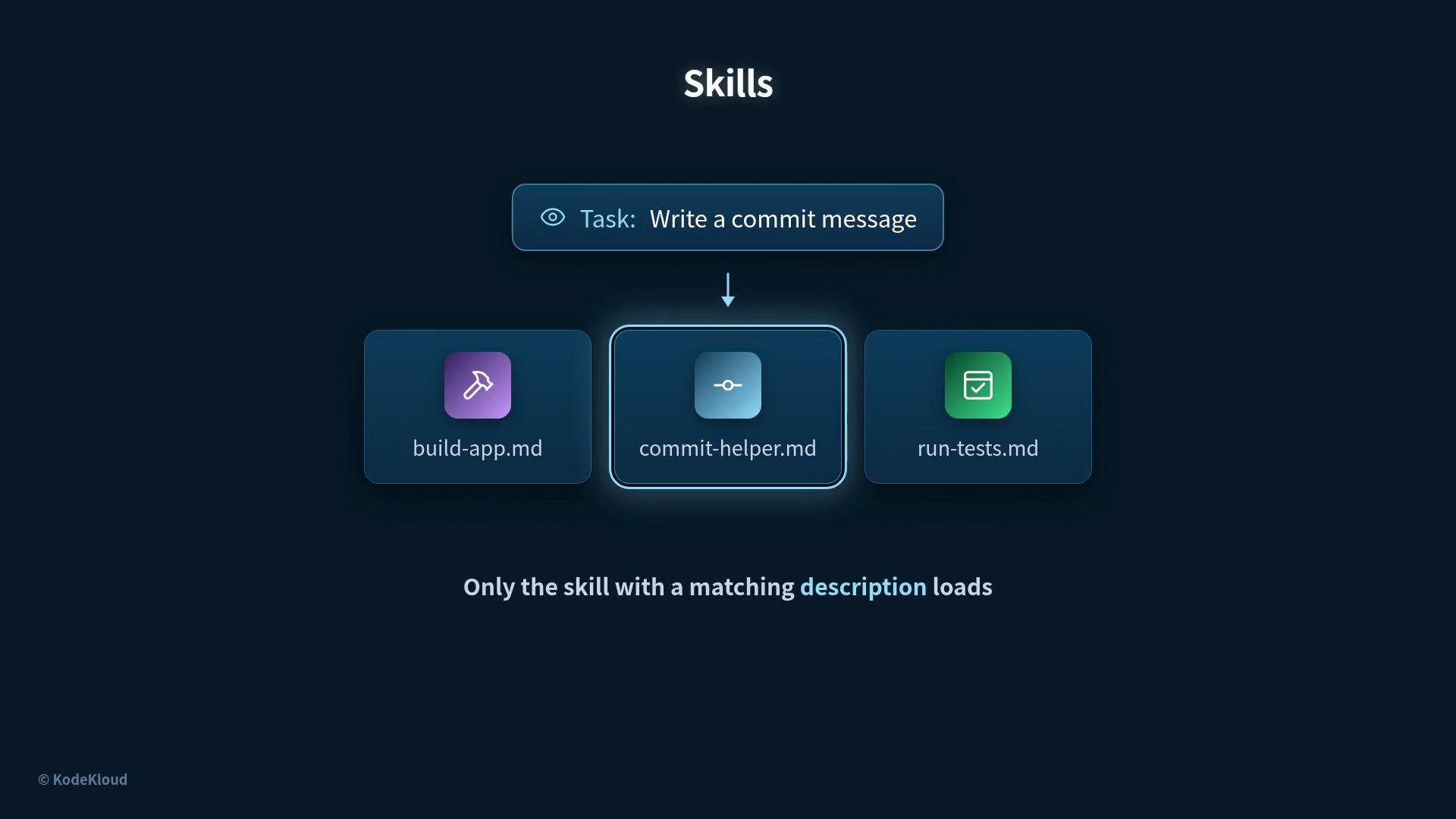
skill.md file points to.
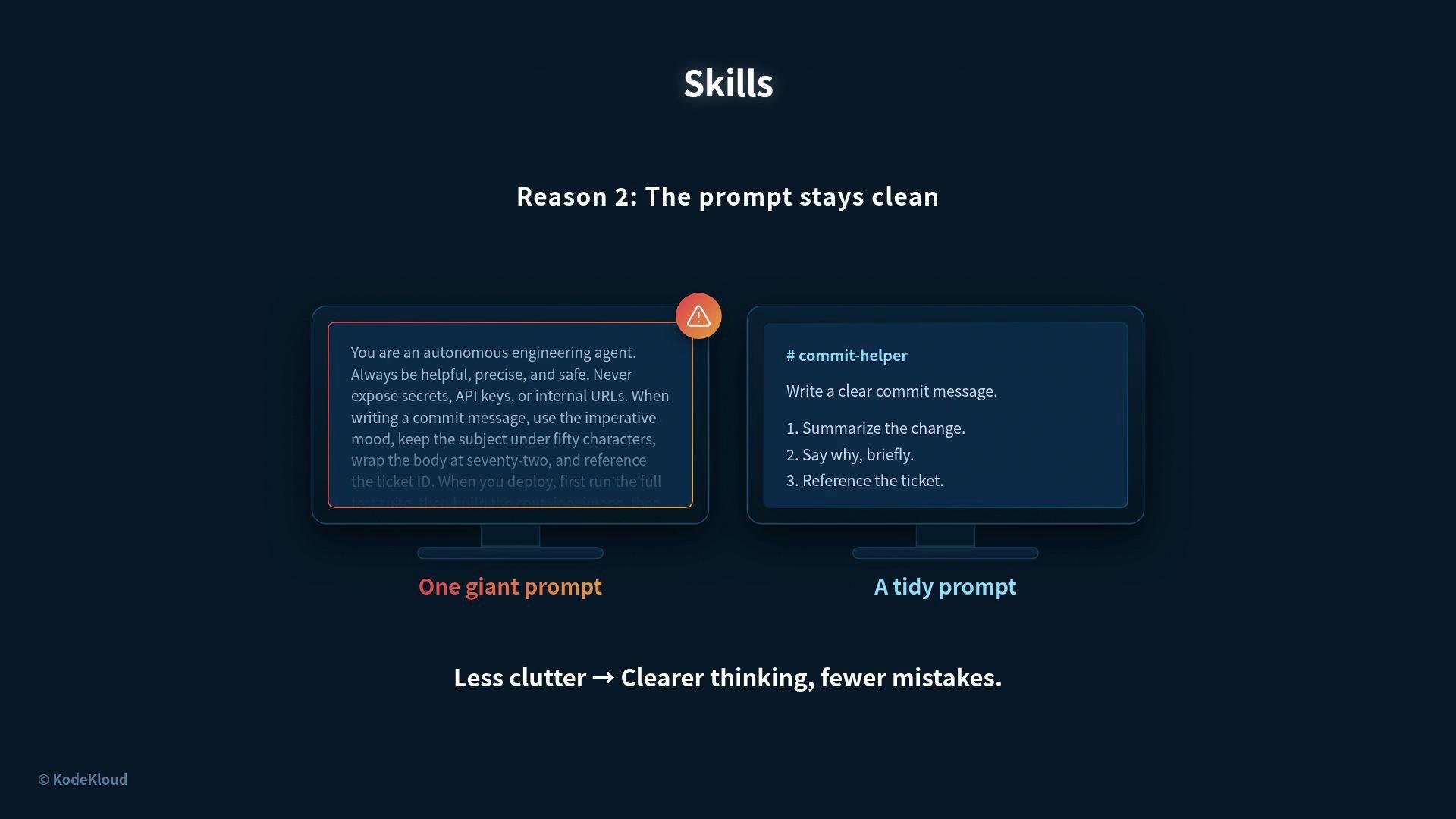
Why not one giant prompt?
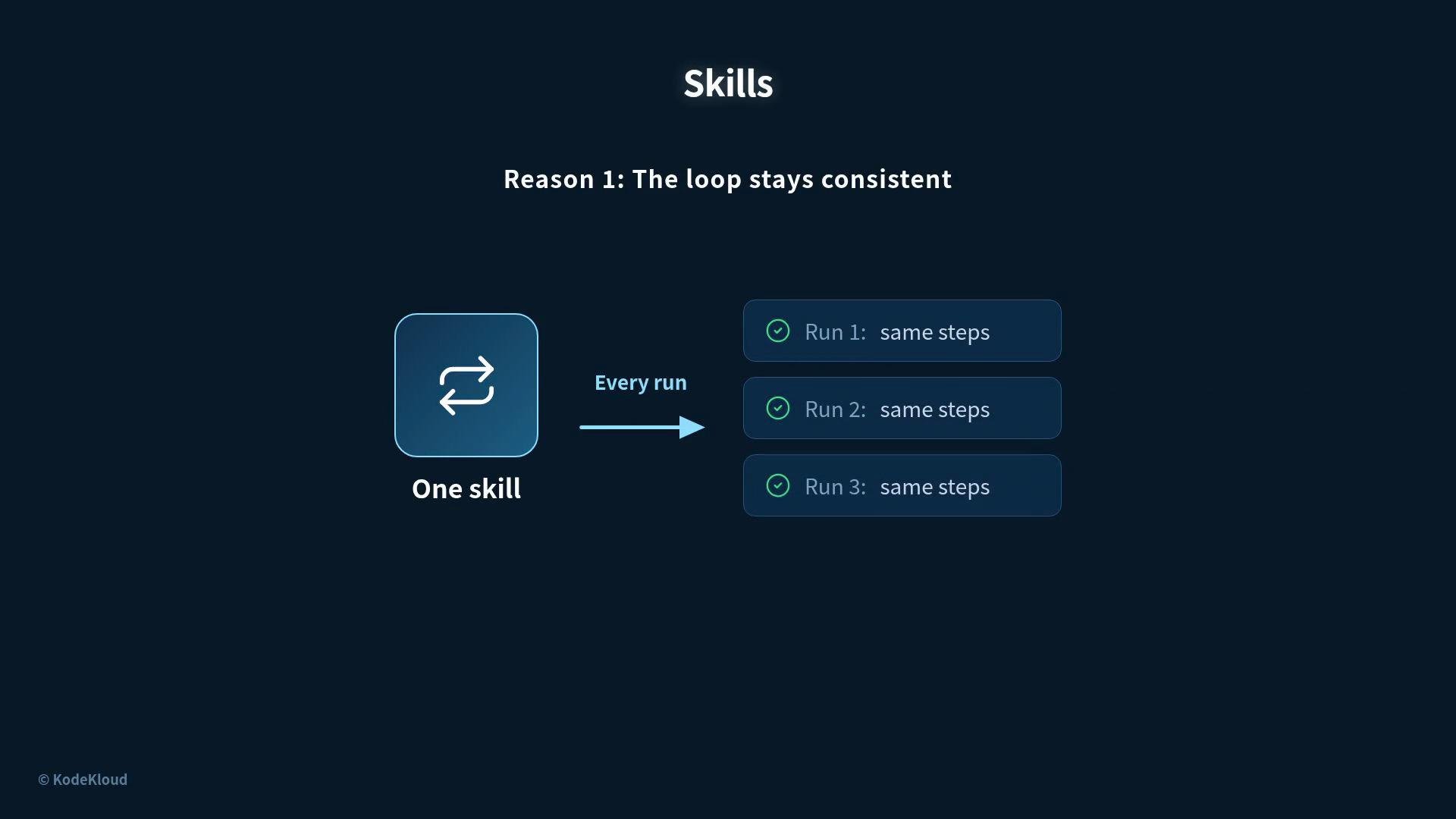
Two practical reasons favor small, focused skills over a single monolithic prompt:- Consistency: The same skill provides the same steps every time, which prevents the agent’s behavior from drifting.
- Clarity: Smaller skills keep the prompt tidy. Instead of a huge wall of instructions, the loop maintains a concise prompt and pulls in only the know-how it needs. Less clutter means clearer thinking and fewer mistakes.
Golden rule: process over prose
A good skill is a short list of concrete steps with a clear finish. Avoid long essays inside skills — an agent might read and move on, but it will follow and verify a step-by-step sequence.Write steps, not essays. Concrete, testable instructions let the loop execute and check outcomes reliably.
Examples of useful skills
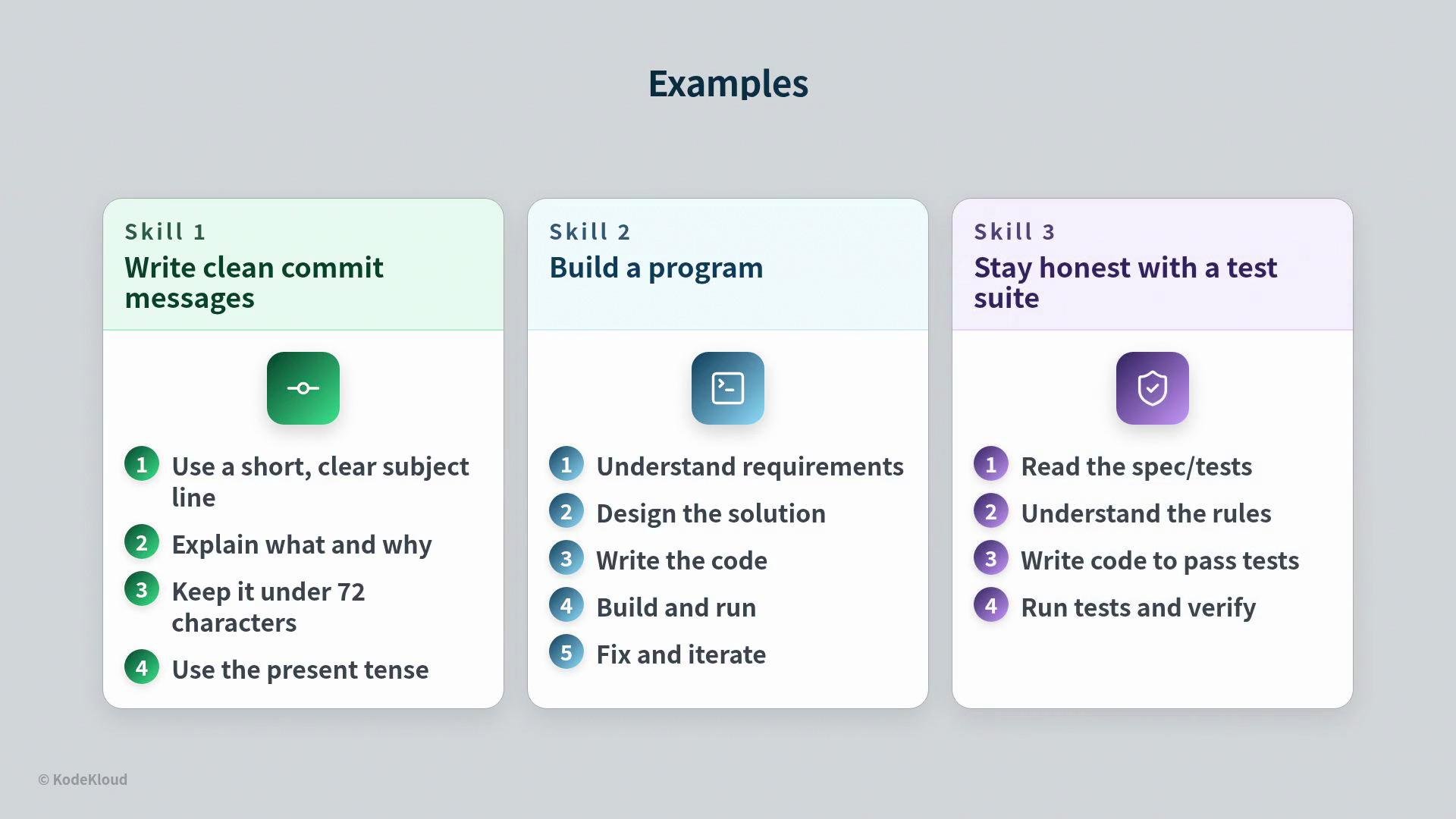
Here are common skill types often found in automation loops:- Commit message authoring — short, consistent commit summaries and extended body guidelines.
- Build and release steps — compile, package, and publish artifacts.
- Test harnesses and honesty checks — run a test suite or graded harness that the agent does not own, then report pass/fail.
Benefits (at a glance)
Best practices
- Keep each skill focused on one job or intent.
- Make descriptions specific and short to improve match accuracy.
- Write steps that are executable and testable.
- Include references to helper scripts or API calls rather than embedding long examples in the skill itself.
skill.md file containing a name, a description, and steps. Write skills as steps, not essays. Use the description to tell the agent when to load the skill. Skills keep the loop consistent and the prompt uncluttered.
This article also discusses connectors and plug-ins, explaining how the loop integrates external services and tools.
Links and references
- Prompt engineering principles
- Best practices for writing documentation
- For connectors and plug-ins, see your loop platform’s integration docs or the section on connectors and plug-ins in this documentation set.