

Test.
Fix.
Save. A well-engineered loop stays on track toward a clear objective without continuous supervision. The payoff is practical: instead of directing every step manually, you design the loop to take the steps for you. This course teaches loop engineering in three parts: the basics, a deep dive into each loop component, and finally — how to assemble a full, working loop you can run yourself.
- The definition and purpose of a loop.
- Why the scorekeeper matters for autonomous runs.
- The six core components that make up a loop run.
Why start small: the green-first principle
- Aim for a tiny, validated win that saves successfully before adding complexity.
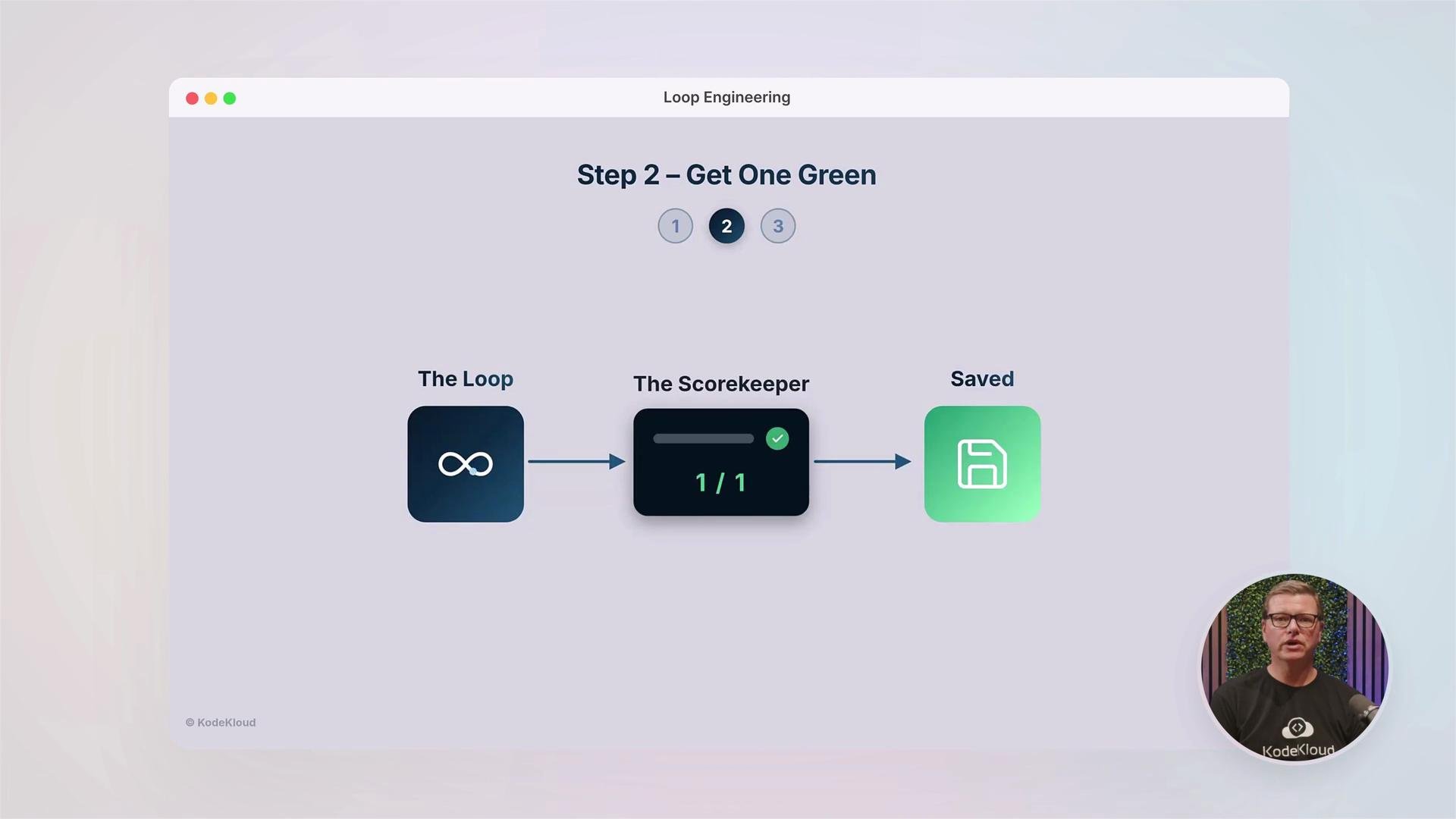
- A working loop with a minimal result (“green”) is worth far more than a large plan that never executes.
Start with a small, validated change. Save that success early. This “green-first” approach reduces risk, speeds feedback, and gives you a stable foundation for adding features.
- Automations — the runnable scripts and processes that perform tasks.
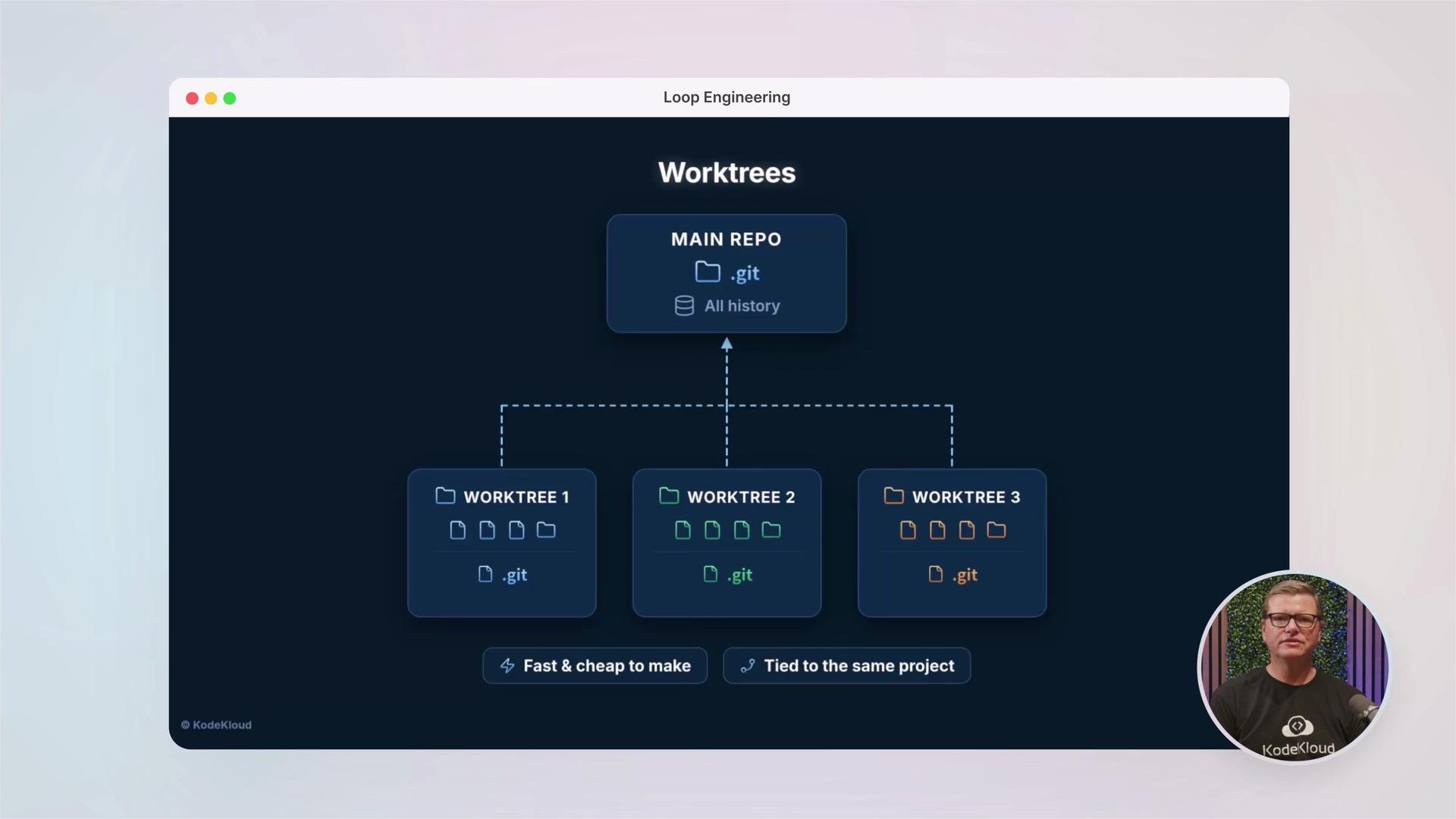
- Worktrees — isolated code snapshots for safe, fast changes (see the diagram above).
- Skills — the agent’s abilities or specialized functions.
- Connectors & Plugins — integrations with external systems and tools.
- Sub-agents — smaller agents that handle subtasks delegated by the main loop.
- Memory — how the loop stores, recalls, and reuses context across runs.
Autonomous loops can make destructive changes if not carefully constrained. Always run loops against isolated worktrees or test environments until you’ve validated safety and correctness.
- Git worktrees: https://git-scm.com/docs/git-worktree
- General concepts on agent loops and autonomous agents: https://en.wikipedia.org/wiki/Autonomous_agent