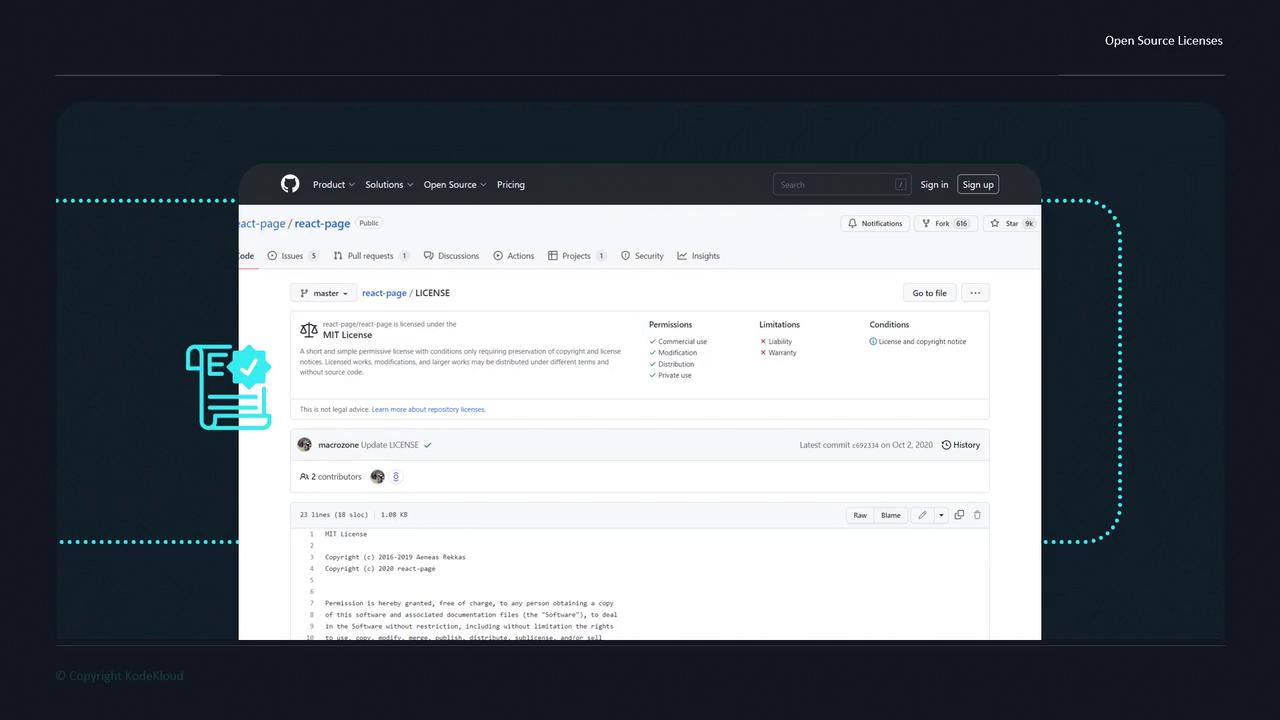
Always include a license file in your repository. Without one, contributors and users risk infringing on your copyright.

What Makes a Project “Open Source”?
Simply making code publicly accessible doesn’t make it open source. True open source projects must adopt a license that complies with the Open Source Definition. That definition ensures your project remains free to use, modify, and distribute under clear terms.
A license grants legal permission. Popular open source licenses are maintained by standard organizations to ensure consistency and clarity.
Popular Open Source Licenses
Examining a License on GitHub
Let’s explore how React’s team handles licensing. Visit the React GitHub repository and locate theLICENSE file:
- Navigate to the repo and click on LICENSE in the file list.
- You’ll see that React uses the MIT License.
- The sidebar also provides a quick summary of permissions and conditions.