Speech Recognition
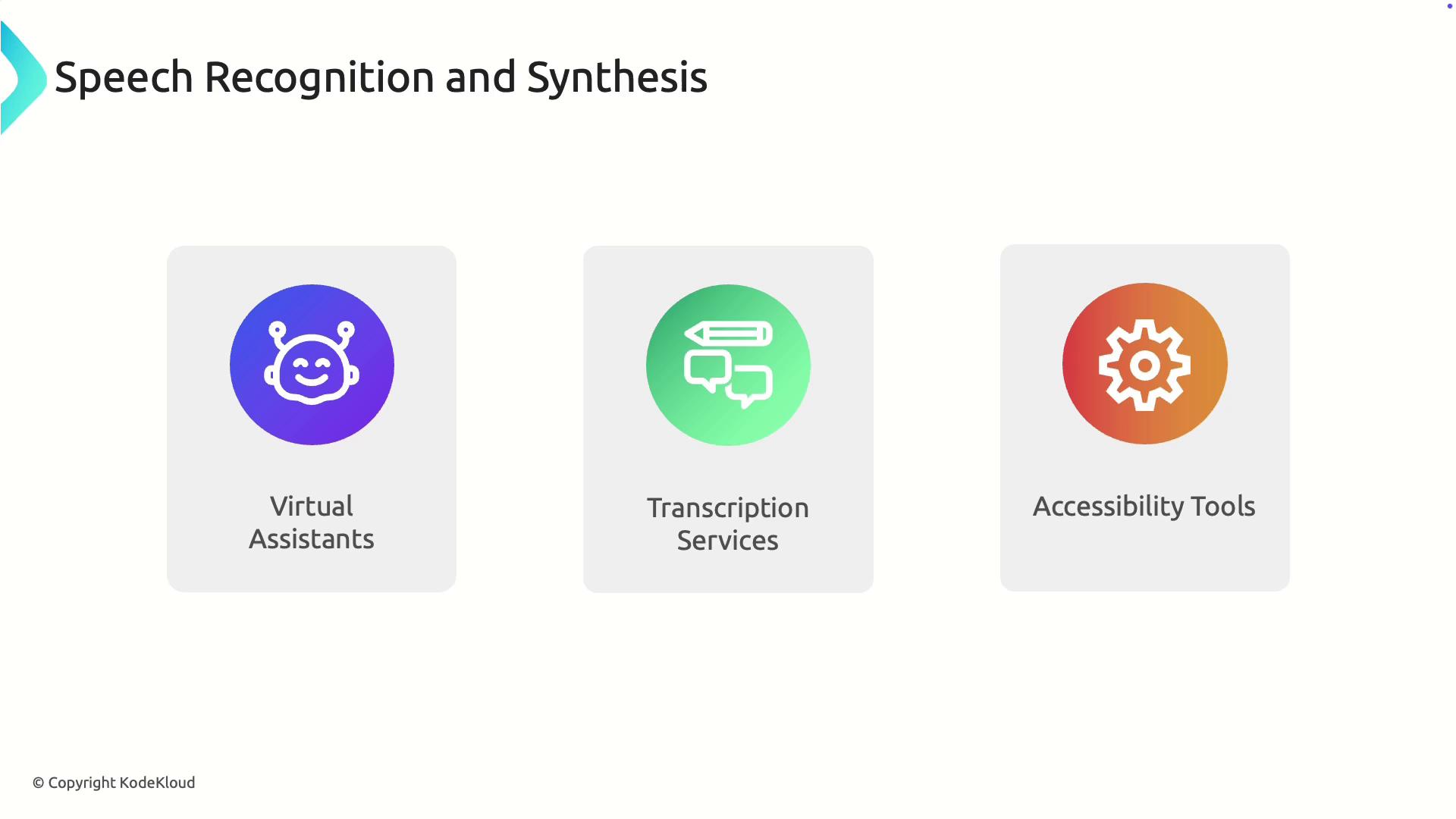
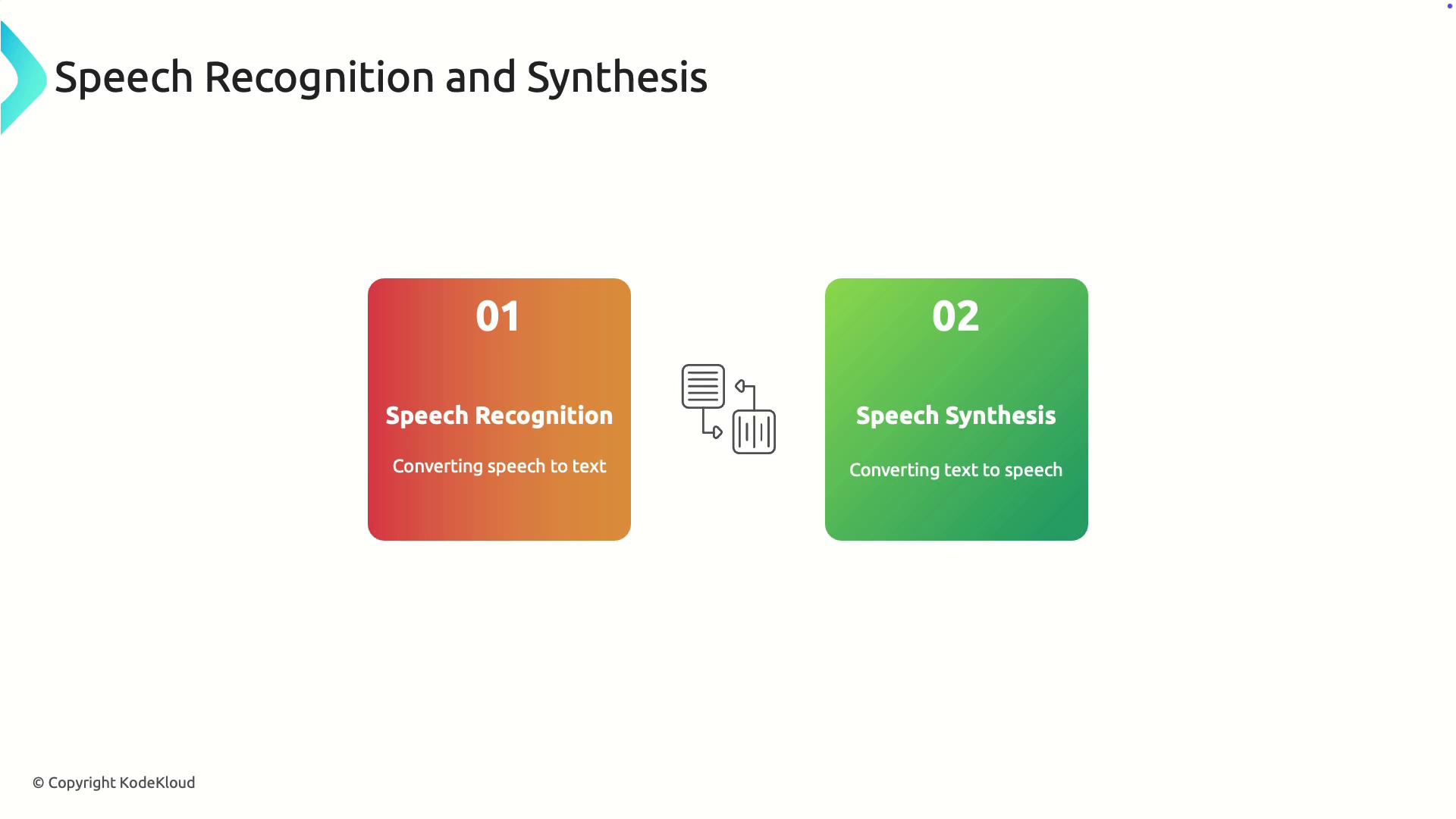
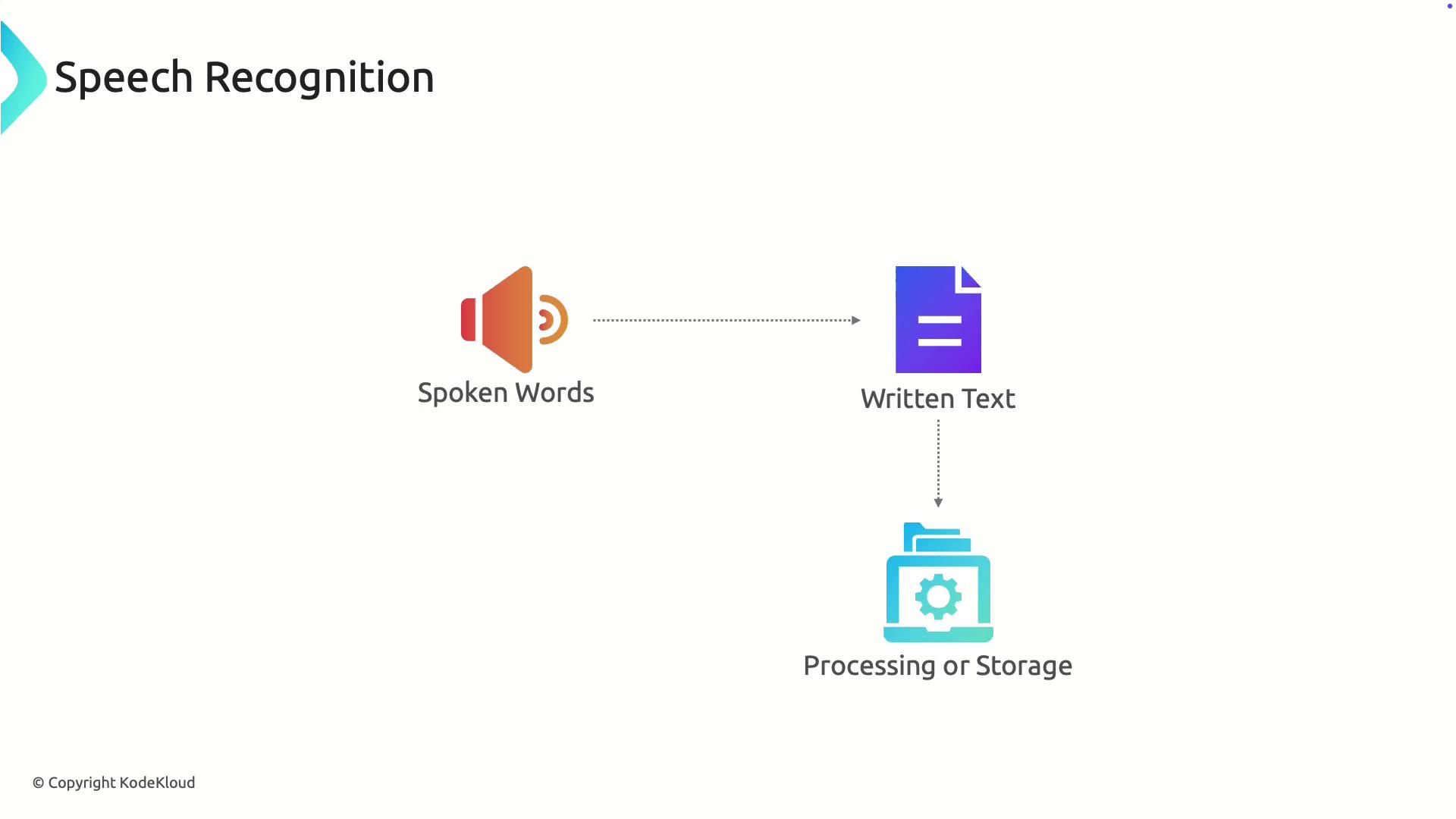
Speech recognition, or speech-to-text, converts spoken language into written text. The process begins with capturing audio input—such as voice commands, conversations, or dictation—and processing it into text for storage, analysis, or further action.Speech recognition enhances user accessibility and productivity. It allows users to dictate documents hands-free, making it especially valuable for individuals with mobility impairments. Additionally, customer service applications leverage this technology to transcribe conversations for sentiment analysis and issue resolution.
Speech Synthesis
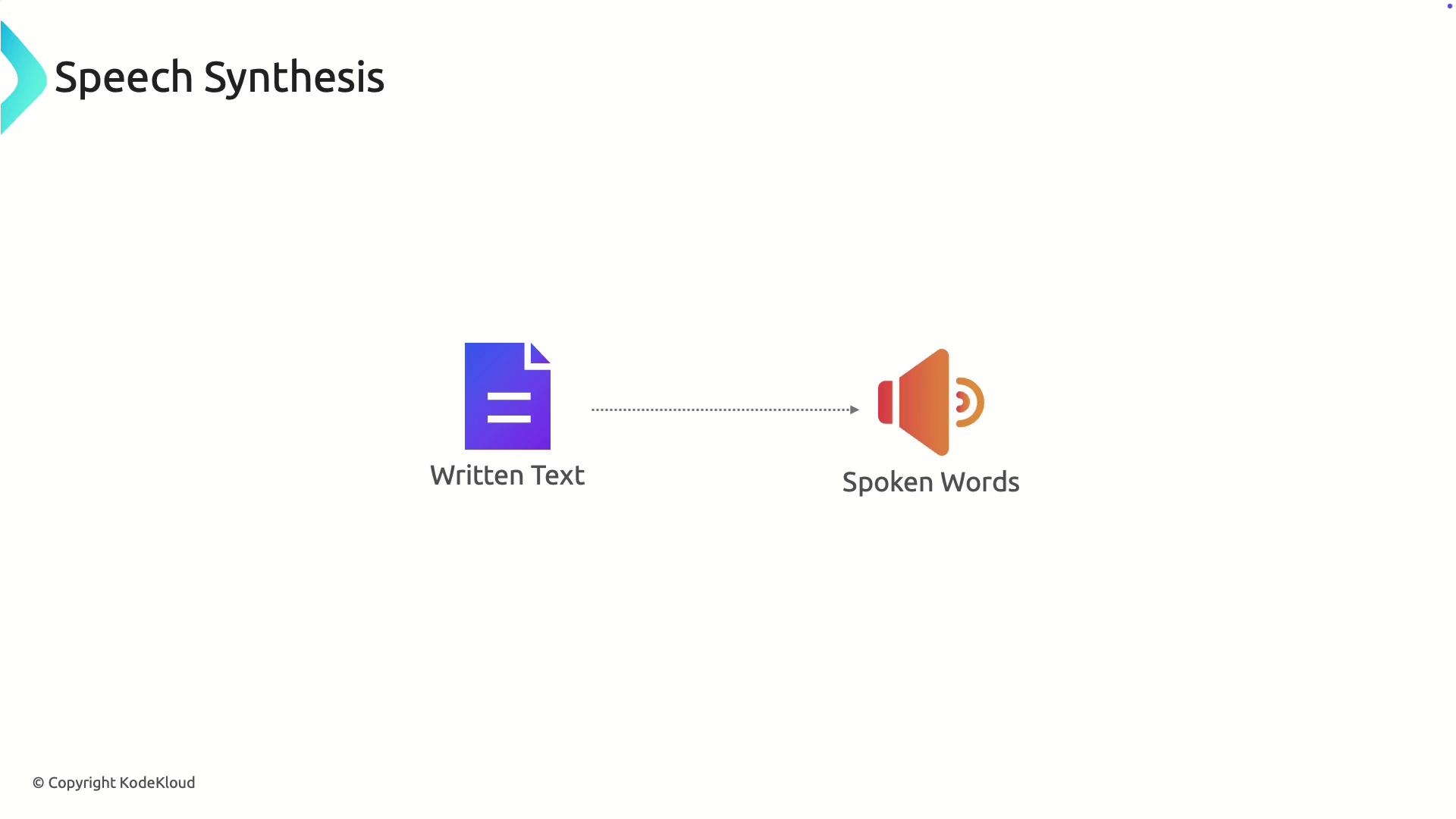
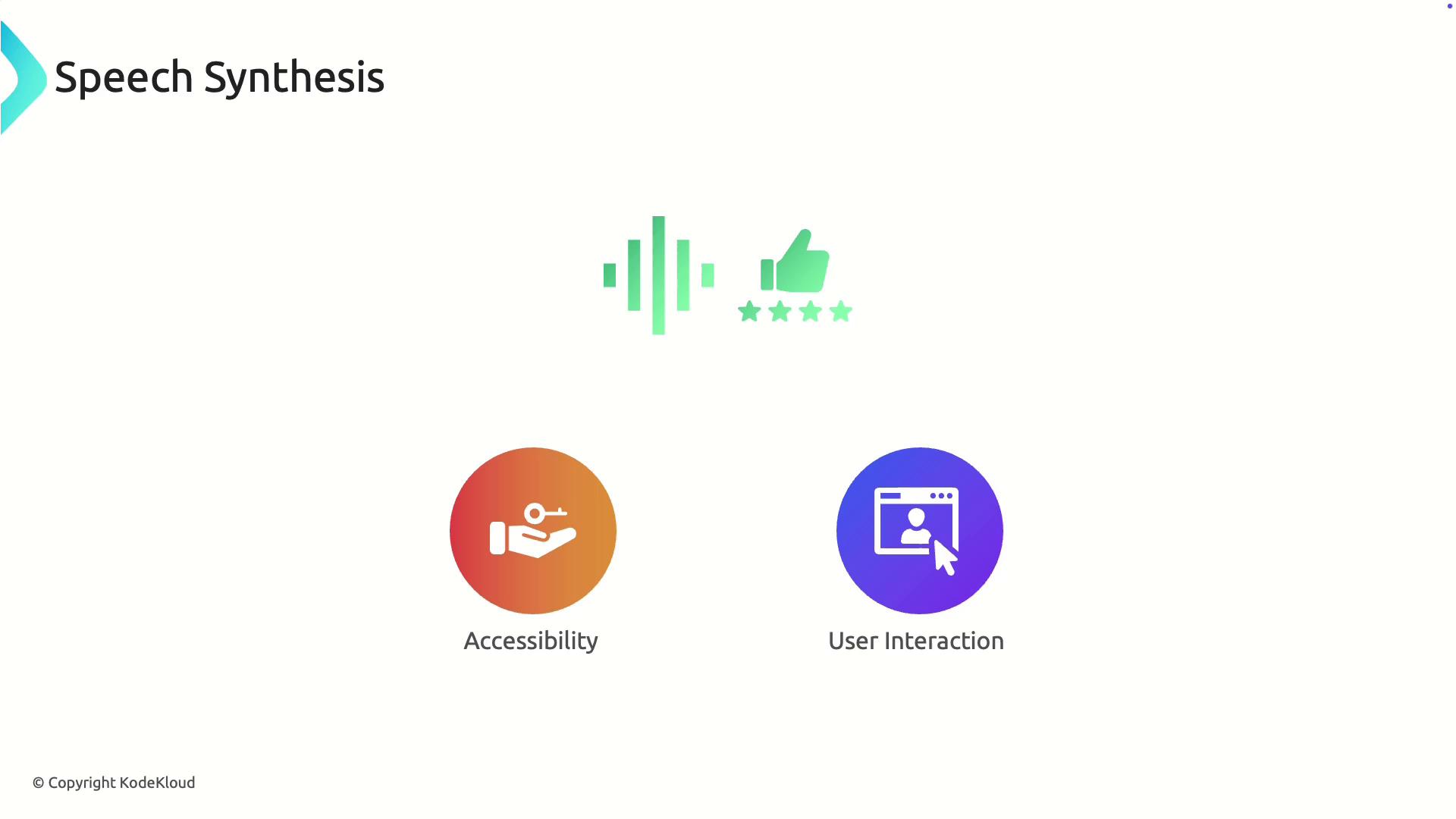
Speech synthesis, also known as text-to-speech, converts written text into audible speech. This capability is essential for delivering spoken feedback, thereby enhancing accessibility for users with visual impairments and supporting interactive learning environments.Applications such as navigation apps can read out directions, while educational tools may read aloud instructions to enhance comprehension and engagement. These features help create more inclusive experiences for all users.
Practical Applications and Speech Studio Overview
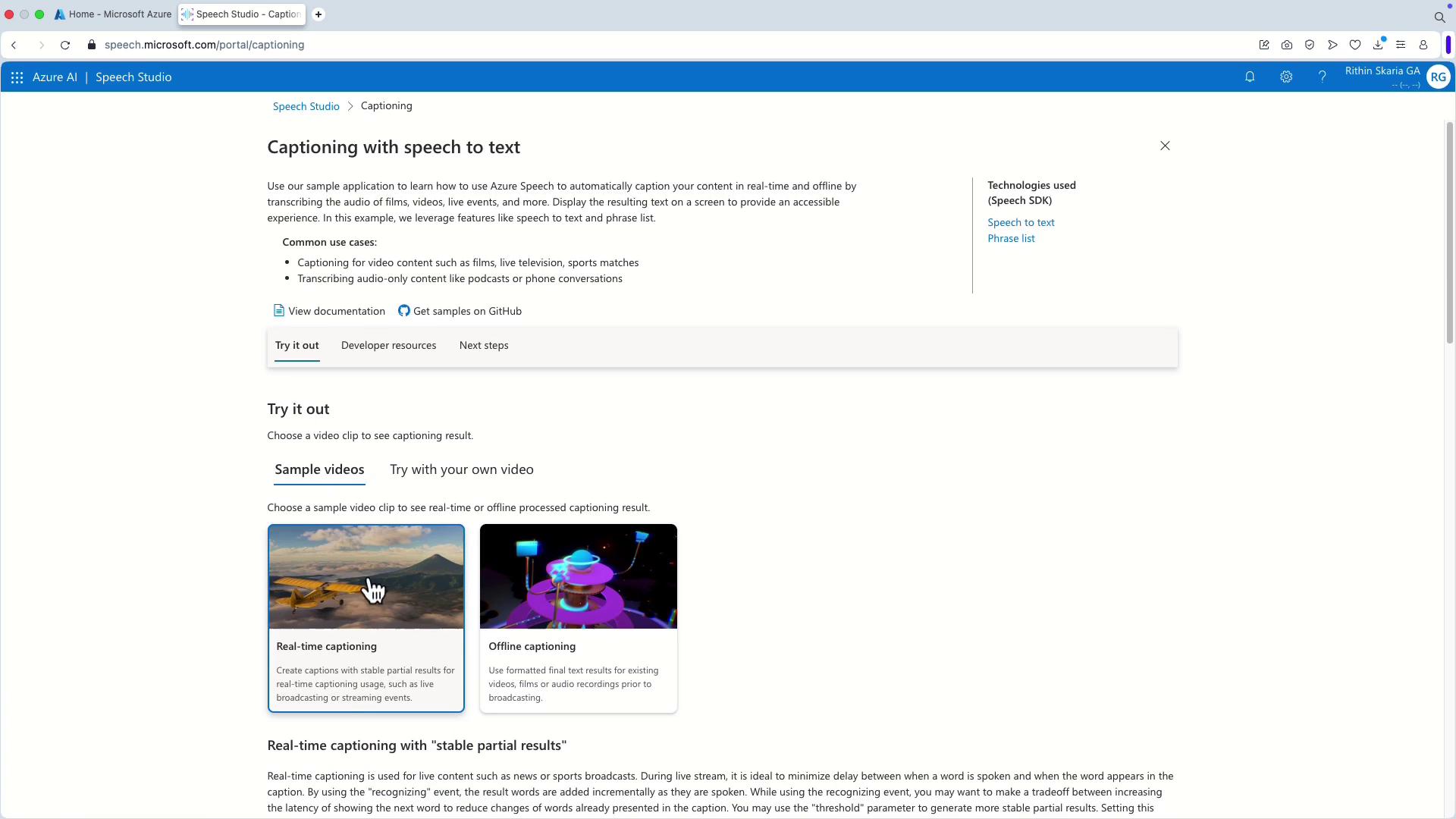
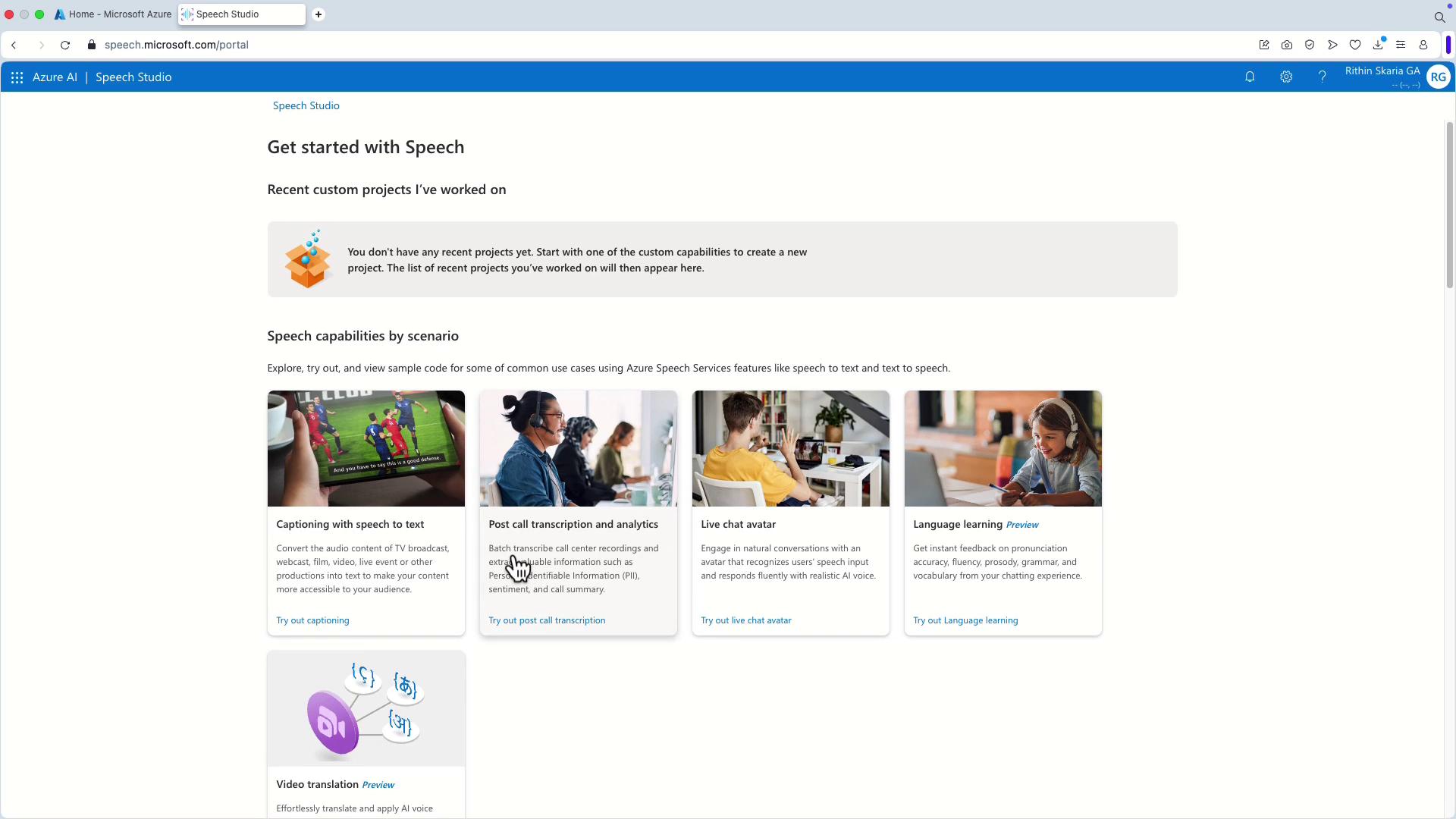
Azure Speech Studio provides an interactive platform where you can experiment with these speech capabilities. It is designed to help you create and manage speech resources effectively, making it easier to integrate features like captioning, transcription, and interactive speech services into your applications.Use Cases in Azure Speech Studio
Within Speech Studio, you can manage voice resources and experiment with real-time captioning, a feature that benefits both live events and post-event processing.