-
Training from Scratch:
In this approach, you build a language model from the ground up using your own dataset. Although this allows complete control over the development process, it is extremely resource-intensive in terms of data, time, and computational power. -
Leveraging a Pre-Trained Foundational Model:
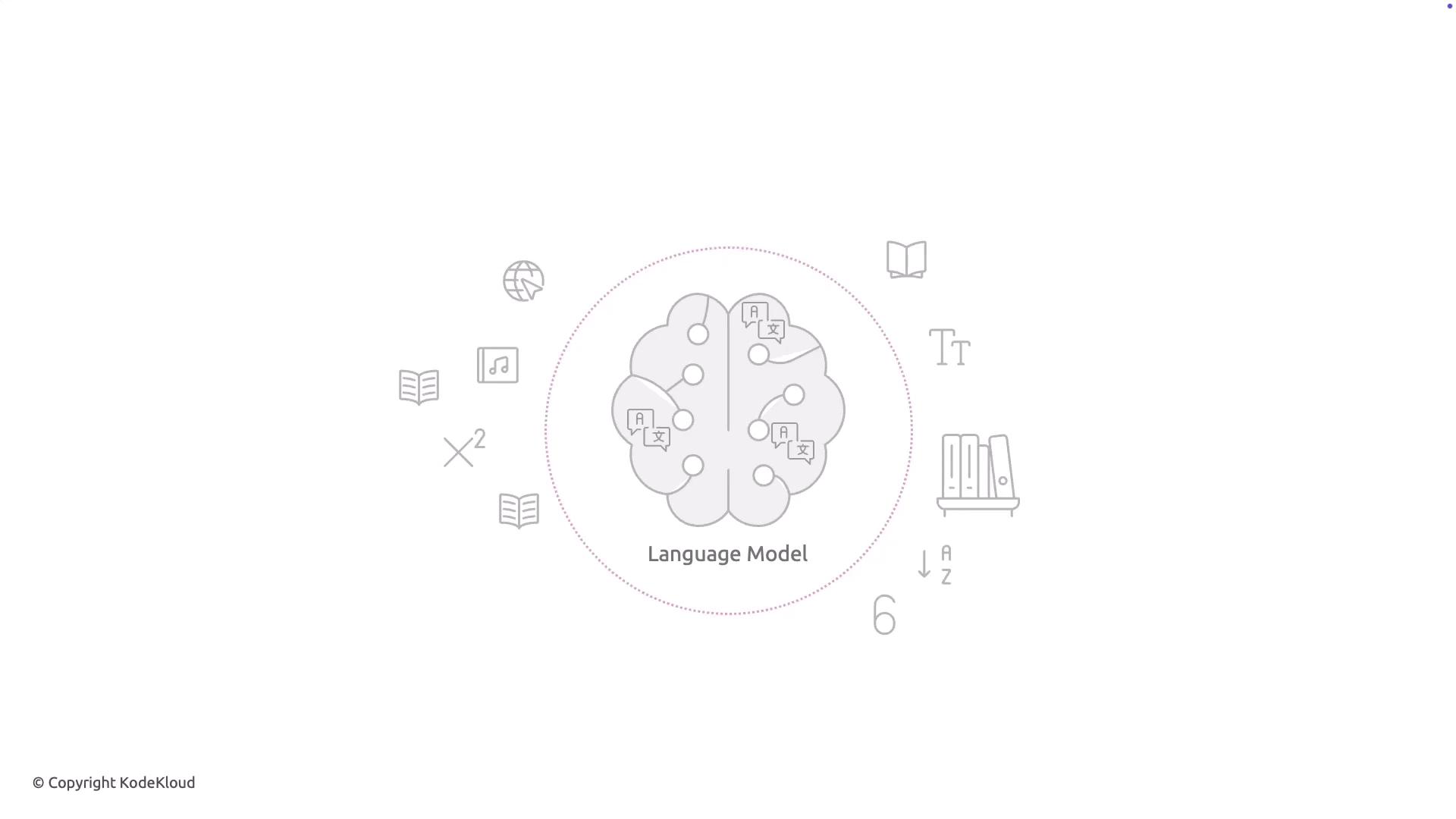
Most organizations opt to start with a pre-trained model. These models are developed using extensive datasets and can effectively understand and generate human language. By fine-tuning them with a smaller, task-specific dataset, you can develop customized AI solutions without the significant overhead of training entirely from scratch.
Leveraging pre-trained models accelerates development and grants access to state-of-the-art techniques established by leading AI research communities.
Azure OpenAI and the Model Catalog
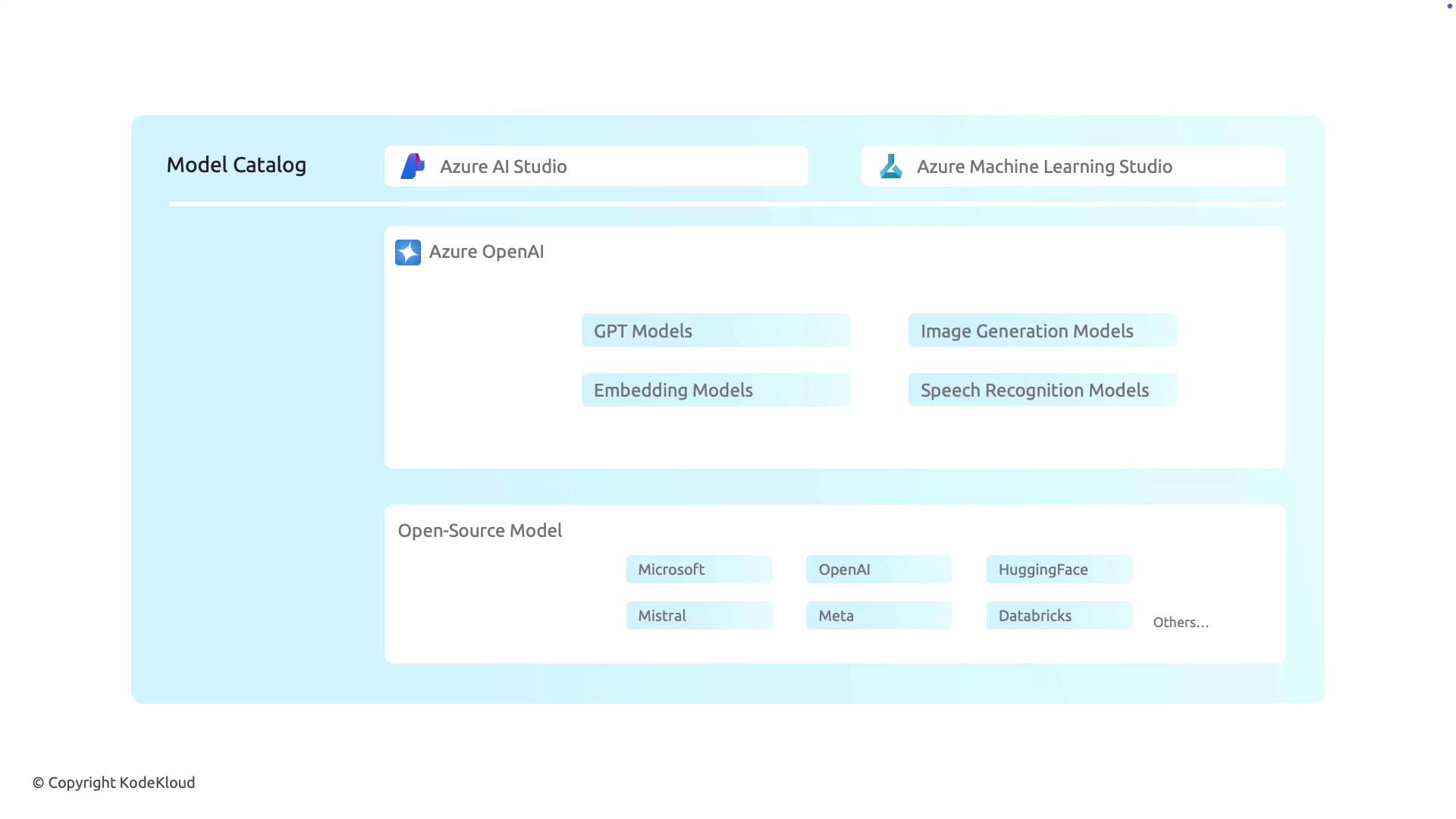
Azure simplifies the integration of foundational models with tools such as the Azure OpenAI service and the comprehensive Model Catalog. Through Azure, you can access a variety of advanced models from OpenAI alongside open-source alternatives provided by industry-leading partners like Hugging Face, Mistral, Meta, and Databricks. This unified platform makes it easy to find and deploy the right model for your specific needs. Popular model types include:- GPT Models: Designed for natural language understanding and code generation.
- Embedding Models: Transform text into numerical representations to analyze semantic relationships between words and concepts.
- Image Generation Models: For example, DALL-E can create images from textual descriptions, opening up innovative creative possibilities.
- Speech Recognition Models: Models such as Whisper convert speech to text, making them ideal for automated audio transcription.