

- Identity and Access Management (IAM)
- Authentication and Authorization
- Encryption (Data at Rest & In Transit)
- Secrets Management
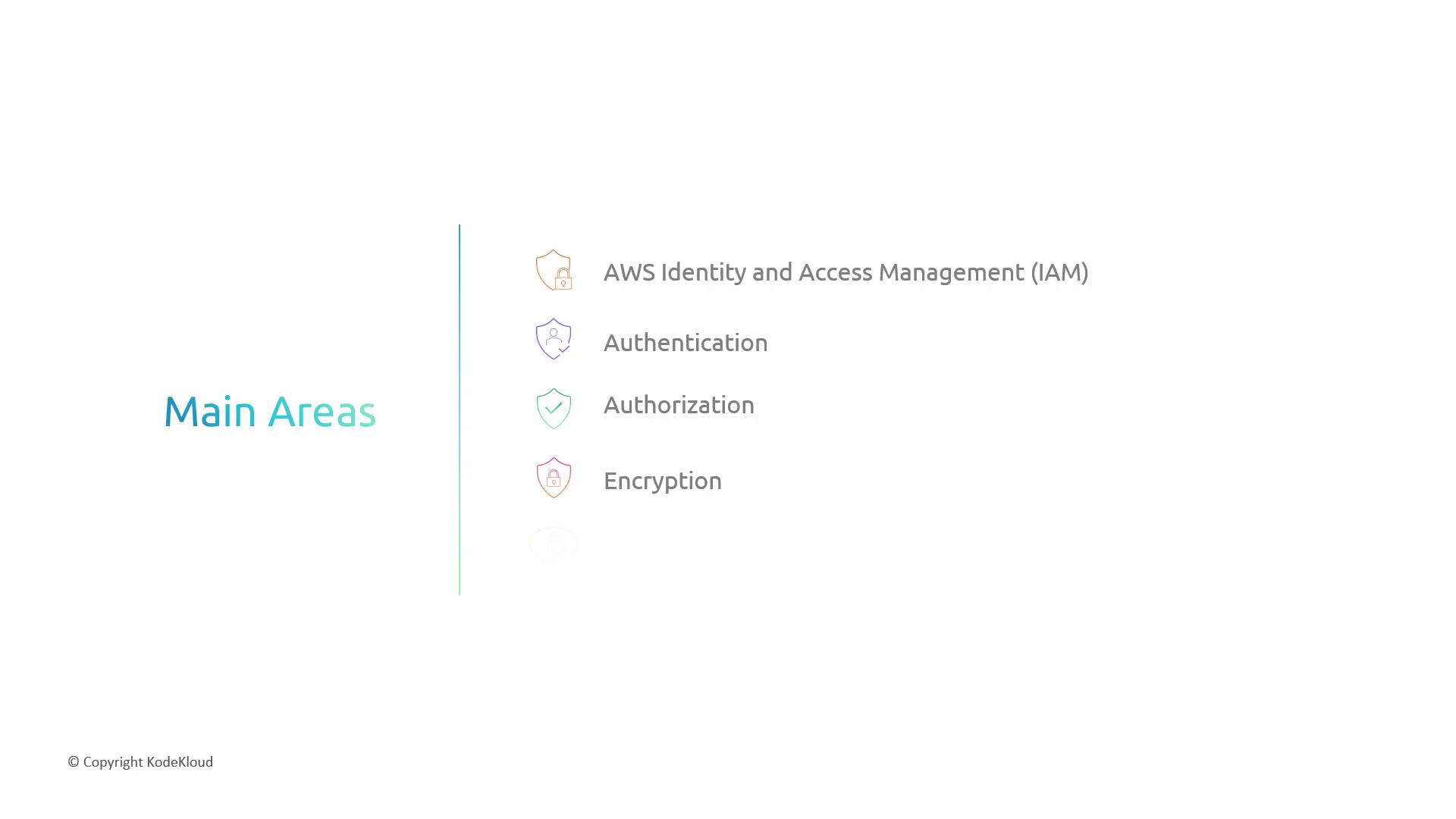
1. Identity and Access Management (IAM)
IAM ensures that only authorized principals can perform actions on your pipeline and its resources.1.1 Authentication
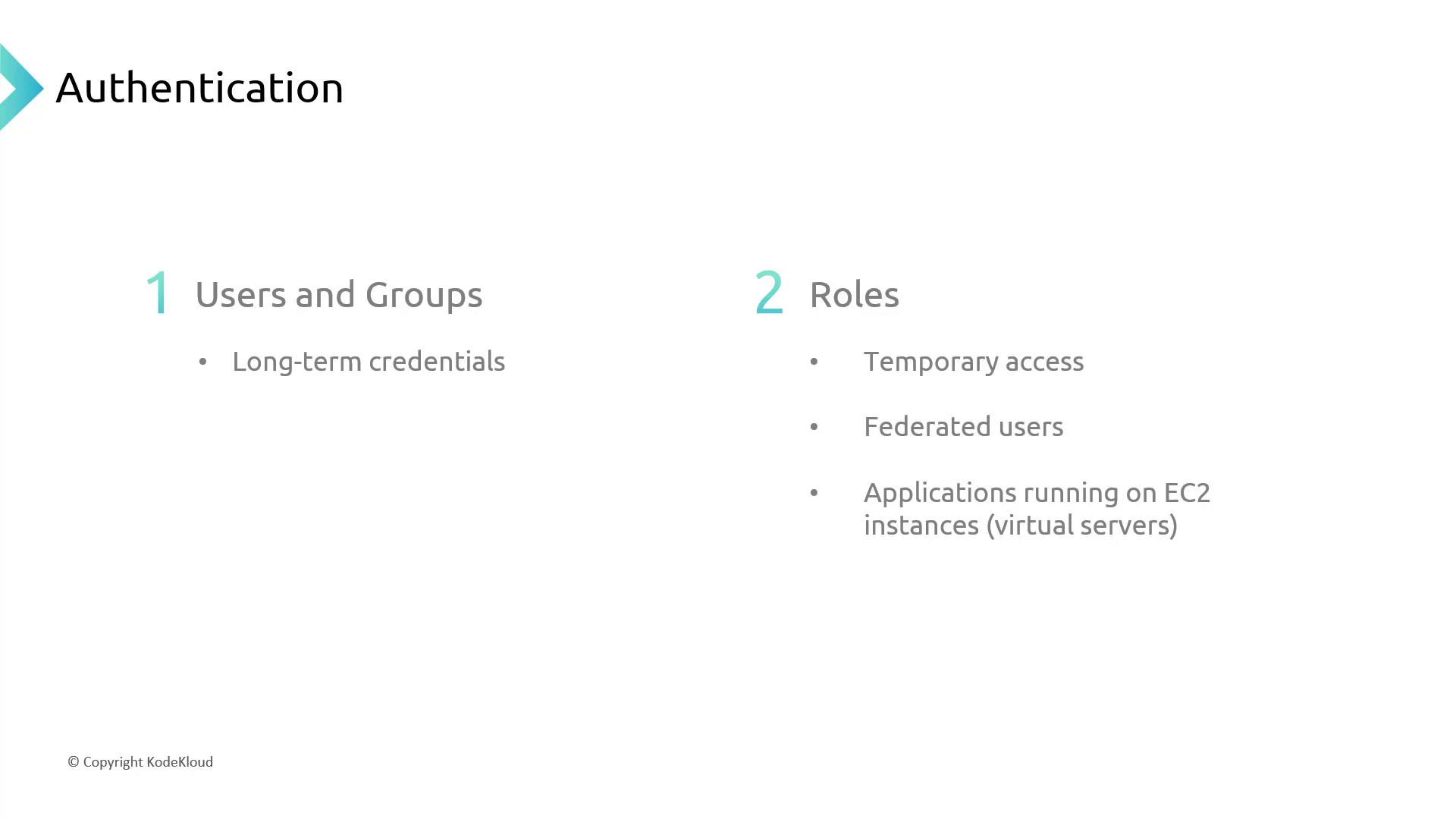
Use IAM users, groups, and roles to control who can access CodePipeline:- IAM Users & Groups
Provide long-term credentials for developers and administrators. - IAM Roles
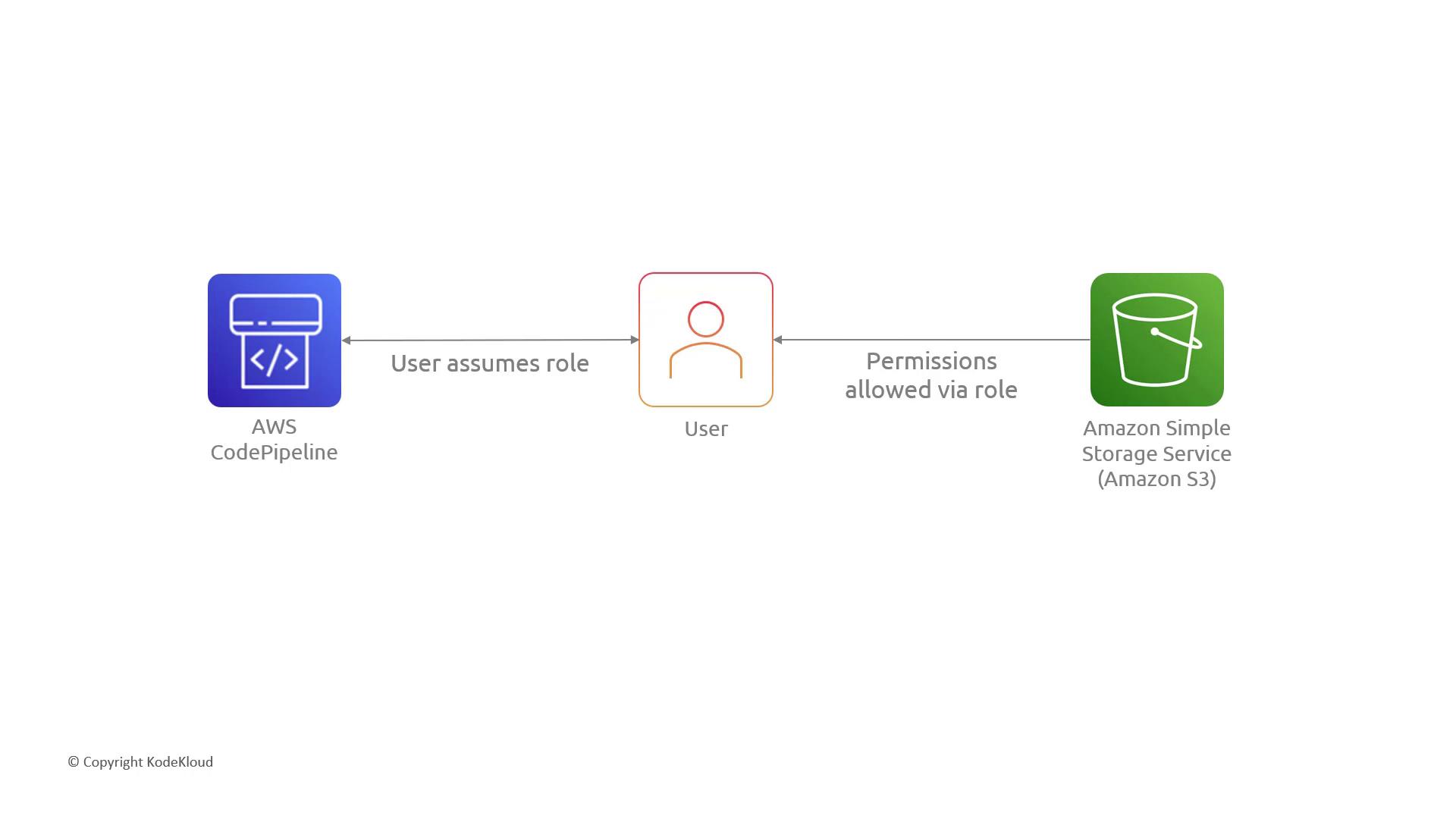
Grant temporary permissions when assumed by users, AWS services, or federated identities.
- Short-lived access across AWS accounts
- Federated users (e.g., SAML, OIDC)
- Applications running on EC2 (via instance profiles)
1.2 Authorization
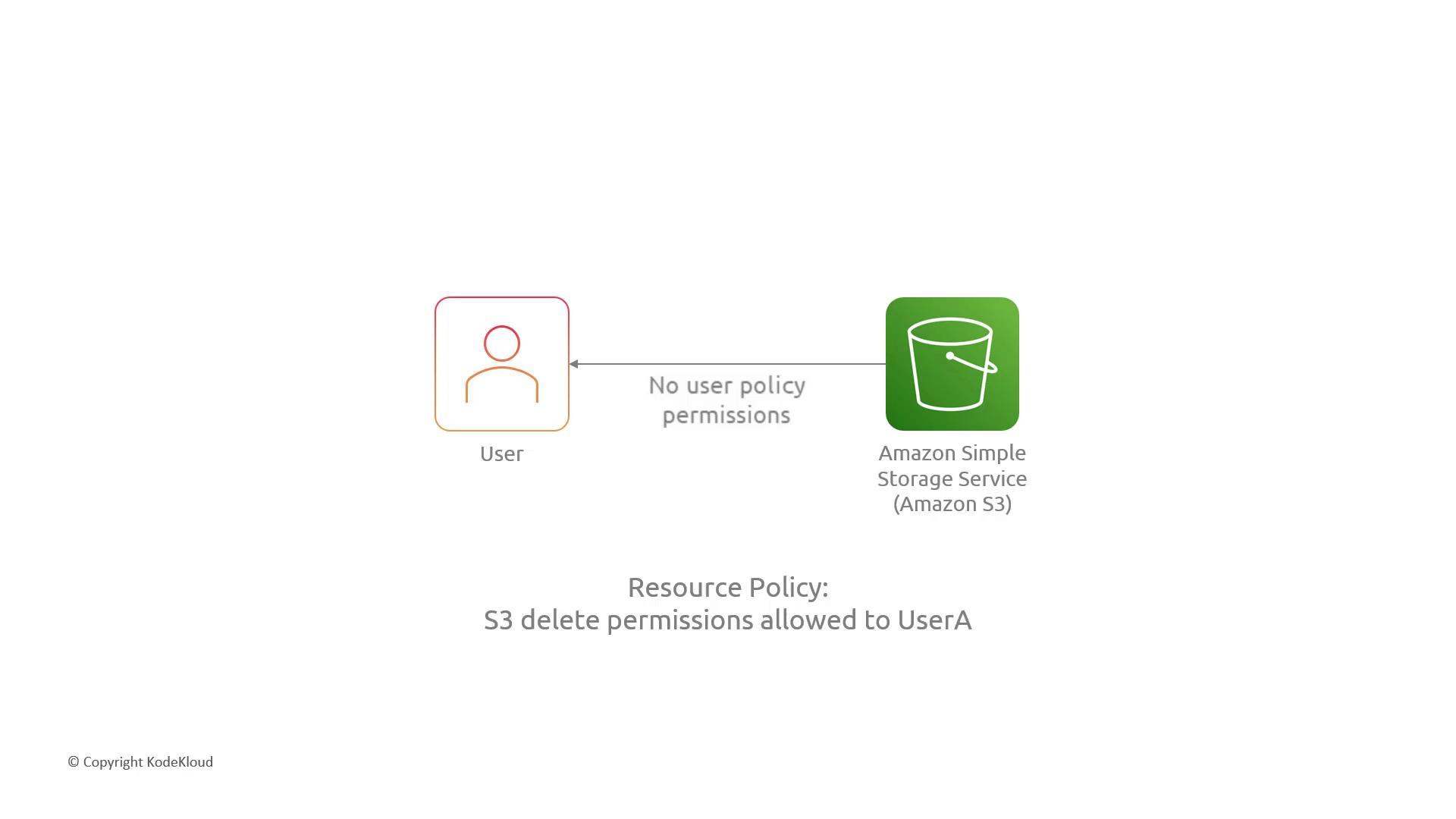
Fine-grained permissions are enforced through IAM policies. These JSON documents define allowed or denied actions:
s3:DeleteObject, UserA can delete items:
2. Encryption
Protect data confidentiality by encrypting artifacts at rest and securing data in transit.2.1 Data at Rest
When storing build artifacts in S3, enforce server-side encryption (SSE). Compare your key management options: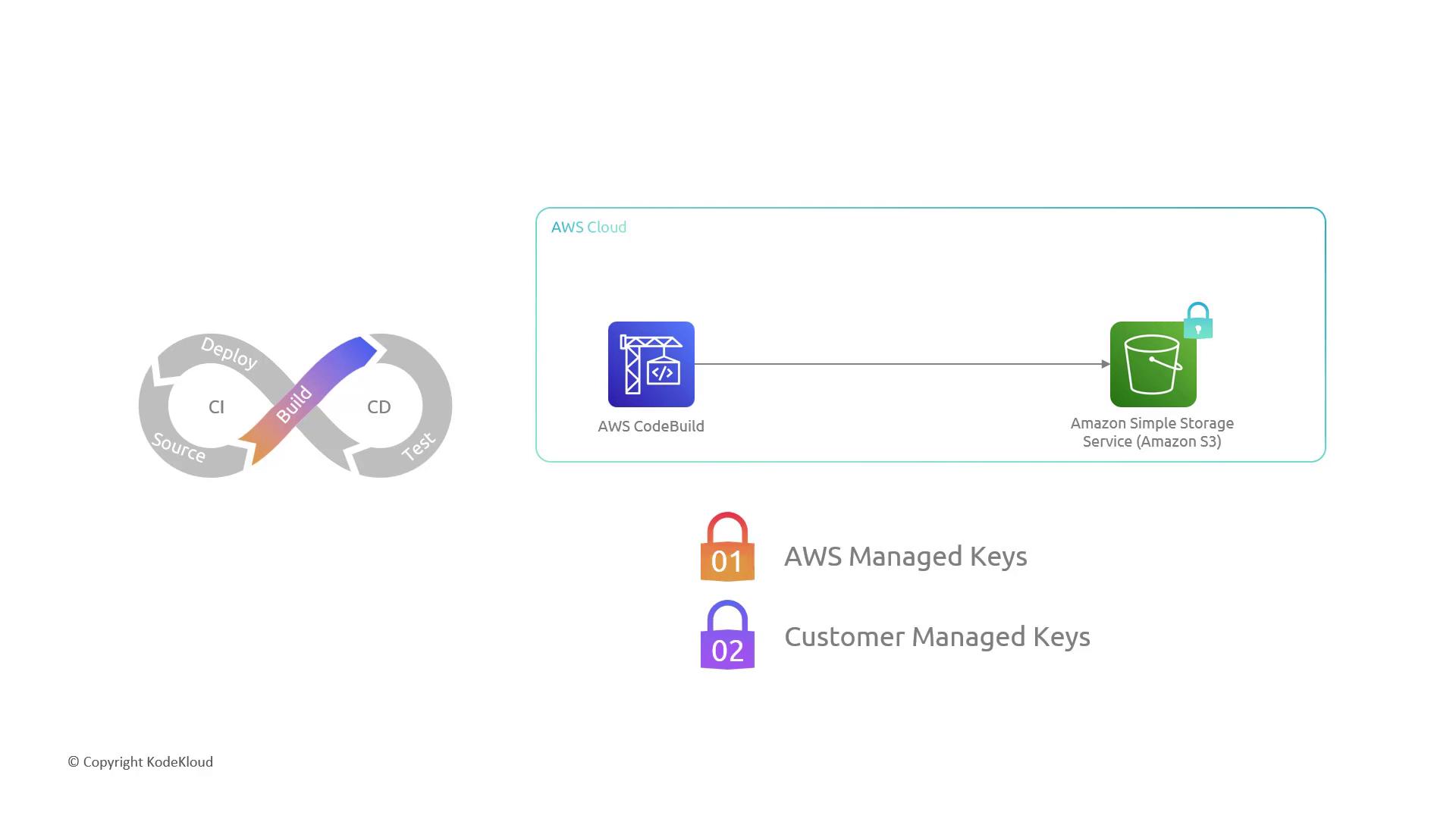
Always enforce HTTPS and server-side encryption in your S3 bucket policy to block unencrypted uploads or insecure connections.
2.2 Data in Transit
Always use TLS (HTTPS) for:- CodePipeline interactions with AWS services
- Integrations with third-party repositories (GitHub, Bitbucket)
- Calls to build and deployment providers
3. Secrets Management
Avoid hard-coding credentials such as API keys or passwords in your pipeline. Instead, centralize secrets in AWS Secrets Manager: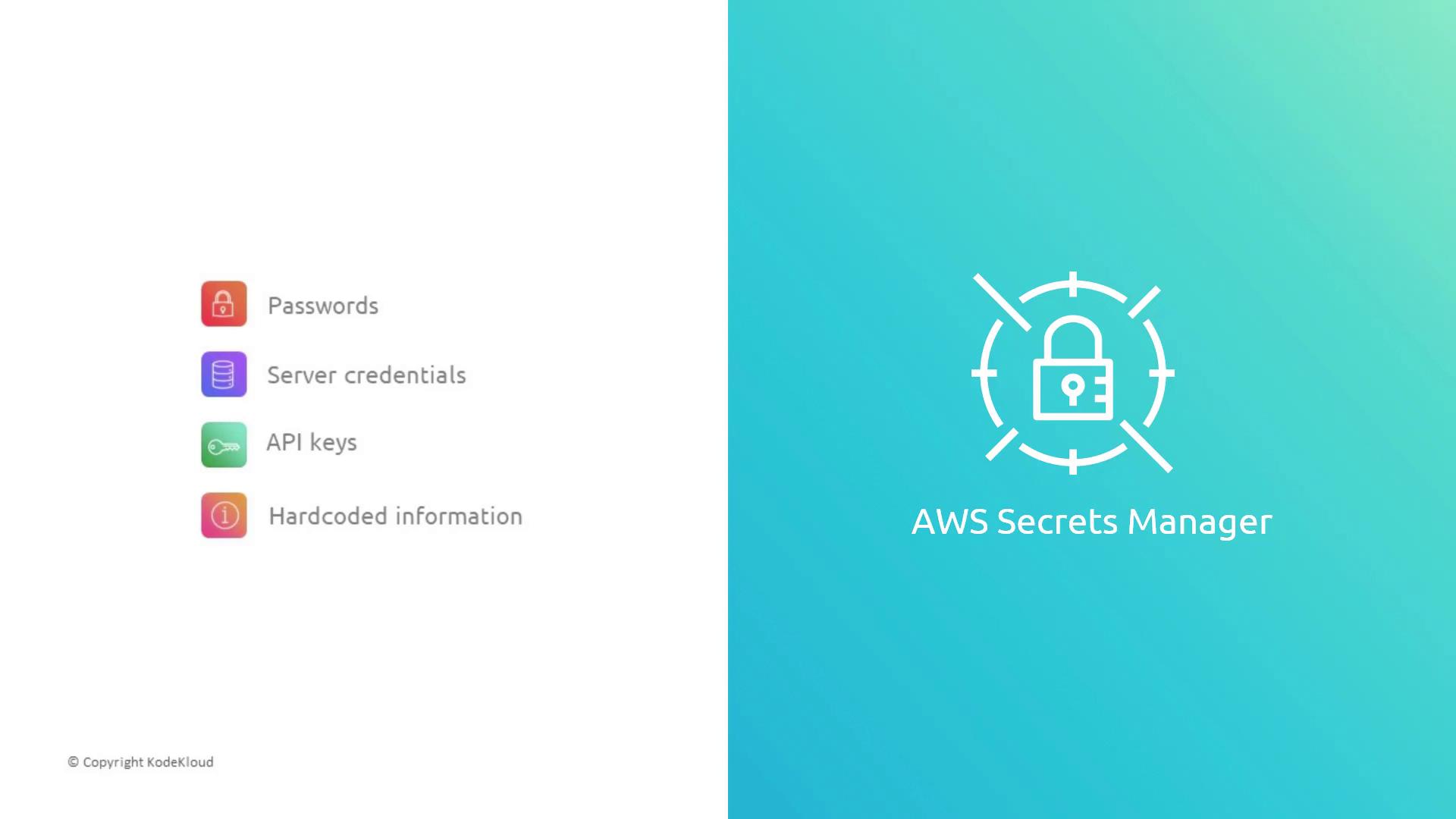
Use the AWS SDK or AWS CLI to fetch secrets at runtime:
Summary
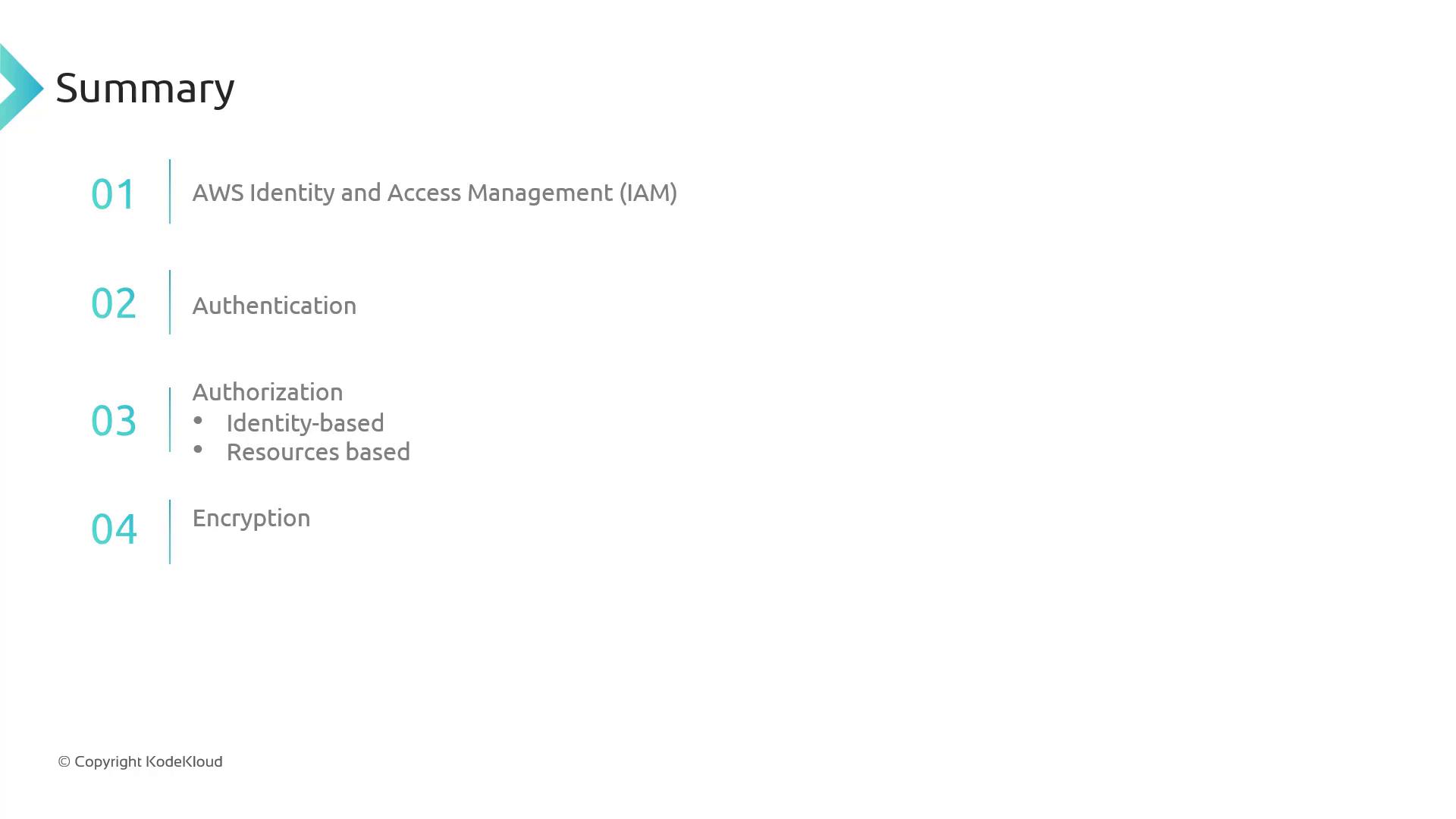
We’ve covered the critical security controls for AWS CodePipeline:- IAM for robust authentication and authorization
- Encryption of artifacts at rest (SSE) and in transit (TLS)
- Secure secret handling with AWS Secrets Manager
Links and References
- AWS CodePipeline Documentation
- IAM Best Practices
- AWS KMS Developer Guide
- AWS Secrets Manager User Guide