Key Features
- Domain registration and management as your registrar
- DNS record configuration for EC2, load balancers, S3 static websites, and more
- Highly available, low-latency global DNS resolution
Domain Registration and DNS Management
When you register a domain (e.g.,example.com) through Route 53, AWS serves as your domain registrar. You can then configure all DNS records directly in the AWS Management Console, AWS CLI, or through the API.
If you register the domain with Route 53, name servers are automatically set. For external domains, update the NS records at your existing registrar to point to the Route 53 name servers.
Hosted Zones
A hosted zone in Route 53 is a container for DNS records related to a specific domain or subdomain. AWS allocates four authoritative name servers for each hosted zone.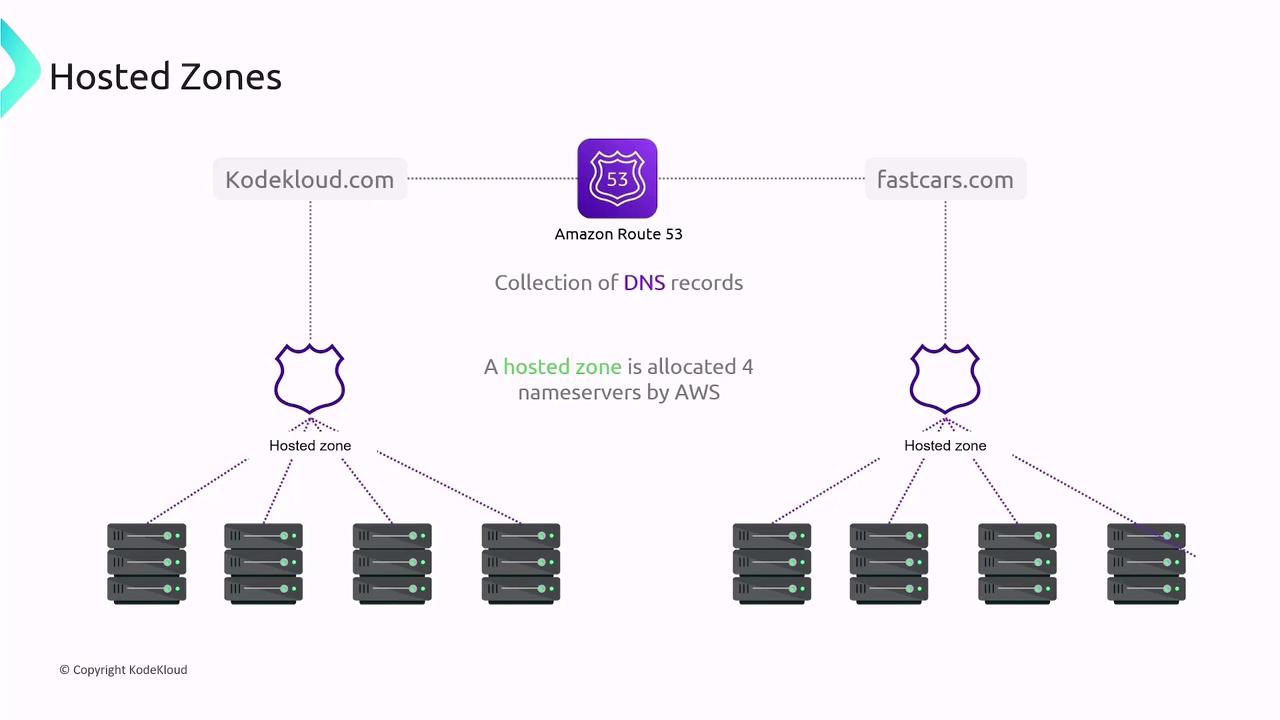
How It Works: Step by Step
- Create a hosted zone for your domain (e.g.,
fastcars.com). - AWS assigns four name servers to the hosted zone.
- Define DNS records (A, AAAA, CNAME, MX, TXT, etc.) in the hosted zone.
- Verify that your domain’s NS records at the registrar match the assigned name servers.
Common DNS Record Types
Summary
Route 53 offers:- Fully managed DNS service for end-user request routing
- Domain registration with AWS as the registrar
- Global DNS infrastructure for low-latency queries
- Hosted zones for organizing DNS records per domain