

The Implicit VPC Router
Every VPC router:- Has one interface per subnet, using the
.1address in each CIDR (for example, if a subnet’s CIDR is192.168.1.0/24, its router IP is192.168.1.1). - Routes traffic between subnets and to gateways or on-premises connections.
- Is configured via route tables, where each table contains a set of routes (rules) defining how to forward packets.
How Route Tables Work
When a packet leaves a subnet, the router:- Examines the destination IP.
- Finds the matching prefix in the associated route table.
- Chooses the most specific route (longest prefix match).
- Forwards the packet to the route’s target (local, gateway, instance, etc.).
The router always applies the longest-prefix match if multiple routes overlap.
2001:db8:abcd::/48→ local2001:db8:abcd:0012::/64→ local
2001:db8:abcd:0012::1234 matches both, but uses the /64 route because it has the longer prefix.
Default Route Tables and Associations
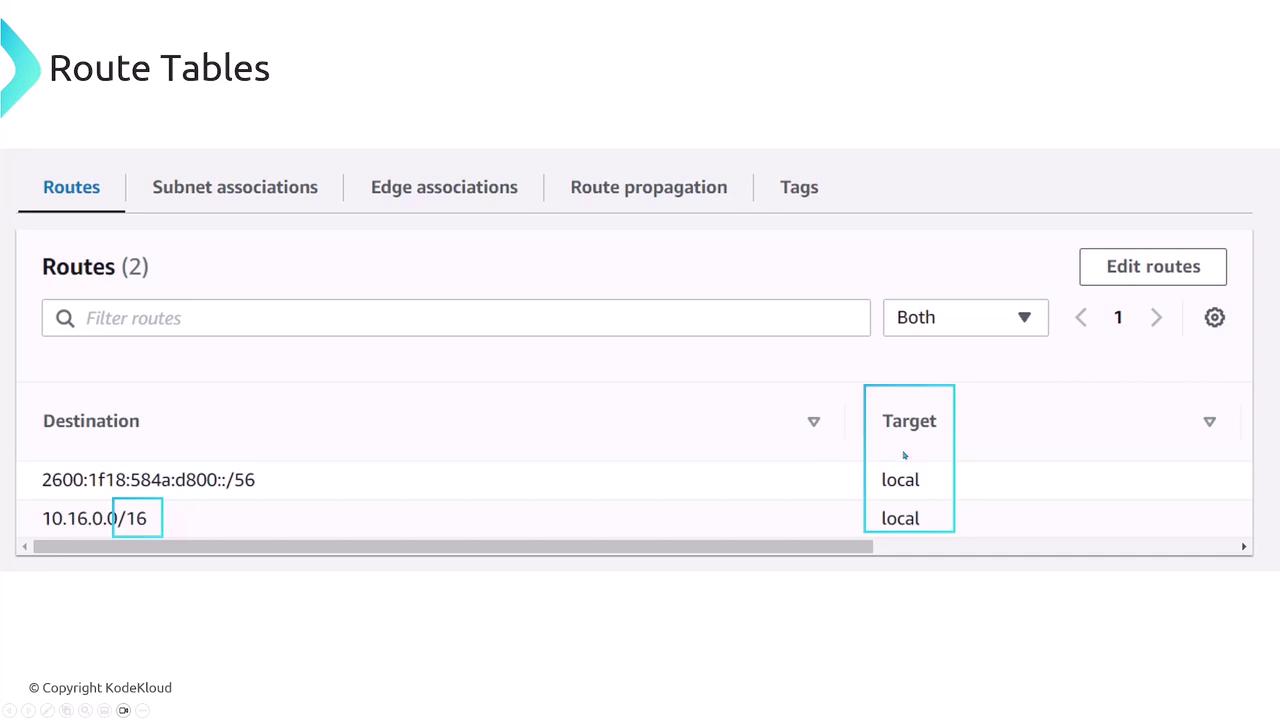
By default, every route table in a VPC contains:- A local route for the VPC’s IPv4 CIDR (e.g.,
10.16.0.0/16→ local) - If IPv6 is enabled, another local route for the IPv6 block
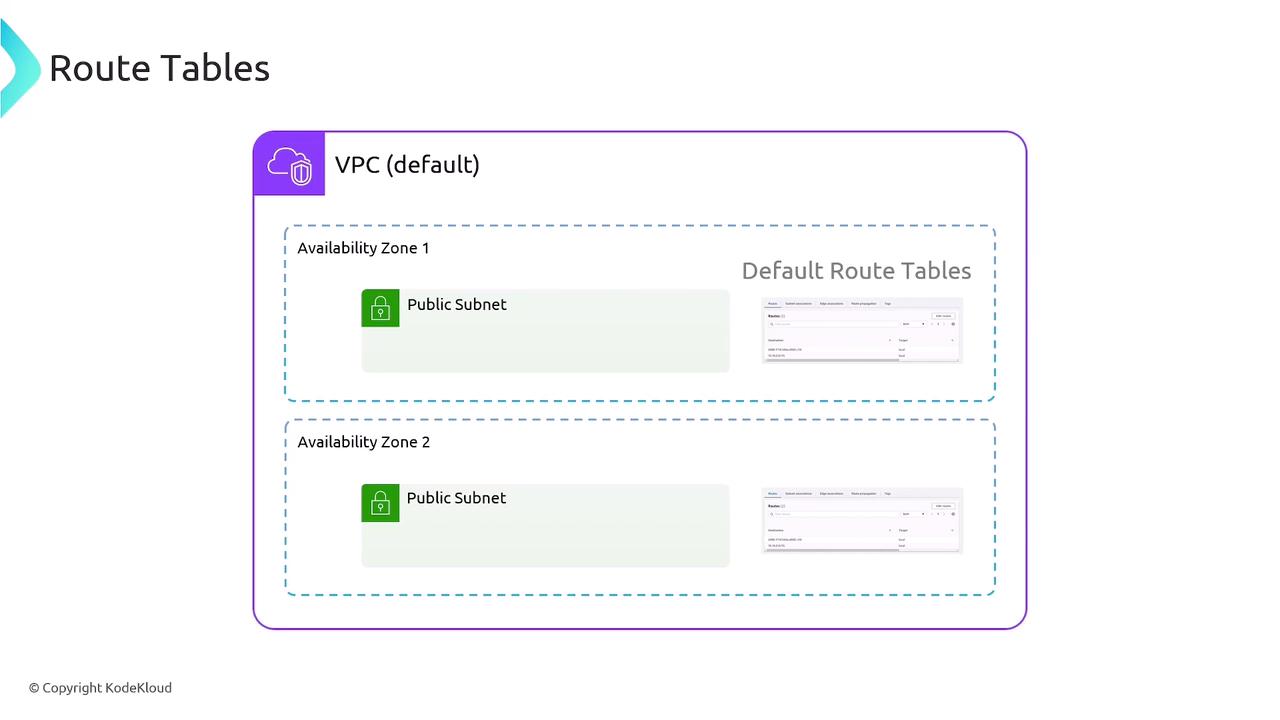
A subnet can only be associated with one route table at a time, although a route table may serve multiple subnets.
VPC Routing Overview
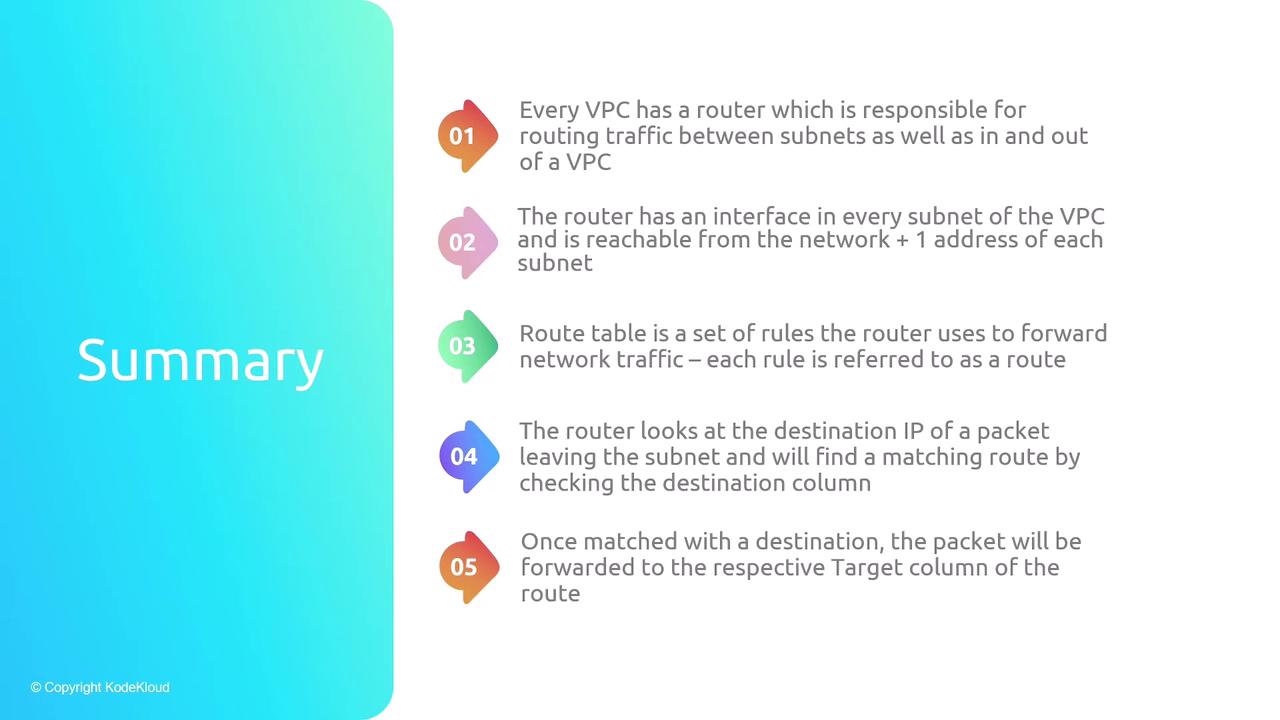
- Each VPC has an implicit router with one interface per subnet (
.1address). - Route tables define forwarding rules based on IP prefix destinations.
- The router selects the most specific matching route (longest prefix).
- Packets are forwarded to targets like local, gateways, or instances.
- Every table includes a local route for the VPC’s IPv4 (and, if enabled, IPv6) CIDR.
Key Takeaways
- Every VPC has one default route table.
- Subnets must be associated with exactly one route table.
- Multiple subnets can share the same route table.
- Custom route tables enable distinct public/private routing behaviors.