What is DevOps?
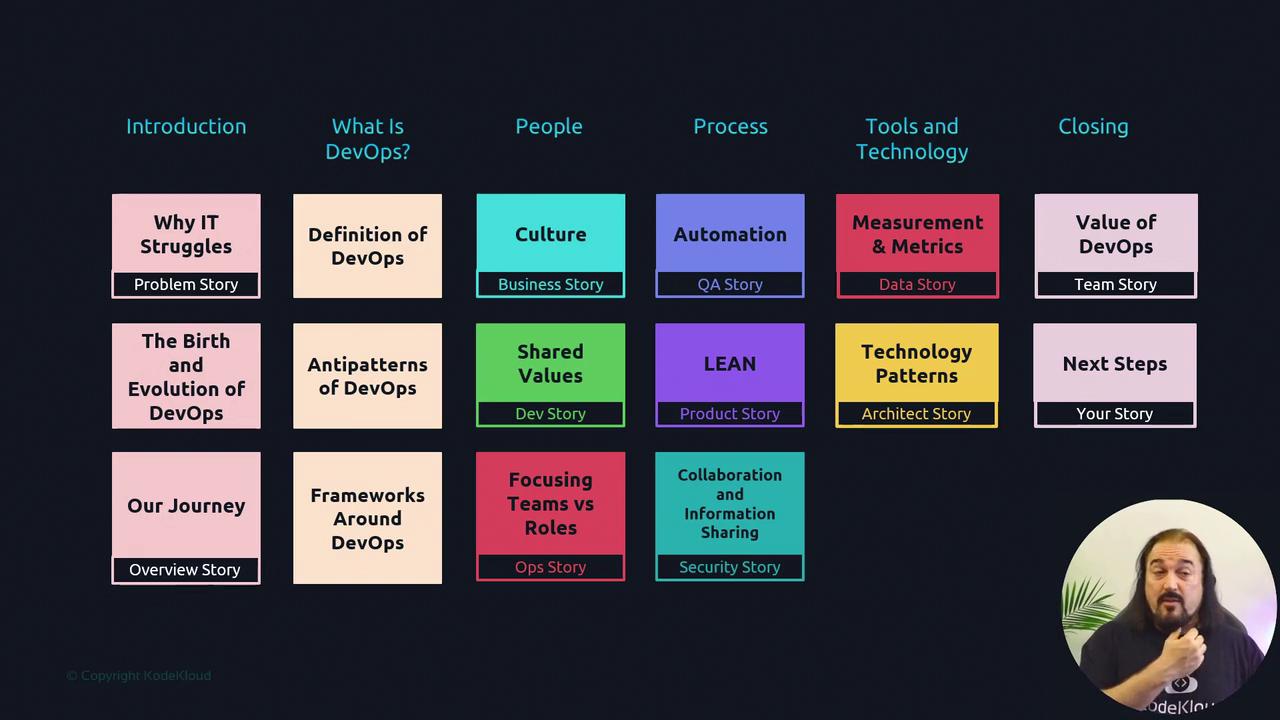
In the “What is DevOps” section—the second part of our course—we address the following key elements:- A formal definition of DevOps.
- Common antipatterns that can hinder DevOps adoption.
- An overview of frameworks that form the core or are closely related to DevOps practices.
People
The third section centers on the human element of DevOps. Here, you will engage with role-based stories that include:- The Business Story
- The Development Story
- The Operations Story
Process
The course then transitions into the process aspect. In this section, role-based stories are used to demonstrate how:- Automation and LEAN thinking promote alignment through continuous product feedback delivered in small batches.
- Collaborative information sharing—especially regarding security—plays a crucial role in driving successful outcomes.
Tools and Technology
In our discussion of tools and technology, we cover:- Essential measurements and metrics that foster continuous improvement.
- The journey of data engineers, including the challenges and opportunities inherent in data management.
- Technology patterns from an architect’s perspective, showcasing effective solutions for complex environments.
Before proceeding further, keep in mind that you will eventually be encouraged to craft your own “DevOps journey” story. This reflective exercise is designed to help you document your personal experiences after completing the course. We will also provide a few hints at the very end of the class.
Role-Based Stories
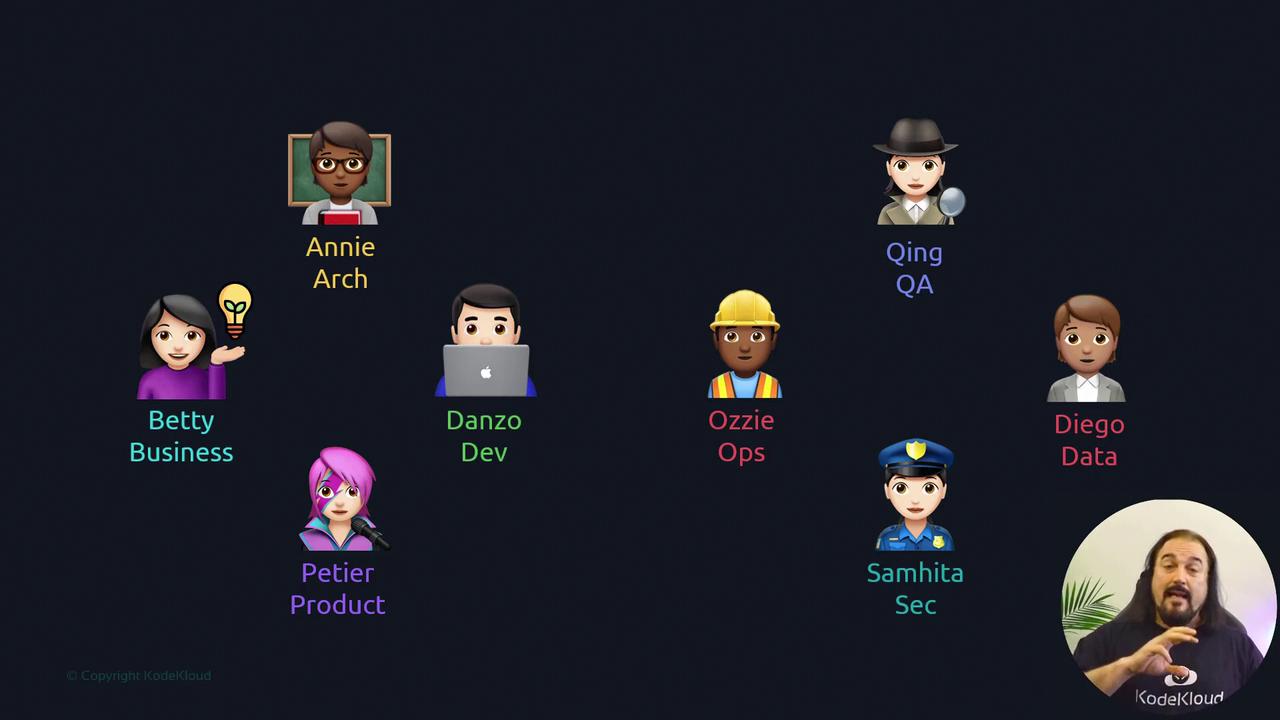
The role-based stories throughout this course focus on the following personas:- Betty Business
- Annie Architect
- PTR Products
- Danzo Dev
- AutoOps
- Qingyue
- Samita Security
- Diego Data
Course Structure Summary
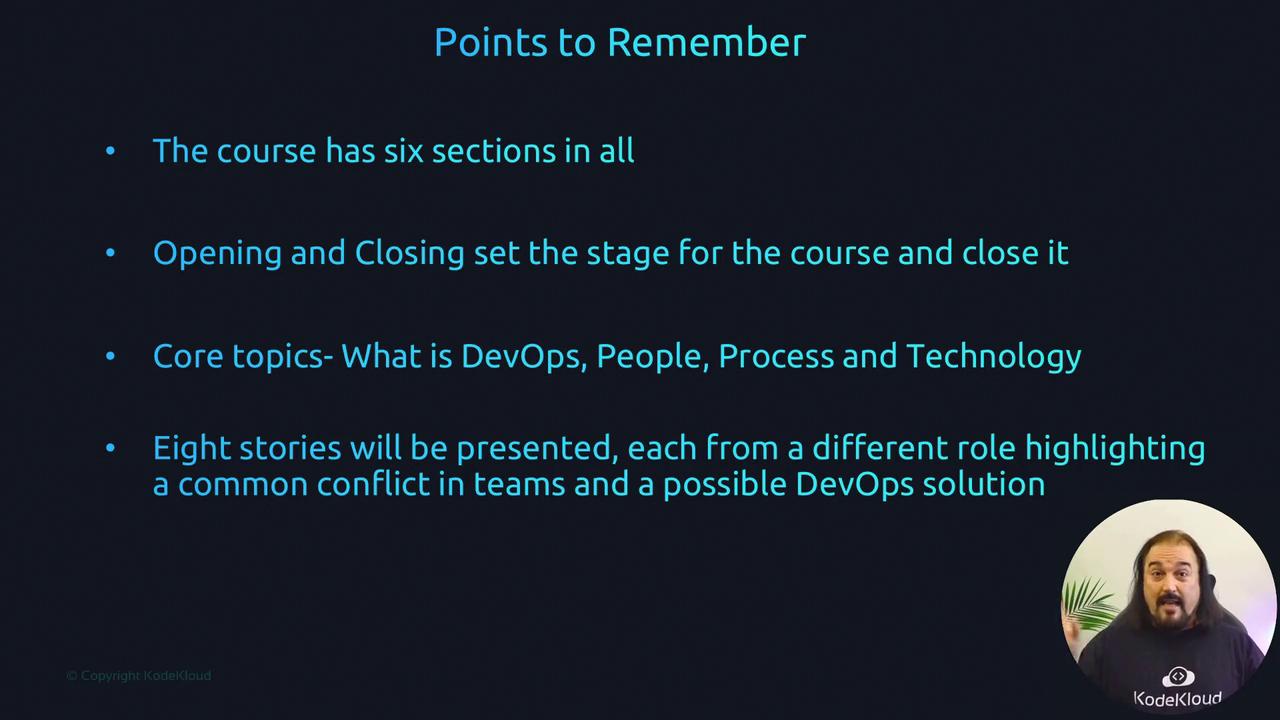
To summarize, the course comprises six sections:- Opening and Closing: Setting the stage and wrapping up the comprehensive course content.
- Introducing DevOps: Defining DevOps and discussing its core concepts.
- Focus on People: Emphasizing role-based stories and cultural considerations.
- Process: Delving into the importance of automation, LEAN thinking, and collaborative information sharing.
- Technology and Tools: Examining metrics, data management, and architectural patterns.
- Final Thoughts: A concluding segment with final reflections and suggested next steps.