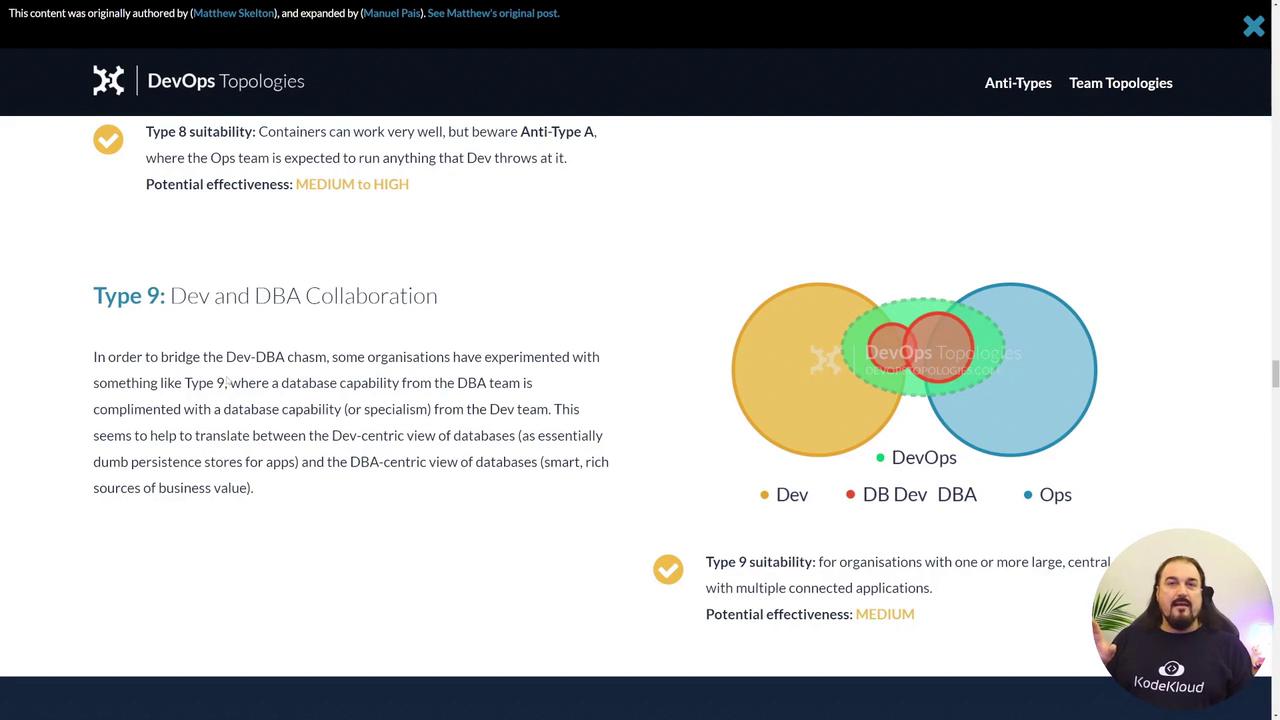
Type 1: Developer and Operations Collaboration
This model emphasizes close collaboration between developers and operations, driven by strong technical leadership. When both teams operate as a fully integrated unit with ongoing discussions about software delivery, they can leverage overlapping skills and experiences to enhance the process.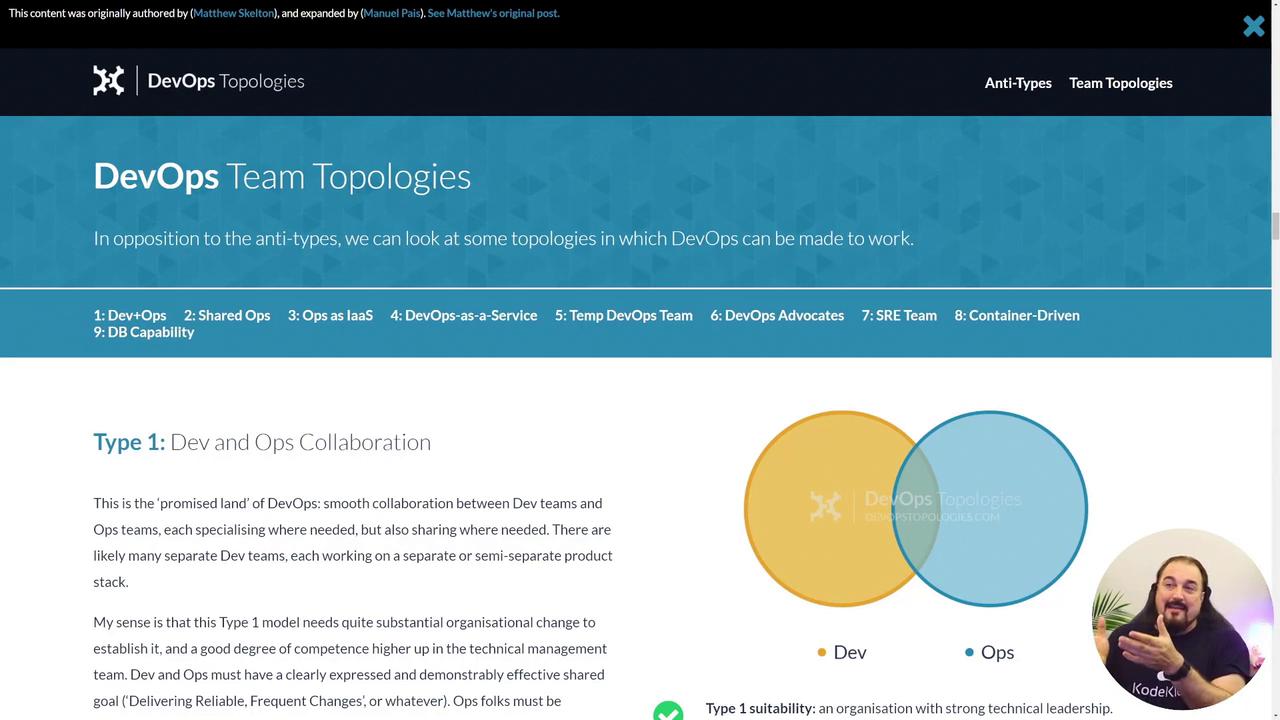
Type 2: Fully Shared Ops Responsibilities
In this approach, development and operations merge into a single, cross-functional team. Best suited for organizations delivering a single product, this model simplifies workflows by uniting all necessary skills in one cohesive unit. Many startups favor this pattern for its straightforward implementation and operational efficiency.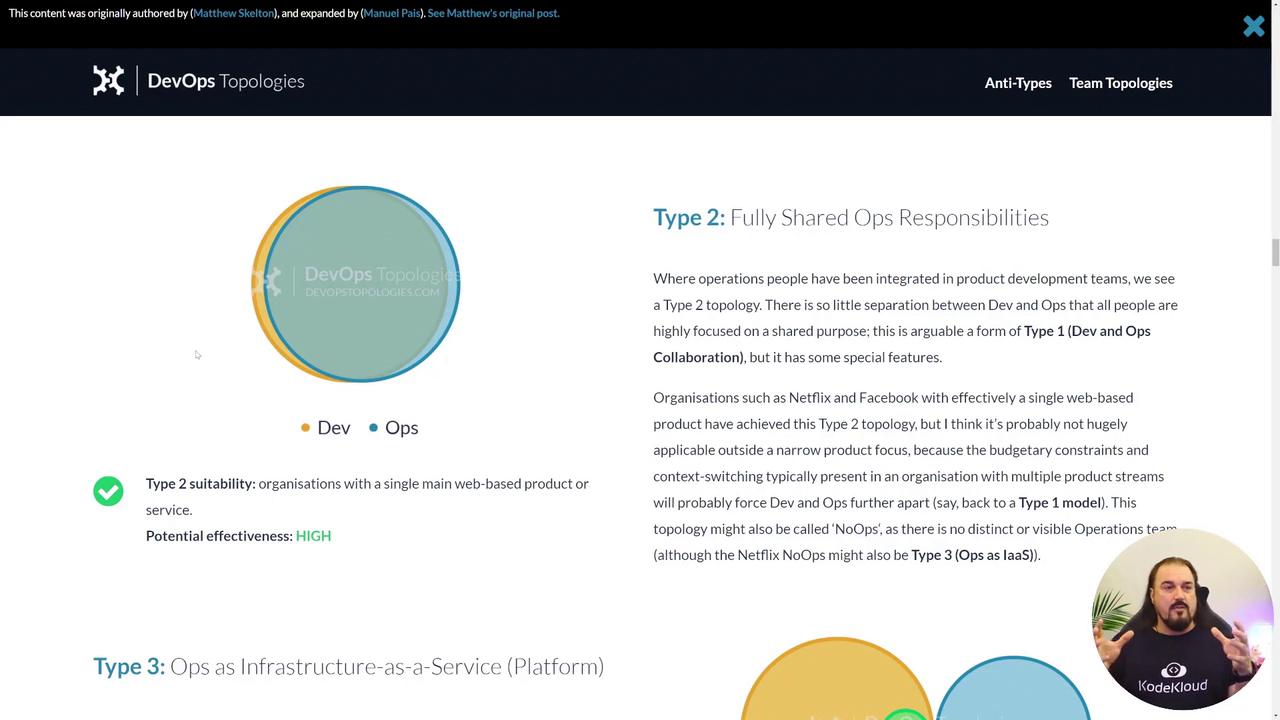
Type 3: Infrastructure-as-a-Service Platform
Here, the operations team serves primarily as the maintainer of an internal infrastructure platform or deployment service. Developers interact with this platform via a streamlined interface, which enables smooth and rapid code deployments. This model is increasingly popular with the rise of platform engineering, allowing teams to concentrate on innovation while the platform handles production deployments.Type 4: DevOps as an External Service
In this model, the DevOps function is provided as a fully managed, external service. Taking care of the complete delivery process—from code commit to production rollout—the external service offers a low-friction, turnkey solution. This approach is particularly beneficial for smaller teams with limited operational expertise.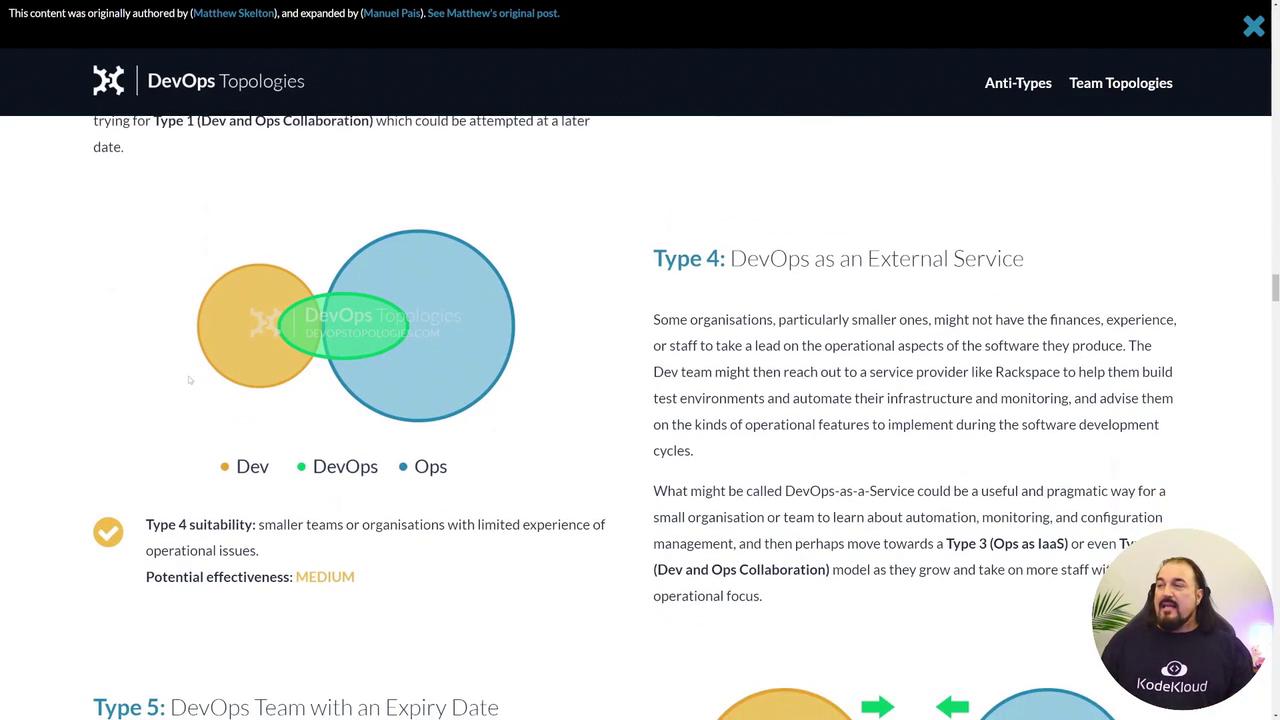
Type 5: Temporary DevOps Bridge
This pattern establishes a temporary DevOps team that acts as a bridge between development and operations until full integration is achieved. Although designed to ease the transition of responsibilities, if not managed properly, it can lead to challenges and potential inefficiencies.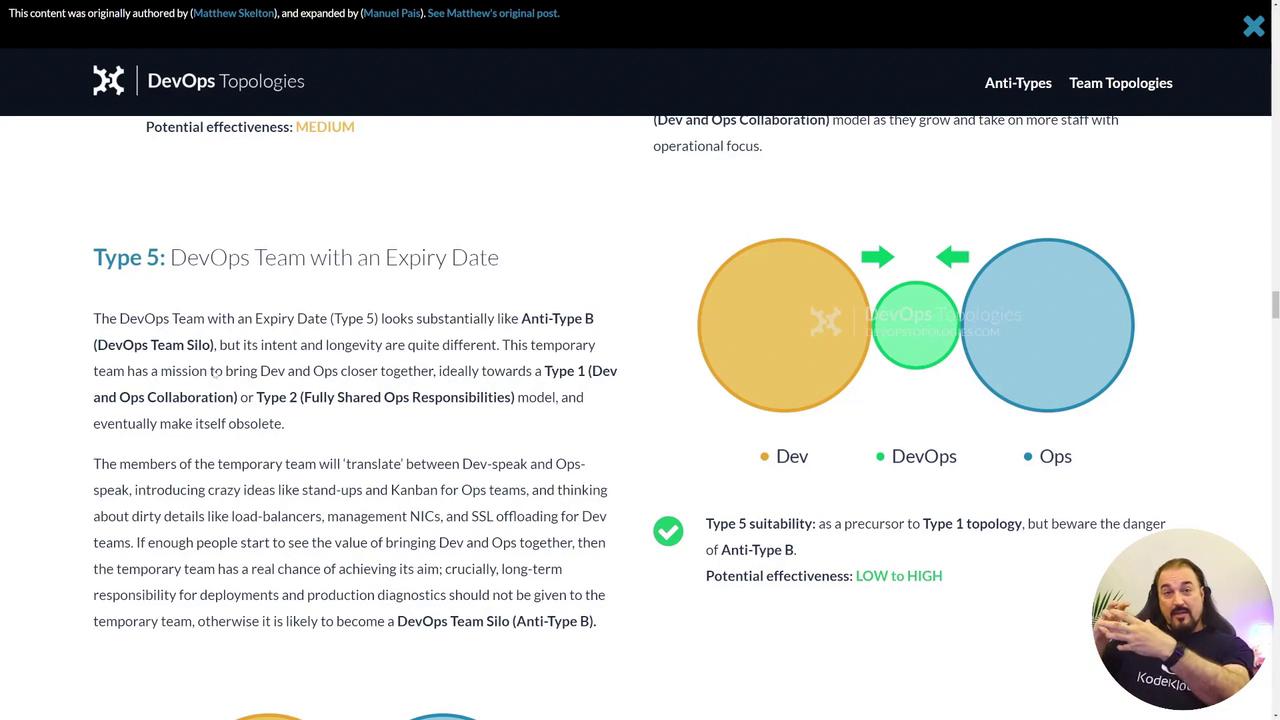
Temporary bridging measures must be carefully planned and executed to avoid becoming a permanent dependency that hinders long-term team integration.
Type 6: Temporary Bridging Teams for Cultural Integration
Similar to Type 5, this approach uses a bridging team to facilitate cultural and operational integration between siloed groups. The goal is to quickly merge diverse teams so that the bridging function eventually becomes unnecessary. Organizations should, however, ensure that these temporary measures do not evolve into a long-term crutch.Type 7: Site Reliability Engineering (SRE) Team Model
Adopting Google’s SRE principles, this model features a dedicated SRE team that shares responsibilities between development and operations. After an initial trial period—typically around six months—once stability is achieved, operational responsibilities are gradually shifted to development teams. This model requires substantial engineering maturity and is best suited for organizations with advanced technical infrastructures.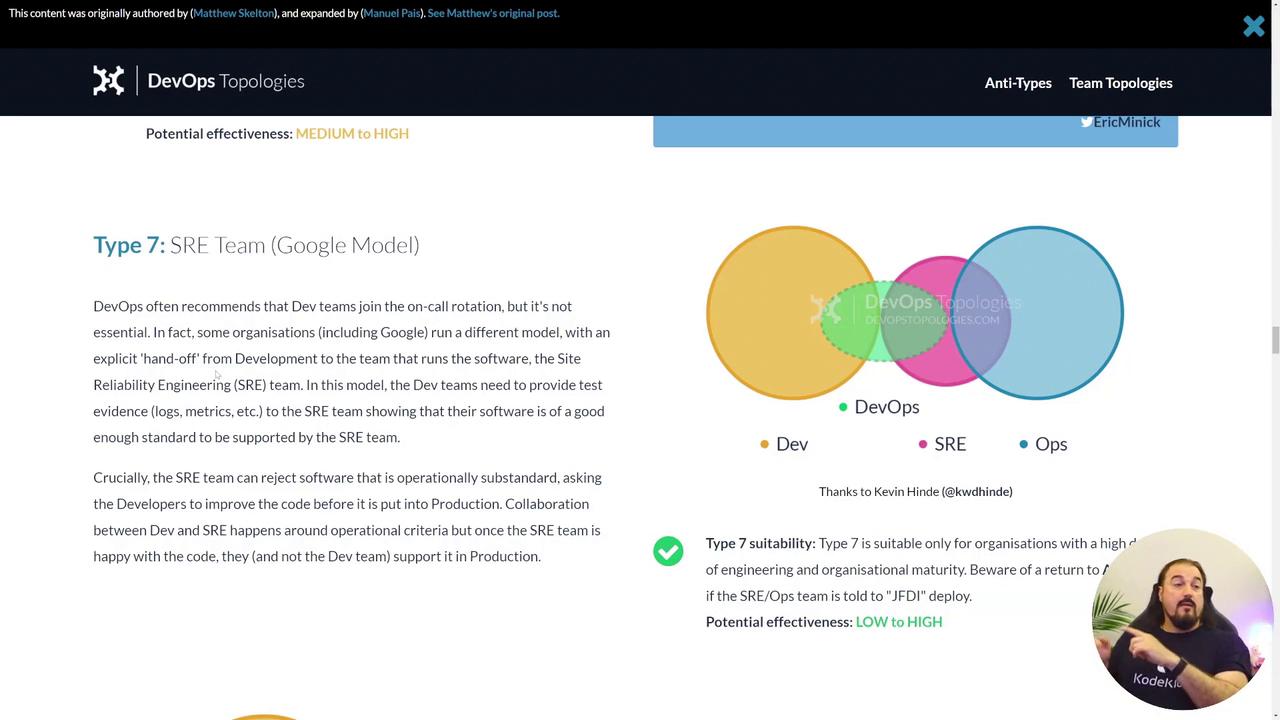
Type 8: Container-First (K8s) Approach
This model centers on containerization technologies, such as Kubernetes, where the entire application environment is encapsulated in containers. While this reduces the need for continuous collaboration between developers and operations, it places greater responsibility on developers to implement robust health checks and monitoring strategies for effective container management.Type 9: Developer and DBA Collaboration
For organizations managing large and complex data sources, it is essential to bridge the gap between developers and database administrators (DBAs). This pattern emphasizes collaboration between those who treat data as a storage medium and DBAs who recognize data’s strategic value. Enhanced cooperation in this area leads to better leverage of data assets and supports data-driven decision making.