From Vision to Action
The process begins with a visionary business leader who secures funding, lays down the foundations, and builds a team. Initially, this team is dedicated to transforming the idea into user-friendly, functional code that evolves into an application. Next, another team member is tasked with deploying the code to a production environment, ensuring that consumers can access and use the application. Simultaneously, a product manager works closely with customers to define a minimally viable product, gathering valuable feedback and incorporating features that truly delight users.Scaling for Reliability and Performance
As the product matures, the need for scalable, reliable, and highly available systems becomes evident. An architect is brought on board to address scalability challenges through proven design patterns, while quality assurance engineers rigorously test the application to guarantee an exceptional user experience. A data engineer is implemented to collect, process, and analyze customer behavior data, guiding essential business decisions. In parallel, a security specialist works to protect the application, its data, and the company’s resources from potential threats.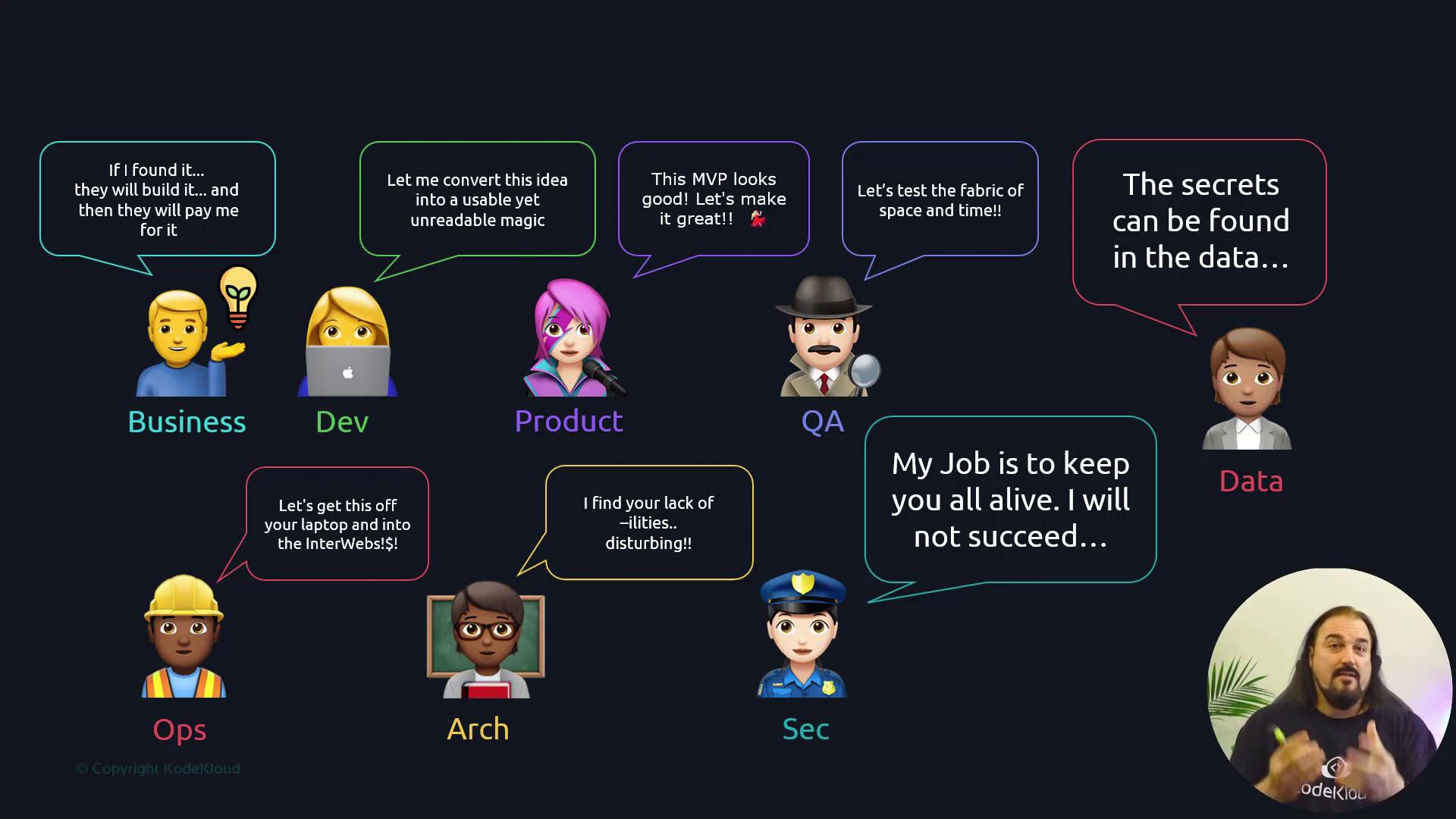
The Communication Breakdown
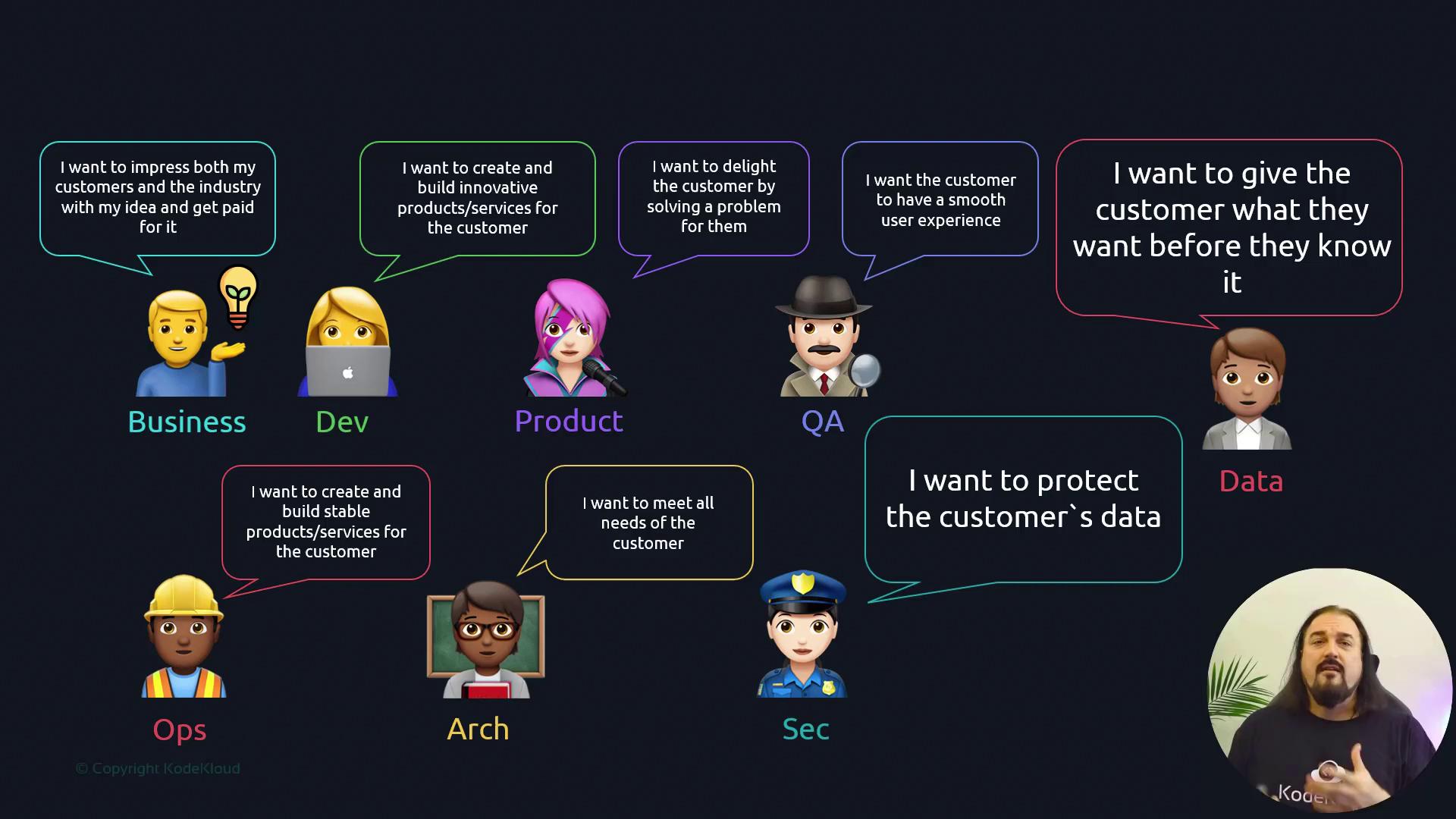
At the outset, effective communication unites everyone—from business leaders to engineers—in a shared objective: delivering value to customers. However, as the team and product expand, maintaining this quality communication becomes increasingly challenging.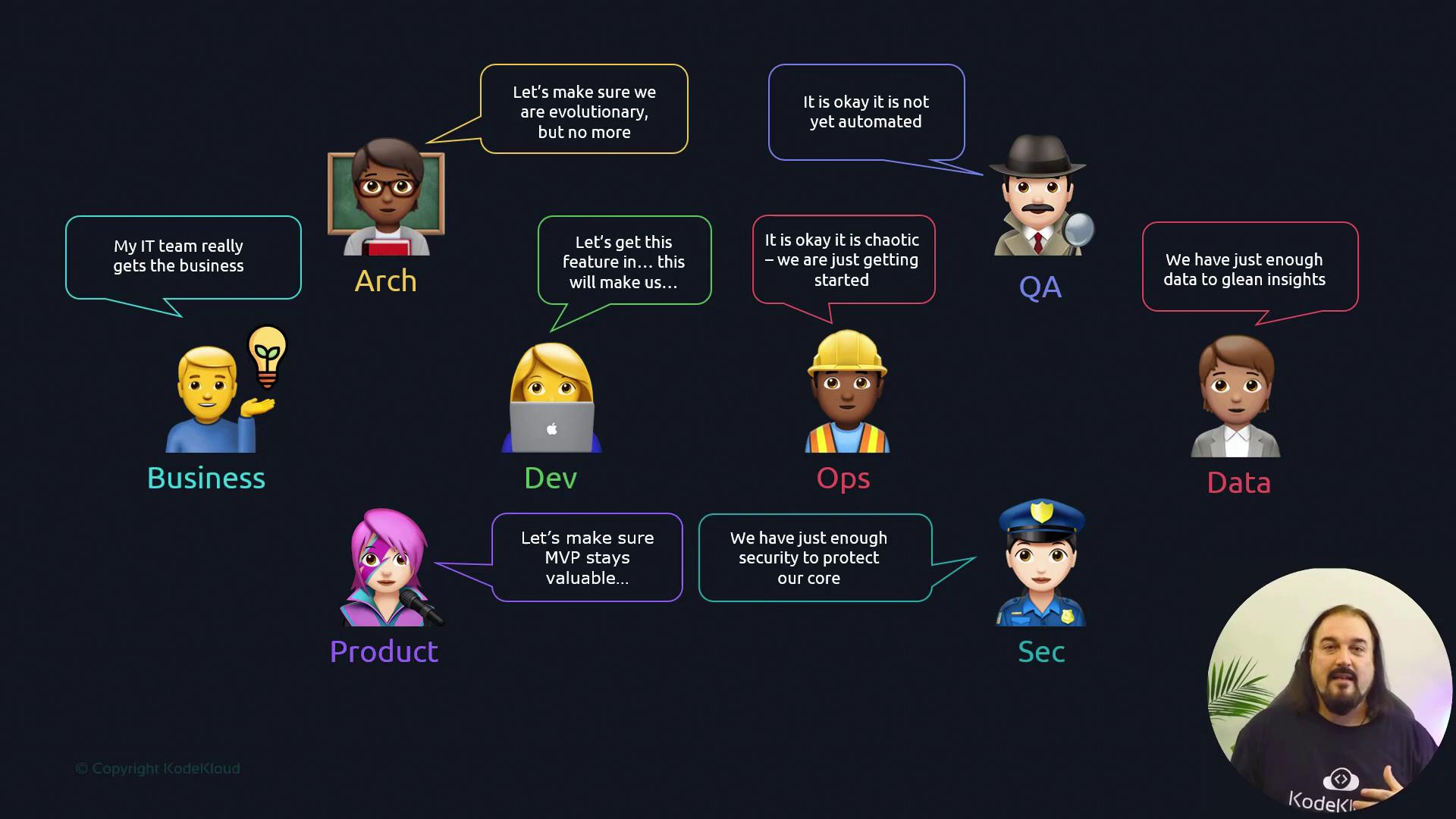
The DevOps Solution
DevOps emerges as a solution in this fragmented landscape. It is a set of practices, cultural philosophies, and technological tools designed to reunite disparate roles, enhance communication, and streamline collaboration. With DevOps, every team member’s perspective is acknowledged, ensuring that the focus remains on the company’s ultimate objective—providing continuous value to the customer.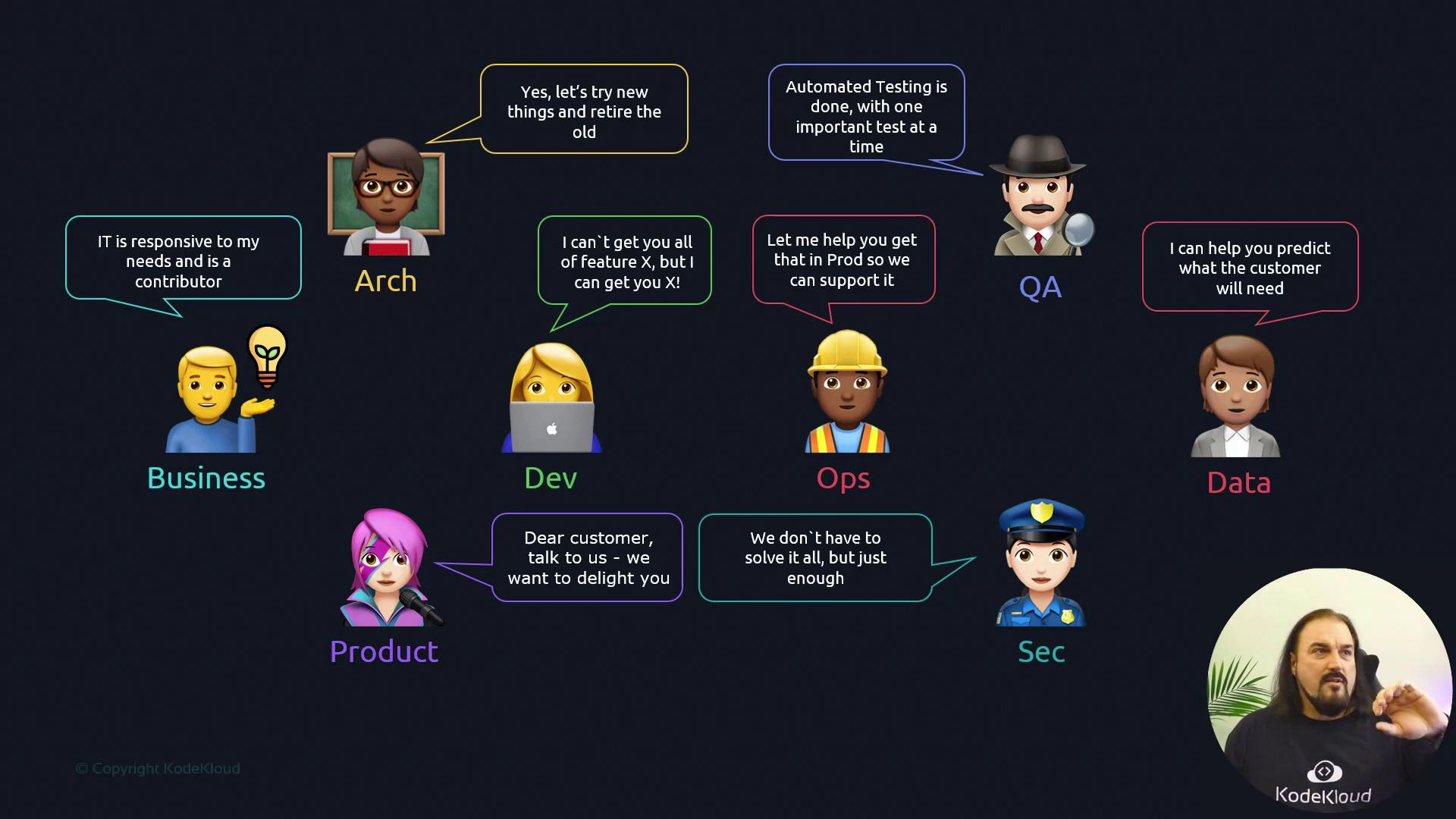
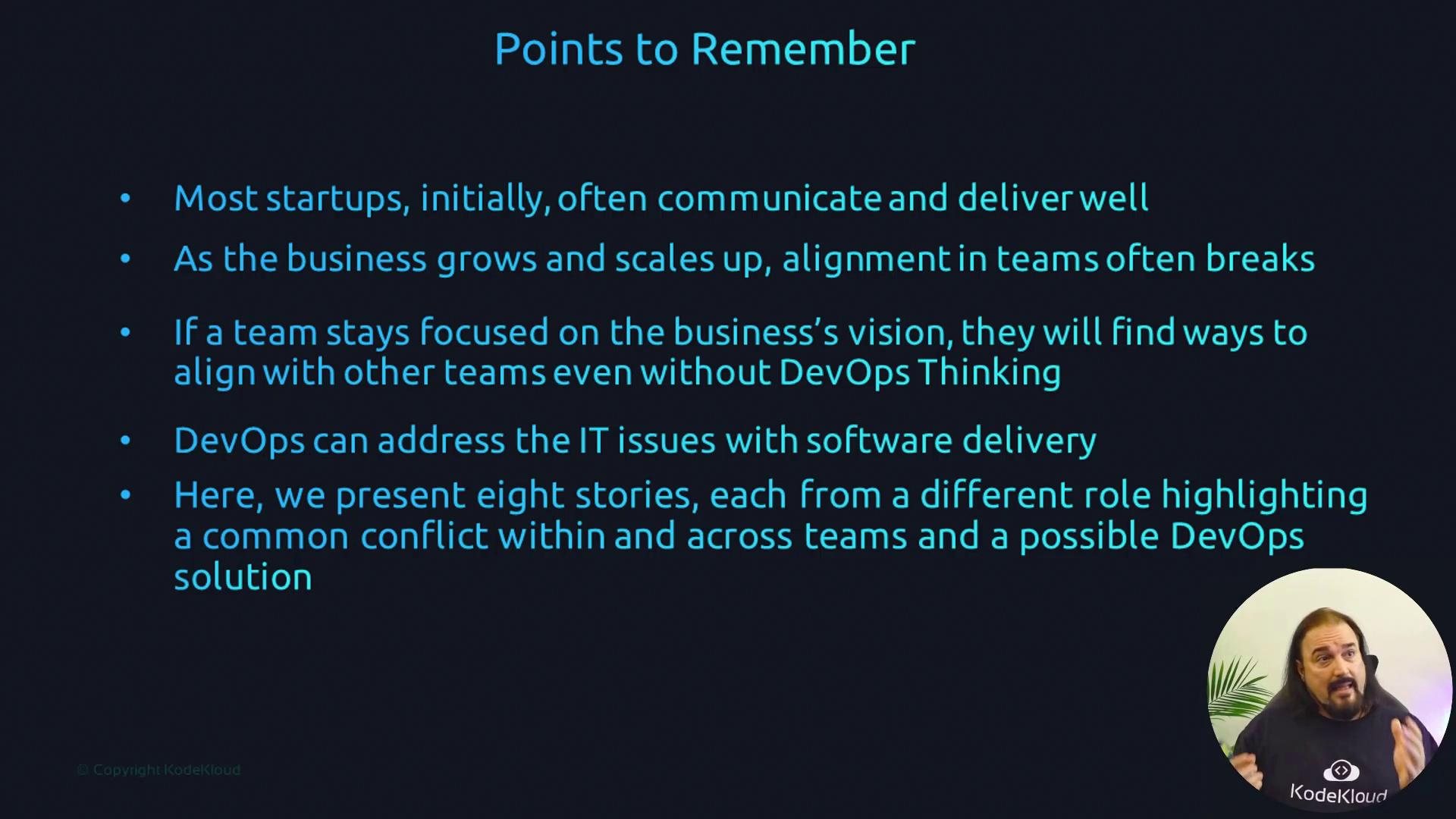
- Startup teams often begin with excellent communication and delivery.
- As businesses scale, maintaining this fluidity can become a challenge, leading to misalignment between teams.
- While some organizations might realign without additional frameworks, DevOps methodologies typically offer significant benefits.