

For additional insights into effective team structuring and organizational design, visit DevOpsTopologies.com which outlines both effective practices and common pitfalls.
Antipattern A: Dev and Ops Silo
The first antipattern occurs when development and operations operate as completely separate teams with minimal collaboration—in essence, developers “throw things over the wall” to operations. This disconnect curtails essential feedback loops, ultimately hindering effective delivery.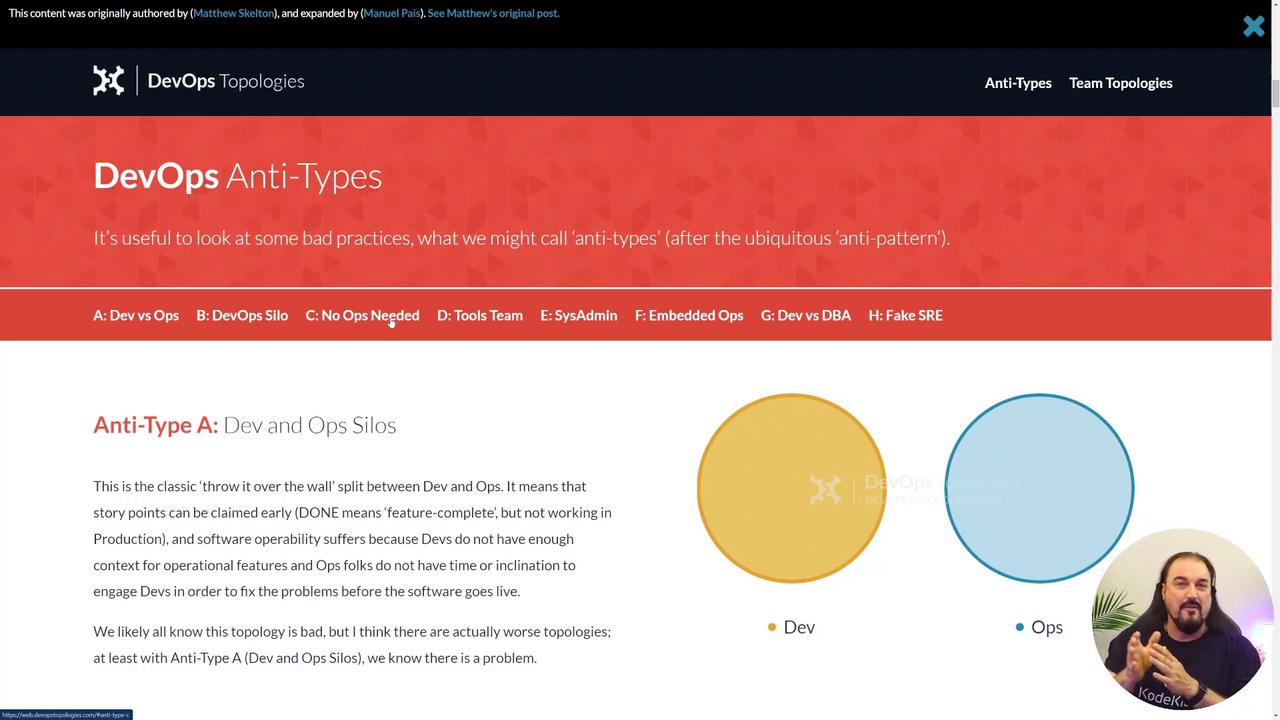
Antipattern B: The Separate DevOps Team
In this scenario, organizations establish distinct teams for developers and operations, and then add an extra DevOps team intended to bridge the gap. This additional layer quickly becomes overwhelmed by trying to mediate conflicting priorities, which increases complexity and reduces overall efficiency.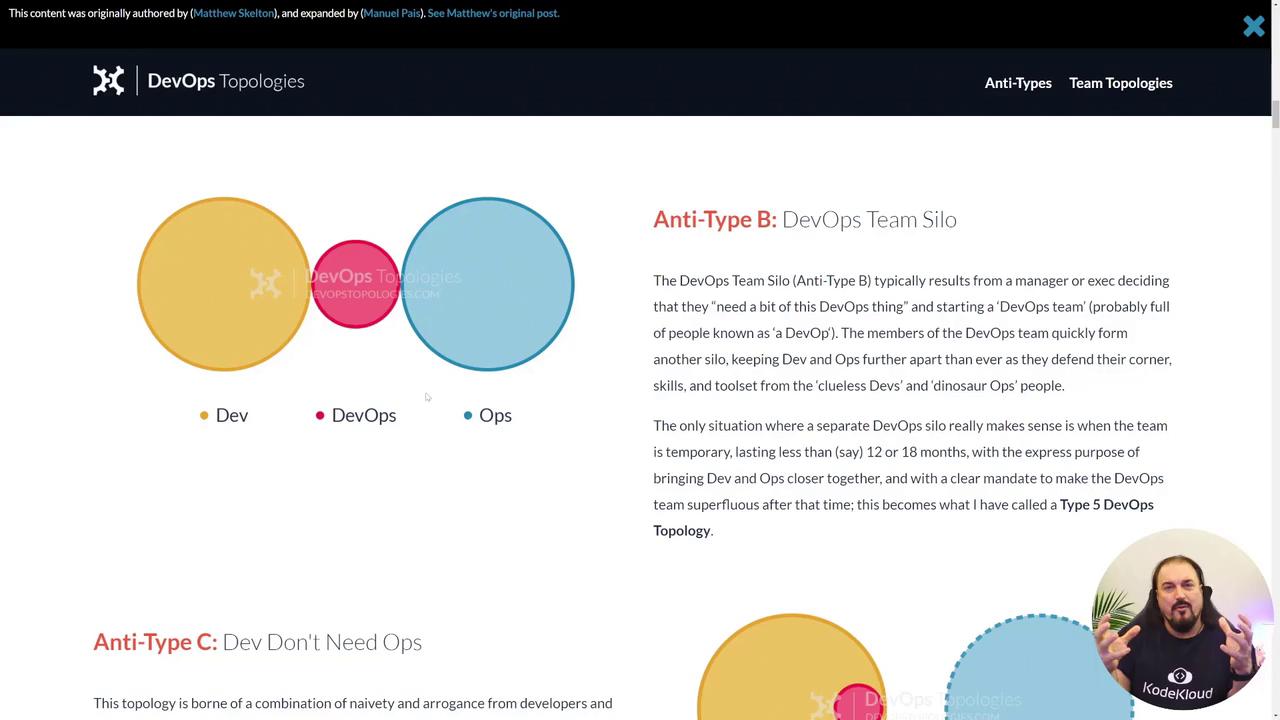
Antipattern C: One-Sided Internalization
This antipattern arises when a development organization attempts to implement DevOps practices without integrating an operations perspective. Although some level of collaboration is possible, ignoring operational challenges reinforces the silo mentality and leads to incomplete integration.Antipattern D: DevOps as a Tools-Only Team
Treating DevOps solely as a tools team isolates the operational component. Even if a dedicated tools team can streamline some processes, the lack of operational input will prevent the team from efficiently advancing production delivery in a collaborative manner.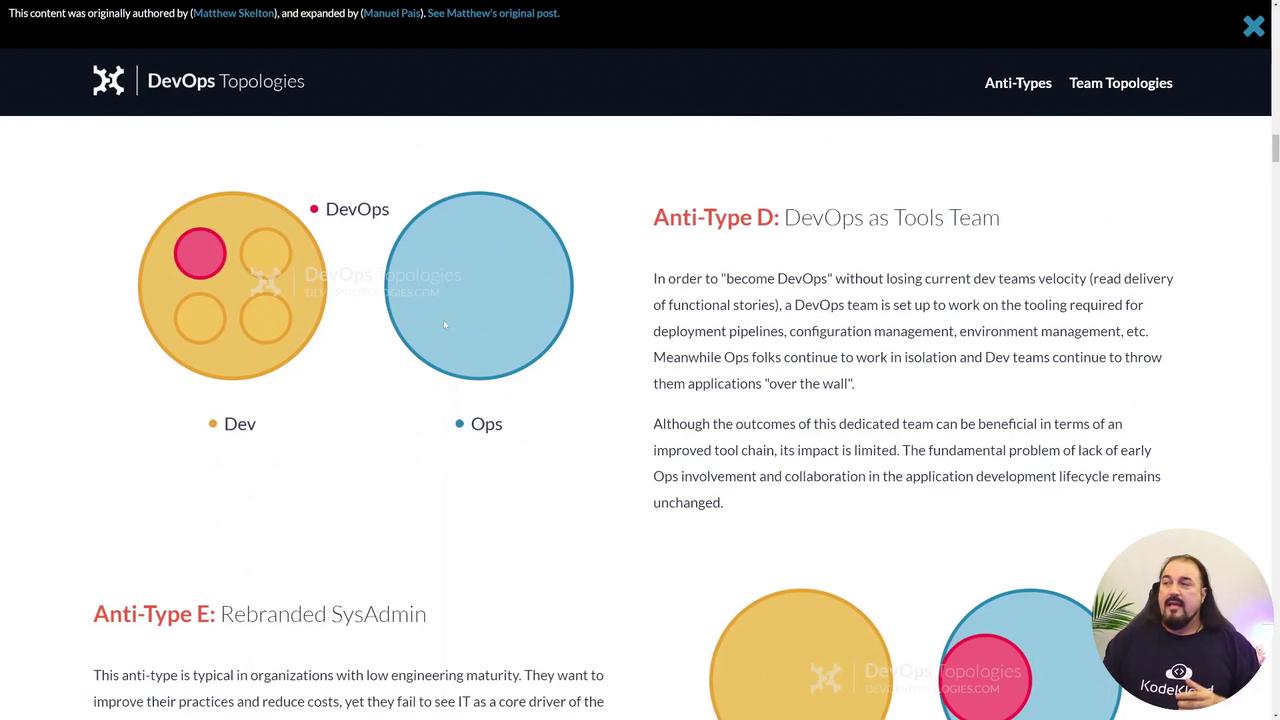
Antipattern E: Rebranded SysAdmins
Often, traditional sysadmins are rebranded as DevOps professionals without altering the deep-rooted siloed mindset. This rebranding does not lead to genuine collaboration between software development and operations teams; it merely repackages the old approach without significant change.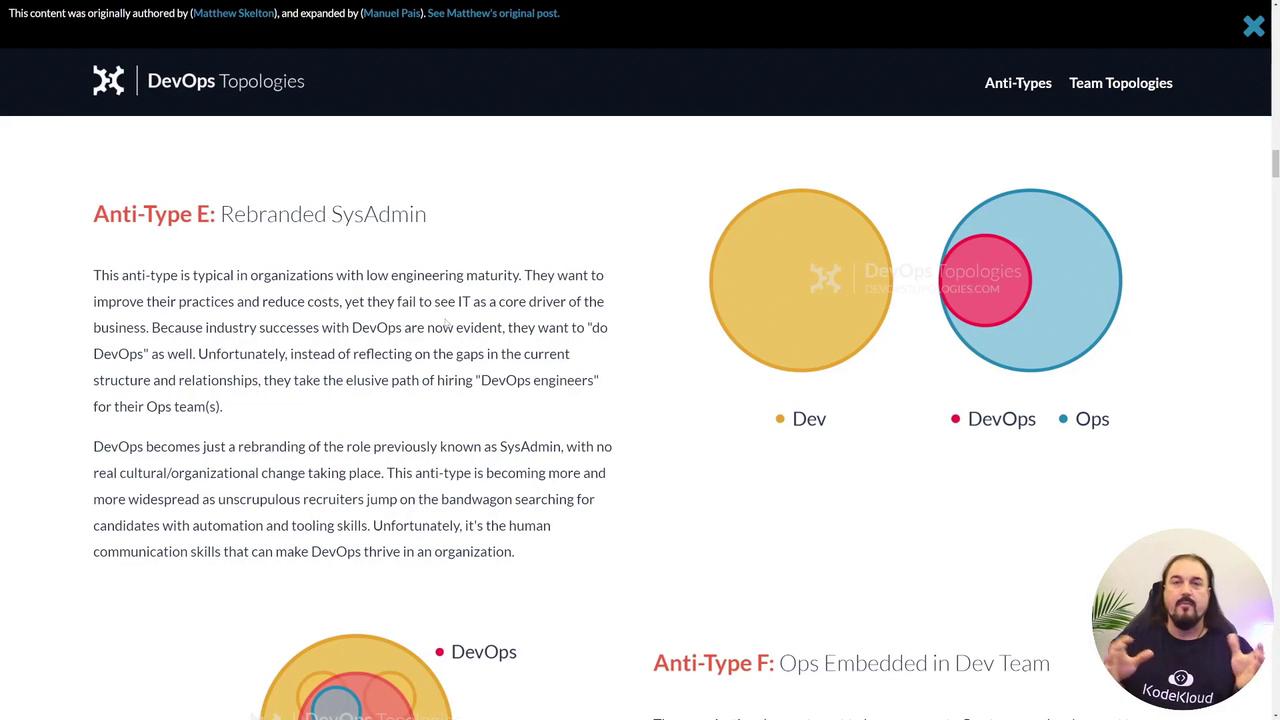
Antipattern F: DevOps Absorbed into Development
When DevOps is fully absorbed into the development branch, the focus often remains solely on software delivery. Development managers tend to prioritize code delivery over essential operational tasks such as maintenance, patching, or security. While integration might evolve over time, initially placing all responsibility under development can compromise true operational excellence.Antipattern G: Database Administrator (DBA) Silos
Embedding DBAs exclusively within operations reinforces inter-team silos and can obstruct rapid, secure deployment processes. This separation hinders the necessary cross-team collaboration required for a smooth DevOps workflow.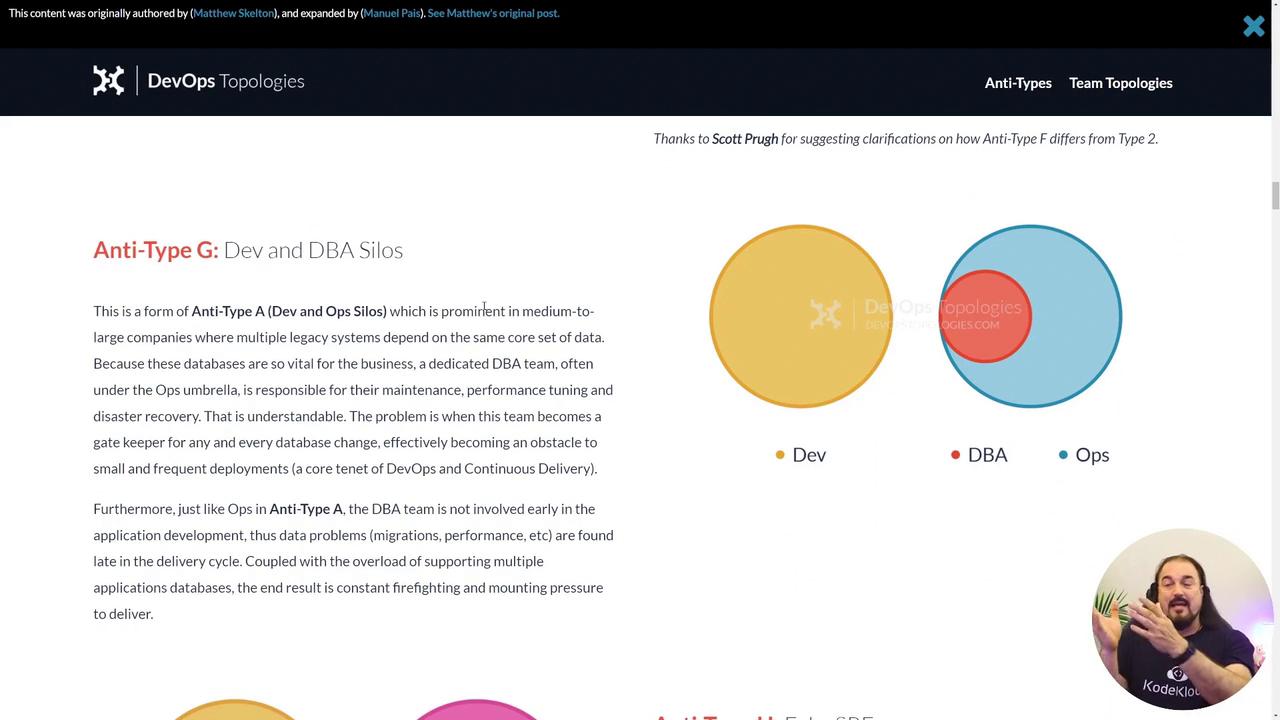
Antipattern H: The “Fake” SRE
The final antipattern involves rebranding undertrained sysadmins as site reliability engineers (SREs) without truly adopting SRE principles. Simply renaming the team, without cultural or procedural transformation, fails to deliver the benefits of genuine SRE practices.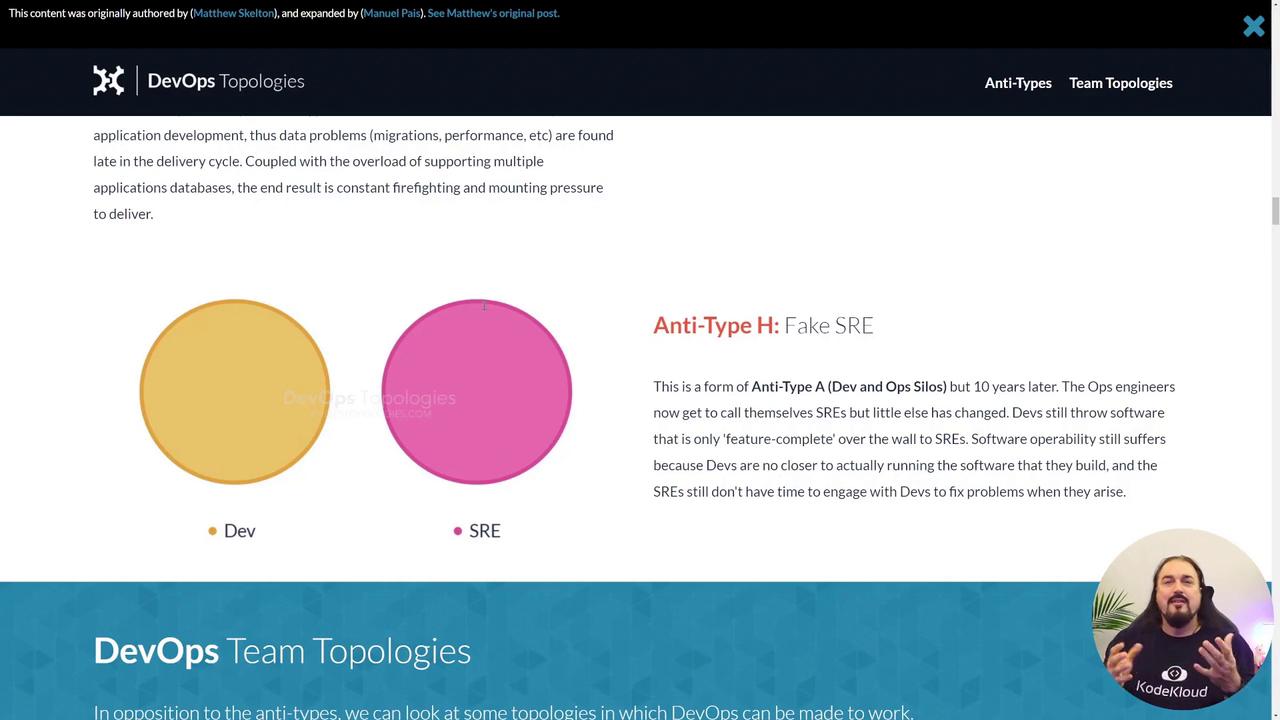
Avoid falling into these pitfalls when structuring your organization’s teams. Recognizing and addressing these antipatterns early can set the stage for a more resilient and efficient DevOps culture.