

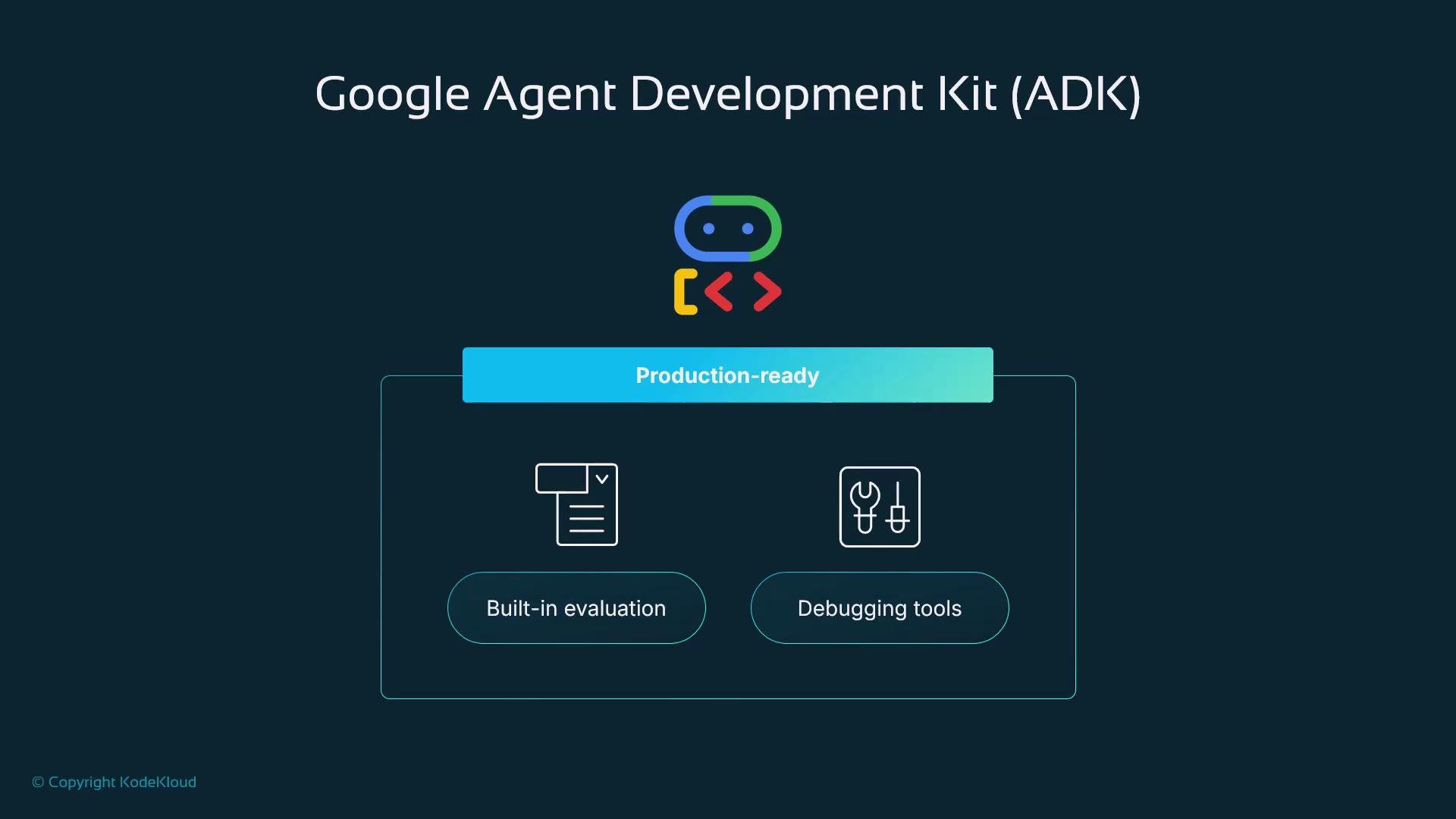
ADK is vendor-agnostic: although it integrates deeply with Google Cloud, it also works equally well on other clouds such as Azure and AWS.
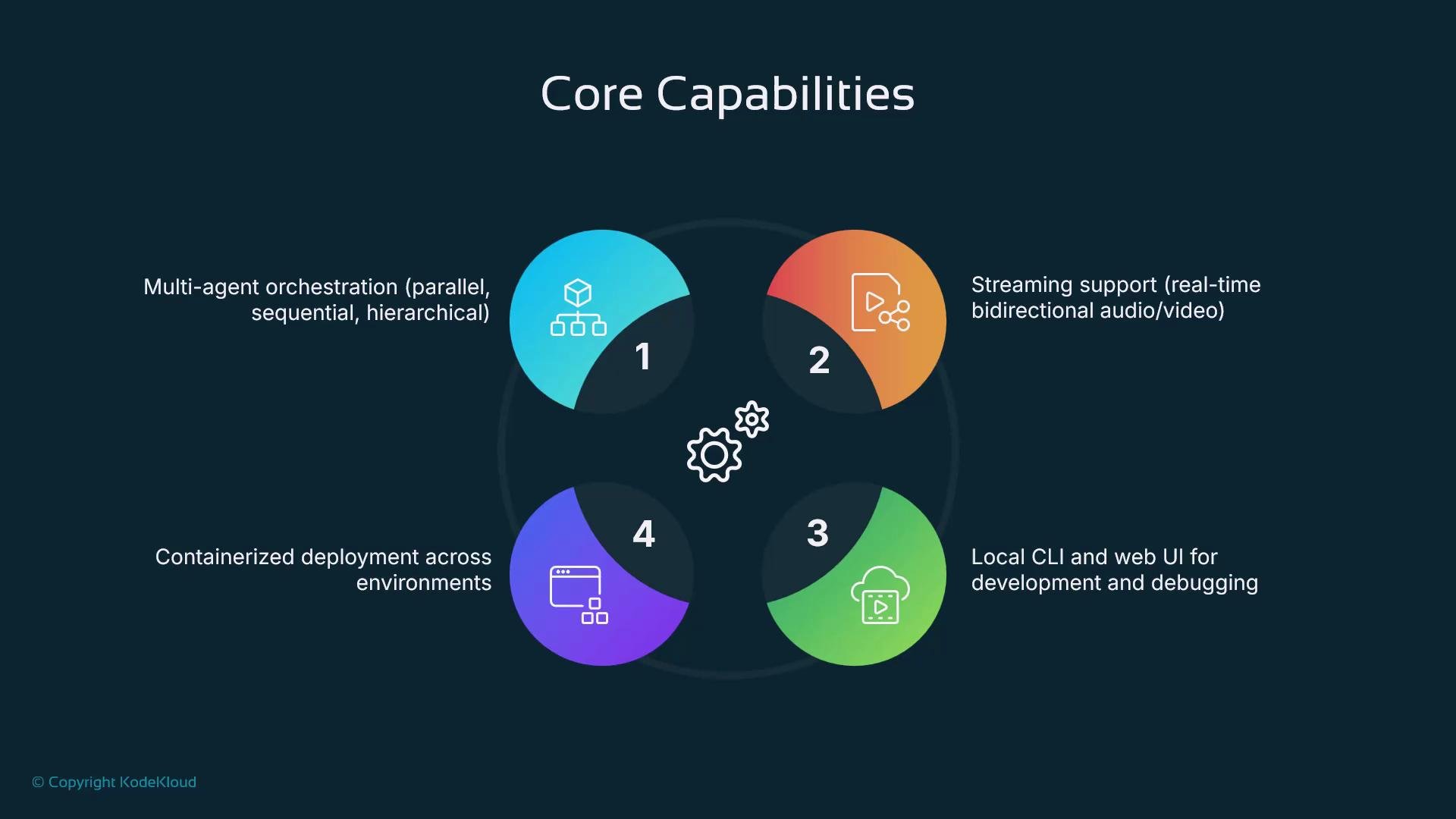
- Multi-agent orchestration: support for parallel, sequential, and hierarchical coordination patterns across agents.
- Streaming support: real-time bidirectional streaming for audio; video capabilities are available depending on integration and tooling choices.
- Local developer tools: CLI and web UI for iterative development, debugging, and evaluation workflows.
- Containerized deployment: build once and deploy across environments (Cloud Run, GKE, Compute Engine) with scaling and resilience in mind.
Because ADK targets enterprise adoption, it emphasizes scale, observability, and production readiness from the start.
ADK integrates deeply with Google Cloud Platform (GCP) services and provides prebuilt connectors for common enterprise systems. Built by Google, ADK has native connectivity to Compute, Cloud Run, GKE, BigQuery, AlloyDB, Cloud Spanner, API management (Apigee), and more. On the enterprise side, ADK offers connectors and adapters for systems such as Salesforce, Workday, and SAP, enabling automation and cross-system workflows.
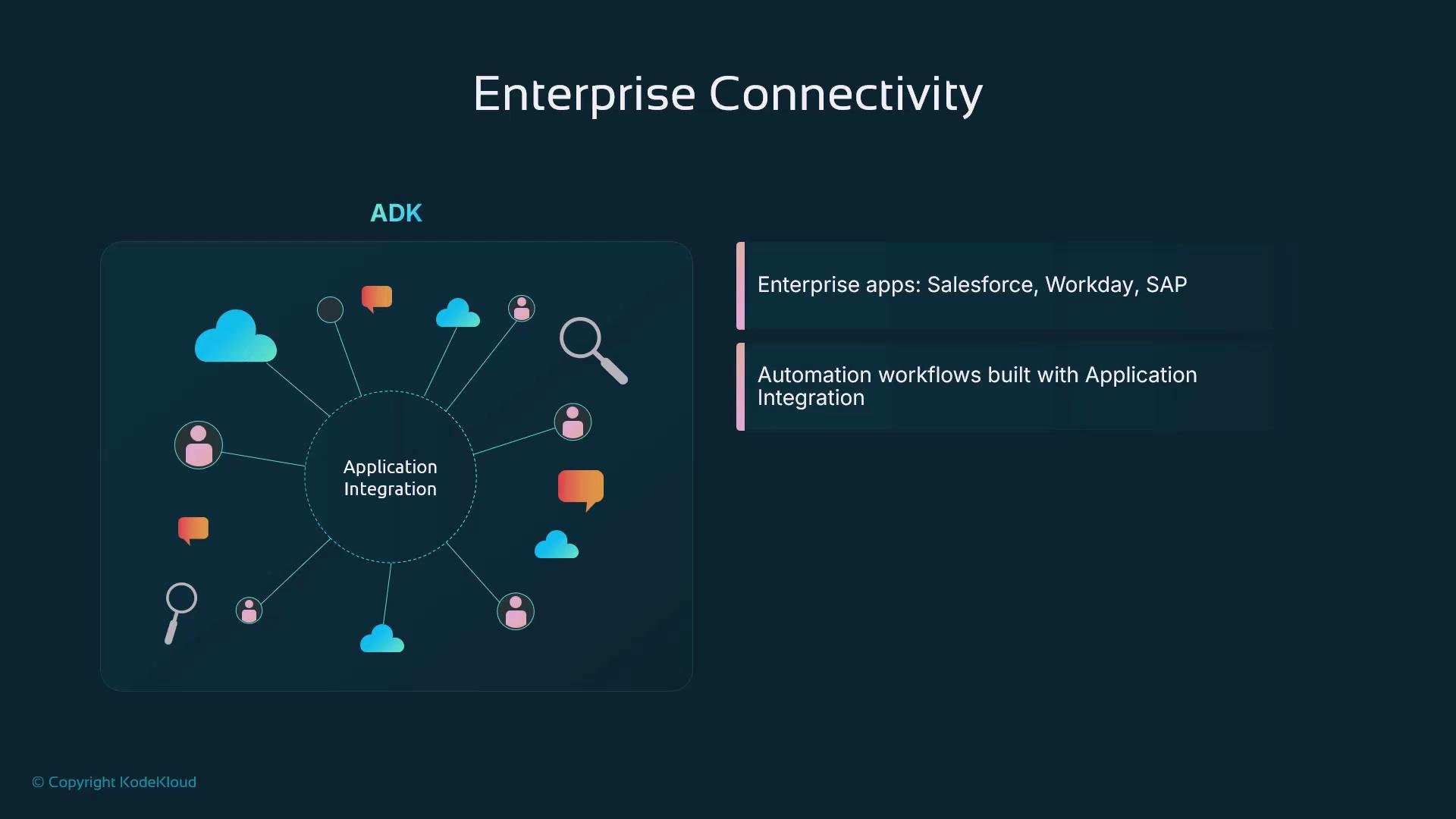
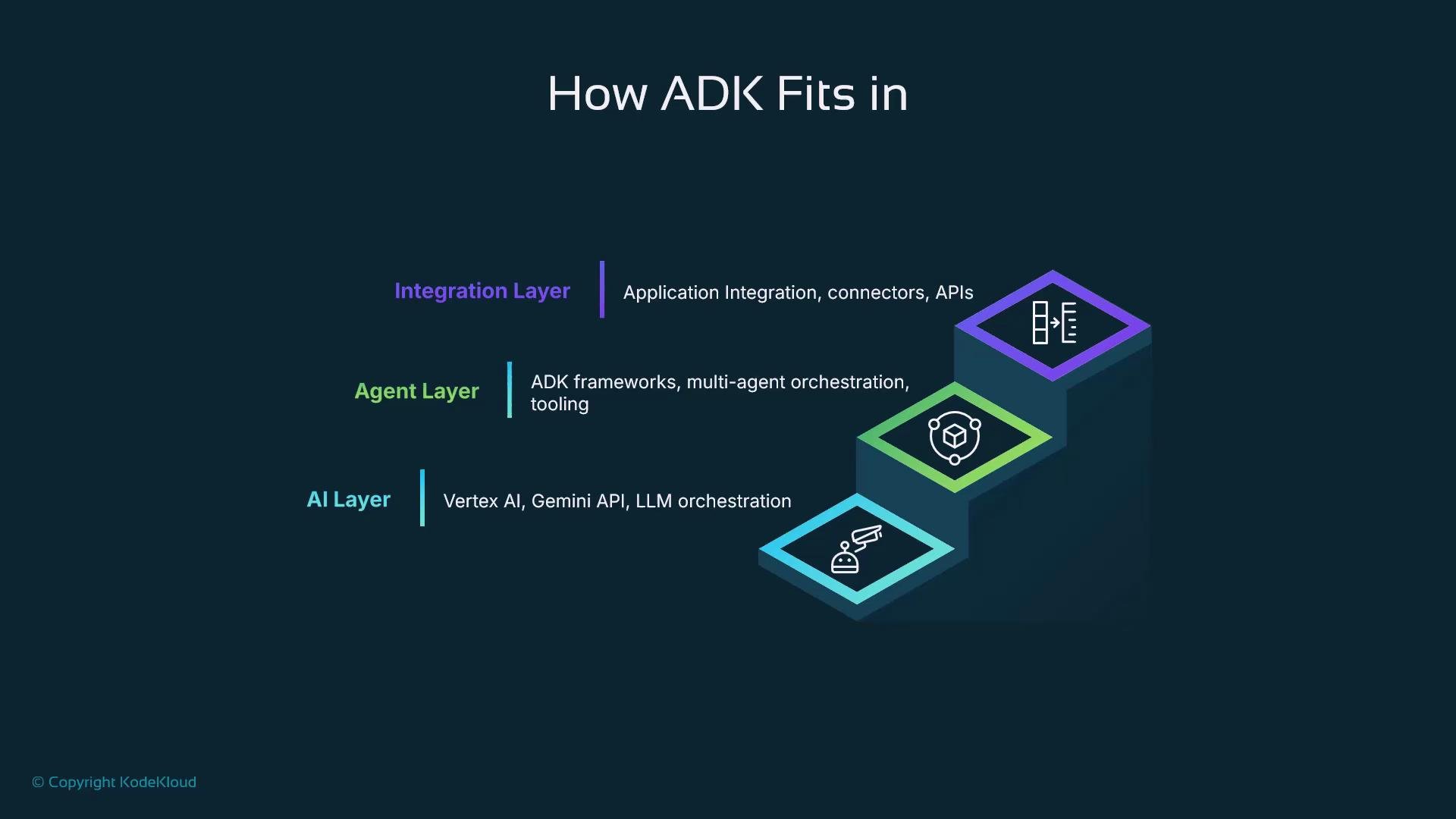
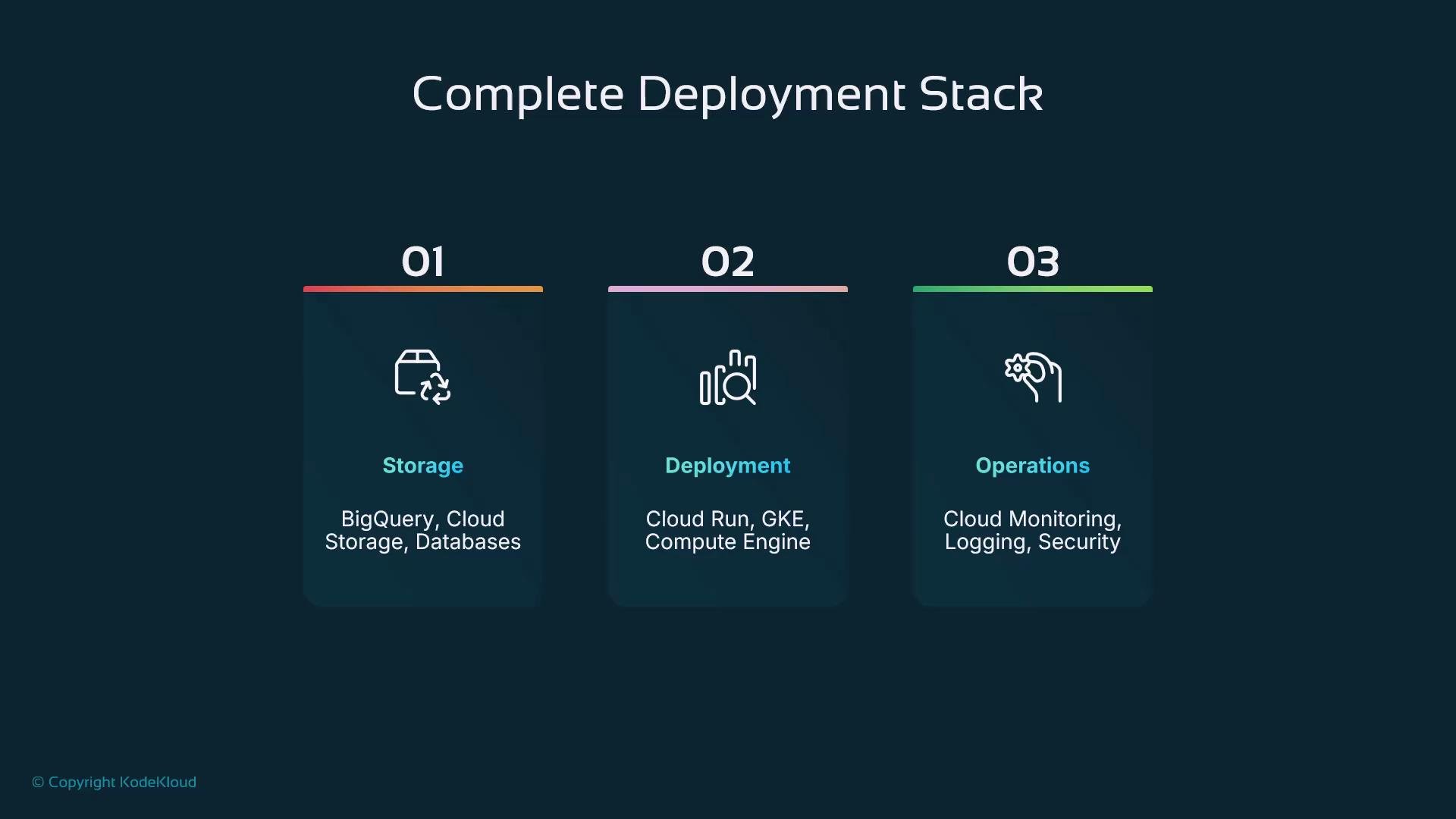
For deployment and operations, ADK uses the standard GCP stack: BigQuery and Cloud Storage for data, Cloud Run/GKE/Compute Engine for hosting, and Cloud Monitoring/Logging and security tooling for observability and governance. These integrations make it straightforward to embed agents in enterprise pipelines and monitoring setups.
Why ADK matters
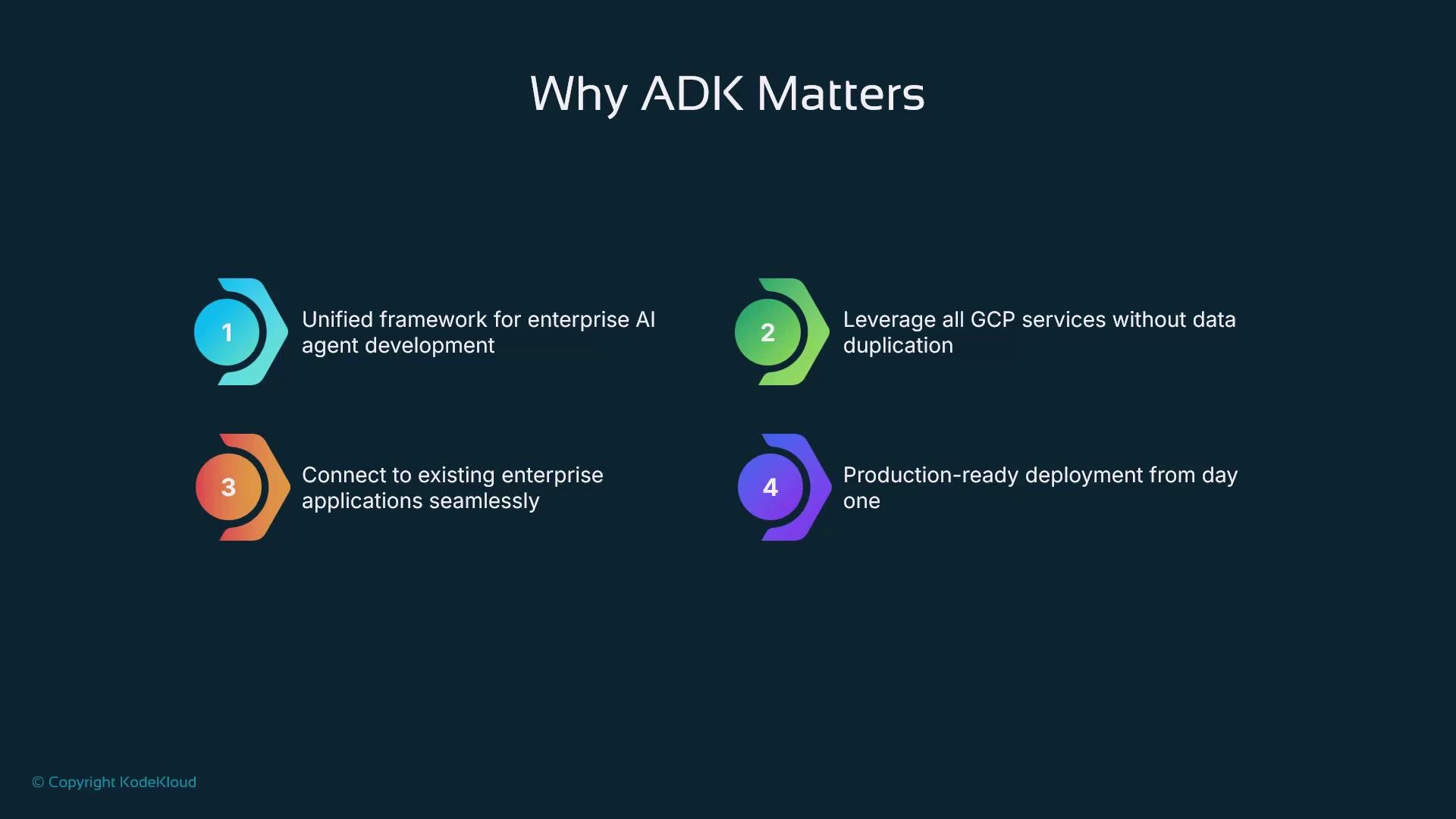
- Unified framework: a consistent development model for agent-based applications across teams.
- Efficient use of cloud services: connect to GCP services without unnecessary data duplication where possible.
- Enterprise connectivity: prebuilt connectors and APIs to integrate with existing applications and workflows.
- Production-ready: built-in testing, evaluation, and deployment patterns informed by Google’s internal agent experience.
- Local development and iterative debugging using the ADK CLI and web UI.
- Built-in evaluation and testing to validate agent behavior, performance, and safety constraints.
- Packaging and containerized deployment to Cloud Run, GKE, or other compute targets using ADK tooling and CI/CD best practices.
- Observability and governance with Cloud Monitoring, Logging, and security integrations.
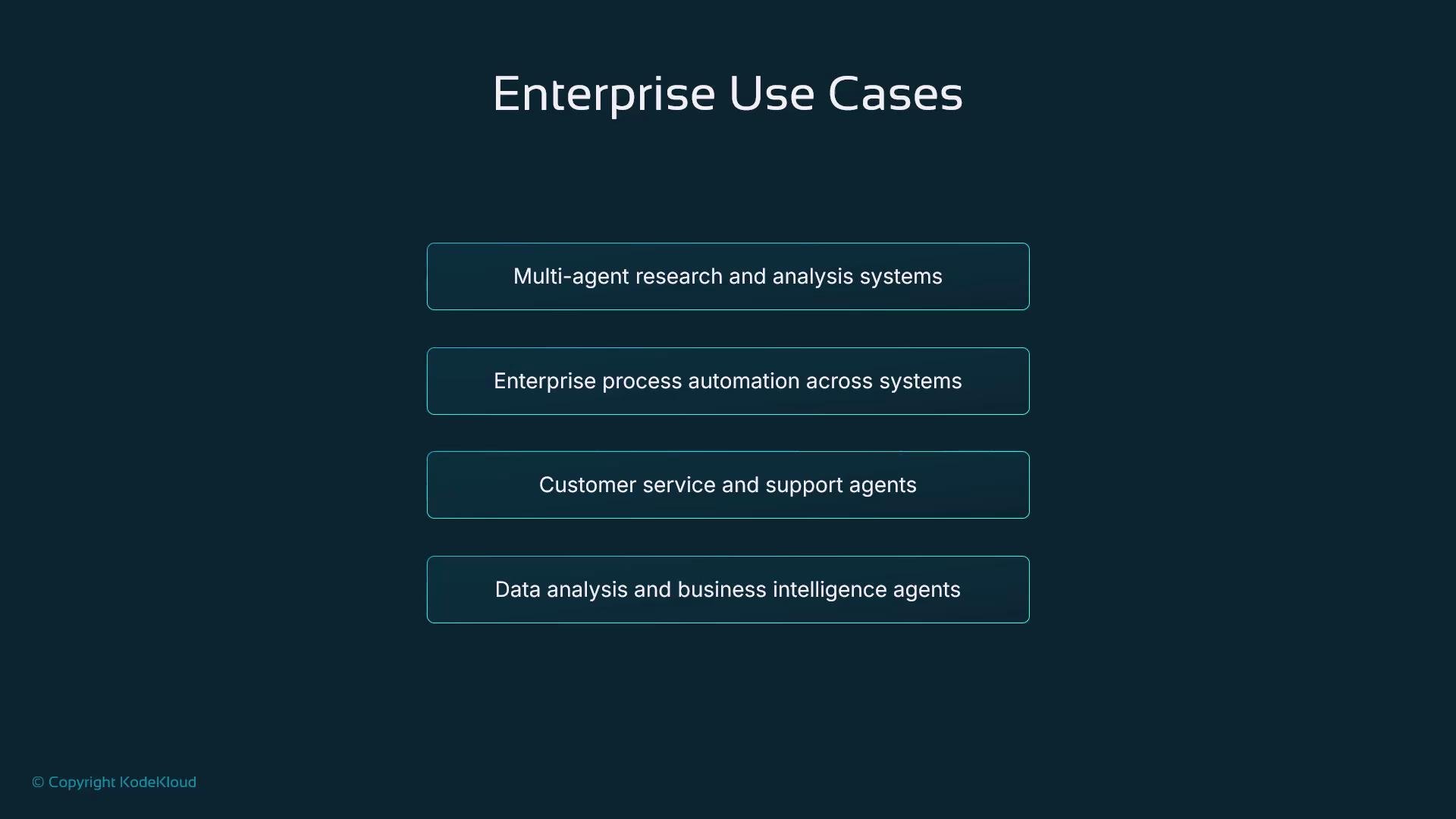
- Multi-agent research and analysis systems that coordinate data retrieval, enrichment, and synthesis.
- Enterprise process automation connecting disparate systems and workflows (e.g., HR, finance, CRM).
- Customer service and support agents delivering reliable, explainable interactions.
- Data analysis and business intelligence agents that query enterprise datasets and synthesize insights.
- ADK documentation: https://google.github.io/adk-docs
- Vertex AI: https://cloud.google.com/vertex-ai
- BigQuery: https://cloud.google.com/bigquery
- Cloud Run: https://cloud.google.com/run
- GKE: https://cloud.google.com/kubernetes-engine