Istio authorization manages inbound traffic and secures service communication through flexible policies, enabling fine-grained access control between services.
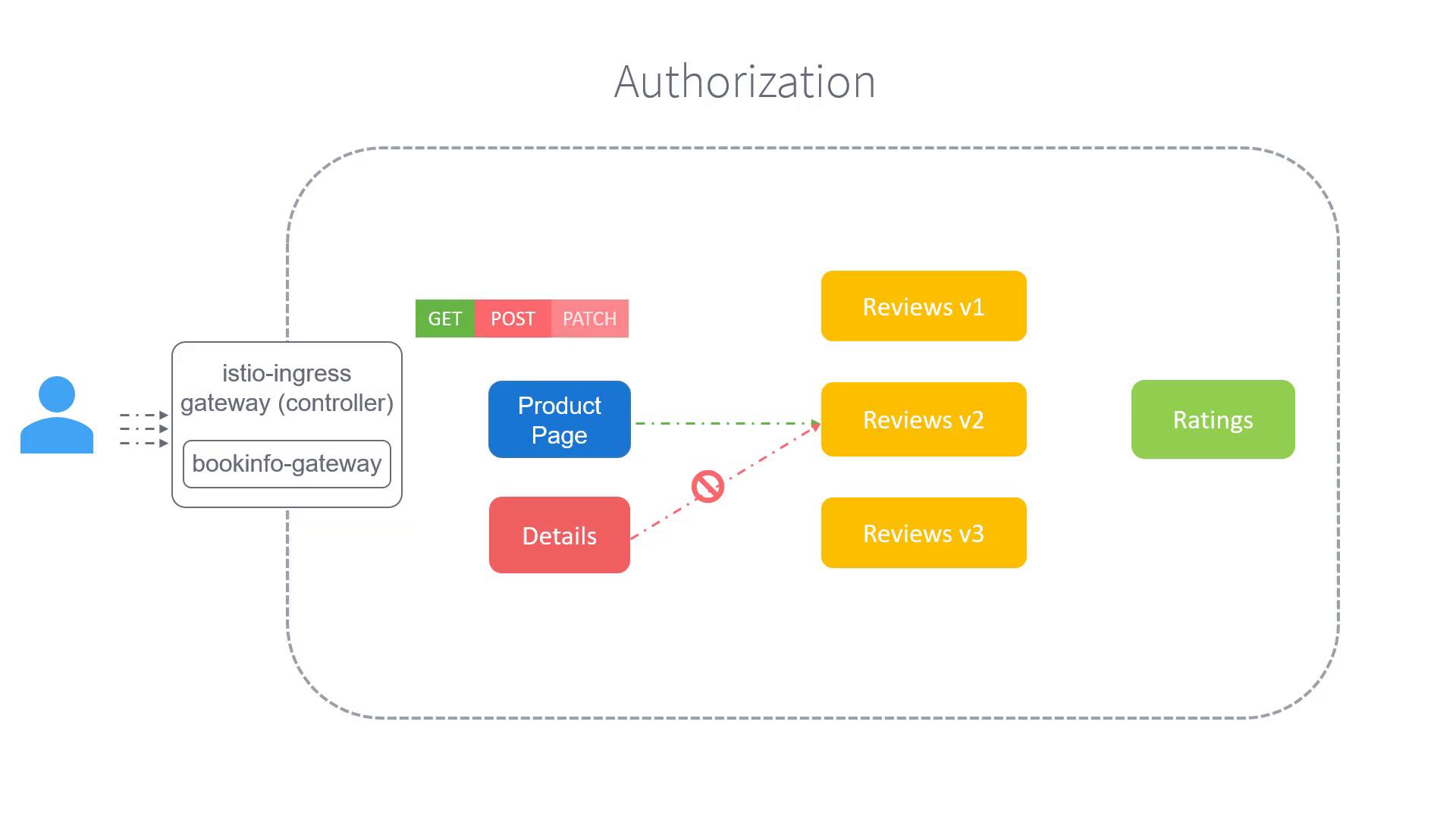
Istio authorization provides a flexible, robust mechanism to manage inbound traffic and secure communication between services. By leveraging authorization policies, you can control which services are permitted to interact with one another—this is commonly referred to as east-west traffic control. When coupled with authentication policies, the system not only secures end-user and service-to-service communications but also enforces fine-grained access control.For instance, you may want a paid product service to access a reviews service exclusively via GET requests while denying POST or UPDATE operations. Likewise, you might need to prevent unauthorized services, such as a product page service, from attempting to modify reviews using POST calls.
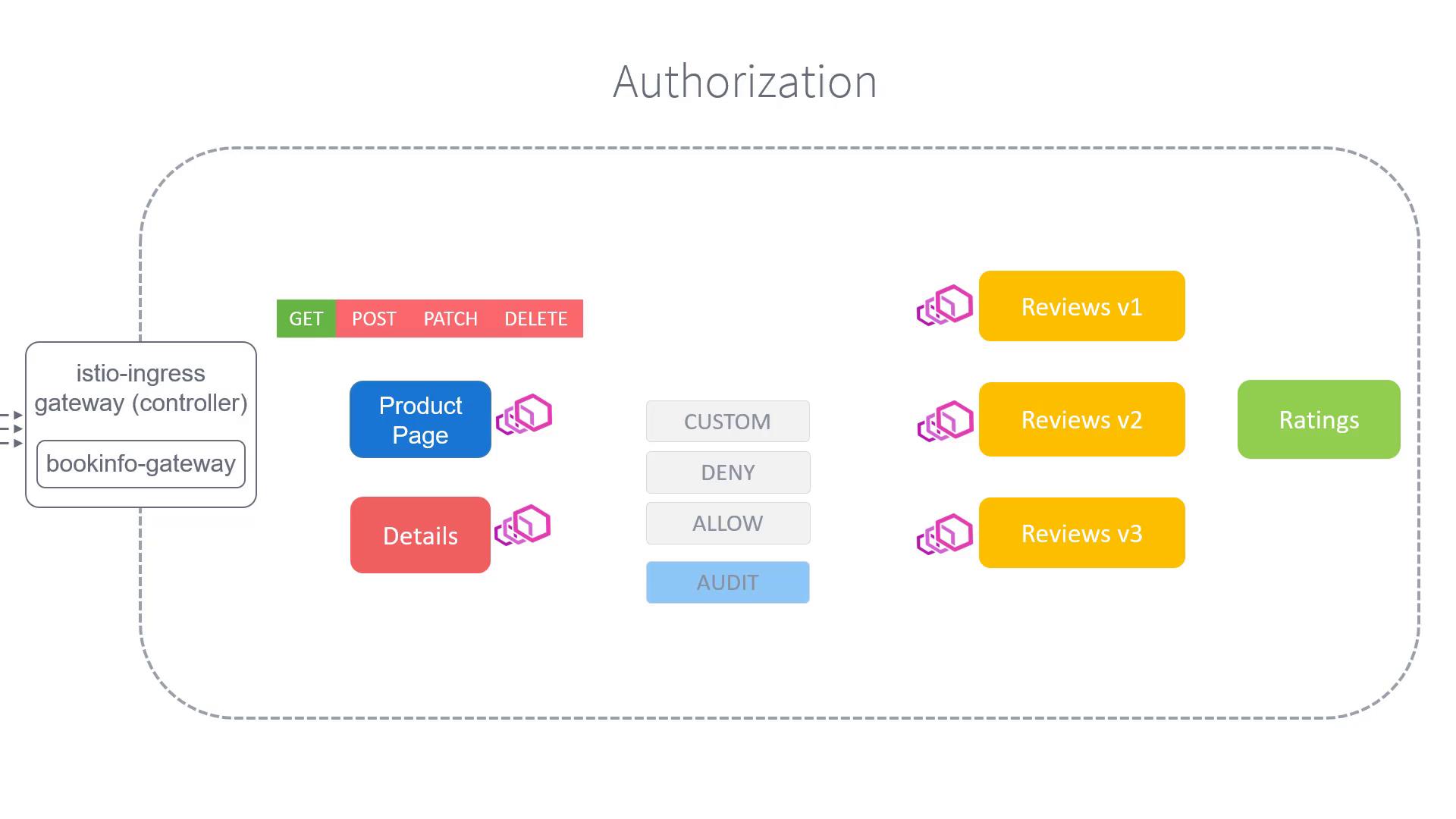
Istio seamlessly integrates authorization mechanisms into the Envoy Proxy, meaning no modifications are required in your application services. When a request is received, the Envoy Proxy’s authorization engine checks the request context against the defined policies and decides whether to allow or block the request based on the following actions:
Allow: Permits the request.
Deny: Blocks the request.
Custom: Enables extension of request handling with user-defined logic.
Authorization policies can also be configured to audit requests. When a request matches a specific rule, it is logged for auditing, offering valuable insights for security monitoring.
Consider the following example of an Authorization Policy. In this scenario, the policy is defined with the kind set to AuthorizationPolicy and configured to block all POST requests originating from the “bar” namespace to the “bookinfo” namespace.
Ensure that your authorization policies are carefully tested in a staging environment before deploying them to production. Incorrect configurations may inadvertently block legitimate traffic.
In this lesson, we’ve explored the fundamentals of Istio authorization. By structuring policies effectively, you can control access between services without modifying your application code. This method not only strengthens your microservices security but also simplifies the enforcement of access control policies across your service mesh.For more detailed information, consider exploring the following resources: