This tutorial covers configuring traffic splitting in Istio using Destination Rules and Virtual Services to manage service endpoint routing.
In this tutorial, we will create new subsets using Destination Rules and route traffic to grouped service endpoints. You will learn how to update your Istio configuration with custom labels, modify the Virtual Services, and manage traffic distribution between different versions of the reviews service.
Initially, the reviews service has three subsets defined by version labels: V1, V2, and V3. The corresponding Virtual Service configuration routes traffic based on these subsets. However, there may be scenarios when you need to group different deployments under a new rule or label. In our example, we introduce a new label (test: beta) to group deployments and update the existing configurations accordingly.
Ensure that any changes to labels also reflect in the corresponding Destination Rule and Virtual Service configurations to avoid routing mismatches.
First, we add the new label to our application. The new label (test: beta) allows us to create additional subsets without affecting the initial routing for Version V1. In this example, we copy reviews.yml from the samples directory and proceed to update it.
After updating the reviews service, add the same label to the Version V2 and Version V3 deployments. For instance, the deployment for Version V3 with the updated label is as follows:
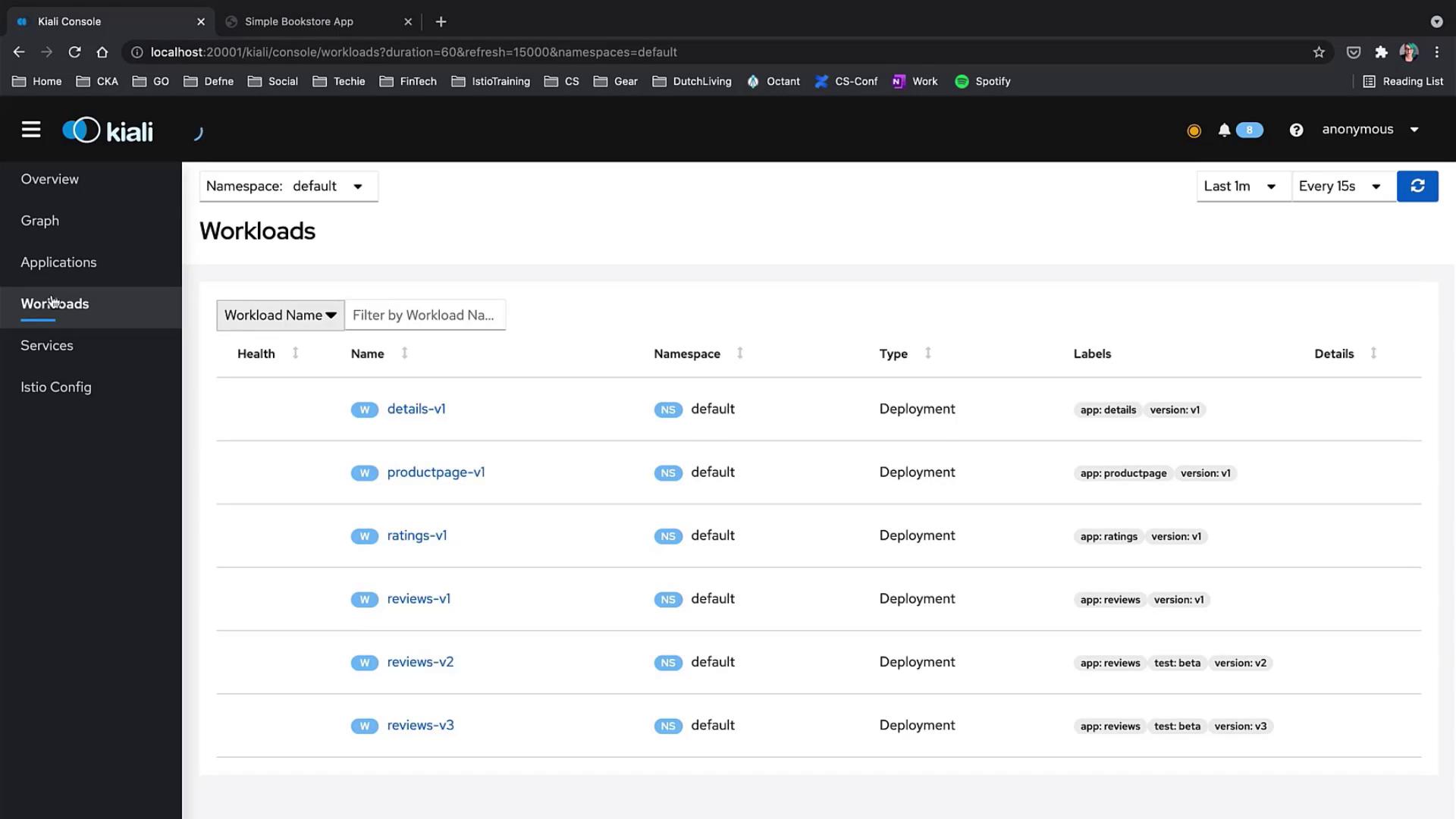
Notice that the new test: beta label appears only in Version V2 and Version V3, while Version V1 remains unchanged. In the Applications page, you can now observe the service reflecting the new label.
When you update the Virtual Service, the subset references must match the updated Destination Rule. The original Virtual Service configuration is as follows:
Now that the configurations have been updated, you can control the percentage of traffic routed to each subset. For a scenario where the new subset receives only 10% of the traffic, use this configuration:
After testing, you might observe that Reviews V1 handles most of the traffic while the new subset appears less frequently. To experiment with dynamic traffic distribution, adjust the weights—for example, giving V1 and the test subset equal distribution:
Next, update the Destination Rule to include a traffic policy for the new test subset. Specify the label for the test group and apply a random load balancing strategy:
By leveraging Destination Rules and Virtual Services, Istio provides a powerful mechanism to manage and control traffic routing in your microservices architecture. This tutorial demonstrated how to add a new grouping label, update the relevant configurations, and control traffic distribution between different versions of the reviews service. With these techniques, you can enhance your service mesh architecture and experiment with advanced traffic management strategies.For additional details on Istio and traffic management strategies, refer to the Istio Documentation.