

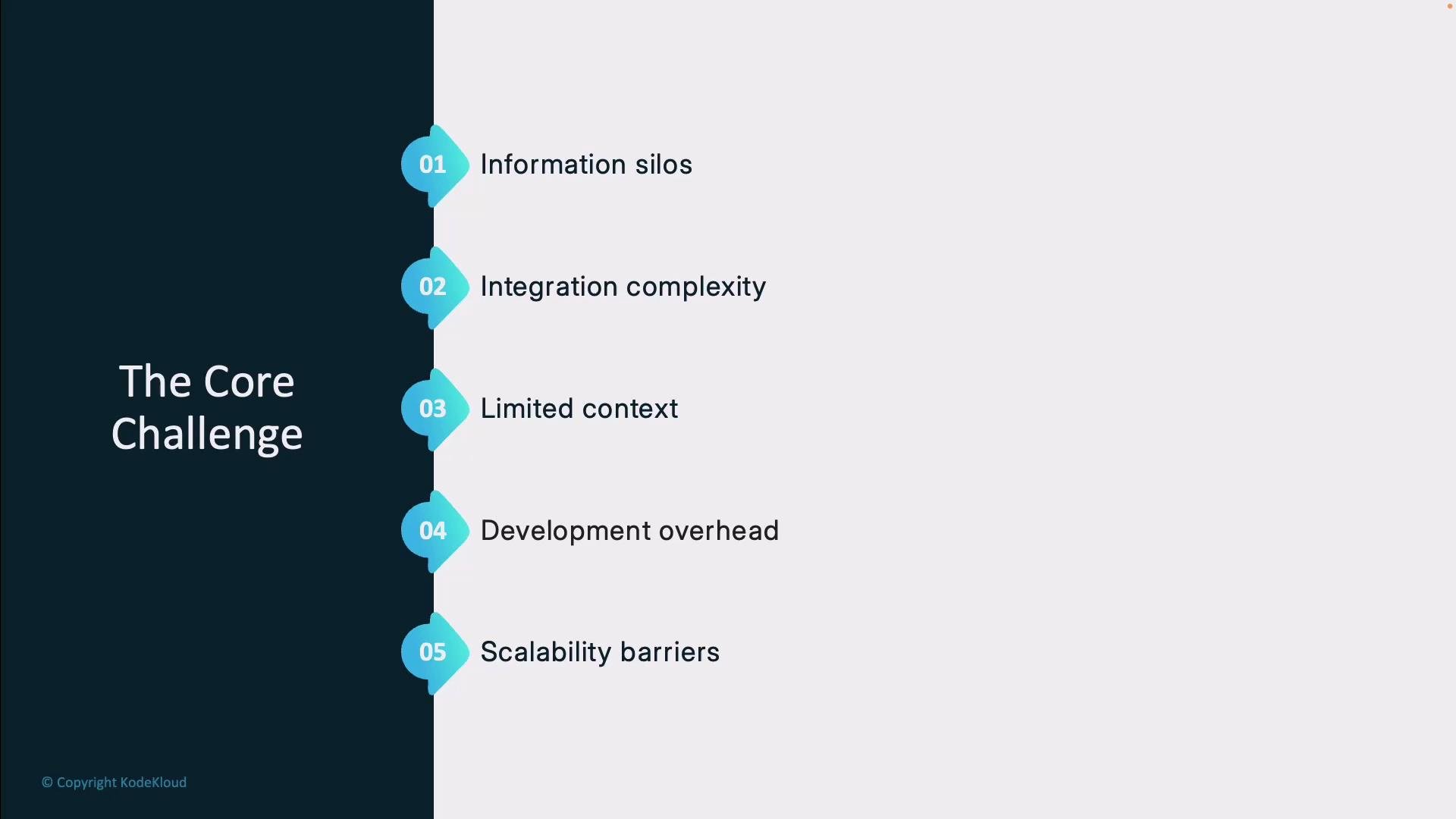
- Information silos: data lives in disconnected repositories and tools.
- Integration complexity: each data source requires custom connector logic or bespoke API work.
- Limited context: models lack up‑to‑date, relevant information (e.g., LLM knowledge cutoffs).
- Development overhead: building and maintaining bespoke connectors is costly.
- Scalability barriers: adding new data sources or services is error‑prone and slow.
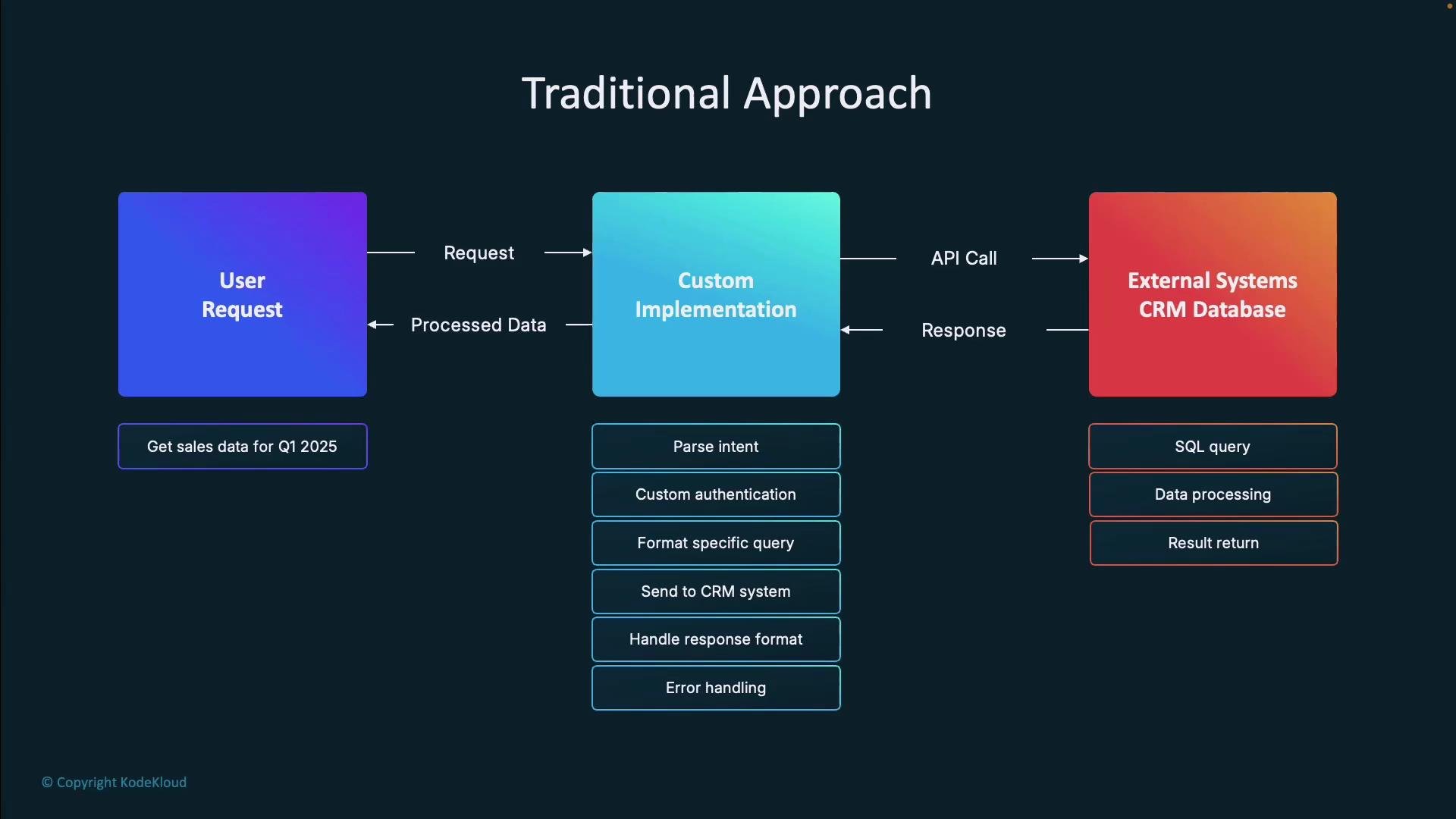
Traditional approach
Historically, teams built custom integrations for each service. In the typical workflow:- A user request is parsed for intent.
- Custom code authenticates against the remote system.
- The code formats a service‑specific query (SQL, REST, GraphQL, etc.).
- Results are processed and transformed into a response.
How MCP changes the picture
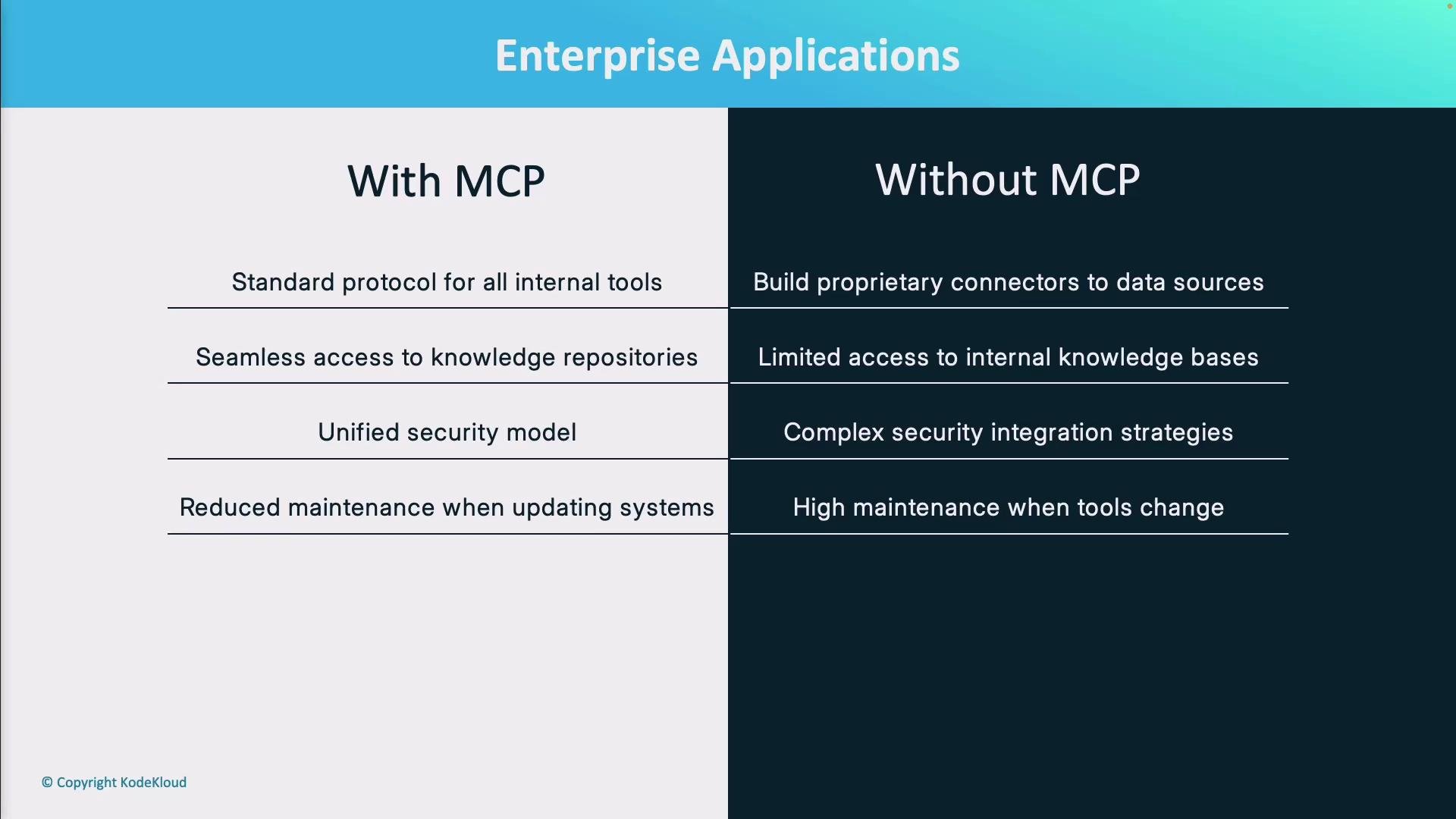
MCP provides a standardized data‑exchange protocol and a common interface for integrations. Instead of many one‑off connectors, capabilities are exposed through a single, consistent protocol and set of primitives. Key benefits:- Standardized connector interface so drivers behave like interchangeable puzzle pieces.
- Protocol‑level authentication and consistent error handling semantics.
- Unified context management enabling models to access relevant data from multiple sources consistently.
- Easier extensibility: add new data sources via an MCP server without changing client logic.
- Reduced maintenance overhead: protocol updates are absorbed at the MCP layer rather than across many adapters.
Developer simplicity is a core benefit: write an integration for MCP once, then reuse it across models and clients.
Problems vs. MCP advantages
Security and deployment models
MCP supports flexible deployment models tailored to trust and privacy needs:- Local‑first MCP servers: data can remain on a user’s device (laptop, phone) unless explicitly shared — ideal for privacy‑sensitive workflows.
- Remote MCP modules: run in trusted remote environments when centralized access or compute is required.
Be deliberate about trust boundaries: local MCP servers keep data on the device, while remote MCP endpoints may require explicit data sharing and authorization. Design your deployment model to match your security and compliance requirements.
Developer experience
MCP simplifies integration work and shortens time to value for teams:- Build once: write an MCP adapter and reuse it for many models and clients.
- Unified authentication: a single protocol handles compatible auth flows.
- Consistent error and context handling: surface errors and context uniformly at the protocol layer.
MCP in action — representative use cases
Common MCP deployments and what they enable: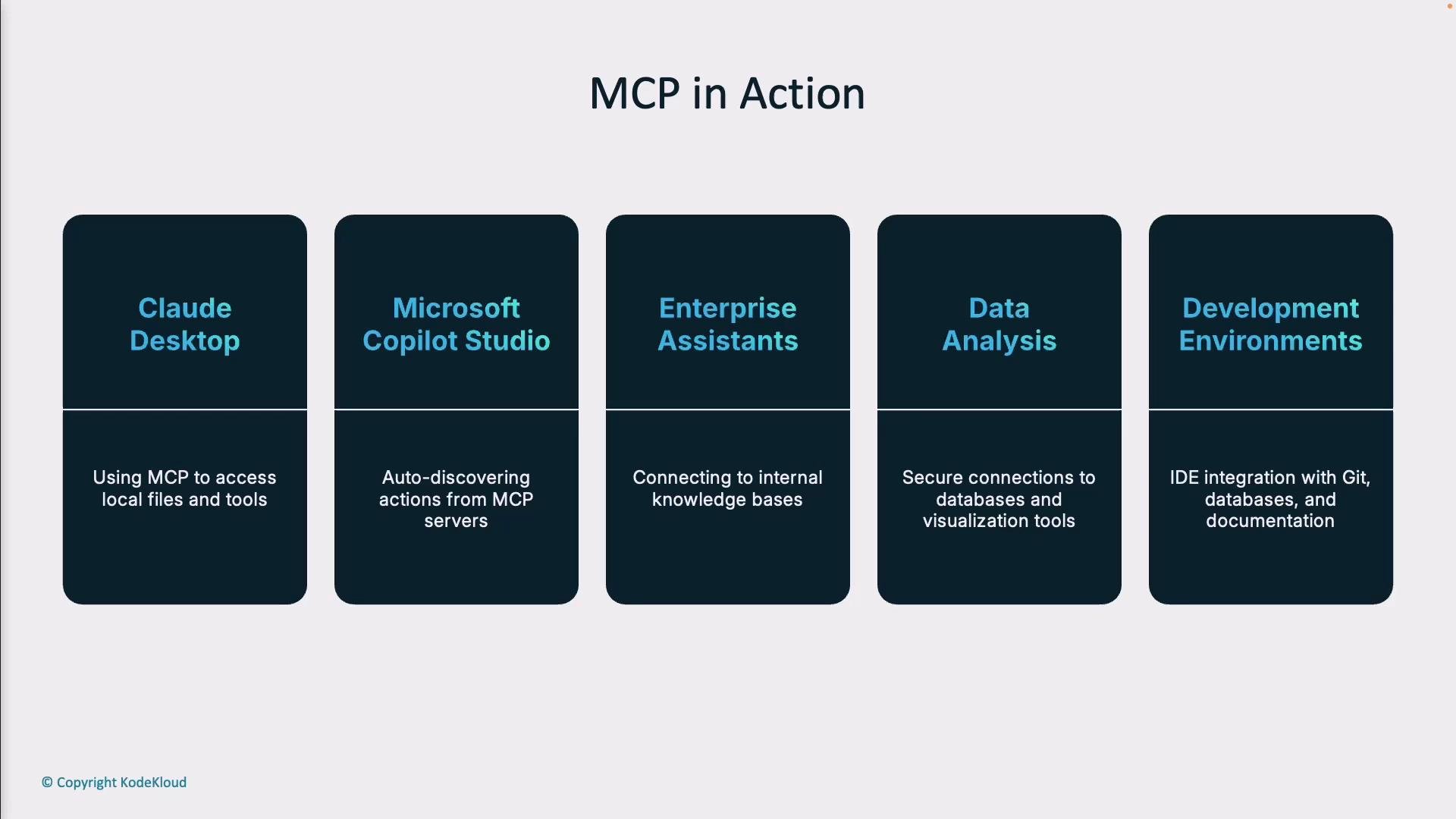
Conclusion
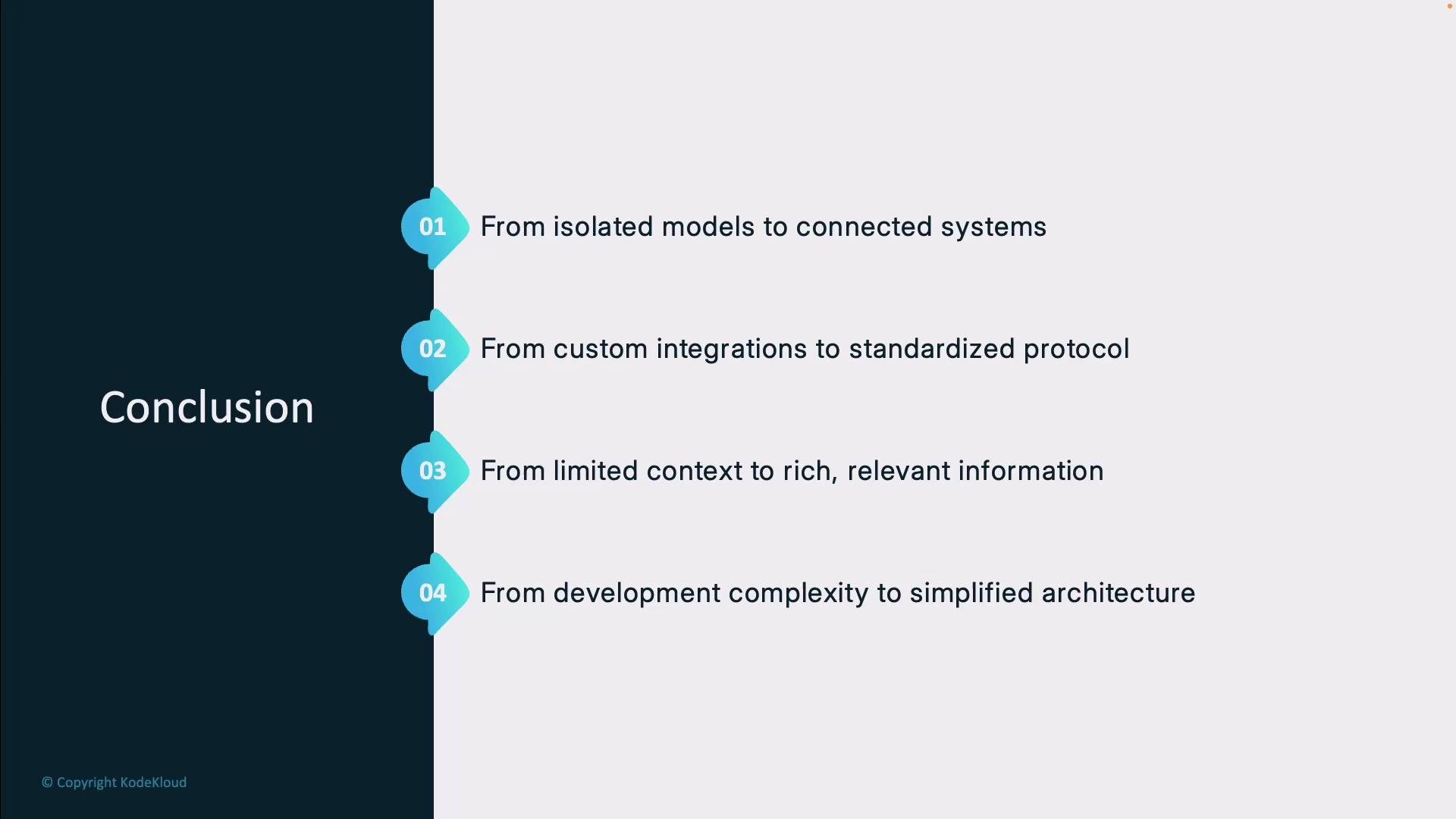
MCP represents a shift from isolated models and custom integrations to connected systems using standardized protocols. The practical outcomes are:- Richer model context with access to relevant, up‑to‑date information.
- Simplified developer workflows and fewer duplicate adapters.
- Consistent security and error handling across integrations.
- Lower operational maintenance and easier extensibility.
Links and further reading
- MCP concepts and design patterns (search for “Model Connector Protocol” and “local‑first connectors”)
- Local‑first software: mental model and tradeoffs
- Guides on secure API design and protocol versioning