Understanding Go Packages
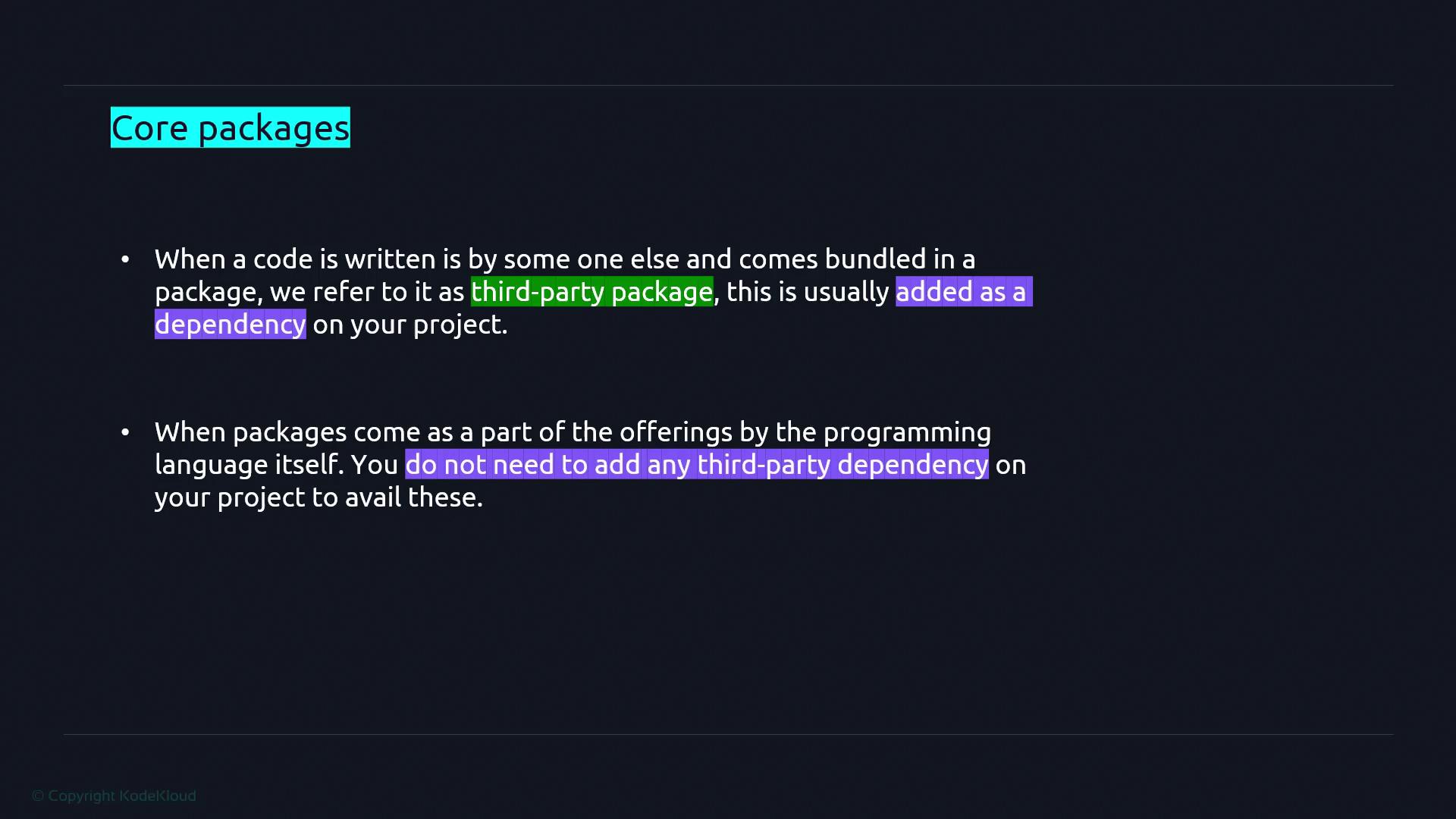
In Go, a package is a collection of code that groups related functions, types, and implementations. This modular approach lets you abstract complex details behind simple interfaces, enabling efficient code reuse. When you incorporate code written by others into your project, it’s classified as a third-party package, meaning you need to add it as a dependency. In contrast, packages built into the language require no extra installations.Built-in packages are part of the Go Standard Library and come with the language, whereas third-party packages must be explicitly added as dependencies.
The Go Standard Library
The Standard Library is a comprehensive collection of core packages that cover a wide range of functionalities—from networking and string manipulation to file system operations and input/output handling. By leveraging these pre-written, well-tested packages, you can significantly decrease development time and improve the reliability of your code.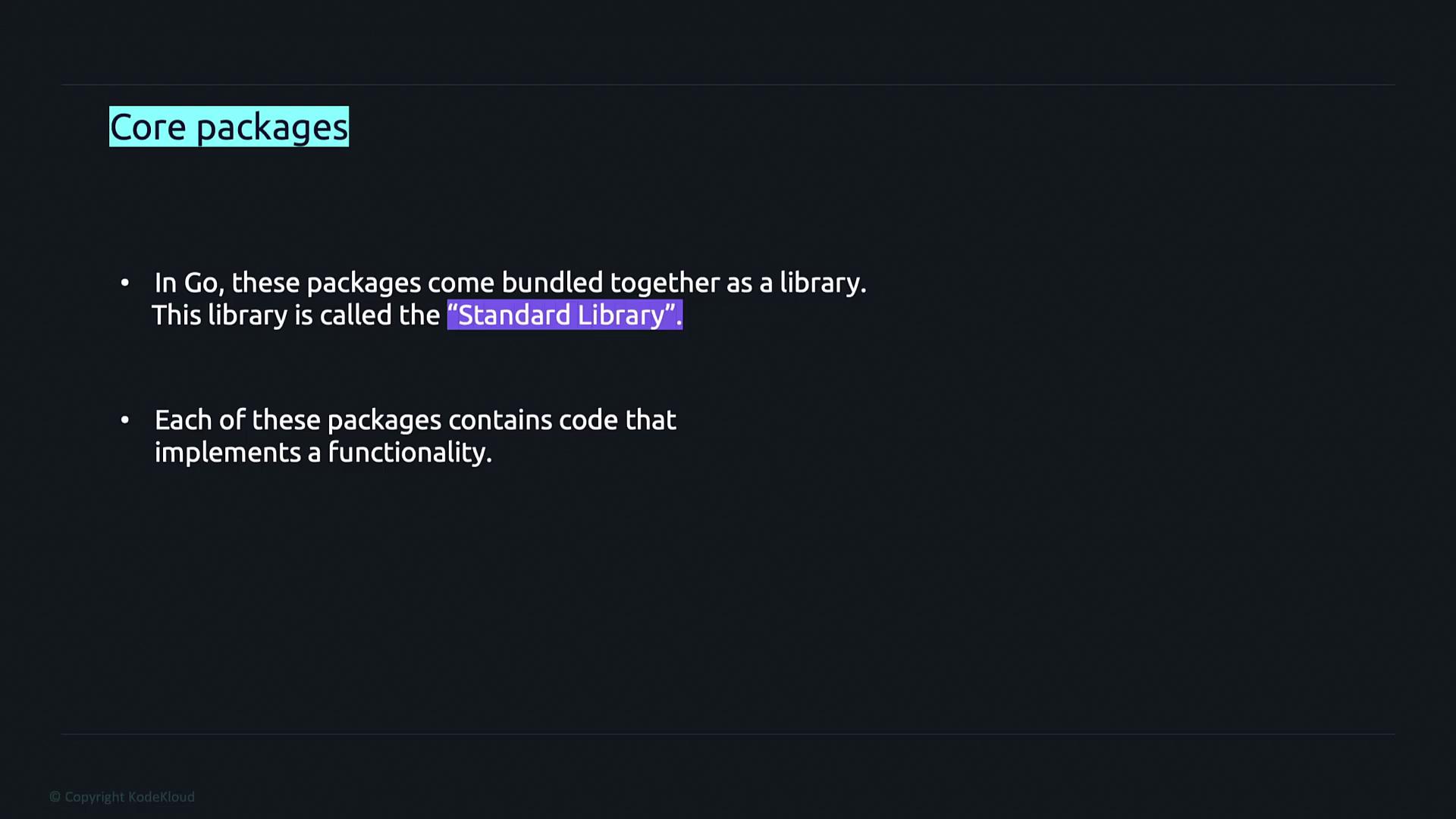
Overview of Core Packages
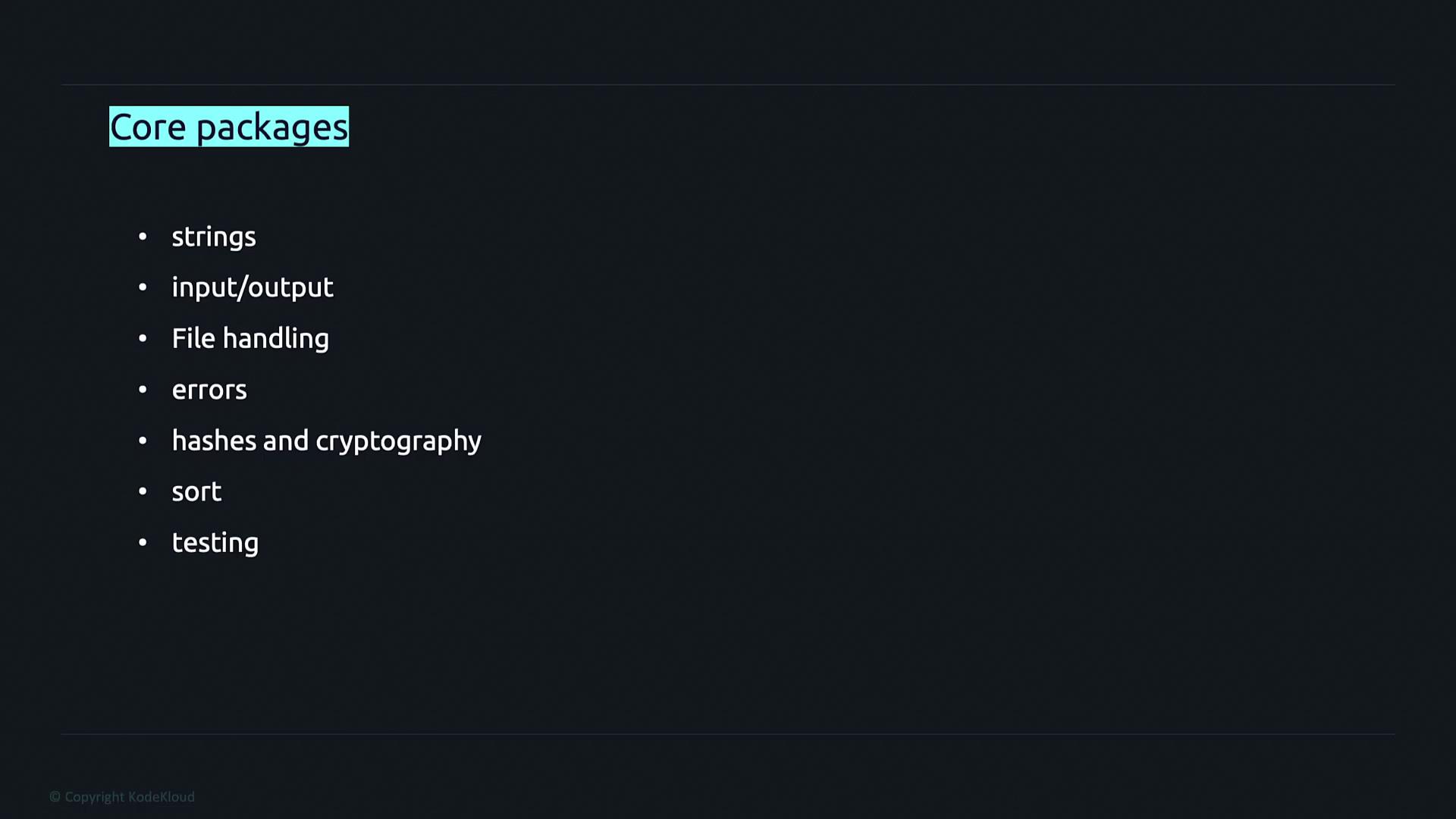
The Standard Library includes numerous packages designed to address common programming needs. Here are a few key areas:- Networking: Build robust network-based applications.
- String Manipulation: Efficiently handle and transform text.
- File System Operations: Simplify file and directory interactions.
- Input/Output: Streamline reading from and writing to various sources.
- Cryptography: Implement secure data handling and encryption.
- Testing: Facilitate the development of reliable, maintainable code.
In the upcoming sections, we will dive deeper into these standard packages and demonstrate practical examples to enhance your Go programming skills.