

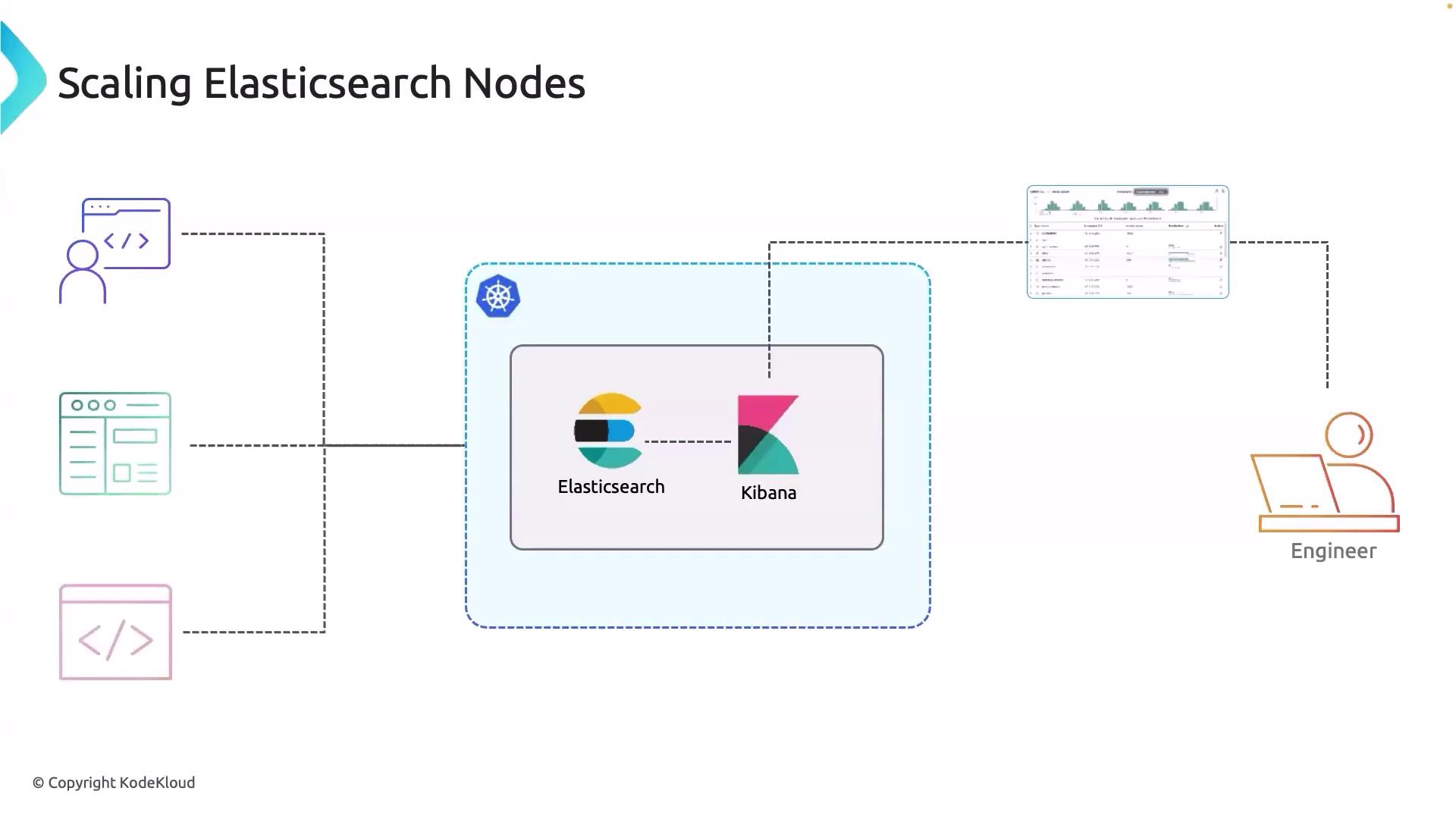
Scaling Elasticsearch nodes is essential when:
- The data volume overwhelms current nodes, resulting in performance degradation.
- High query loads force nodes to work inefficiently.
- Performance bottlenecks indicate nodes are nearing their operational limits.
- Ingestion rates exceed the capacity of existing nodes.
- Redundancy and high availability are needed to prevent data loss and downtime.
- Geographical distribution demands optimized performance across regions.
Scaling Strategies
There are two principal approaches when it comes to scaling Elasticsearch nodes:- Vertical Scaling: Increase the resources (CPUs, memory) of existing nodes.
- Horizontal Scaling: Add more nodes to distribute the load more evenly across the cluster.
- Sharding: Distributes data across multiple nodes to enhance search and indexing performance.
- Index Lifecycle Management (ILM): Efficiently manages the lifecycle of your data indices.
- Snapshot and Restore: Provides reliable backup and recovery solutions to maintain data integrity during scaling operations.
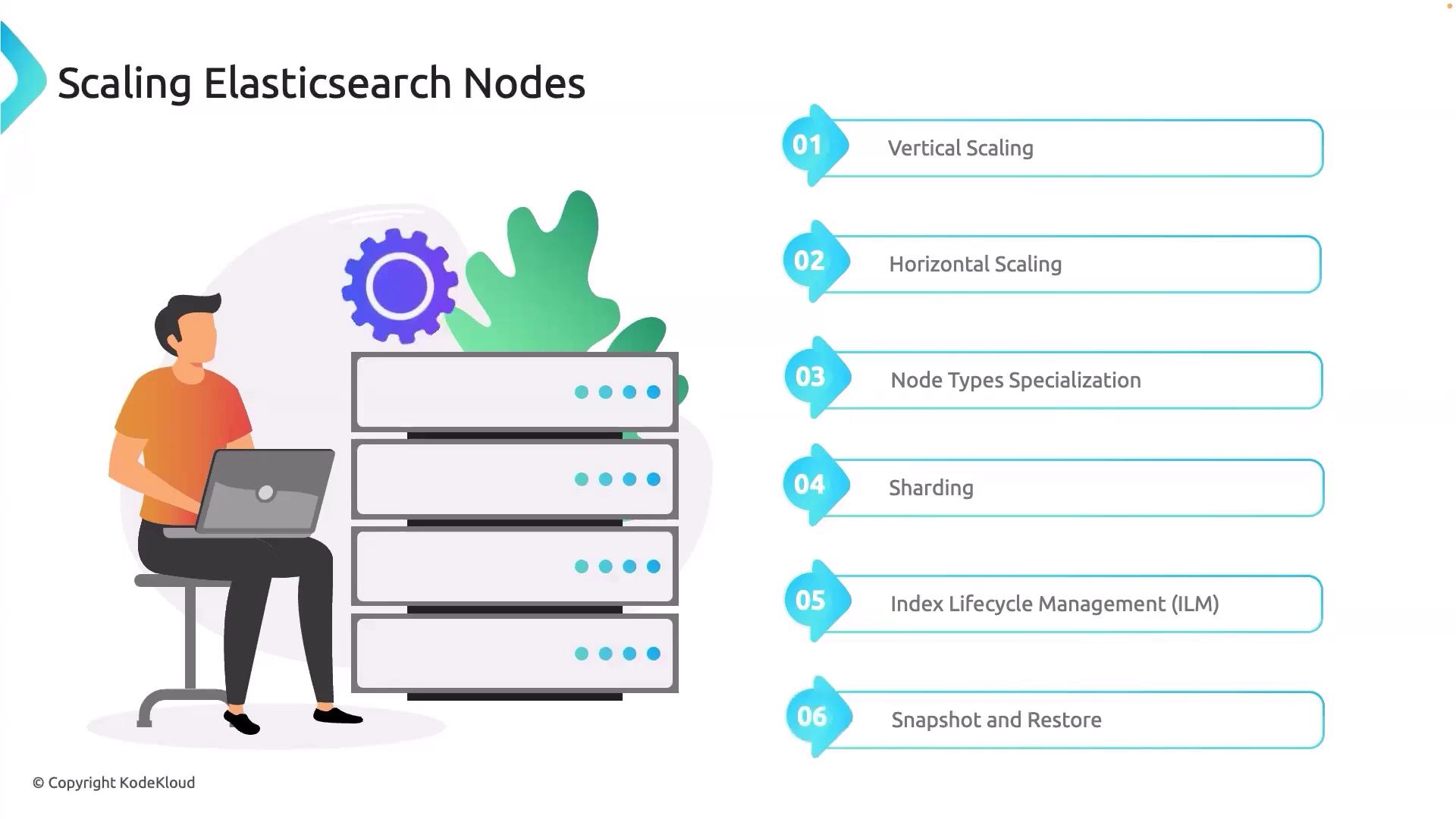
Start by experimenting with node type specialization. If further improvements are required, proceed with sharding and lifecycle management techniques, followed by the implementation of snapshot and restore processes. Managed services like Elastic Cloud often primarily utilize vertical and horizontal scaling to expand clusters. More detailed guidance on Elastic Cloud will be covered in future lessons.