Feedback Loop for Effective Communication
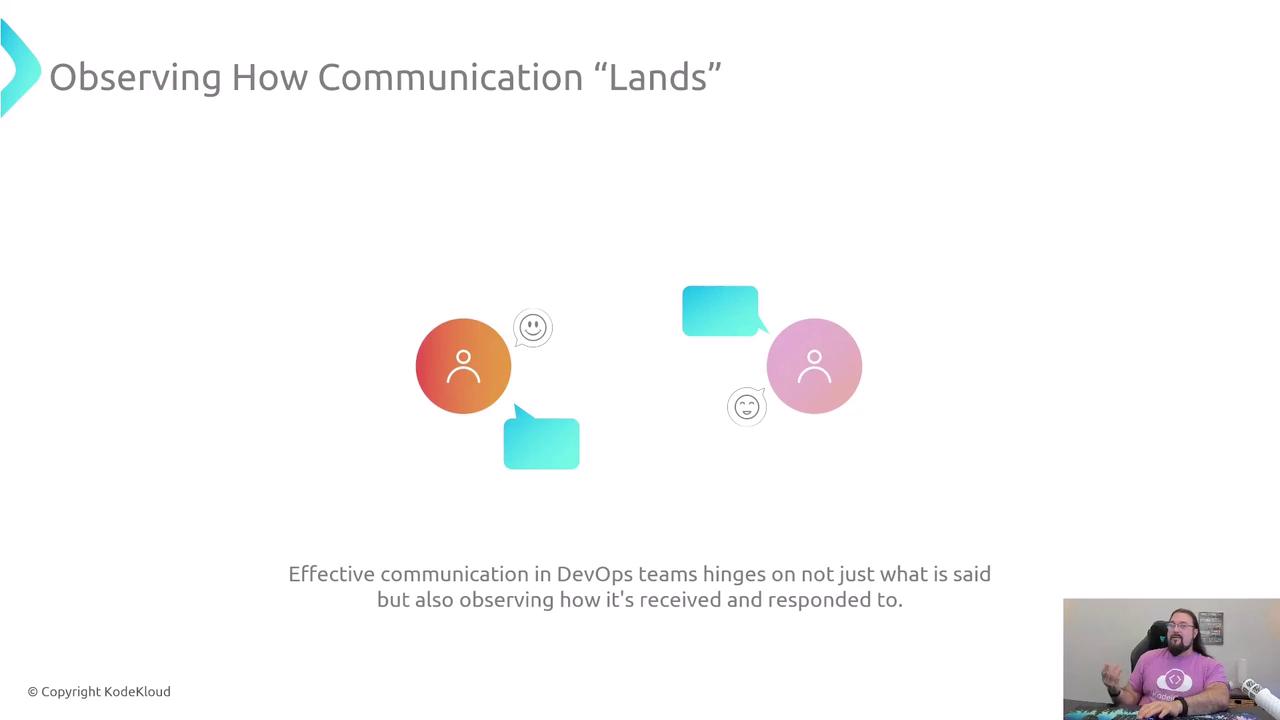
- Observe: Note verbal and nonverbal signals.
- Hypothesize: Interpret what those signals might indicate.
- Experiment: Tweak your content, tone, or delivery.
- Reflect: Assess the response and iterate.
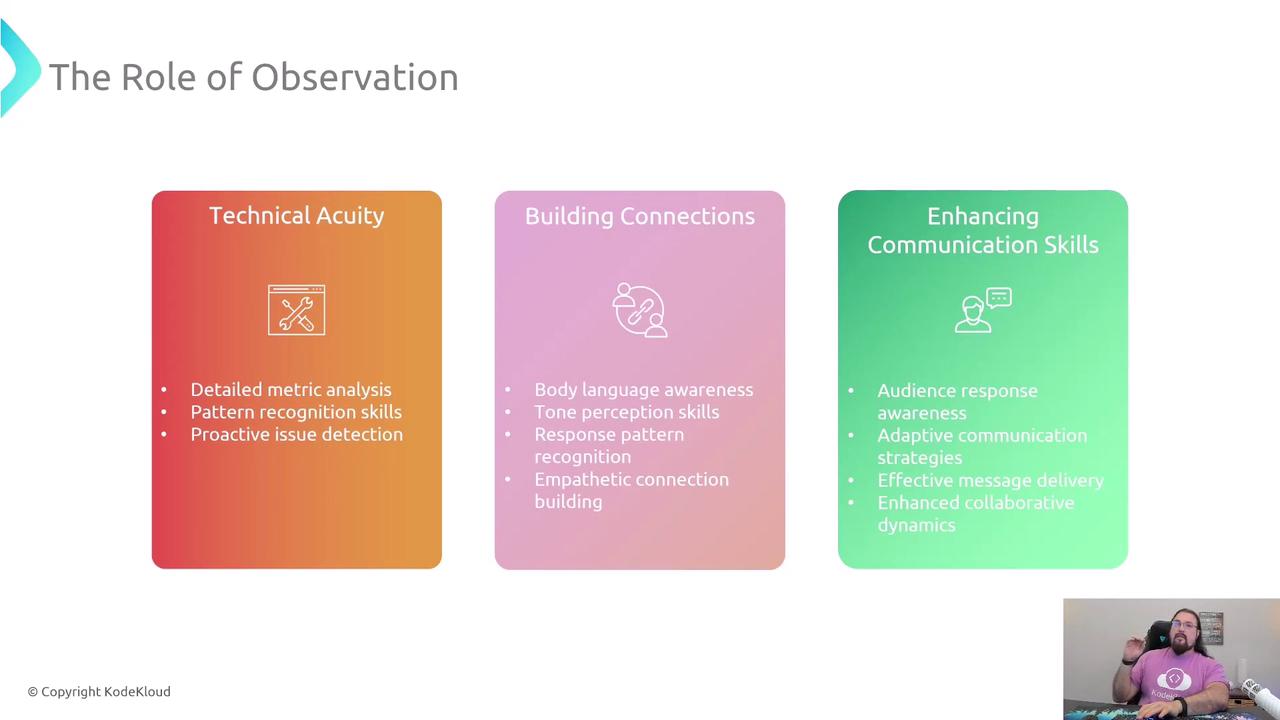
Consistent observation helps tailor your communication. If a colleague often responds negatively to AWS topics, try discussing general cloud concepts or a different provider to uncover their preferences.
Contextual Factors: Cultural, Historical, Social & Environmental
Understanding context ensures your message lands as intended. The table below summarizes key context types: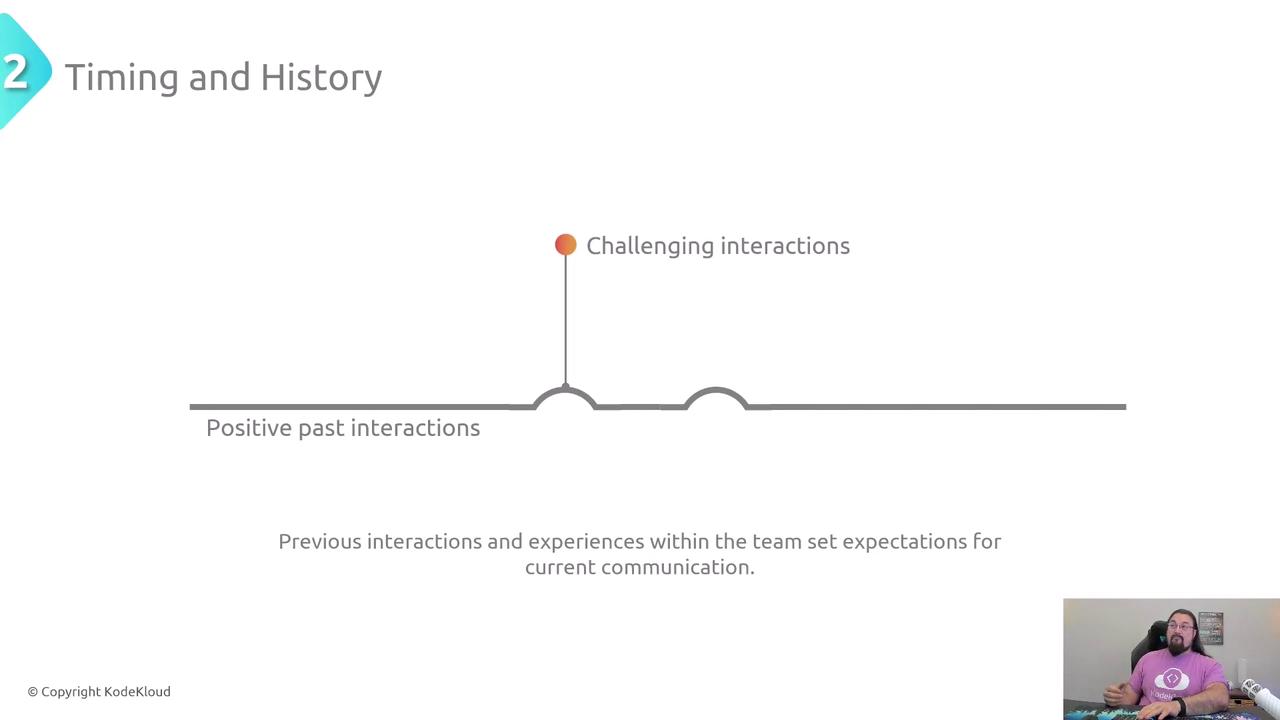
Social vs. Environmental Context
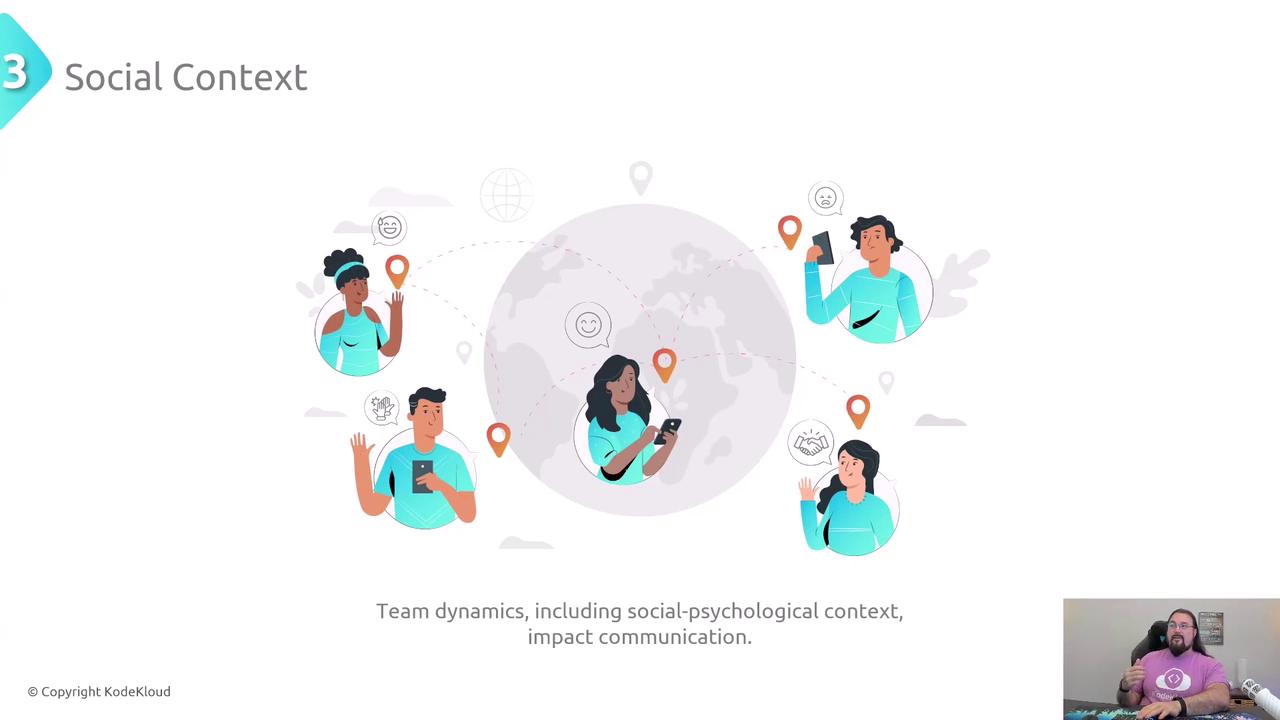
- Social: Peers, leadership, cross-functional teams
- Environmental: Face-to-face, video conferences, chat, email
Summary
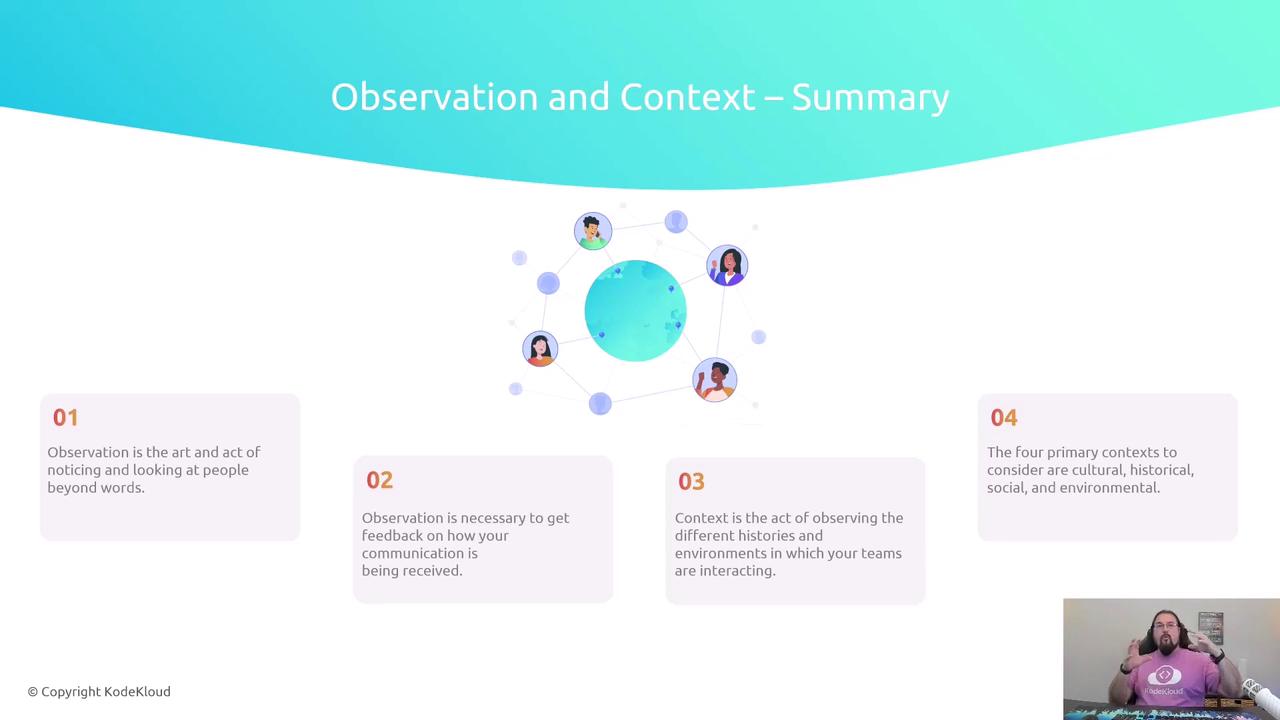
- Observation combines verbal and nonverbal awareness to gauge reactions.
- Context includes cultural, historical, social, and environmental factors shaping how messages are received.
- By applying a feedback loop and adapting to context, you’ll improve team collaboration and communication efficiency.