

1. Pre-Assessment
Are you truly open to change, able to adapt quickly, and committed to continuous growth? Begin by reflecting on your current mindset.Answer honestly—self-awareness is the first step toward improvement.
2. Mindset of Continual Improvement
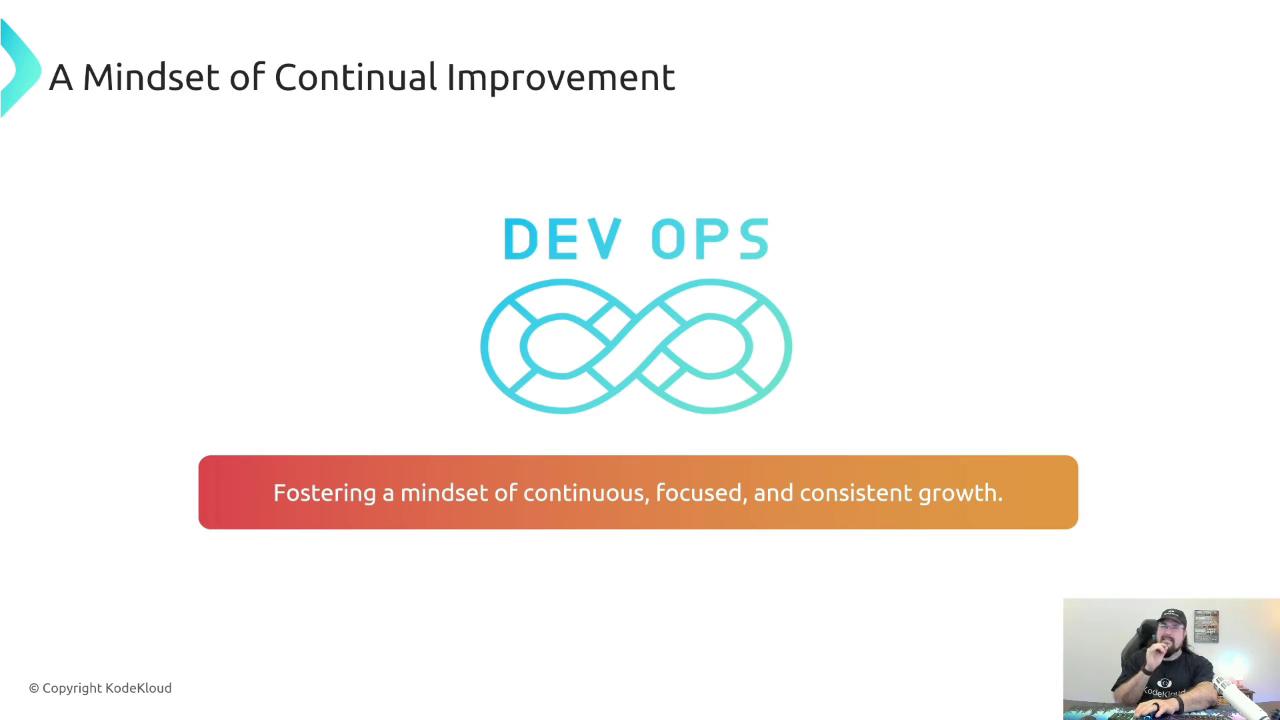
Continual improvement (Kaizen) means taking small, consistent steps each week, month, or year. In fast-paced IT environments, a growth mindset helps you stay ahead.- Focus on incremental wins
- Embrace feedback loops
- Celebrate small milestones
3. Learning Strategies
With so many resources—blogs, videos, courses—how do you choose what’s most relevant? Deploy these strategies:- Identify skill gaps based on your role
- Set clear, time-boxed learning objectives
- Use curated playlists or reading lists
Leverage tools like Anki for spaced repetition and retention.
4. Rituals of Growth and Learning
Habits anchor your progress. Whether it’s:- 15 minutes of coding challenges daily
- Weekly mini-projects
- Monthly book summaries or podcast deep dives
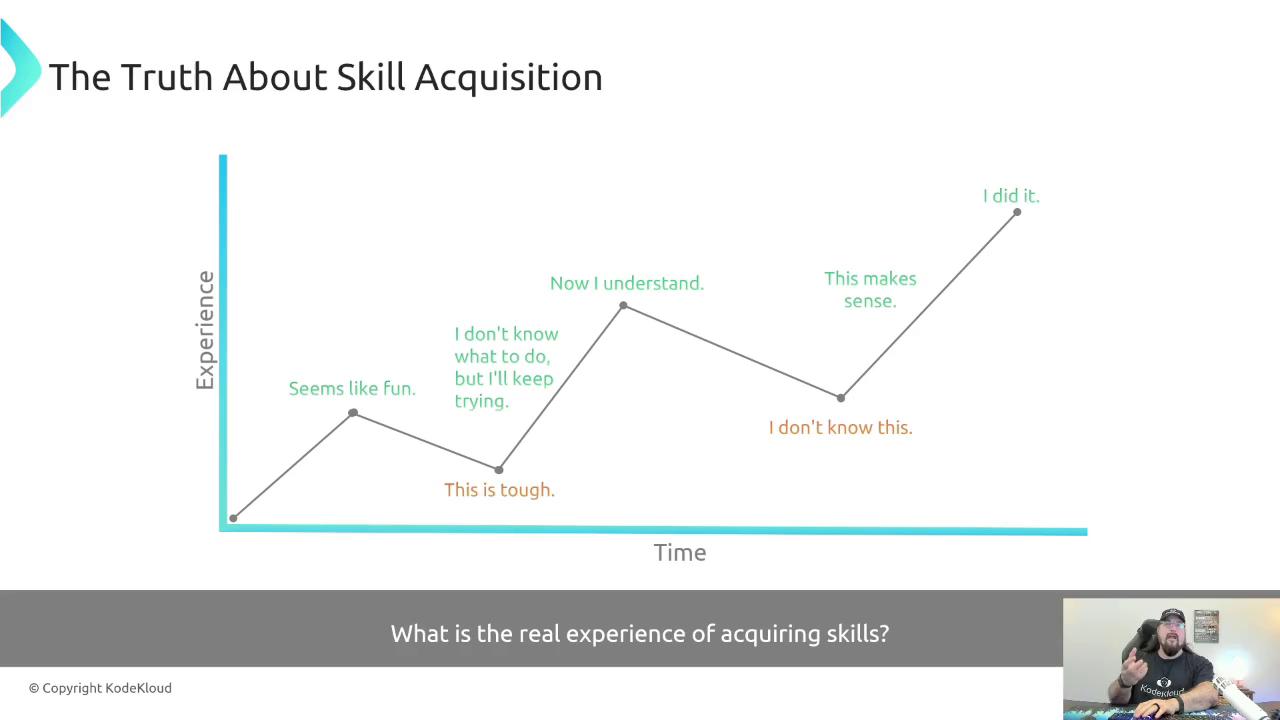
5. Skill Acquisition Over Time
Acquiring new skills follows a pattern:- Excitement: “This looks fun!”
- Frustration: “Why isn’t this working?”
- Breakthrough: “I’m getting it!”
- Doubt: “Am I really doing this right?”
- Mastery: “I did it.”
Cycles of discomfort are normal—perseverance leads to mastery.
6. Handling Knowledge Overload
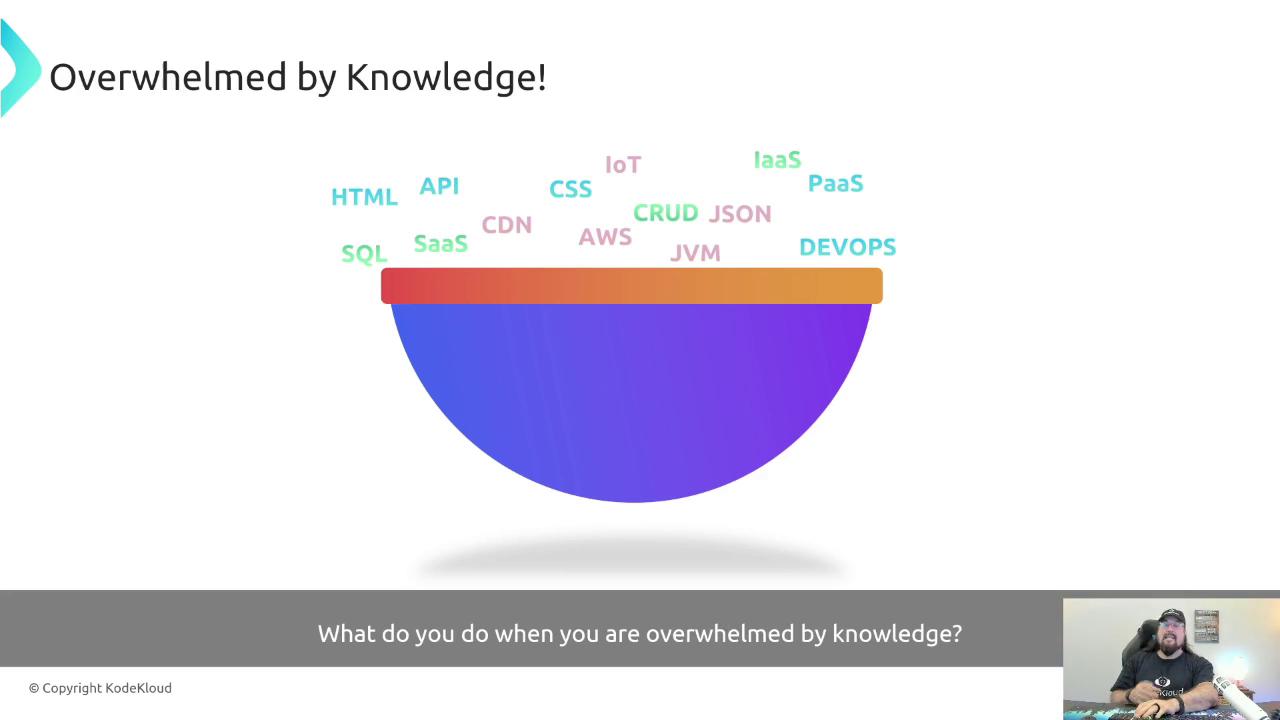
IT terminology, frameworks, and tools can flood your brain. Tackle overload by:- Prioritizing skills that align with current projects
- Filtering noise: curate one newsletter or blog feed
- Chunking information into manageable learning blocks
Avoid binge-learning—overloading your brain leads to burnout.
7. Adapting to Change
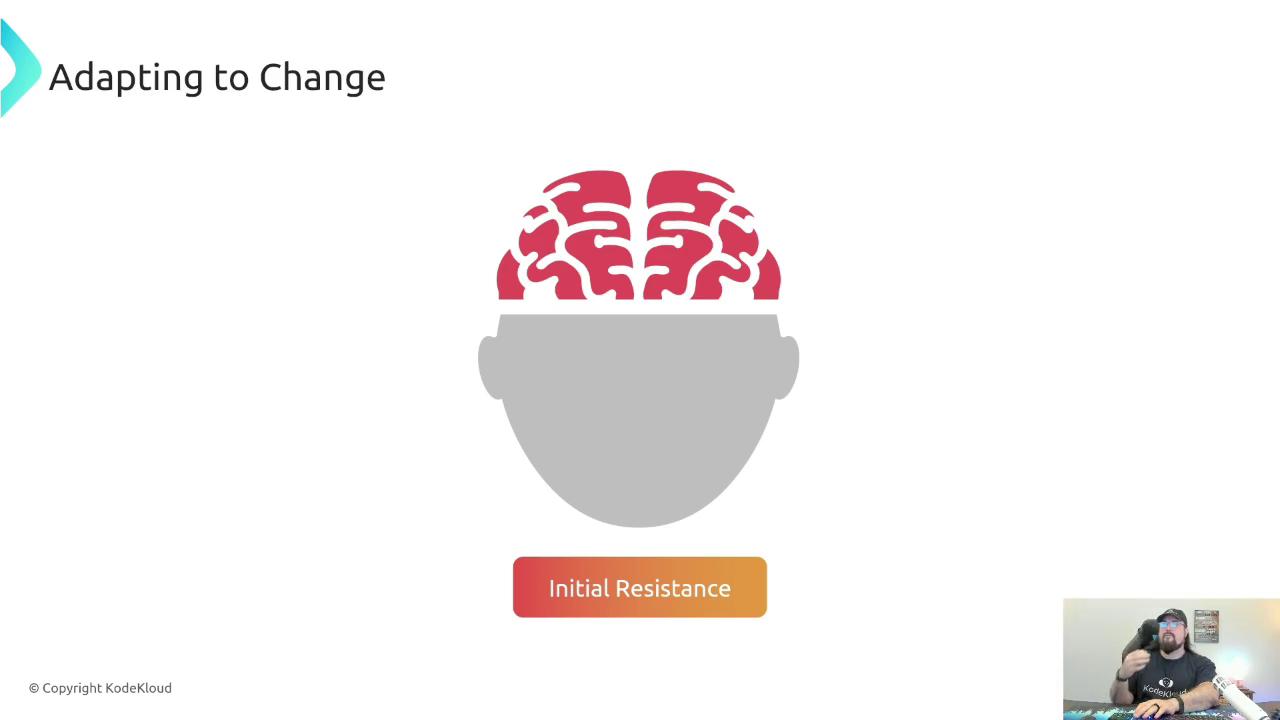
New technologies often face initial pushback. For example, containerization seemed risky at first but now powers cloud-native apps. To embrace change:- Test new tools in a sandbox environment
- Document learnings and share with peers
- Reflect on wins and setbacks
8. Summary & Final Assessment
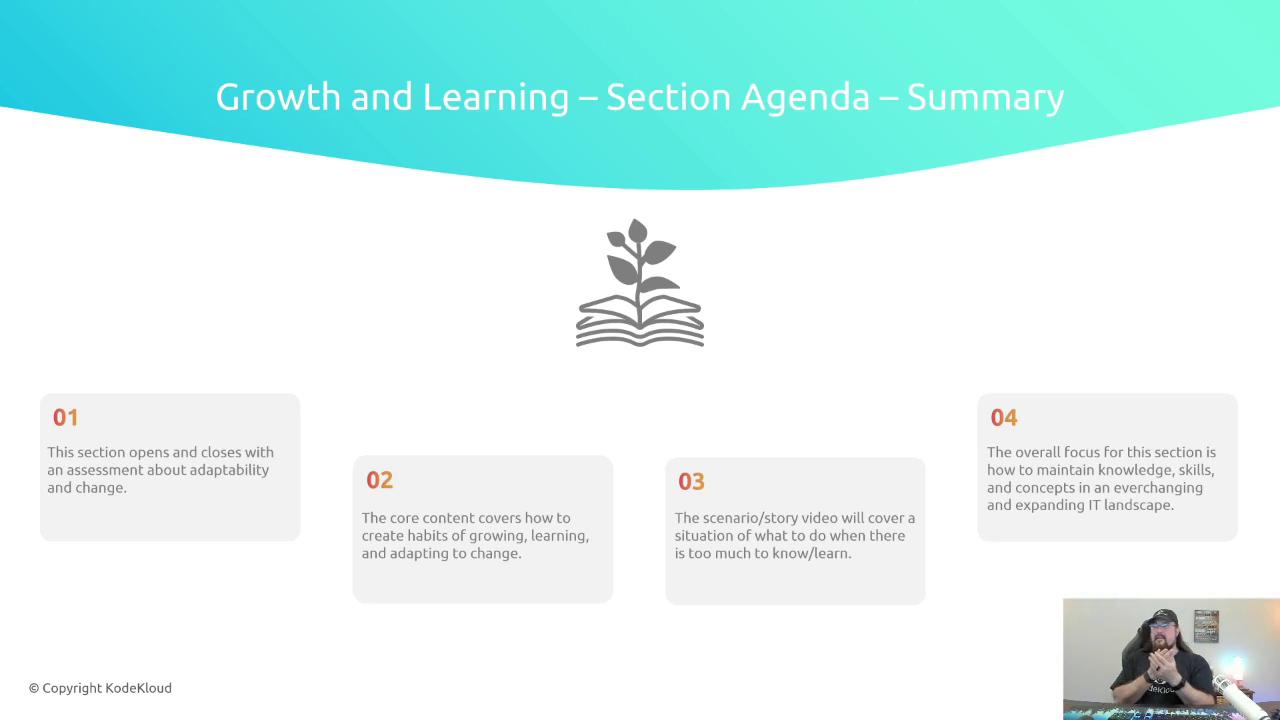
Reinforce your learning with a quick self-assessment on:- Openness to change
- Growth-oriented habits
- Effective learning routines
- Stress management for information overload
- Willingness to experiment with new tools
References
- Kaizen and Continuous Improvement
- SMART Criteria for Goal Setting
- Cognitive Load Theory
- Anki Spaced Repetition
- Containerization Overview