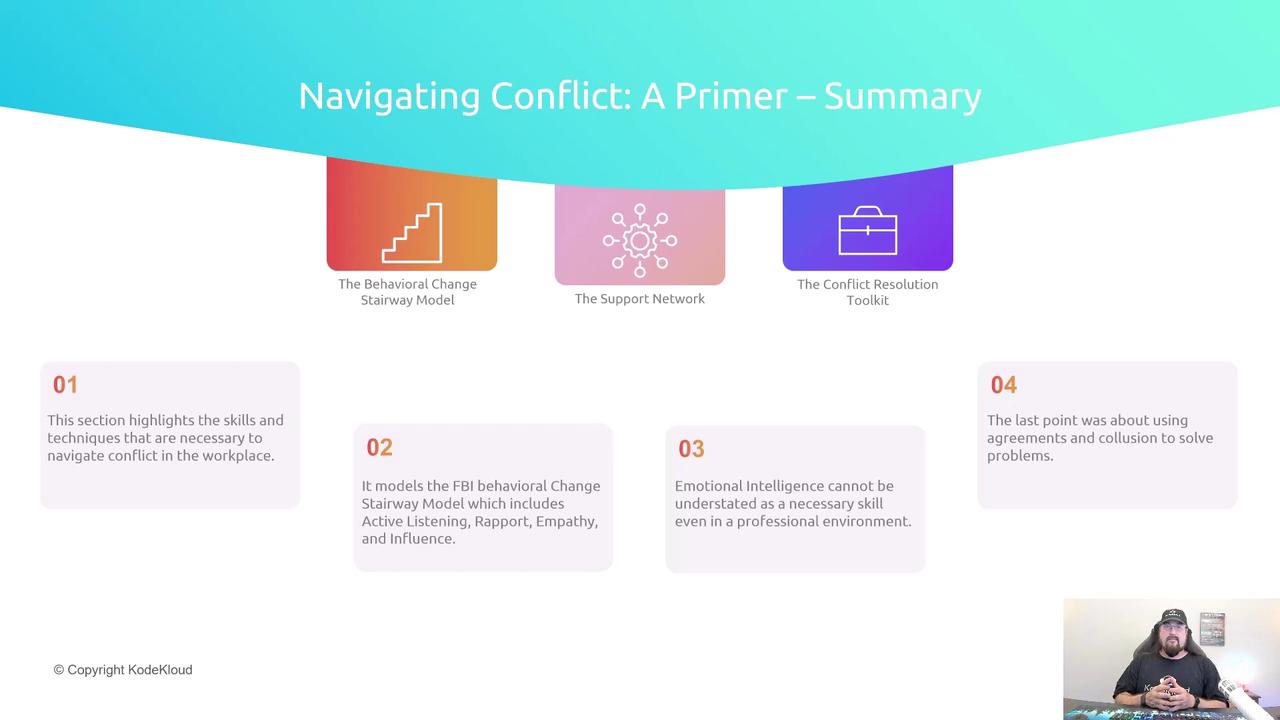
The Five-Step Framework
Below is an overview of the Behavioral Change Stairway Model adapted for DevOps: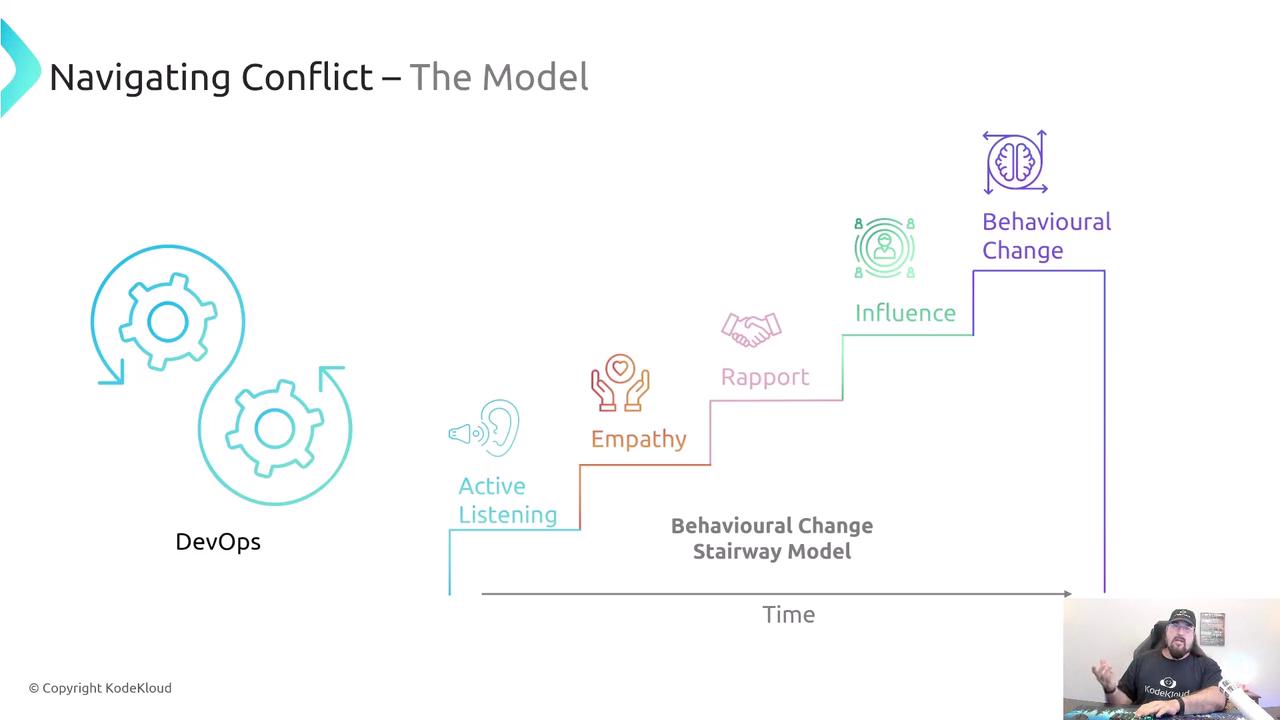
1. Active Listening
Active listening is the bedrock of conflict navigation. In a system outage or deadline dispute, pay attention to:- Tone & Emotion: Are they frustrated, anxious, or neutral?
- Body Language: Posture, eye contact, and micro-expressions.
- Verbal Cues: Repetitions, hesitations, or abrupt topic changes.
-
Mirroring
Repeat the last few words.
Example:
Speaker: “We lost production metrics last night.”
You: “Production metrics?” -
Paraphrasing
Restate in your own language.
“So you’re saying the monitoring alerts didn’t fire?” -
Emotional Labeling
Name the feeling you observe.
“It sounds like that was really stressful.” -
Effective Pauses
Use silence to prompt elaboration.
Combine these techniques with genuine curiosity to foster psychological safety in your team.

2. Four Techniques for Active Listening
Use these methods iteratively to draw out hidden concerns and clarify priorities in high-pressure situations.

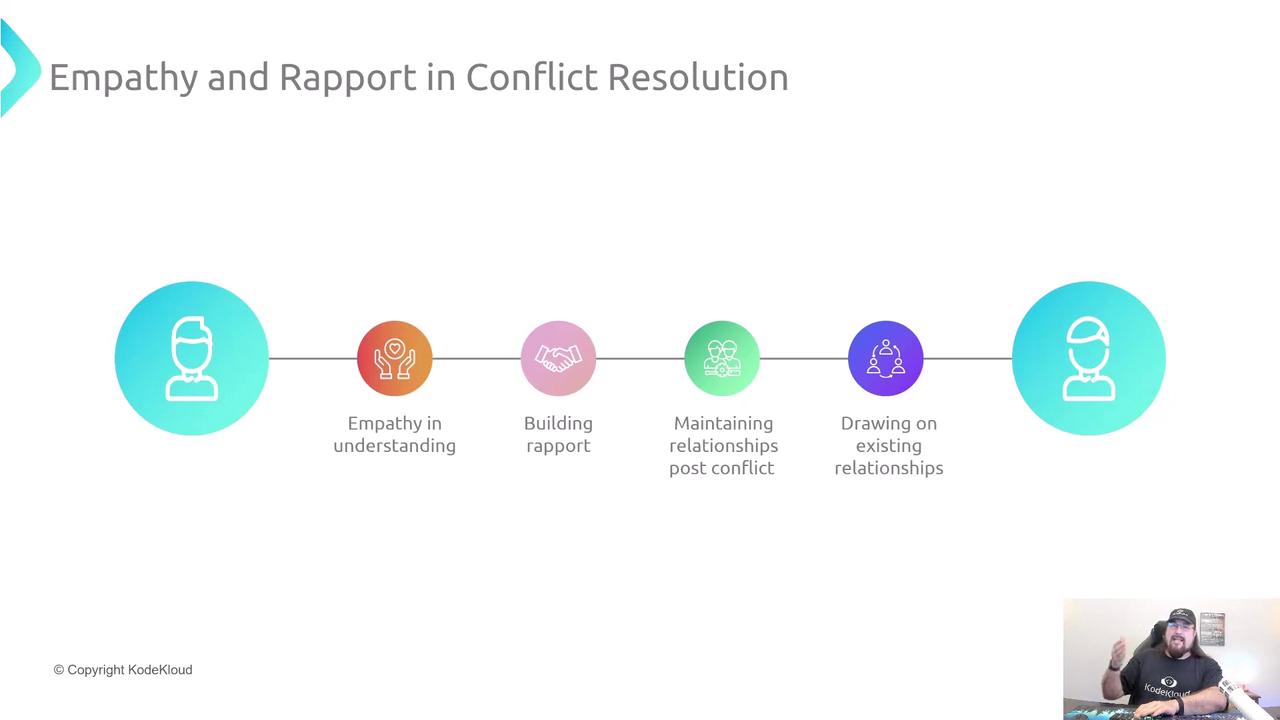
3. Empathy and Rapport
Once you’ve listened, validate emotions and cultivate trust:- Label both your own and their feelings.
- Choose the right setting: one-on-one for sensitive topics.
- Model accountability by apologizing for any missteps.
- Schedule a follow-up meeting.
- Ask, “Does next Tuesday work for an update?”
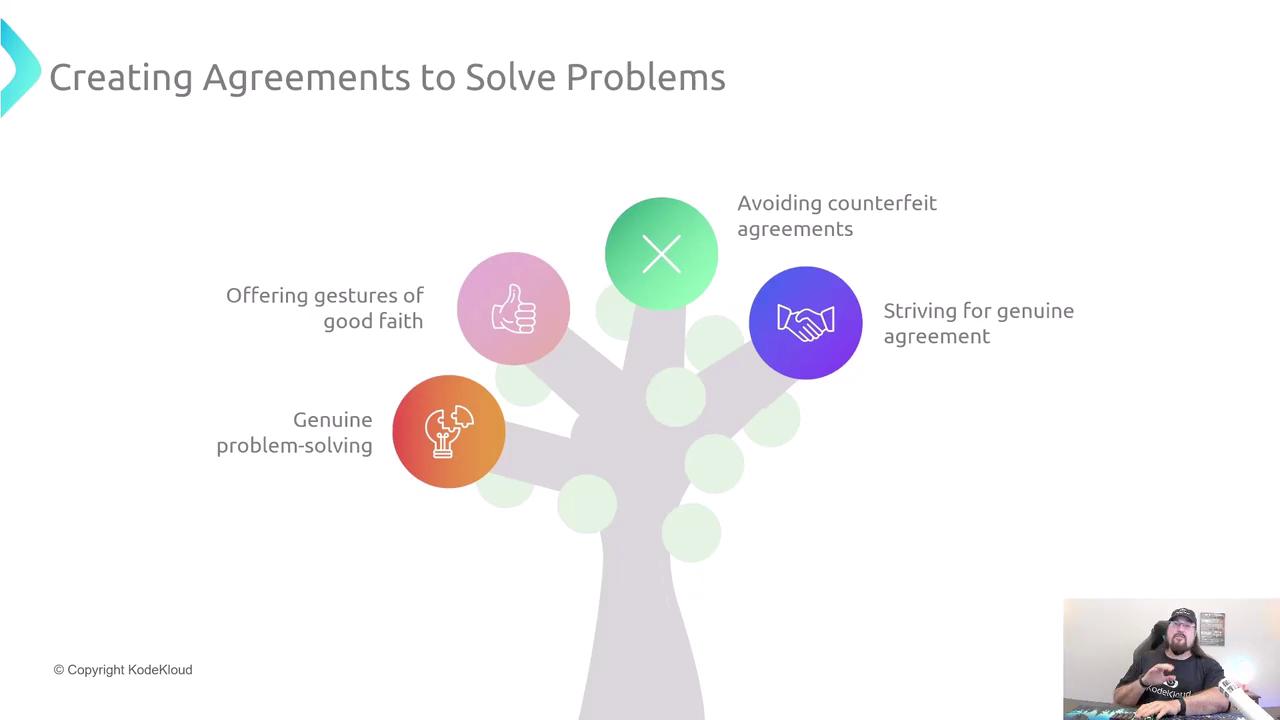
4. Creating Genuine Agreements
In DevOps, missed SLAs and changing specs often cause disputes. Forge reliable commitments by:- Offering gestures of good faith (e.g., daily status updates).
-
Distinguishing between different “yes” types:
“Let me verify the details and get back to you by 3 PM tomorrow.”
Avoid counterfeit yeses—they erode trust and lead to scope creep.
5. Behavioral Change & Follow-Through
True resolution comes from consistent follow-through:- Document agreements in a shared channel (e.g., Jira ticket, Confluence page).
- Set clear milestones and review dates.
- Celebrate wins to reinforce positive collaboration.